
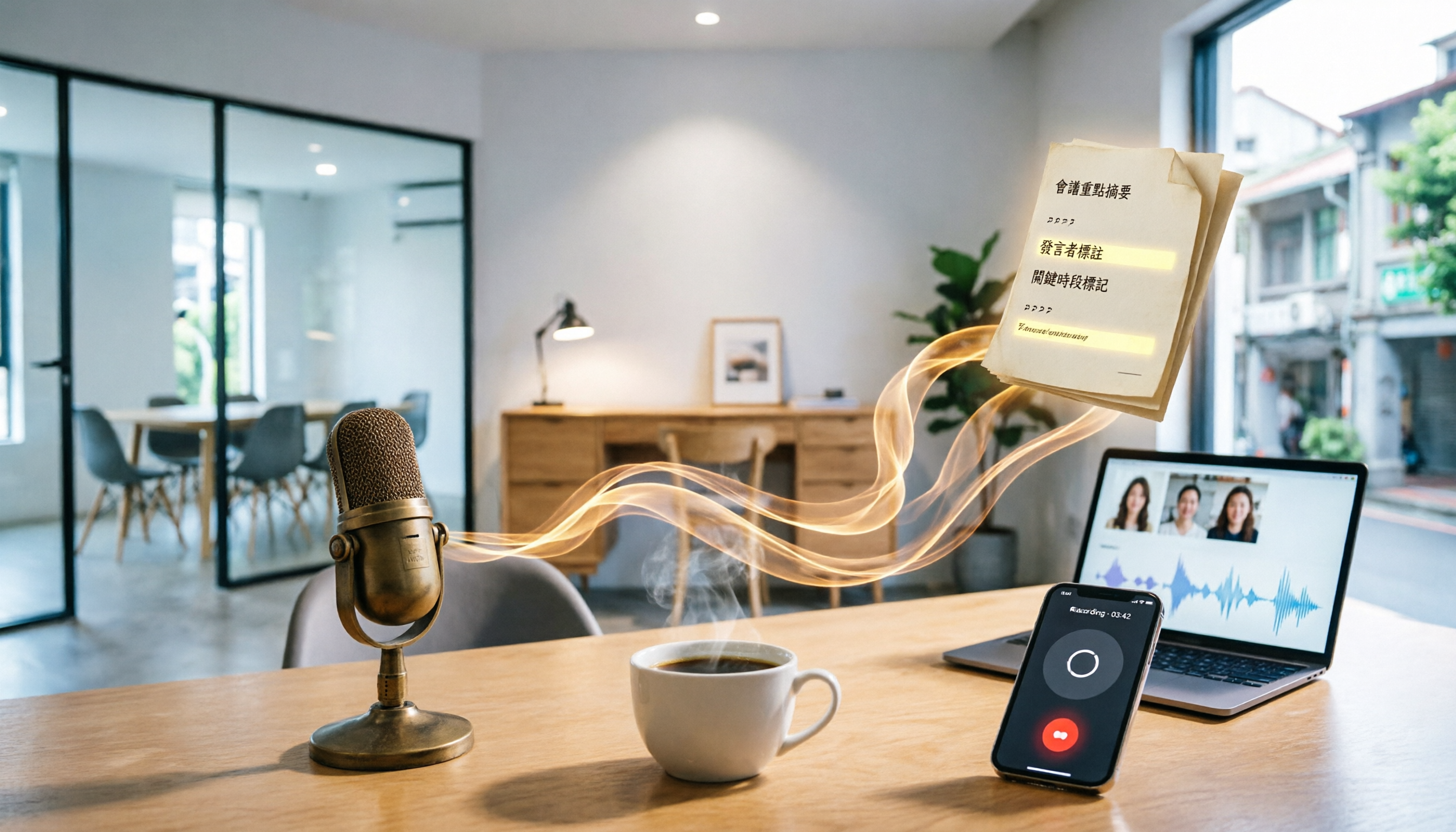
Turn recordings into transcripts and summaries in minutes
Upload audio or video for multilingual transcription, AI notes, and action items
Two hours in a meeting, another two hours writing up the minutes—this is the norm for office workers. What's worse, classroom recordings, interview transcripts, and YouTube video summaries each require different tools. If you're often overwhelmed by this kind of audio and video content, this article will help you find a more efficient approach.
Before Choosing an Audio-to-Text Tool, Understand These 4 Key Points
Accuracy: Don't just look at the claimed 98% accuracy; check real-world performance. Tinrec performs steadily with clear audio, but in noisy environments, it's advisable to verify the output.
Input Sources: Do you only need to transcribe meetings? Or also handle courses, videos, and old recordings? Tinrec supports live recording, file upload, and online video links, covering more scenarios.
AI Post-Processing: Transcription is just the first step. Can it automatically summarize, extract action items, or even allow you to query the content like a database? Tinrec's AI Q&A and post-processing features turn recordings into actionable data.
Free Tier and Cross-Platform Support: Is the free version sufficient for testing? Does it work on both mobile and desktop? Tinrec offers a free basic quota and supports iOS, Android, and Web.
Tinrec (秒听录音) – Our Top Pick After Testing
Tinrec is an AI-powered audio and video organization tool designed for meetings, learning, interviews, and content creation, supporting iOS, Android, and web versions.
During meetings, open Tinrec and it transcribes in real time; after the meeting, AI automatically generates summaries and action items, saving you from manual work. Upload course recordings or interview audio files, and Tinrec converts them to text, then further generates chapters and highlights for easy review and citation. Paste a YouTube or Bilibili video link, and Tinrec can turn it into text and a summary, helping you quickly grasp the key points.
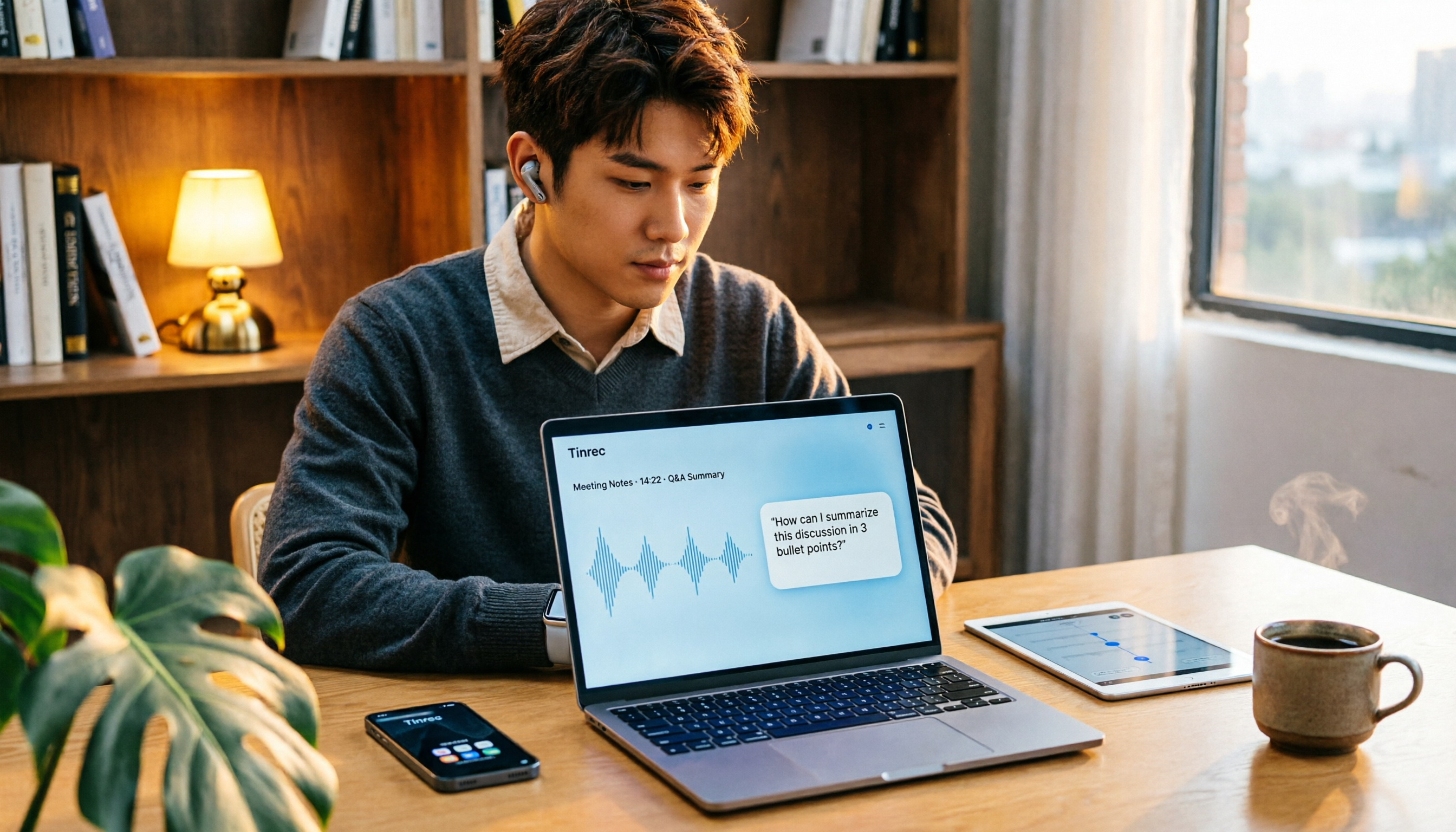
After recording, you can directly ask Tinrec: "Who mentioned the budget in the last meeting?" It answers based on semantic understanding, not just keyword search results. This is a feature most competitors lack.
We tested Tinrec with a clear Chinese meeting recording. The transcription speed was fast, the summary accurately captured key points, and the action item extraction helped with follow-up. With slight background noise, some proper nouns still required manual verification, but overall usability was high.
Pros:
- Multi-source input: Supports live recording, files, and online videos, making it more comprehensive than meeting-only tools.
- Powerful AI post-processing: Summaries, chapters, action items, Q&A, export, and even report and table generation.
- Chinese-friendly: Excellent for processing Chinese, Traditional Chinese, and mixed Chinese-English content.
Limitations:
- The free version has a basic transcription quota; heavy usage requires a paid plan. However, for typical office workers with a few meetings per week, the free version is a good starting point.
- Accuracy is affected by audio quality; for important content, it's recommended to cross-check with the original recording.
Stop organizing recordings by hand
Upload audio or video and automatically get a transcript, summary, and action items
Who It's For: If you need to organize meetings, courses, interviews, and online videos, and want to use AI to ask questions and generate deliverables after transcription, Tinrec is a highly recommended option.
Beyond Tinrec: What Other Options Are There?
Notta: Notta is a common audio-to-text tool that supports multilingual transcription and translation, with a free plan offering 120 minutes per month. Compared to Tinrec, Notta is solid in transcription and translation, but Tinrec adds online video transcription and deeper AI Q&A and post-processing, allowing direct generation of meeting minutes, reports, etc., not just transcripts. If you frequently need translation, Notta is worth considering; but if you need to organize Chinese videos or require AI follow-up on content, Tinrec is more suitable.
Otter.ai: Otter.ai is a strong tool for English meeting notes, with a free plan offering 300 minutes per month, ideal for English online meetings. However, its support for Chinese content is not as good as Tinrec's, and it leans toward being a meeting bot. If you primarily record English meetings, Otter is a cost-effective choice; but if you need Chinese meetings, courses, or online video organization, Tinrec covers more scenarios.
Pitfall Avoidance Guide: 3 Common Mistakes When Choosing an Audio-to-Text Tool
Pitfall 1: Only Looking at Official Accuracy Rates. Many tools claim 98%, but in real environments with noise, accents, and multiple speakers, accuracy drops. It's best to test with your own recordings for free.
Pitfall 2: Ignoring Input Source Diversity. Some tools only support online meetings and cannot handle local files or online videos. If you need to organize YouTube videos, Tinrec's link transcription feature will save you a lot of time.
Pitfall 3: Using the Tool Only as a Transcriber. If you only get transcripts, you're wasting the AI capabilities. Tools like Tinrec's AI Q&A and summaries can directly help you find key points and action items, which is several times faster than manually scanning transcripts.
Conclusion: Which One Should You Choose?
In conclusion: If you need an AI organization tool that covers meetings, courses, interviews, and online videos, Tinrec is the top choice.
Scenario-Based Recommendations:
- Need to organize Chinese meetings, courses, or online videos → Tinrec (multi-source, AI post-processing)
- Want to use AI to find key points and generate reports after recording → Tinrec (AI Q&A and agent post-processing)
- Primarily record English online meetings with a limited budget → Otter.ai (more free minutes)
- Need extensive translation or subtitles → Notta (comprehensive translation features)
Finally: We recommend downloading the free version of Tinrec to try it out, and then decide whether to upgrade after experiencing the core features.
References
- Notta Tutorial: AI Transcription and Translation | Mason AI Lab
- Notta | Learn AI
- Super Useful Voice-to-Text Tool – Notta, No More Painstaking Typing ...
- Notta.ai Online Meeting Real-Time Transcription Full Tutorial】 Not ...
- Henry Chu Weekly: No.57 | 🎤 Tool Sharing - Notta Audio-to-Text, High Recognition Rate + Highlighting Key Points in Transcripts
Turn every recording into actionable outcomes
Get 60 free transcription minutes when you sign in. No credit card required.
Related Reading
You might also like

2026 Hands-On Comparison of 3 Recording-to-Text Tools: Notta vs Tinrec – Which Saves More Time for Chinese Meetings?
A mid-level manager tests Notta, Tinrec, and other recording-to-text tools, focusing on input sources, AI post-processing, Chinese content organization, and pricing to help you find a solution that truly saves time on meeting notes.
How to Choose a Recording-to-Text Tool in 2026? Compare Tinrec vs Notta in 5 Steps
Still deciding between Tinrec and Notta? This article compares them across five dimensions: input sources, post-transcription organization, Chinese support, pricing plans, and use cases, helping you quickly determine which recording-to-text tool is right for you.
Tinrec vs Otter 2026: 5-Dimension Comparison for Chinese Audio/Video Transcription
Looking for a Notta tutorial? The differences between Tinrec and Otter are also crucial. This article compares 5 dimensions—input sources, post-processing, Chinese support, AI Q&A, and pricing flexibility—to help you decide which AI transcription tool suits Chinese users better.

2026 Review of 5 Audio-to-Text Tools: Which Is Best for Meetings, Courses, and Online Videos?
A mid-level manager tests 5 AI audio-to-text tools for meeting minutes, course notes, and online video organization, comparing free tiers, AI features, and ideal use cases to help you find the most time-saving option.

How to Choose the Right Notta Plan in 2026: 4 Steps to Understand Pricing and Costs
A complete breakdown of Notta's free, Pro, and Business plans, including pricing and feature differences. Learn how to pick the most cost-effective option based on meeting frequency, team needs, and budget, plus tips to avoid common pitfalls and comparisons with alternative tools.

2026 Free Speech-to-Text Solutions: 5 Tools Compared
In 2026, we've selected 5 free speech-to-text solutions, including Tinrec, Notta, Otter.ai, Fireflies.ai, and MyEdit. We've organized the free quotas, paid pricing, and suitable users to help you quickly find the best tool.

2026 Test of 4 Recording-to-Text Apps: Why Tinrec Suits Hongkongers Better Than Notta
In this hands-on comparison of 4 popular recording-to-text tools, we found that Tinrec excels in Chinese audio/video organization, AI Q&A, and export features, making it a better fit for Hong Kong office workers. This article breaks down Tinrec's core features, real-world use cases, and buying tips to help you save overtime hours.
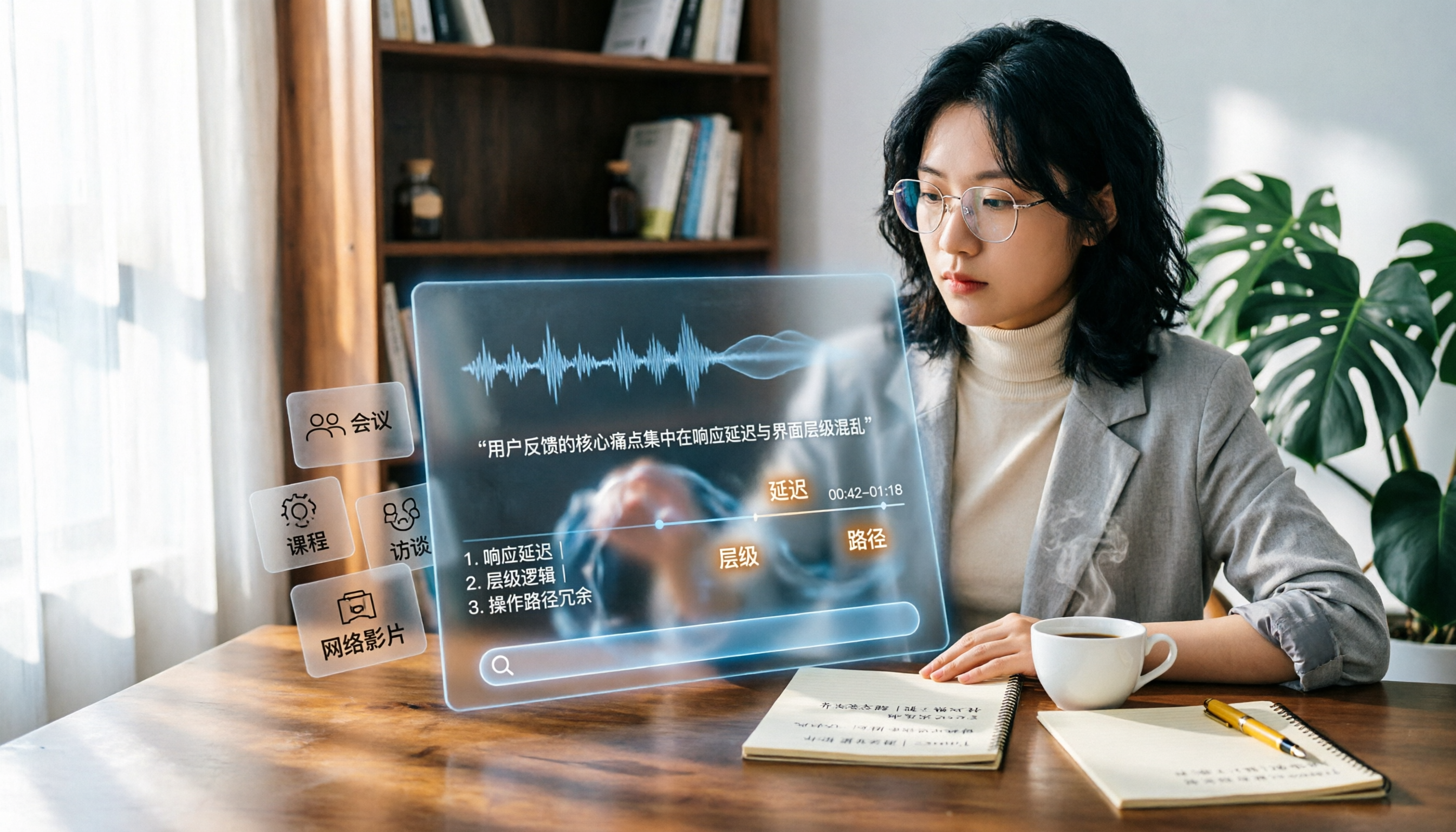
Notta vs Fathom vs Tinrec: 2026 Hands-On Comparison for Chinese Audio/Video Organization
Compare Notta and Fathom's features, and from real-world use cases, discover how Tinrec's instant recording turns meetings, courses, interviews, and online videos into searchable, summarizable knowledge.
2026 Notta vs Pocket AI Recording Tools: Tinrec Cross-Platform Organization + AI Q&A
Still deciding between Notta and Pocket? This article compares Notta, Pocket, and Tinrec across four dimensions: input sources, post-transcription organization, cross-platform convenience, and pricing, and explains why Tinrec might be the more comprehensive choice.