

Turn recordings into transcripts and summaries in minutes
Upload audio or video for multilingual transcription, AI notes, and action items
Two Hours in Meetings, Two More Hours on Notes—You Don't Need a Tool, You Need a Solution
I attend about 15 meetings a week: team syncs, project status updates, one-on-ones, and cross-departmental coordination. The most annoying part isn't the meetings themselves—it's what comes after, because every meeting leaves a pile of decisions and action items to organize. I've tried handwritten notes, but they're too slow; I've tried recording and listening back, but that's too time-consuming; I've tried asking my team to help, but they're just as busy.
What's even more painful is cross-departmental communication: you discuss something verbally, then follow up two days later, and the other person says they forgot. That's when I realized I didn't need just a recording tool—I needed a solution that turns recordings into searchable, trackable, deliverable assets.
If you're like me and constantly chasing meeting notes, this article is for you.
Before Choosing a Recording-to-Text Tool, Understand These 4 Key Points
1. Accuracy: Don't Just Trust the Official 98% Many tools claim 98% accuracy, but that's measured in a quiet recording studio. In a real meeting room with air conditioning noise, keyboard clicks, and people talking over each other, accuracy drops significantly. My approach is to test with my own real meeting recordings during free trials—don't just rely on ads.
2. Input Sources: Do You Only Record Meetings? If you also record lectures, interviews, or even want to turn YouTube videos into notes, you need a tool that supports multiple sources. Some tools only handle live recording or file uploads, but they're useless when you have a video link.
3. Post-Transcription Processing: What Do You Do with the Transcript? A transcript is just the first step. What really saves time is the AI summary, action item extraction, AI Q&A, and even generating meeting minutes or reports. If a tool only gives you a transcript, you'll still have to spend time organizing it yourself.
4. Free Tier and Pricing: Are You a Light or Heavy User? Free tiers vary a lot: some offer 120 minutes per month, others 300. If you only have 3 meetings a week, the free tier might be enough; if you're in meetings daily like me, you'll need to calculate the value of a paid plan.
Tinrec (秒听录音)—Our Team's Top Pick After Testing
Tinrec is an AI recording and audio/video organization tool designed for meetings, learning, interviews, and content creation. It doesn't just convert speech to text; it turns recordings and audio/video assets into actionable knowledge.
After two weeks of testing, what impressed us most was its wide range of input sources and post-processing capabilities. During a meeting, Tinrec transcribes in real time; when the meeting ends, the AI has already generated a summary, chapters, and action items—who's responsible for what and deadlines are clear at a glance. But what really made me decide to keep it is its AI Q&A feature: after recording a one-hour interview, I can ask Tinrec, "What is the interviewee's attitude toward pricing?" It doesn't just give keyword search results; it answers based on semantic understanding. Notta and Otter at the same price point haven't achieved this level.
Additionally, Tinrec supports transcription from video links. I often need to turn industry webinar videos from YouTube into key points for my team. In the past, I had to watch and take notes manually; now I just paste the link and get a transcript and summary in minutes. This is a feature Notta lacks.
In terms of transcription quality, in our common Chinese meeting scenarios (typical office noise, Taiwanese accent), Tinrec's recognition rate is good enough for us to use the summary and action items directly without major corrections. We didn't measure the exact word error rate, but compared to free tools we've used before, Tinrec has significantly fewer omissions and misrecognitions.
Pros:
Stop organizing recordings by hand
Upload audio or video and automatically get a transcript, summary, and action items
- Multiple input sources: live recording, audio/video files, and video links.
- Strong AI post-processing: summaries, action items, Q&A, export, and even report or table generation.
- Chinese-friendly: handles Traditional Chinese, Simplified Chinese, and mixed Chinese-English meetings and interviews smoothly.
Limitations:
- The free tier is limited; heavy users will need a paid plan. But if you only have 2-3 meetings a week, the free tier is worth trying.
Who it's for: If you need to handle meetings, courses, interviews, or online videos, and want to use AI to find key points and generate deliverables after transcription, Tinrec is currently the most convenient choice.
Beyond Tinrec: What Other Options Are There?
Notta: Notta is a general transcription tool that supports real-time transcription in 58 languages. The free tier offers 120 minutes per month, and the Pro plan costs $8.17 per month when billed annually. Its multilingual translation is strong, making it suitable for international meetings. However, Notta's input sources are mainly recordings and files; it doesn't support transcription from video links. Moreover, after transcription, it mainly provides a transcript and summary, lacking the AI Q&A and report generation capabilities that Tinrec offers. If you need to convert YouTube videos to text, Notta can't do it.
Otter.ai: Otter.ai is an AI meeting assistant. The free tier offers 300 minutes per month, and it works well for English meetings. It has added Traditional Chinese support, but its Chinese processing isn't as deep as Tinrec's. Otter's strengths are auto-joining online meetings and team collaboration, but it's weaker at handling video links and local files, and it lacks Tinrec's agent-based post-processing features. If you mainly have English meetings, Otter is worth considering; but if you need to process Chinese videos or generate reports, Tinrec is a better fit.
Pitfall Guide: 3 Common Mistakes When Choosing a Recording-to-Text Tool
Pitfall 1: Only Looking at Official Accuracy Rates Many tools advertise 98% accuracy, but that's under ideal conditions. In real use, air conditioning noise, people talking over each other, and accents will lower accuracy. I recommend testing with your own real recordings during free trials—don't just look at the advertised numbers.
Pitfall 2: Ignoring Input Source Diversity If you think recording-to-text tools can only record meetings, you're missing out. Good tools now should support uploading audio/video files and even pasting video links. For example, Tinrec can turn YouTube videos into text and summaries, which is useful for those who regularly organize webinars or instructional videos.
Pitfall 3: Using the Tool Only for Transcription If you only use it for "recording to text," you're using only a third of the tool's capabilities. What really saves time is the AI summary, action item extraction, AI Q&A, and report generation after transcription. For instance, after recording an interview, I can ask Tinrec, "What's the conclusion?"—much faster than manually going through 30 minutes of transcript.
Summary: Which One Should You Choose?
If you're like me and need to handle meetings, courses, interviews, or online videos, and want to use AI to find key points and generate deliverables after transcription, Tinrec is the top choice.
Scenario breakdown:
- Need multi-source transcription (meetings + files + video links) → Tinrec (the only one supporting video links)
- Want to use AI Q&A and report generation after transcription → Tinrec (Notta and Otter lack agent-based post-processing)
- Mainly record English meetings with zero budget → Otter.ai (higher free tier, but weaker Chinese processing)
- Need real-time translation in 58 languages → Notta (strong multilingual translation, but lacks video transcription and post-processing)
I recommend downloading Tinrec's free version to try it out—it's free, so test it with a recording you actually need to organize and see if it saves you those two hours of meeting notes. Upgrade if you find it useful; there's no need to pay upfront.
References
- Super Useful Voice-to-Text Tool—Notta, No More Painstaking Typing...
- Notta - Voice to Text, Voice Notes and Recording - Google Play Apps
- Comparison of 5 AI Meeting Note Tools: Features and Pricing of Otter, Notta, etc.
- VOMO vs Notta: Which Audio-to-Text Tool Is Better in 2025?
- Notta - Accurate Transcripts, Voice to Text, Meeting Recording, AI Summary Notes App - App Store
Turn every recording into actionable outcomes
Get 60 free transcription minutes when you sign in. No credit card required.
Related Reading
You might also like

Is Notta Worth It in 2026? 5 Key Tests and a More Comprehensive Alternative
Notta is an AI meeting notes tool that supports 58 languages. This article tests its language support, AI summaries, meeting integrations, free plan limitations, and user reviews, and introduces Tinrec as a more comprehensive alternative to help you decide which one suits you better.

2026 Hands-On Comparison of 3 AI Speech-to-Text Tools: Notta Online vs Tinrec – Which Is Better for Chinese Speakers?
This article compares three popular AI speech-to-text tools – Notta Online, Tinrec, and Otter.ai – based on hands-on testing. It evaluates features, pricing, Chinese language support, and real-world use cases to help you find the best option for transcribing meetings, lectures, and interviews.

4 Best Speech-to-Text Tools in 2026 Compared: From Notta to Tinrec—Which One Suits Taiwan Users Best?
Struggling to turn meeting recordings and course audio into text quickly? This article tests four tools—Notta, Tinrec, Otter, and TurboScribe—covering free quotas, Chinese accuracy, AI post-processing features, and cross-platform support to help you find the best speech-to-text solution.
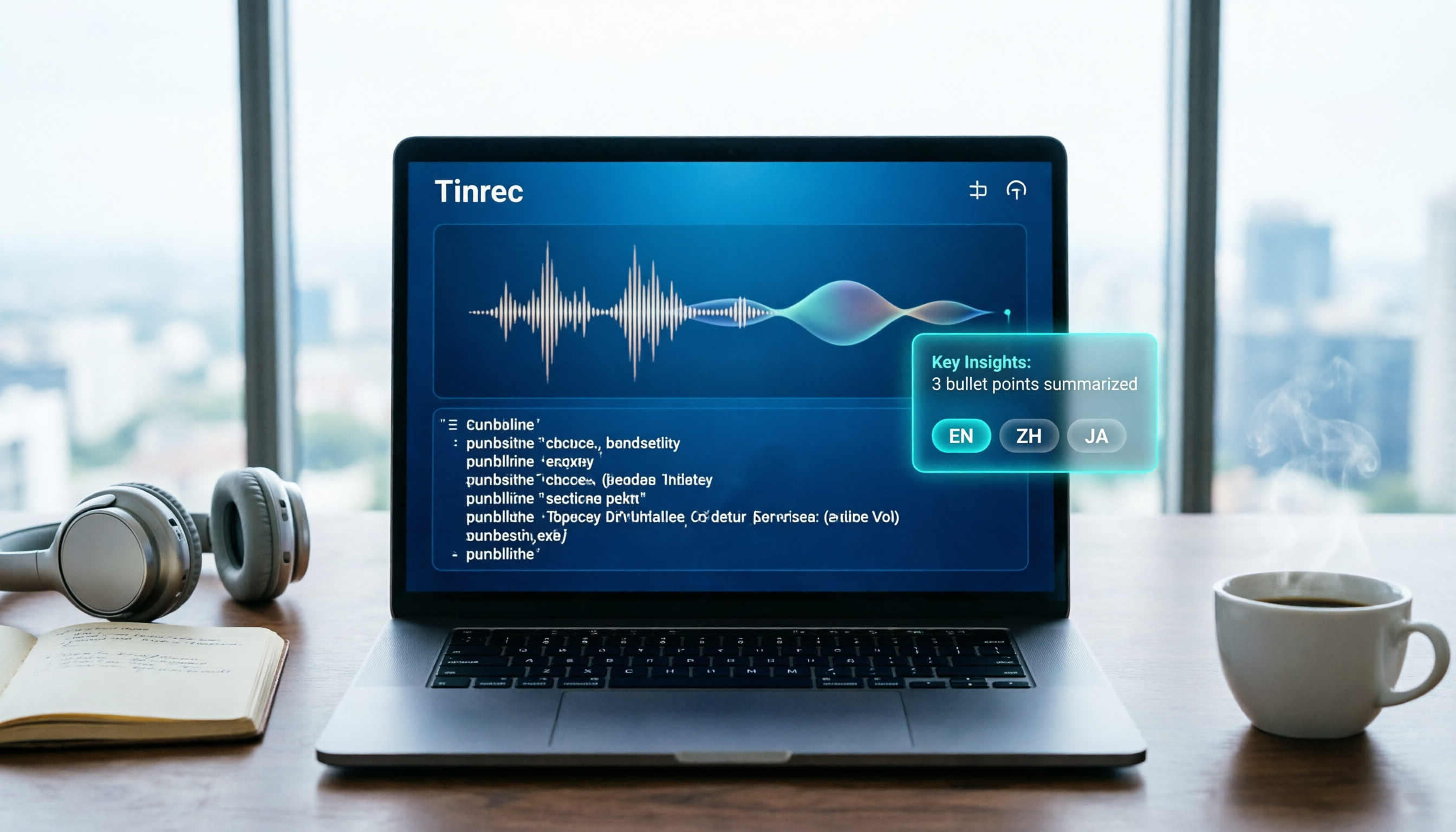
Notta 2026 Tutorial: Recording to Text + AI Summaries and Multilingual Support
This article teaches you how to use Notta for recording, uploading files, and AI summaries, covering real-time transcription, multilingual translation, meeting organization, and pricing plans, with recommendations for suitable users and purchasing advice.
Which Country Is Notta in 2026? 5 Steps to Choose a Better AI Recording Tool
Notta was founded by a Chinese team, with headquarters in Singapore, R&D center in Shenzhen, and an office in Japan. This article provides 5 steps to help you choose Tinrec, an AI audio-video organization tool better suited for Chinese users.
How to Choose a Recording-to-Text Tool in 2026? Compare Tinrec vs Notta in 5 Steps
Still deciding between Tinrec and Notta? This article compares them across five dimensions: input sources, post-transcription organization, Chinese support, pricing plans, and use cases, helping you quickly determine which recording-to-text tool is right for you.
Tinrec vs Otter 2026: 5-Dimension Comparison for Chinese Audio/Video Transcription
Looking for a Notta tutorial? The differences between Tinrec and Otter are also crucial. This article compares 5 dimensions—input sources, post-processing, Chinese support, AI Q&A, and pricing flexibility—to help you decide which AI transcription tool suits Chinese users better.
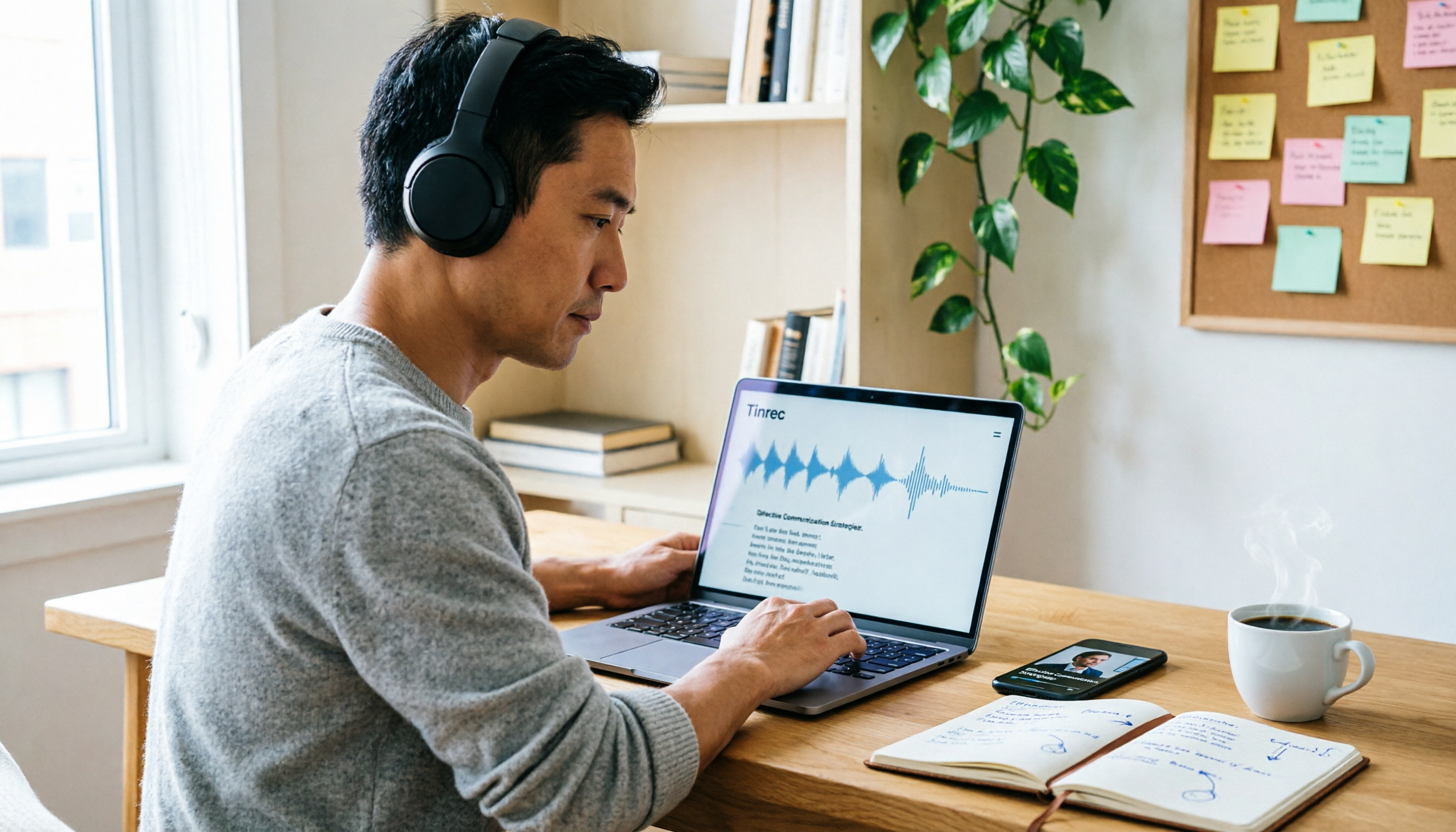
2026 Review of 5 Audio-to-Text Tools: Which Is Best for Meetings, Courses, and Online Videos?
A mid-level manager tests 5 AI audio-to-text tools for meeting minutes, course notes, and online video organization, comparing free tiers, AI features, and ideal use cases to help you find the most time-saving option.

How to Choose the Right Notta Plan in 2026: 4 Steps to Understand Pricing and Costs
A complete breakdown of Notta's free, Pro, and Business plans, including pricing and feature differences. Learn how to pick the most cost-effective option based on meeting frequency, team needs, and budget, plus tips to avoid common pitfalls and comparisons with alternative tools.