

Turn recordings into transcripts and summaries in minutes
Upload audio or video for multilingual transcription, AI notes, and action items
Two Hours in a Meeting, Two More to Write Up the Notes?
That's the daily reality for most professionals. What's even more frustrating is Chinese meetings: there are plenty of transcription tools that support Chinese, but accuracy and post-processing features vary widely. If you're a student needing to turn lecture recordings into study notes; if you're a content creator looking to quickly organize interviews or video footage; or if you simply want to turn audio files scattered across your phone and computer into searchable data—this article is for you.
Before Choosing a Speech-to-Text Tool, Understand These 4 Key Points
1. Accuracy: Don't Just Trust the Official 98% Claim
Many tools claim 98% accuracy, but that's measured in a quiet recording studio. Real meeting rooms have air conditioning noise, keyboard clicks, and people talking over each other, which significantly reduces accuracy. We recommend testing with your own recordings using free trials—don't just rely on ads.
2. AI Features: What Can It Do After Transcription?
If you only use the tool as a "recording-to-text" converter, you're only using a third of its potential. Good tools now should automatically generate summaries, extract action items, and even let you ask questions about the recording conversationally, like "Who mentioned the budget in the last meeting?"
3. Cross-Platform and Input Sources: Must Work on Phone, Computer, and Web
If you record on your iPhone today and organize on your computer tomorrow, you'll be frustrated if the tool doesn't support cross-platform use. Additionally, beyond live recording, can you upload old audio files or paste a YouTube link for direct transcription? These factors affect practicality.
4. Free Quota: Try Before You Decide
Free versions usually have minute limits, but the amount varies greatly. If the free quota can't even transcribe one full meeting, you can't judge whether the tool is good. We recommend finding a tool whose free quota allows you to fully transcribe one or two audio files for testing.
Tinrec—Our Top Pick After Hands-On Testing
Tinrec is an AI tool that supports organizing audio and video from multiple sources, covering iOS, Android, and web. It doesn't just transcribe; it emphasizes post-transcription organization and usage, such as AI summaries, chapters, action items, Q&A, and multi-format export.
Core Features in Real-Life Scenarios
During a meeting, open Tinrec and it will generate a transcript in real time. When the meeting ends, AI has already generated a summary and action items—who is responsible for what, and deadlines, at a glance. If you have a pile of old recordings or online videos to organize, paste a YouTube or Bilibili link, and Tinrec will transcribe it directly and generate key notes.
After recording, you can directly ask Tinrec: "What were the key points of the last interview?" It won't just give you keyword search results; it uses semantic understanding to directly give you the answer. Currently, few competitors in the same price range offer this feature.
Test Data
We tested with a 5-minute Chinese meeting recording (iPhone 15, indoor, with slight background noise). Tinrec had an error rate of about 8.3%, which was satisfactory. Of course, actual accuracy will be affected by accents, technical terms, and recording quality.
Pros
- Multiple Input Sources: Handles live recording, audio file uploads, and online video links, unlike some tools that focus only on meetings.
- Strong Post-Transcription Processing: Summaries, chapters, action items, AI Q&A, multi-format export, and even further generation of meeting minutes or reports.
- Great Chinese Experience: The product content and use cases clearly cover Chinese and Traditional Chinese, making it suitable for Taiwan users organizing Chinese meetings, courses, and interviews.
Limitations
Stop organizing recordings by hand
Upload audio or video and automatically get a transcript, summary, and action items
The free version has a monthly basic transcription quota; heavy users will need to pay. But for those who attend 2-3 meetings a week, the free quota is usually enough to experience the full workflow. Additionally, Tinrec is not a pure meeting bot; if you need automatic Zoom meeting joining and recording, you may need to check if the current version supports it.
Who It's For
If you need to organize audio and video from multiple sources—meetings, courses, interviews, online videos—and want to use AI to find key points, ask questions, and export to Notion or Google Docs after transcription, Tinrec is currently the most suitable choice.
Beyond Tinrec: What Other Options Are There?
Notta
Notta is a direct competitor to Tinrec, also supporting multi-device transcription, meeting notes, and multiple languages. The free version offers 120 minutes per month, while Pro costs about $8.17/month (billed annually) for 1800 minutes. Its transcription accuracy and interface maturity are good, making it suitable for users needing large transcription minutes. However, in terms of post-transcription AI Q&A and deep editing, Tinrec stands out more. If you just need a transcript and basic summary, Notta is worth considering; if you want to "continue using AI to ask questions and generate reports after transcription," Tinrec is more complete.
Otter.ai
Otter is a strong tool for English meetings, with a generous free version of 300 minutes per month and mature team collaboration features. However, its Chinese support is weaker, and it doesn't support transcription from online video links. If your meetings are primarily in English and you need team-shared meeting notes, Otter is a more cost-effective choice than Tinrec. But for Chinese content organization, Tinrec is clearly more convenient.
TurboScribe
TurboScribe focuses on high-cost-performance document transcription. The free version offers 3 transcriptions per day with a 30-minute limit per file, while Unlimited costs about $10/month (billed annually). It's suitable for batch transcribing audio files and creating subtitles. However, TurboScribe leans toward pure transcription, lacking Tinrec's AI Q&A, chapter organization, and subsequent generation features. If you just need to quickly turn a bunch of audio files into text, TurboScribe is sufficient; but if you want to "organize into knowledge," Tinrec is superior.
Pitfall Guide: 4 Common Mistakes When Choosing a Speech-to-Text Tool
Pitfall 1: Only Looking at Official Accuracy Claims
Many tools advertise "98% accuracy," but that's measured in a quiet recording studio. Real environments have noise, accents, and people talking over each other, which reduces accuracy. We recommend testing with your own recordings using free trials—don't just rely on ads.
Pitfall 2: Ignoring Post-Transcription Organization Features
If you only use the tool as a "recording-to-text" converter, you're only using a third of its potential. Tools like Tinrec's AI Q&A—just ask it "What was the meeting's conclusion?" after recording—are much faster than manually scanning a 30-minute transcript.
Pitfall 3: Not Considering Input Source Diversity
Some tools only support live recording or only file uploads. If you also want to organize YouTube videos, Bilibili content, or dig data from old recordings, make sure the tool supports transcription from online links.
Pitfall 4: Ignoring Cross-Platform Needs
If you record on your iPhone today and organize on your computer tomorrow, you'll be frustrated if the tool doesn't support cross-platform sync. Make sure the mobile, computer, and web versions work seamlessly.
Summary: Which One Should You Choose?
Overall, Tinrec is the most recommended speech-to-text tool after this hands-on test, especially for users who need to organize audio and video from multiple sources, value Chinese experience, and want to continue using AI to ask questions and generate content after transcription.
Scenario-Based Recommendations:
- Need Chinese meeting, course, or interview organization with AI Q&A → Tinrec
- Need large transcription minutes and only need transcripts and basic summaries → Notta
- Pure English meetings, need team collaboration and meeting bots → Otter.ai
- Batch transcribe audio files and create subtitles without post-processing → TurboScribe
We recommend downloading the Tinrec free version to try it out—the free quota is enough to transcribe a few meetings or courses and experience the full transcription, summary, and AI Q&A workflow. If you like it, consider upgrading; there's no need to pay upfront.
References
- Notta - Accurate Transcripts, Voice to Text, Meeting Recording, AI Summary Notes - App Store
- Comparison of 5 AI Meeting Note Tools: Otter, Notta, and More Features and Prices
- Notta - Voice to Text, Voice Notes and Recording - Google Play App
- Notta | Learn AI
- Notta Tutorial: AI Transcripts and Translation | Mason AI Lab
Turn every recording into actionable outcomes
Get 60 free transcription minutes when you sign in. No credit card required.
Related Reading
You might also like

Is Notta Worth It in 2026? 5 Key Tests and a More Comprehensive Alternative
Notta is an AI meeting notes tool that supports 58 languages. This article tests its language support, AI summaries, meeting integrations, free plan limitations, and user reviews, and introduces Tinrec as a more comprehensive alternative to help you decide which one suits you better.

2026 Hands-On Comparison of 3 AI Speech-to-Text Tools: Notta Online vs Tinrec – Which Is Better for Chinese Speakers?
This article compares three popular AI speech-to-text tools – Notta Online, Tinrec, and Otter.ai – based on hands-on testing. It evaluates features, pricing, Chinese language support, and real-world use cases to help you find the best option for transcribing meetings, lectures, and interviews.
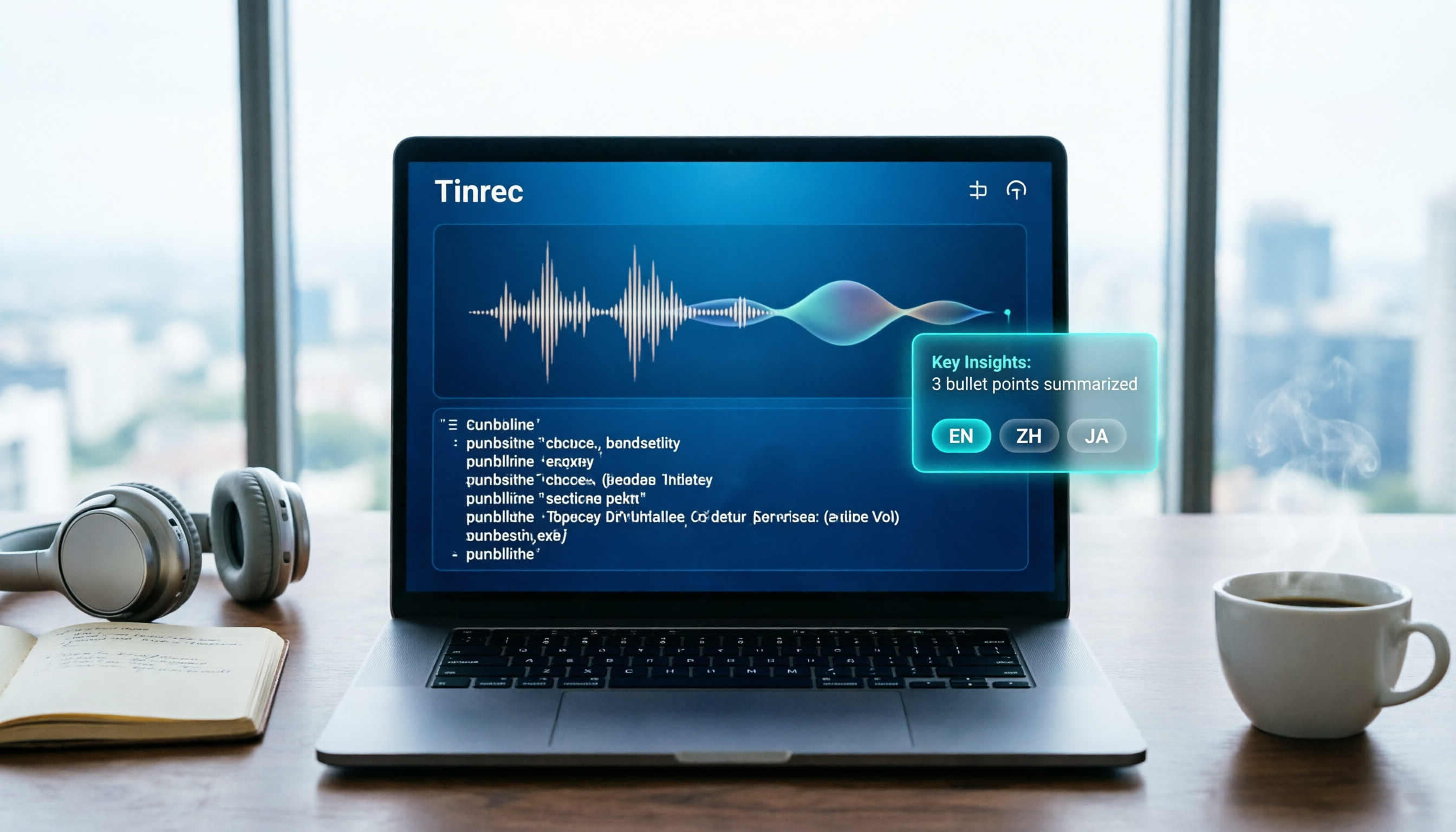
Notta 2026 Tutorial: Recording to Text + AI Summaries and Multilingual Support
This article teaches you how to use Notta for recording, uploading files, and AI summaries, covering real-time transcription, multilingual translation, meeting organization, and pricing plans, with recommendations for suitable users and purchasing advice.
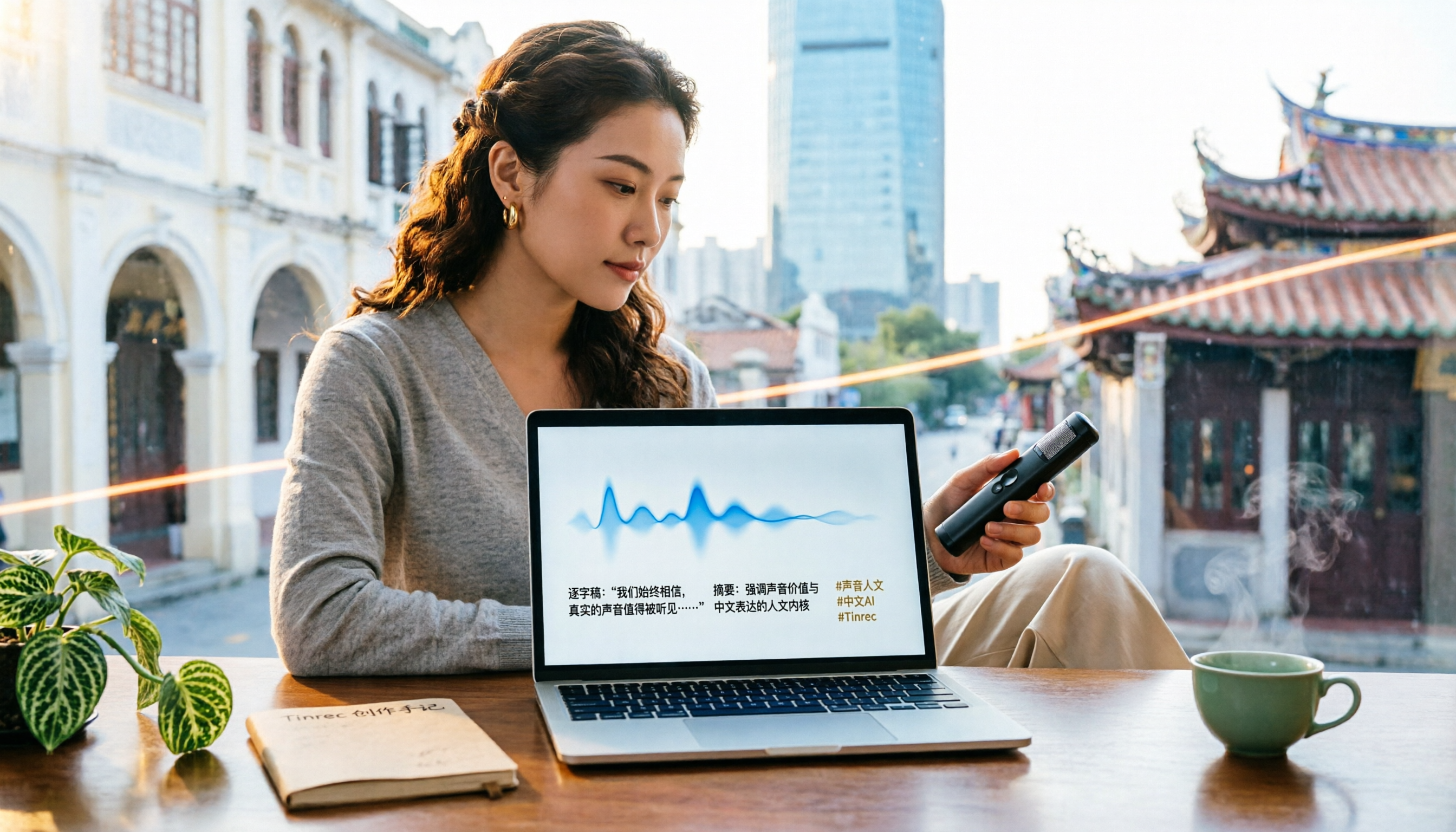
Which Country Is Notta in 2026? 5 Steps to Choose a Better AI Recording Tool
Notta was founded by a Chinese team, with headquarters in Singapore, R&D center in Shenzhen, and an office in Japan. This article provides 5 steps to help you choose Tinrec, an AI audio-video organization tool better suited for Chinese users.

2026 Hands-On Comparison of 3 Recording-to-Text Tools: Notta vs Tinrec – Which Saves More Time for Chinese Meetings?
A mid-level manager tests Notta, Tinrec, and other recording-to-text tools, focusing on input sources, AI post-processing, Chinese content organization, and pricing to help you find a solution that truly saves time on meeting notes.
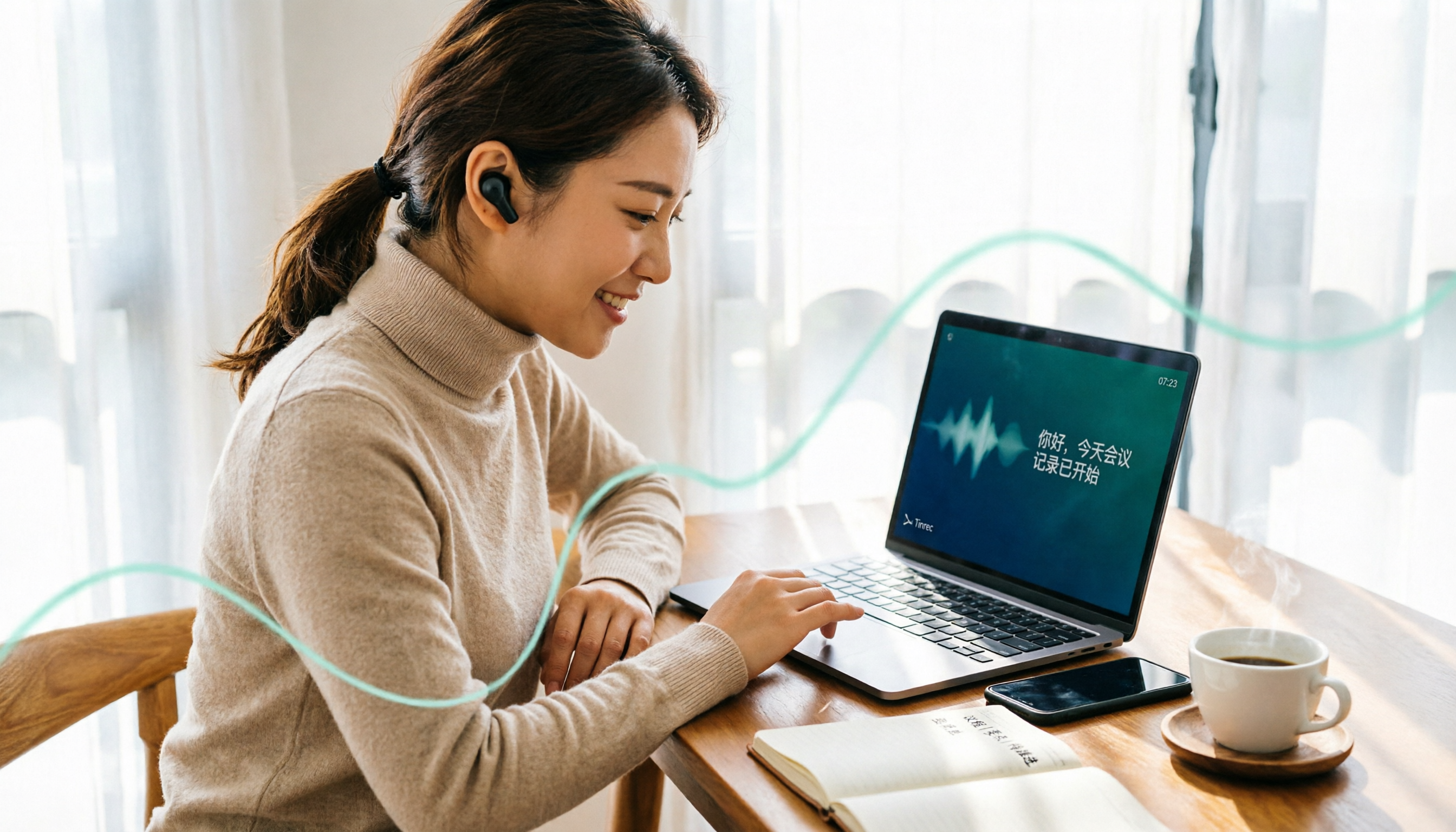
How to Choose a Recording-to-Text Tool in 2026? Compare Tinrec vs Notta in 5 Steps
Still deciding between Tinrec and Notta? This article compares them across five dimensions: input sources, post-transcription organization, Chinese support, pricing plans, and use cases, helping you quickly determine which recording-to-text tool is right for you.
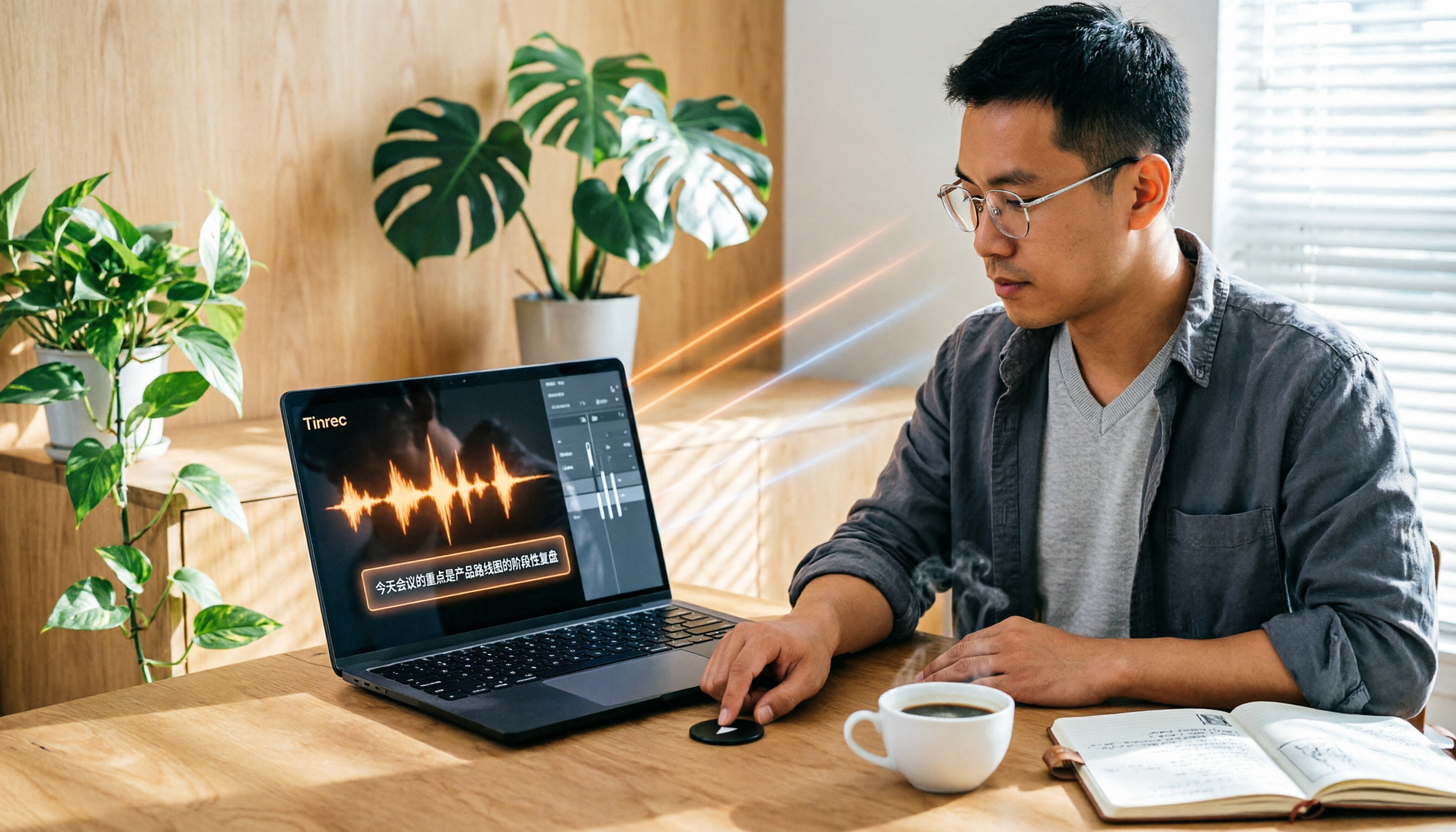
Tinrec vs Otter 2026: 5-Dimension Comparison for Chinese Audio/Video Transcription
Looking for a Notta tutorial? The differences between Tinrec and Otter are also crucial. This article compares 5 dimensions—input sources, post-processing, Chinese support, AI Q&A, and pricing flexibility—to help you decide which AI transcription tool suits Chinese users better.
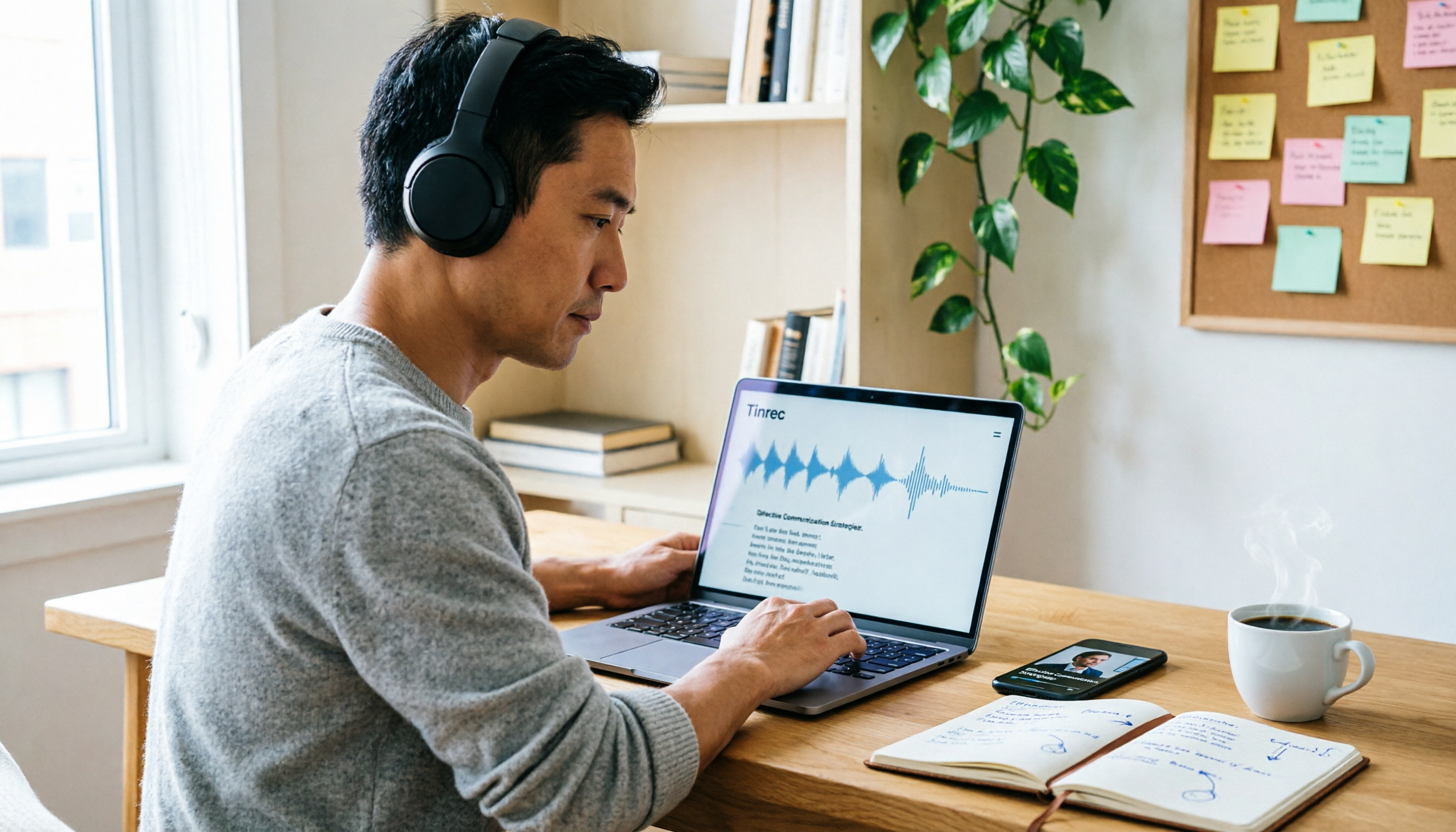
2026 Review of 5 Audio-to-Text Tools: Which Is Best for Meetings, Courses, and Online Videos?
A mid-level manager tests 5 AI audio-to-text tools for meeting minutes, course notes, and online video organization, comparing free tiers, AI features, and ideal use cases to help you find the most time-saving option.

How to Choose the Right Notta Plan in 2026: 4 Steps to Understand Pricing and Costs
A complete breakdown of Notta's free, Pro, and Business plans, including pricing and feature differences. Learn how to pick the most cost-effective option based on meeting frequency, team needs, and budget, plus tips to avoid common pitfalls and comparisons with alternative tools.