
Turn recordings into transcripts and summaries in minutes
Upload audio or video for multilingual transcription, AI notes, and action items
With remote collaboration now the norm, switching between Chinese and English in cross-border meetings often feels exhausting. Have you ever experienced a speaker talking too fast to follow, focusing so hard on translation that you forget to take notes, or replaying recordings without finding key points?
If this sounds familiar, choosing the right "real-time meeting translation" or "AI transcription" tool is key to boosting efficiency. This article reviews 5 popular tools (Zoom, Google Meet, ViiTor, Transync AI, and Tinrec), providing a detailed comparison table and practical tutorials.
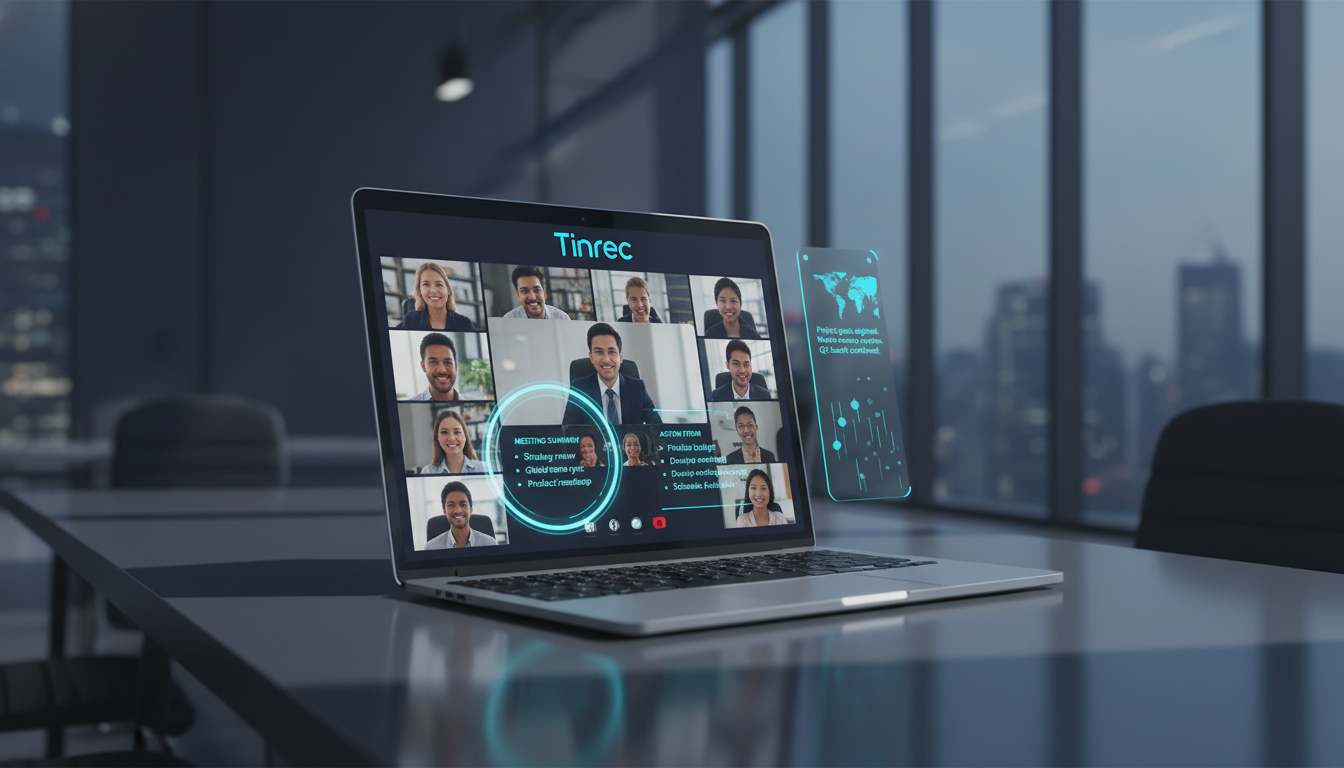
Quick Navigation Summary:
- If you need real-time in-video captions: Prioritize built-in features of Zoom or Google Meet.
- If you need professional external real-time captions: Try ViiTor or Transync AI.
- If you value post-meeting records, transcripts, and AI summaries: Tinrec is the ideal choice for turning recordings into actionable content.
1. Video Conferencing Platforms with Built-in Real-Time Translation
For users who prefer not to install extra software, using built-in features of video platforms is the most intuitive option.
1. Zoom
Zoom, a leading global conferencing platform, offers mature "language interpretation" and caption features. Once enabled, the system uses AI to automatically recognize speech and generate real-time captions.
- Feature: Display both original and translated text on screen for easy comparison. Participants can freely switch caption languages.
- Advantages: Supports Traditional Chinese captions, friendly to users in Taiwan; includes meeting transcription.
- Note: Some advanced translation features may require a paid plan or host permissions.
2. Google Meet
Google Meet leverages strong Google ecosystem integration for stability. Its AI real-time translation converts speech into captions displayed on screen.
- Feature: Highly integrated with Google Workspace, intuitive interface.
- Advantages: Expanding translation database, speech recognition approaches natural conversation.
- Note: As of now, primarily supports major languages like English and Spanish; support and accuracy for Traditional Chinese still have room for improvement.
2. Standalone Real-Time Meeting Translation Software Recommendations
If built-in features don't meet your needs, or you need cross-platform use, independent third-party software often offers broader language support.
3. ViiTor
Designed for enterprises and educational institutions, ViiTor is known for high-precision AI speech recognition. It synchronizes translated content on projections or embedded in meeting screens.
- Feature: Built-in smart note-taking generates transcripts.
- Advantages: AI responds quickly and integrates with multiple major video platforms.
- Note: Recognition of specific accents depends on audio quality.
4. Transync AI
A professional tool supporting over 60 languages, offering bidirectional display and multilingual communication, ideal for large cross-border conferences.
- Feature: Supports computer and mobile login, automatically saves translations and generates summaries.
- Advantages: Wide language coverage, high operational flexibility.
- Note: Highly dependent on internet connection quality; unstable connections may affect translation accuracy.
3. Comprehensive AI Recording Note & Transcription Tools
Beyond real-time translation, many professionals value "post-meeting information retention" and "actionable decisions." These tools focus on turning audio into valuable text assets.
5. Tinrec (Seconds Audio Recorder)
Tinrec is a multi-platform AI recording assistant supporting iOS, Android, and web. Unlike simple translation caption tools, it focuses on the complete workflow from "recording" to "understanding." In cross-border meetings, it supports automatic recognition and transcription of 10 languages including Chinese, English, Japanese, and Korean.
Stop organizing recordings by hand
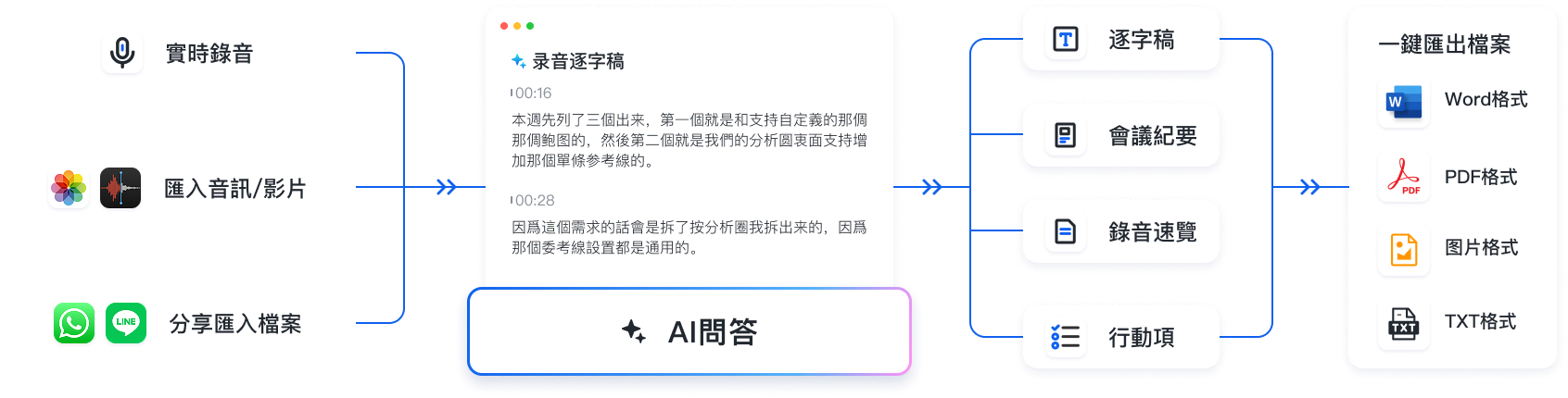
Upload audio or video and automatically get a transcript, summary, and action items
- Core Features:
- Real-time Transcription: Speech is converted to text instantly during recording, helping you understand even if you miss spoken English.
- AI Decision Summary: Beyond transcripts, it automatically generates meeting minutes and action items, solving the "what to do after the meeting" pain point.
- AI Dialogue Query: Supports semantic Q&A; you can ask the AI directly, "What was the budget number mentioned by the manager?" without replaying the entire recording.
- Use Cases: Cross-border meeting notes, English class learning, interview organization.
4. Comparative Specifications Table of 5 Popular Tools
To help you choose quickly, here's a comparison of key dimensions:
| Dimension | Zoom | Google Meet | ViiTor | Transync AI | Tinrec (Seconds Audio Recorder) |
|---|---|---|---|---|---|
| Primary Focus | Video conferencing platform | Video conferencing platform | Education/Enterprise translation | Professional multilingual translation | AI recording note assistant |
| Real-time Feature | In-video live captions | In-video live captions | Screen-synced captions | Bidirectional translation captions | Real-time speech-to-text during recording |
| Language Support | Multiple (including Traditional Chinese) | Multiple (Traditional Chinese optimizing) | 60+ languages | 60+ languages | 10 languages (Chinese/English/Japanese/Korean etc.) |
| Post-Meeting Output | Cloud recordings/caption files | Transcripts (requires permissions) | Transcripts | Meeting notes/summaries | Transcripts + AI minutes + action items |
| AI Smart Query | No | No | No | No | Yes (AI dialogue Q&A) |
| Pricing Model | Free/paid subscription | Free/Workspace | Enterprise quote/subscription | Subscription | Free 100 min/month + subscription |
5. Practical Tutorial: How to Use AI Tools for Real-Time Meeting Transcription and Review
No matter which tool you choose, proper workflow is key to maximizing benefits. Below, we use Tinrec's interface as an example to demonstrate an efficient meeting recording process:
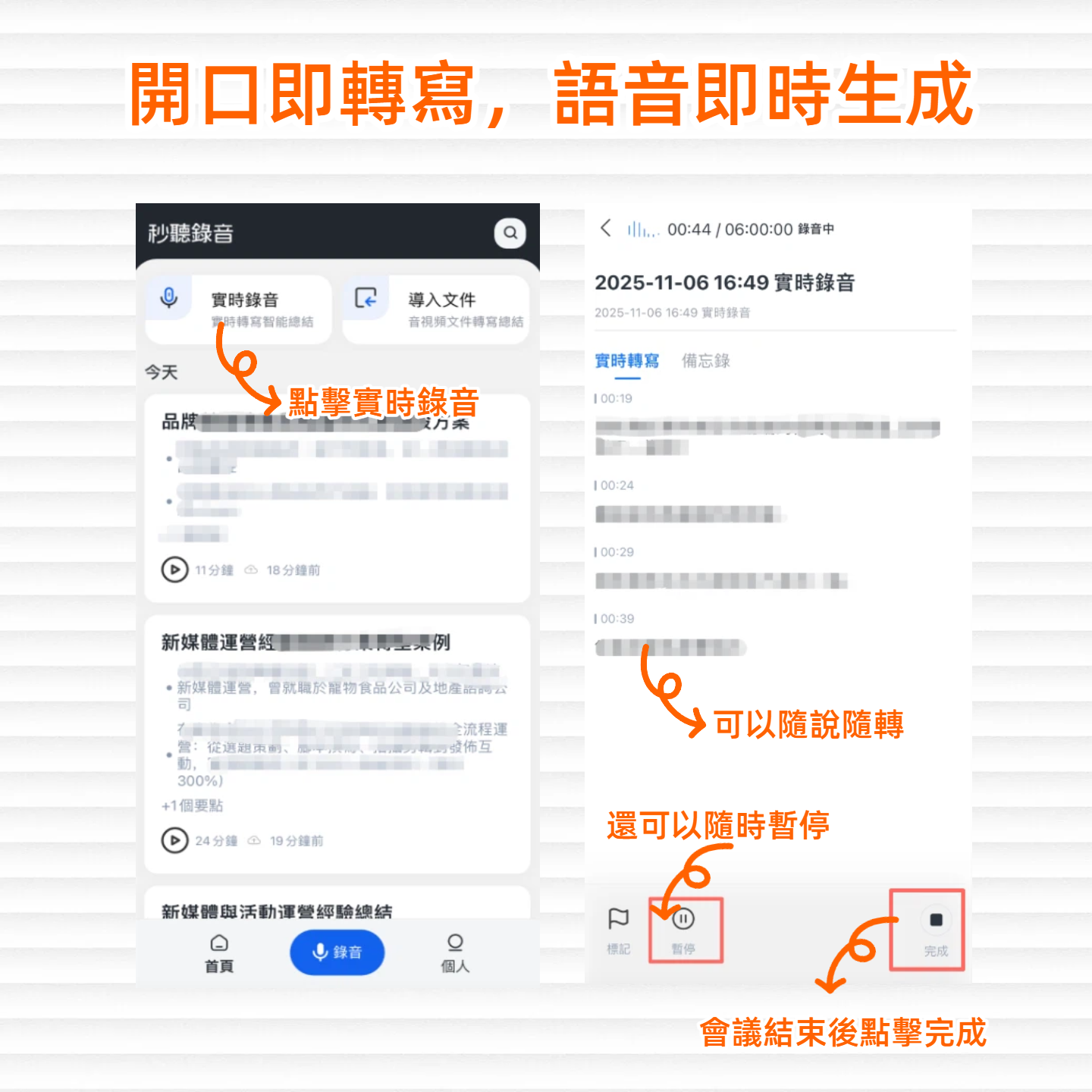
Step 1: Start Real-Time Speech-to-Text
At the start of the meeting, enable the tool's recording feature. For multilingual meetings, ensure the correct recognition language (e.g., Chinese-English mix).
- Key Action: Click the "Real-Time Speech-to-Text" feature; the system will start recording and generate live transcripts on screen. This helps you understand when you miss spoken English.
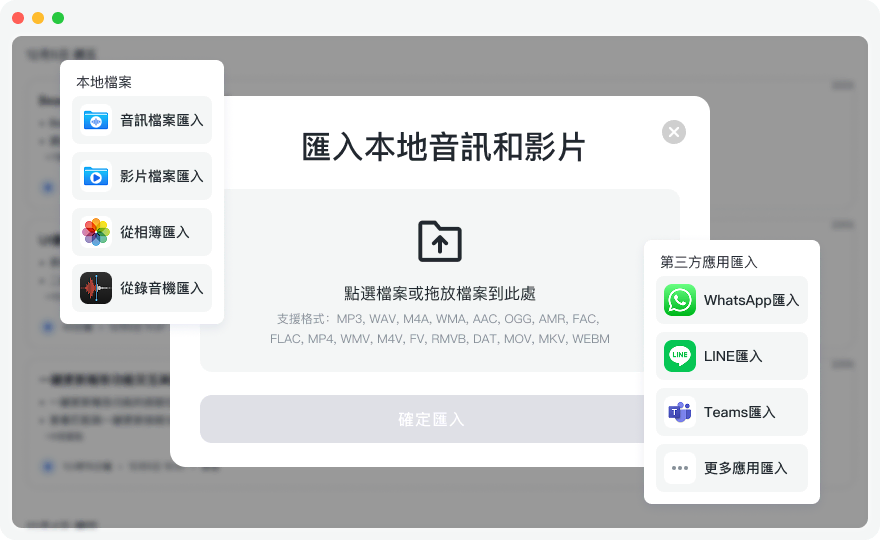
Step 2: Import External Audio or Video
If you attend an online seminar that can't be recorded live, or you already have recordings/video links, use the import feature for post-processing.
- Key Action: Use the "Audio File to Text" to upload files, or use the "Podcast/Online Video to Text" feature to input URLs like YouTube; the system will automatically generate a transcript with timestamps.
Step 3: Use AI to Quickly Extract Key Points
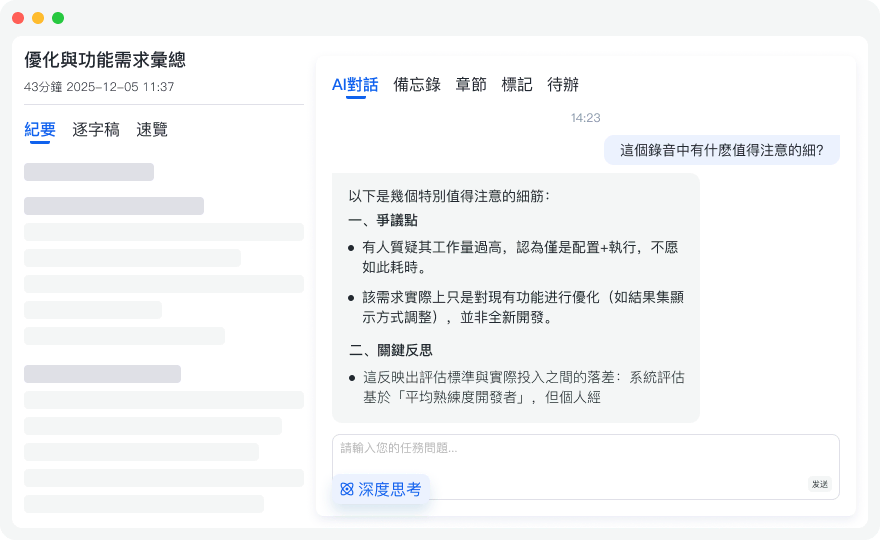
After the meeting, reading a one-hour transcript is inefficient. Using AI to summarize is essential for modern work.
- Key Action: Enter the "AI Dialogue Query" interface, input commands like "Summarize three conclusions of this meeting" or "List all action items," and let AI complete the final step of meeting notes.
6. Frequently Asked Questions (FAQ)
Q1: Can these tools be used on iPhone or Android phones? Most video conferencing apps (Zoom/Meet) have mobile versions. AI recording tools like Tinrec also support iOS, Android, and web, allowing you to record anytime, anywhere.
Q2: Can software handle mixed Chinese and English in meetings? This is a major technical challenge. Zoom and Meet usually require manual language switching. Specialized AI transcription tools like Tinrec support multilingual recognition, but check settings for "mixed language" support or select the dominant language for better accuracy.
Q3: What are common free version limitations? Zoom’s free version has a 40-minute meeting limit; Tinrec's free version offers 100 minutes of transcription per month, suitable for light users. For heavy meeting users, upgrading to Basic ($4.9/month) or Pro ($8.25/month) is more cost-effective.
Q4: Can external recording tools be used with Teams or Meet meetings? Yes. Use a mobile app or web version like Tinrec to record alongside (ensure clear audio, e.g., via speakerphone), bypassing platform restrictions to generate independent transcripts and summaries.
Q5: How accurate is real-time translation? Accuracy depends on audio quality and speaker accent. Generally, clear English and Chinese recognition can reach over 90%, but proper nouns or strong accents may cause errors. It's recommended to cross-check with recordings and transcripts.
Q6: Can transcribed text be exported? Most professional tools support export. For example, Tinrec allows exporting transcripts and summaries as TXT, Word, or PDF for easy editing or sharing with team members.
Turn every recording into actionable outcomes
Get 60 free transcription minutes when you sign in. No credit card required.
Related Reading
You might also like

How to Follow Up on Project Meeting Action Items in 2026: A Complete 5-Step Guide
After a project meeting, action items often get lost in chat threads and lack clear owners. This article breaks down a complete 5-step process for following up on project meeting action items, from pre-meeting preparation, bot-free recording, AI summaries and action item extraction, to export tracking and closure documentation. It uses Tinrec as a practical demonstration tool and also covers 5 key considerations and common questions when choosing a meeting follow-up tool.

Meeting Minutes Email Template 2026: 5-Section Structure + 3 Scenario Examples
Stuck with the task of emailing meeting minutes after a meeting wraps up? This guide offers copy-paste meeting minutes email templates covering routine weekly meetings, client meetings, and cross-departmental decision meetings, plus common mistakes and 6 practical FAQs.
2026 Comparison of 4 Meeting Action Plan Tools: Which One Best Tracks Post-Meeting Actions?
Meetings end, but action plans go nowhere—the problem is often not the people, but that the tool only gives you a transcript. This article starts from 'whether post-meeting actions are captured' and outlines 5 key factors for choosing a meeting action plan tool. It compares Tinrec, Otter.ai, Fireflies.ai, and Notta in terms of recording method, to-do extraction, Chinese language performance, and team ownership, and includes 4 common pitfalls and selection advice.
4 AI Meeting Task Extraction Tools Compared in 2026: From Transcript to To-Do List
You have the meeting transcript, but no one remembers who's responsible for what. This article compares four tools—Tinrec, Otter.ai, Notta, and TurboScribe—from a task extraction perspective, covering four key decision points, hands-on experience, common pitfalls, and scenario-based recommendations to help you find the one that turns meeting noise into actionable signals.

4 Meeting Notes Tools Tested for 2026: Which One Turns Discussions into Actionable Plans?
Even the most detailed meeting notes are useless if no one follows up. This article covers 4 key points for writing meeting action plans, 3 common mistakes, and hands-on comparisons of Tinrec, Notta, Granola, and PLAUD Note on task extraction, post-meeting follow-up, and team collaboration.

2026 Free Post-Meeting Email Automation Options: 5 Tools Compared
Always sending post-meeting emails the next day? The problem isn't your writing—it's that meeting content isn't captured well. This article reviews the free tiers and limitations of 5 post-meeting email automation and assistance methods, and tests how Tinrec turns transcripts, AI summaries, and action items into one-click email material. Suitable for students and small teams.

3 Meeting Recap Email Templates Compared for 2026: Which Format Best Moves Projects Forward?
We break down three meeting recap email template styles and how to choose one, covering structure, examples, and common mistakes. Plus, learn how Tinrec turns meeting recordings into citable minutes, to-dos, and action lists so your post-meeting emails don't get ignored.

2026 Comparison of 4 Meeting Note Tools: Which One Actually Turns Meeting Conclusions into Action Plans?
Meetings end with conclusions, but no one follows through? This article starts from the real need to turn meeting conclusions into action plans, outlines 4 key purchasing points, and compares Tinrec, Notta, Otter.ai, and Granola on bot-free recording, AI summaries and to-dos, post-meeting Q&A, and team data retention, with prices and limitations, to help you choose the one that truly connects to execution.

2026 AI Follow-Up Email Tools Comparison: Tinrec Ensures No Post-Meeting Follow-Up Is Missed
The meeting ending is just the beginning of follow-up. This article tests 3 AI tools related to post-meeting follow-up emails, including Tinrec, Manus, and Genspark, covering meeting transcription, action item extraction, and email draft generation, helping you bridge the last mile from the meeting room to the inbox.