
Turn recordings into transcripts and summaries in minutes
Upload audio or video for multilingual transcription, AI notes, and action items
For many business professionals, journalists, or students, recording a phone call is just the first step. The real pain point is quickly converting audio content that can last tens of minutes or even hours into readable, searchable text. Due to iOS and Android system privacy policies, tools on the market generally fall into two categories: those focused on recording and those focused on transcription.
This article provides an in-depth analysis of two common solutions in the 2026 market: traditional automatic recording tools like Call Recorder 2026 and AI-powered voice-to-text assistants like Tinrec. If you're tired of wasting time replaying recordings or need to turn phone interviews into written drafts, this article offers a detailed feature comparison table, selection tips, and hands-on tutorials.
Quick Navigation Conclusions
- If you need to automatically back up all call audio: Choose a traditional recording app (e.g., Call Recorder 2026) focused on audio file storage and blacklist/whitelist management.
- If you need to convert recordings into transcripts or summaries: Use an AI transcription tool (e.g., Tinrec) focused on semantic understanding, meeting minutes generation, and action item extraction.
Current Pain Points: Why Is Transcribing Phone Call Recordings So Hard?
Before choosing a tool, you need to understand two major challenges with phone recording today:
- System permission restrictions: Android 9+ and iOS have strict controls over call recording permissions, preventing many apps from directly recording two-way calls or requiring speakerphone mode.
- Low information processing efficiency: Traditional recorders only produce MP3/WAV files. Re-listening to a 60-minute conference call and transcribing it manually typically takes 2-3 times as long, with low information density and poor searchability.
Therefore, the most efficient workflow today is often a combination: use a recording tool to capture audio, then leverage an AI tool for transcription and analysis.
Tool Type Comparison: Traditional Recorder vs. AI Transcription Assistant
To help clarify your needs, we compare a traditional call recording app (using common Call Recorder-type apps as an example) with an AI smart recording assistant (using Tinrec as an example) across multiple dimensions.
| Comparison Dimension | Traditional Call Recording App (e.g., Call Recorder 2026) | AI Voice-to-Text Assistant (e.g., Tinrec) |
|---|---|---|
| Core Function | Auto-record incoming/outgoing calls, audio file management | Real-time speech-to-text, audio file transcription, AI summaries |
| Text Output | None (only manual text notes) | Yes (auto-generates transcripts, meeting minutes, to-do items) |
| Information Retrieval | Search only by file name or contact | Search by keywords within content, AI chat-based content queries |
| Recording Mode | Background auto-record (depending on system permissions) | Live recording, file import, desktop recording |
| Privacy & Security | Local storage, PIN lock | Cloud processing (typically enterprise-grade encryption), account management |
| Best Use Cases | Legal evidence collection, customer service dispute backups, simple archiving | Meeting notes, interview transcription, lecture notes, content creation |
In-Depth Analysis of Popular 2026 Tools
1. Traditional Recording Representative: Call Recorder 2026 (Golston.Apps)
This is a typical Android call recording tool focused on capturing audio. According to its app info, it mainly solves the issues of missing details and archiving.
Stop organizing recordings by hand
Upload audio or video and automatically get a transcript, summary, and action items
- Automated Recording: Supports whitelist and blacklist settings to automatically record or ignore specific numbers, no need to manually enable each time.
- File Management: Provides an "Important Recordings" tag to prevent accidental deletion of important data during auto-cleanup. Supports search and display by contact name or photo.
- Security: Built-in PIN lock to protect privacy from unauthorized access.
- Limitation: This app primarily focuses on recording and playback; it does not have speech-to-text functionality. To organize content, users must manually transcribe.
2. AI Transcription Representative: Tinrec (Miao Ting Recording)
Tinrec positions itself as a productivity tool from recording to action, especially for users handling large volumes of voice information. It does not intercept phone lines directly but processes recorded audio or live environmental recordings.
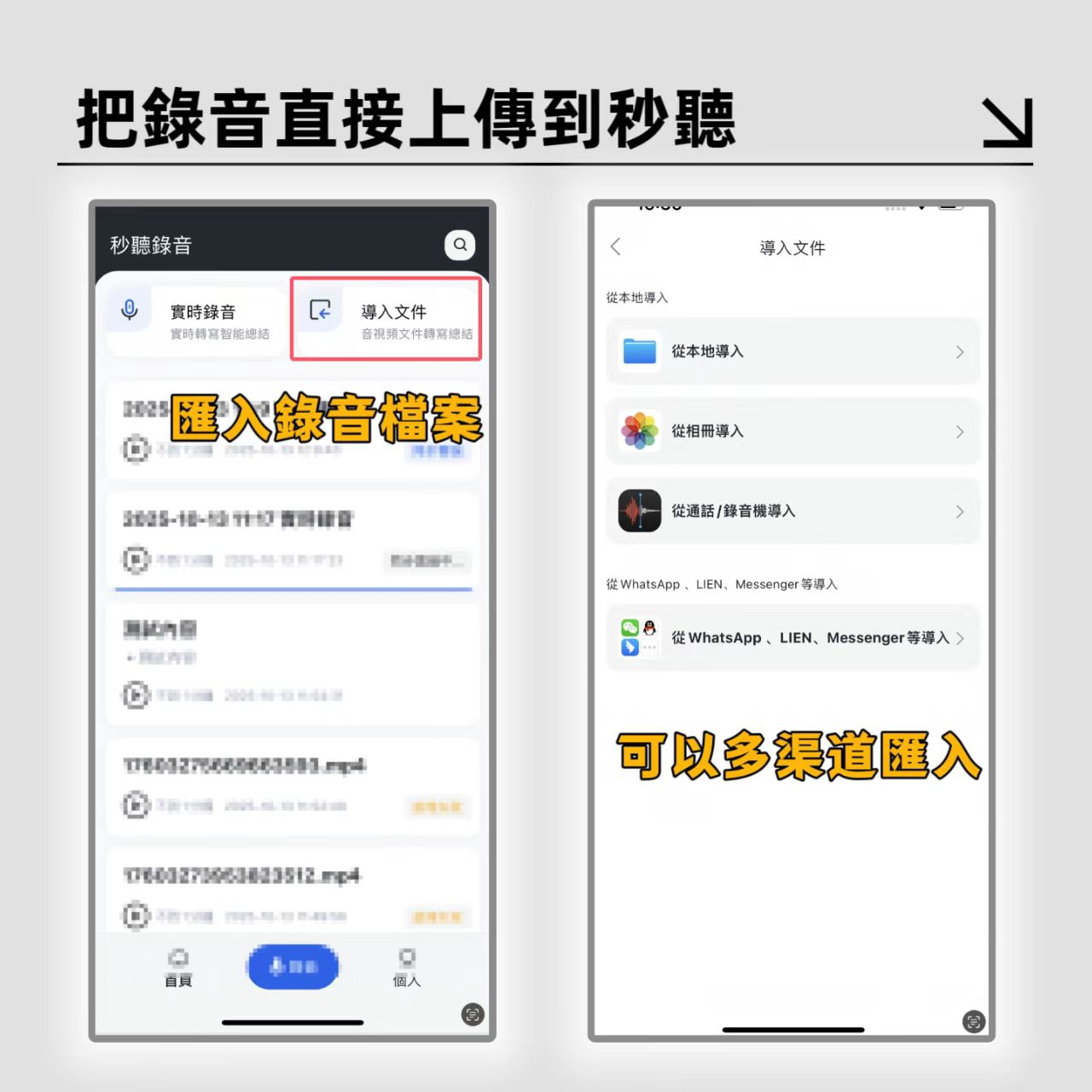
- Multi-Mode Transcription: Tinrec supports real-time speech-to-text and audio/video file import for transcription. You can upload call recordings made with other tools to quickly get transcripts.
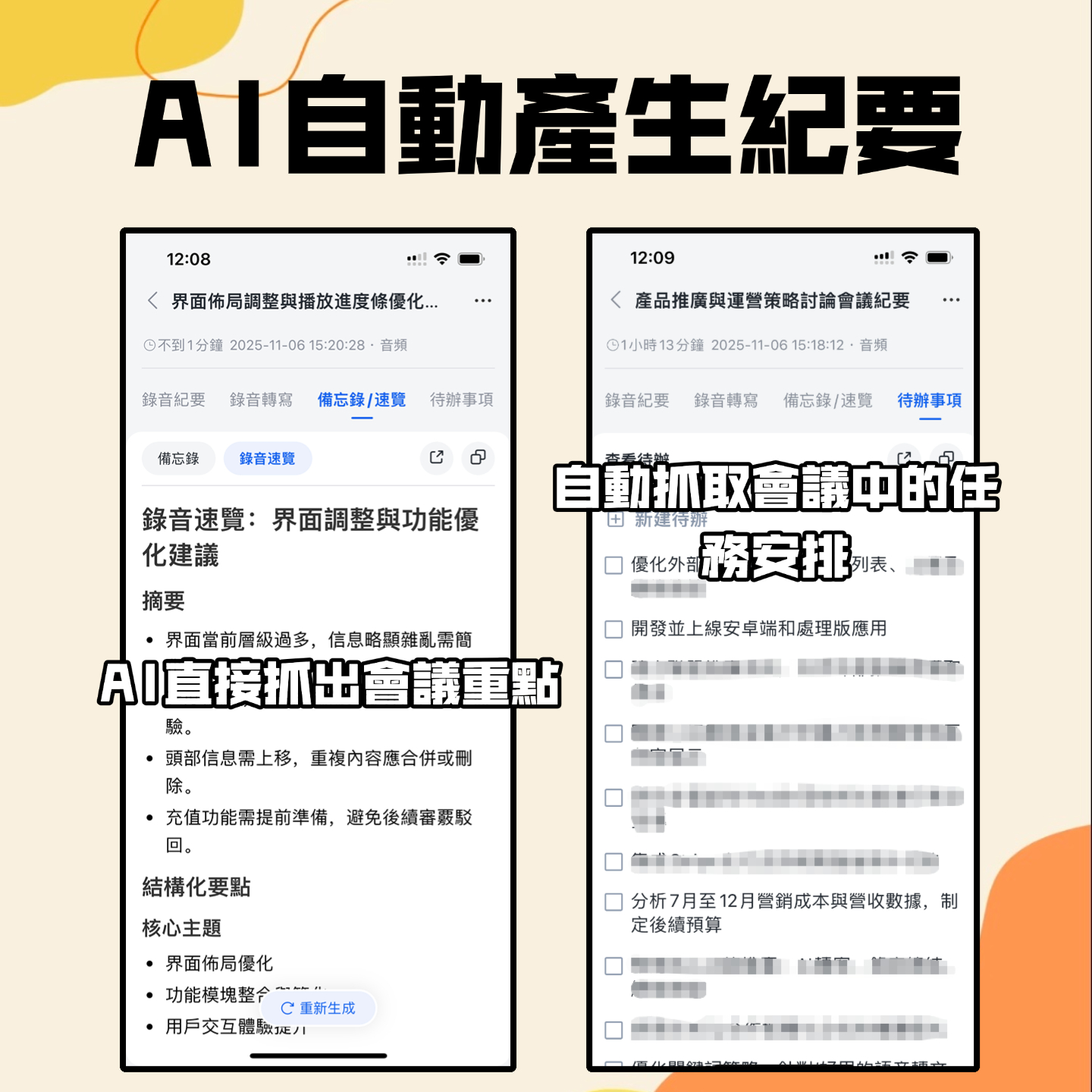
- AI Semantic Understanding: Beyond simple speech recognition, Tinrec can identify speakers and automatically generate meeting minutes and action items, solving the problem of "not knowing what to do after a call."
- Multi-Language Support: Supports automatic recognition of 10 languages including Chinese, English, Japanese, and Korean, especially useful for international conference calls.
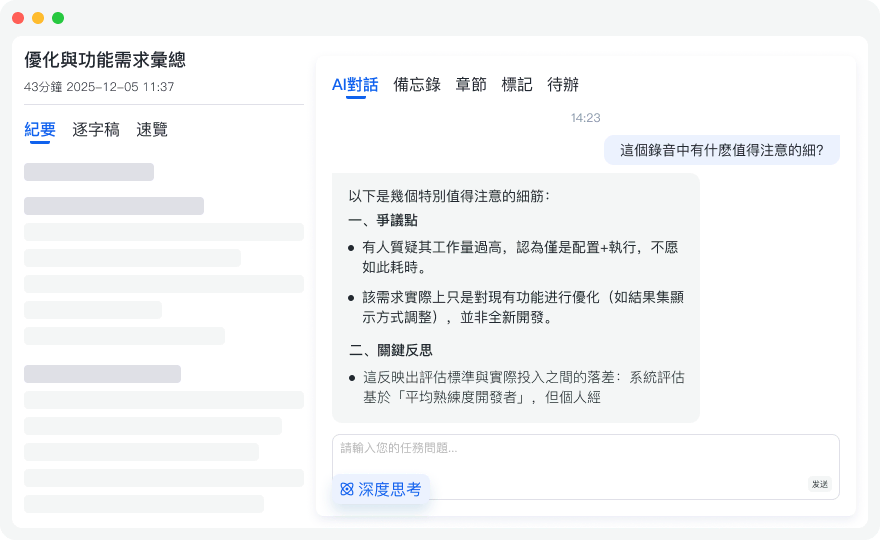
- AI Chat Query: A standout feature; users can ask the AI questions like "What budget did the client mention in this call?" and the system answers based on the recording content, no need to re-listen.
Practical Tutorial: How to Convert Phone Call Recordings into Editable Text
Due to system limitations, the most reliable workflow for transcribing calls is to split it into recording and transcription phases. Here are the steps:
Step 1: Obtain the Call Recording File
- Android Users: Install an app that supports auto-recording, such as Call Recorder 2026. Set permissions, then make the call. After the call, export or save the audio file (usually MP3 or WAV) to your device's folder.
- iPhone Users: Due to iOS restrictions, use speakerphone mode with another device to record, or use your carrier's recording value-added service to obtain the audio file.
Step 2: Import into Tinrec for Transcription
- Open Tinrec web or app.
- Select the Import Audio/Video File to Transcribe feature.
- Upload the call recording file (supports multiple audio formats).
- Select the corresponding language (e.g., English), and the system will automatically perform speech recognition.

Step 3: Use AI to Organize Content
- View Transcript: After transcription, check the text. Tinrec automatically distinguishes speakers for easy reading.
- Generate Summary: Click the AI summary feature to get key conclusions and action items from the call.
- Content Query: For long calls, use the AI Chat Query feature to ask questions and retrieve specific information.
Frequently Asked Questions (FAQ)
Q1: Why can't my call recording app capture the other party's voice?
This is usually related to your phone's OS privacy policies. Android 9.0 and later restrict third-party apps from accessing the call audio stream. Solutions include: recording with speakerphone on, using a recording app optimized for specific devices, or using an external recording device.
Q2: Can Tinrec automatically record and transcribe calls in real time?
Currently, due to system permissions, Tinrec mainly supports live environmental recording (e.g., in-person meetings or speakerphone calls) and file import transcription. We recommend saving the call recording first, then importing into Tinrec for high-accuracy transcription and analysis.
Q3: How accurate is transcribing call recordings to text?
Accuracy depends on recording quality and accent clarity. Noisy environments or poor signal reduce recognition rates. Tinrec uses advanced AI models; in clear recording conditions, it achieves high accuracy for English and Chinese, with contextual corrections.
Q4: What's a good call recording transcription solution for iPhone users?
The simplest method for iPhone users is to use Apple's built-in call recording (available in some iOS versions and regions) or use speakerphone with another device running Tinrec's Real-Time Speech-to-Text feature to see the conversation turned into text instantly.
Q5: What limitations do free versions have?
Most traditional recording apps (e.g., Call Recorder 2026) have ads and limited features in the free version. Tinrec's free version offers 100 minutes of recording transcription per month, which is sufficient for individual users who occasionally need to transcribe phone interviews.
Q6: How can I share transcribed text with colleagues?
After transcribing with Tinrec, you can export meeting minutes and transcripts as Word, PDF, or TXT files, or share a link directly with team members to keep everyone informed.
Turn every recording into actionable outcomes
Get 60 free transcription minutes when you sign in. No credit card required.
Related Reading
You might also like

How to Follow Up on Project Meeting Action Items in 2026: A Complete 5-Step Guide
After a project meeting, action items often get lost in chat threads and lack clear owners. This article breaks down a complete 5-step process for following up on project meeting action items, from pre-meeting preparation, bot-free recording, AI summaries and action item extraction, to export tracking and closure documentation. It uses Tinrec as a practical demonstration tool and also covers 5 key considerations and common questions when choosing a meeting follow-up tool.

Meeting Minutes Email Template 2026: 5-Section Structure + 3 Scenario Examples
Stuck with the task of emailing meeting minutes after a meeting wraps up? This guide offers copy-paste meeting minutes email templates covering routine weekly meetings, client meetings, and cross-departmental decision meetings, plus common mistakes and 6 practical FAQs.
2026 Comparison of 4 Meeting Action Plan Tools: Which One Best Tracks Post-Meeting Actions?
Meetings end, but action plans go nowhere—the problem is often not the people, but that the tool only gives you a transcript. This article starts from 'whether post-meeting actions are captured' and outlines 5 key factors for choosing a meeting action plan tool. It compares Tinrec, Otter.ai, Fireflies.ai, and Notta in terms of recording method, to-do extraction, Chinese language performance, and team ownership, and includes 4 common pitfalls and selection advice.
4 AI Meeting Task Extraction Tools Compared in 2026: From Transcript to To-Do List
You have the meeting transcript, but no one remembers who's responsible for what. This article compares four tools—Tinrec, Otter.ai, Notta, and TurboScribe—from a task extraction perspective, covering four key decision points, hands-on experience, common pitfalls, and scenario-based recommendations to help you find the one that turns meeting noise into actionable signals.

4 Meeting Notes Tools Tested for 2026: Which One Turns Discussions into Actionable Plans?
Even the most detailed meeting notes are useless if no one follows up. This article covers 4 key points for writing meeting action plans, 3 common mistakes, and hands-on comparisons of Tinrec, Notta, Granola, and PLAUD Note on task extraction, post-meeting follow-up, and team collaboration.

2026 Free Post-Meeting Email Automation Options: 5 Tools Compared
Always sending post-meeting emails the next day? The problem isn't your writing—it's that meeting content isn't captured well. This article reviews the free tiers and limitations of 5 post-meeting email automation and assistance methods, and tests how Tinrec turns transcripts, AI summaries, and action items into one-click email material. Suitable for students and small teams.

3 Meeting Recap Email Templates Compared for 2026: Which Format Best Moves Projects Forward?
We break down three meeting recap email template styles and how to choose one, covering structure, examples, and common mistakes. Plus, learn how Tinrec turns meeting recordings into citable minutes, to-dos, and action lists so your post-meeting emails don't get ignored.

2026 Comparison of 4 Meeting Note Tools: Which One Actually Turns Meeting Conclusions into Action Plans?
Meetings end with conclusions, but no one follows through? This article starts from the real need to turn meeting conclusions into action plans, outlines 4 key purchasing points, and compares Tinrec, Notta, Otter.ai, and Granola on bot-free recording, AI summaries and to-dos, post-meeting Q&A, and team data retention, with prices and limitations, to help you choose the one that truly connects to execution.

2026 AI Follow-Up Email Tools Comparison: Tinrec Ensures No Post-Meeting Follow-Up Is Missed
The meeting ending is just the beginning of follow-up. This article tests 3 AI tools related to post-meeting follow-up emails, including Tinrec, Manus, and Genspark, covering meeting transcription, action item extraction, and email draft generation, helping you bridge the last mile from the meeting room to the inbox.