

Turn recordings into transcripts and summaries in minutes
Upload audio or video for multilingual transcription, AI notes, and action items
2026 Tinrec Meeting Efficiency Tool: 3 Steps to Master Chinese Meeting Minutes + Action Items
I recently got bogged down by meeting notes again. After a two-hour project meeting, it took me over two hours just to turn the recording into a summary I could send to the team. That wasn't even the worst part. The most exhausting part was that after organizing everything, I often had to spend time recalling who proposed a certain decision or what the deadline for a specific action item was. I realized the problem wasn't how much time I spent typing, but that I was using the wrong approach.
If you're facing similar issues, this article isn't about recommending a "magic tool." Instead, it shares a method I've tested and found genuinely changes how you process meeting notes. And this method requires the right tool.
Two-Hour Meeting, Two-Hour Notes? You Don't Need a Tool, You Need a Solution
Many people think meeting notes are just typing, but that's not true. The real pain point is: after the meeting, you have to sift through a long recording to find key points, organize them into a summary others can understand, and then list the action items discussed. Doing this manually is extremely time-consuming and prone to missing details.
What's worse, if the meeting is in Chinese, or includes technical terms or multiple people talking at once, many tools fail to transcribe accurately, leaving you to re-listen to the entire recording.
If you're experiencing these issues, don't rush to download any tool. First, understand "how to choose," so you don't waste money and go in the wrong direction.
Before Choosing a Meeting Efficiency Tool, Understand These 4 Key Points
1. Accuracy: Don't Just Trust Official Claims Many tools claim 98% or 99% accuracy, but those numbers are measured in a quiet recording studio. Your meeting room has air conditioning noise, keyboard sounds, and people talking over each other, so real-world accuracy drops significantly. The best approach is to test with a free trial using your own meeting recording to see if the transcript is actually usable.
2. AI Summarization: Can It Auto-Generate Summaries, Action Items, and Even Answer Questions? If a tool only transcribes recordings to text, you still have to read thousands of words of transcript, which only solves half the problem. A truly efficient tool should automatically generate summaries, list action items, and even let you ask questions like "Who mentioned the budget in the last meeting?"
3. Cross-Platform: Can It Sync Across Mobile, Desktop, and Web? You might record on your phone but need to organize on your computer back at the office. If the tool doesn't support cross-platform use or is tied to a single device, you'll be limited.
4. Free Tier: Try Before You Pay Don't commit to an annual plan right away. Use the free version first to confirm it fits your workflow, then consider upgrading.
Tinrec (MiaoTing) — My Top Choice for Building a Meeting Database
Tinrec (MiaoTing) is an AI recording and audio/video organization tool that supports real-time recording, audio transcription, and online video processing, available on mobile, desktop, and web.
Since I started using Tinrec, my meeting organization process has completely changed.
During meetings, I open Tinrec, and it generates a transcript in real time. By the end of the meeting, the AI has already generated a summary and action items—who's responsible for what, and deadlines, all at a glance. I no longer spend two hours re-listening to recordings; I just spend five minutes checking the summary for anything missed.
You can also upload old recordings and course audio. I had a bunch of seminar recordings that I never had time to organize. After uploading them to Tinrec, it not only transcribed them but also automatically divided them into chapters, extracted key points, and turned them into a searchable database.
Stop organizing recordings by hand
Upload audio or video and automatically get a transcript, summary, and action items
The most impressive feature is AI Q&A. After recording, I can directly ask Tinrec: "Who mentioned the budget in the last meeting?" It answers based on the content, not just keyword search. I've rarely seen this feature in other similar tools.
I tested it with a 5-minute Chinese meeting recording (with background noise, three people discussing). Tinrec's transcript was the most complete, the summary was closest to the discussion points, and no action items were missed.
Pros:
- Multi-source processing: Handles not just meetings but also courses, interviews, and online videos—something many tools lack.
- Chinese content processing: Handles both simplified and traditional Chinese, with summaries and Q&A that understand Chinese context well.
- Easy export: Can export to Notion, Google Docs, and other tools for further processing.
Limitations: The free tier is suitable for light use; if you process a lot of recordings daily, you'll need the paid version. But for those who have 2-3 meetings a week, the free version is a good starting point, and you can upgrade if needed.
Who is it for? If you frequently need to organize Chinese meetings, courses, or interviews, and want automatic summaries, action items, and even Q&A after recording, Tinrec is currently the most complete choice.
(Screenshot: Tinrec automatically generating summary and action items after a meeting, with arrows pointing to the summary and action items)
What Are the Alternatives to Tinrec?
Plaud Note: If you prefer a dedicated recording device, Plaud Note is a good option with sleek design and good audio capture. However, it requires an additional hardware purchase, and its organization features rely mainly on the mobile app, lacking the ability to process online videos or old files directly in a browser like Tinrec. Additionally, Plaud Note lacks Tinrec's conversational AI Q&A feature.
Otter.ai: If you have all-English online meetings, Otter.ai is strong and offers a generous free tier. But for Chinese meeting organization, Tinrec's Chinese summaries and Q&A are more attuned to Chinese usage habits. Moreover, Tinrec can process YouTube and other online videos into text, while Otter focuses more on meetings themselves.
Notta: Notta transcribes quickly and offers generous minutes, making it suitable for bulk transcription. However, if you need to ask questions about key points after recording or export results to Notion for further processing, Tinrec's post-processing workflow is more complete, with AI Q&A and agent-generated reports that Notta currently lacks.
Pitfall Guide: 3 Common Mistakes When Choosing a Meeting Efficiency Tool
Pitfall 1: Trusting Official Accuracy Claims. Many tools advertise 99% accuracy, but your meeting room has noise and people talking over each other, so real-world accuracy drops significantly. Recommendation: Test with your own recordings using free trials, not just ads.
Pitfall 2: Ignoring Cross-Platform Needs. You record on your phone today, but need to organize on your computer tomorrow. If the tool doesn't support multi-device sync, you'll be in pain.
Pitfall 3: Buying It Just for Transcription. If you only use the tool for "transcription," you're only using a third of its capabilities. For example, Tinrec's AI Q&A—ask "What was the meeting conclusion?" right after recording, and it's much faster than manually scanning a 30-minute transcript.
Summary: Which One Should You Choose?
If you need to organize Chinese meetings, courses, or interviews, and want more than just transcription—automatic summaries, action items, and Q&A—Tinrec is currently the most complete choice.
- Chinese meetings + action item extraction → Tinrec
- Course recordings to notes + AI Q&A → Tinrec
- Online video to text → Tinrec (few tools can do this)
- All-English online meetings + team collaboration → Otter.ai (the only exception)
- Need a hardware recorder + portable recording → Plaud Note (consider if budget allows)
Start with Tinrec's free version to experience its meeting organization workflow, and consider upgrading if it fits your needs. Don't pay upfront; first confirm it solves your post-meeting organization pain points.
(Screenshot: Tinrec free trial screen, with arrow pointing to the free tier display)
References
- 2026 Latest 9 AI Automatic Meeting Notes Software Recommendations: Solve Summary and Transcript Pain Points - MiaoTing Blog
- Top 5 Recommended Online Meeting Software to Boost Remote Work Meeting Efficiency | On-line to Know
- AI Meeting Notes Software Recommendations: 5 Apps Tested and Compared, Auto-Transcription Makes Meetings Easy!
- 2025 Eight Mainstream Video Conferencing Software Reviews to Improve Meeting Efficiency - Zhihu
- 8 Free Interactive Tools to Upgrade Your Online Meetings!
Turn every recording into actionable outcomes
Get 60 free transcription minutes when you sign in. No credit card required.
Related Reading
You might also like

4 Best Teams Meeting Transcription Tools for 2026: Free to Paid
How to enable built-in Teams transcription and what are its limits? Based on real meeting scenarios, this article compares four solutions: Teams built-in transcription, Tinrec, Otter.ai, and Notta. It covers four key selection criteria, three common pitfalls, and scenario-based recommendations to help you save time on replaying recordings after meetings.

4 Teams Meeting Transcription Tools Tested: Can Transcripts Become Data Your Team Actually Uses?
A hands-on comparison of four approaches—Teams built-in transcription, Tinrec, Otter.ai, and Notta—covering recording methods, file storage, post-meeting organization, and team permissions to find a workflow that turns Teams meeting audio into searchable, queryable, collaborative data.

How to Use Notion Meeting Notes Templates in 2026: 5 Steps from Template to AI Summary
Notion meeting notes templates are free and easy to find, but most people download them and never use them. This guide covers the Notion official free meeting templates worth using in 2026, suggestions for building your own Database fields, and a 5-step workflow: record and transcribe first, then paste the summary and action items back into Notion. Turn your template from an empty shell into meeting data you'll actually refer back to.

2026 Teams Meeting Transcription Showdown: Is Built-in Good Enough?
After a Teams meeting, transcripts are often missing or never generated. This guide approaches the decision from a data-storage perspective, explains the two-layer permissions and storage limits of Teams' built-in transcription, and compares three external solutions: Tinrec, Otter.ai, and Granola. Includes four common pitfalls and selection advice.

6 Meeting Notes Tools Tested and Compared in 2026: Is Notion's Free Plan Enough?
Many people think having Notion means having meeting notes, but the free plan actually provides meeting templates plus trial AI credits, not unlimited automation. This article reviews 6 free and low-cost meeting notes solutions, from Tinrec, Notion, Notta, Otter.ai, Granola to TurboScribe, comparing recording methods, transcription, summarization, export, and pricing to help you decide which fits your meeting habits.

5 Best Microsoft Teams Meeting Transcription Tools in 2026: ChatGPT, Tinrec, and Built-in Transcription Compared
Still pasting Teams transcripts into ChatGPT after meetings? We compare 5 Microsoft Teams meeting transcription solutions—Tinrec, ChatGPT Record mode, Teams built-in transcription, Otter.ai, and Notta—on features, limitations, and pricing to help you find the most time-saving way to take meeting notes.

How to Translate Spotify Transcripts in 2026: 5 Methods + Bilingual Chinese Comparison
How do you translate Spotify transcripts into Traditional Chinese? This guide covers 5 practical methods: Spotify's built-in Read Along, Tinrec, AskSia, Firstory/SoundOn creator backend settings, and TurboScribe. It compares free quotas, translation capabilities, and export options, with selection advice and FAQs.
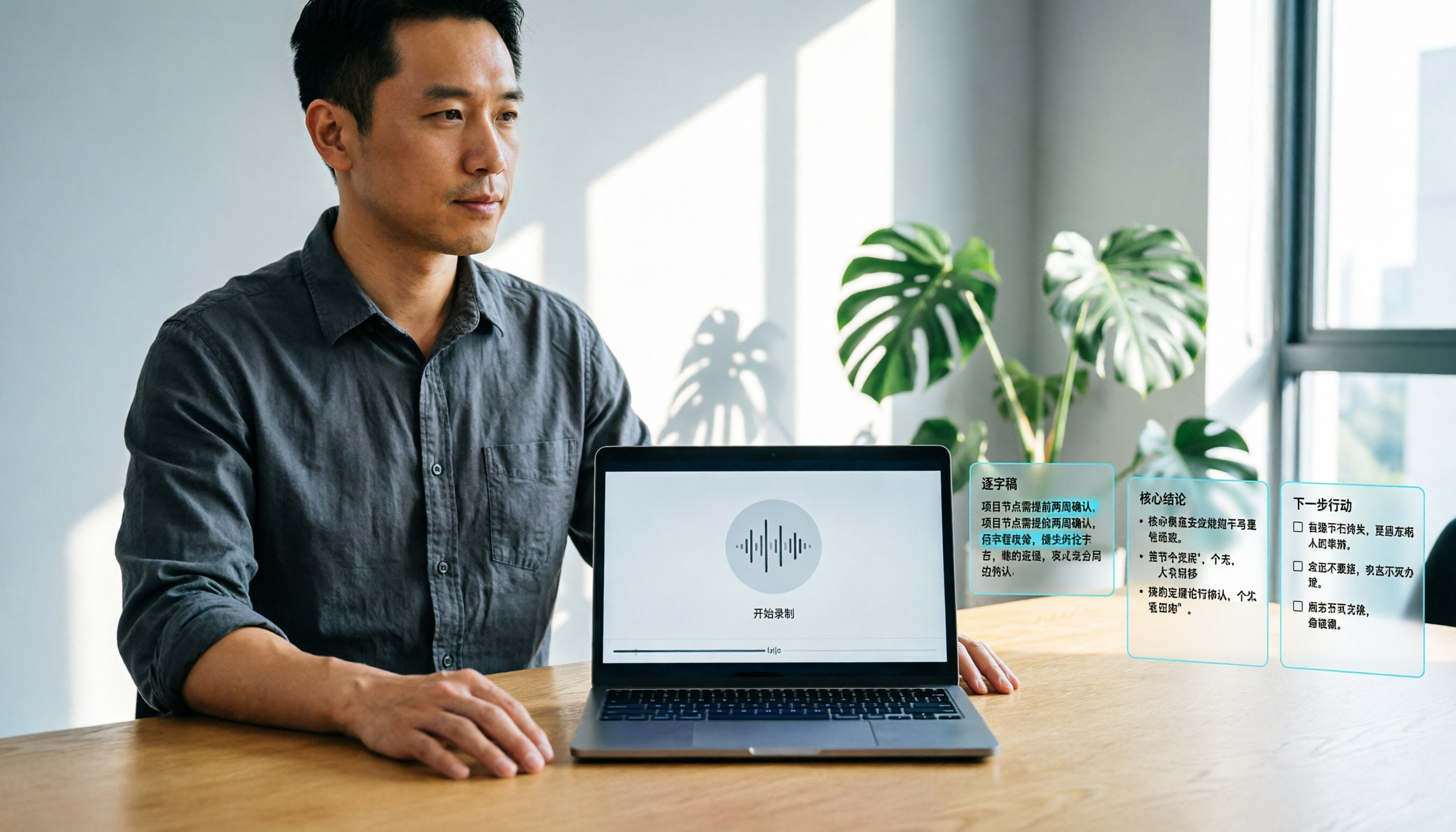
Best Notion Team Meeting Notes Tools in 2026: 4 Tested for Teams Meetings
Managing meeting notes in Notion isn't about prettier templates—it's about the half-hour spent organizing after each call. This hands-on review from a mid-level manager compares Tinrec, Otter.ai, Notta, and Granola on Teams meeting recording, Chinese transcription, summary and action items, and Notion export, plus three common pitfalls to avoid.
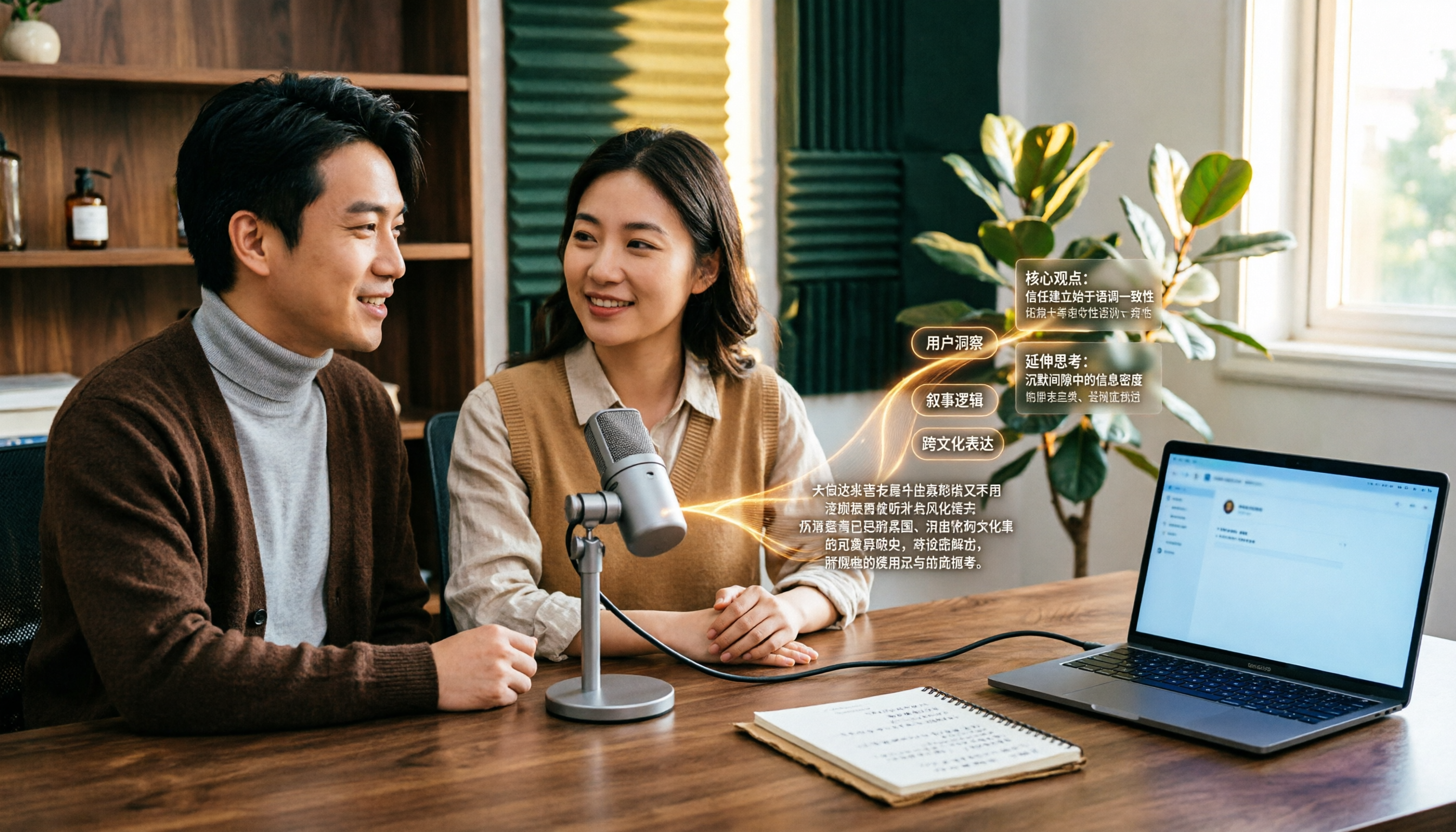
Best Podcast Transcript Apps? 2026 Test of 4 Apps: This One Saves the Most Time for Chinese Interviews
Recorded a podcast episode but stuck organizing the transcript? This article starts from real-world use cases, breaks down the core capabilities a podcast transcript app should have, four common application scenarios, and five purchase checkpoints. Using Tinrec's real-time transcription, AI summaries, AI Q&A, and team spaces as examples, it explains how to turn an 80-minute interview into a searchable, publishable, reusable text asset.