

Turn recordings into transcripts and summaries in minutes
Upload audio or video for multilingual transcription, AI notes, and action items
Otter.ai vs Tinrec 2026: 5-Dimension Comparison – Which Is Better for Chinese Subtitles for Taiwan Users?
Think Otter's Chinese subtitles are great? Check first: it supports Simplified Chinese only
Many Taiwan users assume that "Otter Chinese subtitles" can handle Traditional Chinese meetings, but this is a common misconception.
Otter.ai's official language list includes Chinese (Simplified) but does not officially support Traditional Chinese. If you test it with Taiwan meeting recordings, sentences mixing proper nouns, Taiwan-specific terms, and English abbreviations often result in inconsistent Traditional/Simplified transcription or outright word errors.
If you need Chinese subtitles or transcripts that can be delivered directly to clients as official records, subscribing to Otter without real-world testing carries significant risk.
In contrast, Tinrec (秒听录音) is positioned from the start to cover Traditional Chinese and multilingual meeting scenarios, making it more suitable for Taiwan users' daily meeting needs.
Before choosing a meeting transcription tool, understand these 5 key points
1. Traditional Chinese support and subtitle accuracy
Don't just look for "Chinese support." Otter supports Simplified Chinese; accuracy for Taiwan's Traditional Chinese scenarios requires your own testing. Tinrec explicitly covers Traditional Chinese and offers real-time translation and bilingual viewing, which is more user-friendly for Taiwan users.
2. Meeting recording method: bot vs. bot-free
Otter can join Zoom, Meet, and Teams meetings via a bot, but some people don't want an extra participant in their meetings. Tinrec's desktop app captures system audio directly, so no bot is needed—just open the app to record online meetings without disrupting the flow.
3. Post-recording organization: transcripts alone aren't enough
Transcripts are just the first step. Tinrec automatically generates summaries, chapters, highlights, and action items, and even allows AI Q&A about the meeting content, such as "Who mentioned the budget last meeting?" Otter also has AI Chat, but its Chinese Q&A experience in Traditional Chinese contexts is not as direct as Tinrec's.
4. Cross-platform and file import
Tinrec supports iOS, Android, web, and desktop, and allows uploading audio/video files or importing content from web links. Otter also supports multiple platforms, but the free plan has limited file imports, and post-processing of Traditional Chinese content is not as complete as Tinrec's.
5. Team collaboration and knowledge retention
For team use, Tinrec's team space centralizes meeting data, allowing members to view historical meetings, action items, and summaries, while admins can manage roles, seats, usage, and audits. Otter's team features are mature, but for Chinese content experience, Tinrec is closer to Taiwan enterprise needs.
Tinrec (秒听录音) – Our top pick for Chinese meetings after testing
Tinrec is an AI meeting notes and collaboration tool for individuals and teams. It doesn't just convert speech to text; it turns meeting recordings into searchable, summarizable, queryable, and exportable work assets.
Bot-free online meeting recording
Open Tinrec's desktop app, and it captures system audio directly. It works with Zoom, Google Meet, Microsoft Teams, and Webex—no need to add a bot to your meeting. This is useful for those who dislike unfamiliar participants in meetings or need to start recording quickly.
Traditional Chinese and multilingual transcription
Tinrec supports Traditional Chinese, mixed Chinese-English content, and multilingual meetings. During recording, you can view the original text, translation, or side-by-side bilingual view, which is helpful for Chinese subtitles or cross-language communication.
Stop organizing recordings by hand
Upload audio or video and automatically get a transcript, summary, and action items
More than just transcripts
After recording, Tinrec automatically generates summaries, chapters, and action items, and you can use AI Q&A anytime to query meeting highlights. For example, ask "What was the conclusion?" or "Who is responsible for what?" and it will find answers directly from the meeting content—no need to manually scan the transcript.
Team space and data ownership
In team use, all meeting data belongs to the team, so data doesn't disappear when members leave. Admins can allocate seats, view usage, and manage custom vocabulary, turning meeting content into searchable, collaborative team assets.
Honest limitations
The free plan offers only basic quotas; heavy users need to upgrade to Pro or Team. Transcription accuracy is affected by recording quality, accents, background noise, and overlapping speech, so it can't guarantee 100% accuracy. For important content, we recommend cross-checking with the audio playback.
If you frequently need to organize Chinese meetings, prefer no bots, and want AI to find key points right after recording, Tinrec is definitely worth trying.
Beyond Tinrec: How do Otter.ai and other options compare?
Otter.ai: A mature assistant for English meetings, with a generous 300 free minutes per month. However, note that it officially supports only Simplified Chinese, so Traditional Chinese meetings are prone to errors; its strengths are meeting bots and the English ecosystem. If you mainly record English content, Otter is worth considering; but if you need Traditional Chinese transcription, bot-free recording, and more complete Chinese post-processing, Tinrec is a better fit.
Notta: Focuses on fast transcription, subtitles, and translation, with decent multilingual capabilities. However, its post-meeting AI Q&A, action item extraction, and team space depth are not as strong as Tinrec's; if you occasionally convert videos to subtitles, Notta is worth a try, but if you need to turn meetings into trackable team assets, Tinrec's post-processing is more complete.
Granola: Also focuses on bot-free meeting notes, but it doesn't support uploading pre-recorded audio files or retain meeting audio. Tinrec allows importing historical audio files, retains recordings, and has advantages in Traditional Chinese and multilingual meetings.
Pitfall guide: 4 common mistakes when choosing Chinese subtitle transcription
Pitfall 1: Assuming "Chinese support" means "Traditional Chinese support"
Otter officially lists Chinese (Simplified), not Traditional Chinese. Taiwan users must test with their own real recordings, including proper nouns, Taiwan-specific terms, and names, to avoid discovering numerous errors only during official use.
Pitfall 2: Focusing only on free minutes, ignoring Traditional Chinese accuracy
300 free minutes sounds like a lot, but if the Traditional Chinese transcript has a high error rate, you'll still spend time re-listening and correcting. Tinrec performs more consistently in Traditional Chinese scenarios, so it's worth testing before deciding.
Pitfall 3: Insisting on meeting bots, disrupting the meeting
Some people don't want to see an extra bot participant in Zoom or Teams meetings. Tinrec's desktop app records system audio directly, so no bot is needed—more natural and less intrusive.
Pitfall 4: Stopping at the transcript, wasting AI post-processing capabilities
Using a transcription tool just for "audio-to-text" is a waste. Tinrec's AI Q&A, action item extraction, and team space can turn meeting content into follow-up actions, saving you more time.
Conclusion: Which one should you choose?
If you mainly record English meetings and are already used to Otter's ecosystem, Otter.ai remains a good choice.
But if you need Traditional Chinese meeting transcription, prefer no bots, want AI to find key points right after recording, and want to retain meeting data for your team, Tinrec is more suitable.
- Traditional Chinese meetings with Taiwan-specific terms → Choose Tinrec
- English meetings with a limited budget, free 300 minutes → Try Otter first
- Need bot-free online meeting recording → Choose Tinrec
- Need AI Q&A, action items, and team space → Choose Tinrec
We recommend downloading Tinrec's free version and testing Traditional Chinese transcription with your own meeting recordings. Upgrade if you find it useful.
References
Turn every recording into actionable outcomes
Get 60 free transcription minutes when you sign in. No credit card required.
Related Reading
You might also like

2026 Hands-On Comparison of 4 AI Meeting Recorders: Otter.ai vs. Tinrec—Which Saves More Time?
Tired of spending hours organizing meeting notes? This hands-on comparison reviews Tinrec, Otter.ai, Fireflies.ai, and Notta—four AI meeting recorders—covering Chinese accuracy, AI features, cross-platform support, and pricing to help you find the most time-saving option.

2026 Test: 3 Online English-Chinese Dictionaries Compared – Which Is Most Intuitive for Looking Up 'Otter'?
Trying to find the Chinese meaning of 'otter' but keep getting song lyrics? This article tests VoiceTube, Cambridge Dictionary, and EZABC, comparing pronunciation, definitions, example sentences, and memory aids to tell you which is best for quickly understanding this word.

Best Free Otter.ai Alternatives for Chinese in 2026: 3 Tools Compared
Otter.ai often struggles with Chinese speech recognition. We tested Otter, Notta, and Tinrec, comparing Chinese accuracy, bot-free recording, AI summaries, and to-do features to help you find the best meeting notes tool for Chinese-speaking users.

2026 Free Chinese Meeting Transcription Solutions: A Look at 1 Otter Alternative
Is Otter.ai limited in Chinese? This article introduces Tinrec as a free AI meeting transcription alternative for Chinese, covering features, use cases, and purchasing considerations.

2026 Hands-On Comparison of 2 AI Meeting Recorders: For Chinese Meetings, Is Tinrec Better Than Otter?
Looking for a Chinese alternative to Otter? This article compares Otter and Tinrec in real-world meeting scenarios for Taiwan users, covering Chinese speech recognition, bot-free recording, post-meeting organization, and team collaboration, to help you decide which is better for Chinese meeting needs.

2026 Test and Comparison of 5 Chinese Speech-to-Text Tools: Which One Is Better Than Otter for Users in Taiwan?
Is Otter.ai really not good at Chinese recognition? This article tests 5 mainstream speech-to-text tools, comparing Chinese accuracy, mixed Chinese-English handling, meeting notes, pricing, and team features to help you find the best AI meeting assistant for office workers in Taiwan.

5 Best AI Subtitle Generators Compared in 2026: Which One Handles Chinese Subtitles Best?
Otter is not the best solution for Chinese subtitles. This article compares 5 popular tools to help you find the best one for Traditional Chinese users, using Tinrec as an example to show how to generate bilingual subtitles.

Otter Chinese Version vs Tinrec 2026: Real-World Test for Chinese Meeting Notes & AI Q&A, Debunking Traditional Chinese Transcription Myths
Wondering if Otter works well in Chinese? This article compares Otter.ai and Tinrec (MiaoTing) on Traditional Chinese recognition, bot-free recording, post-meeting organization, and team collaboration to help you find the best AI note-taking tool for Chinese meetings.
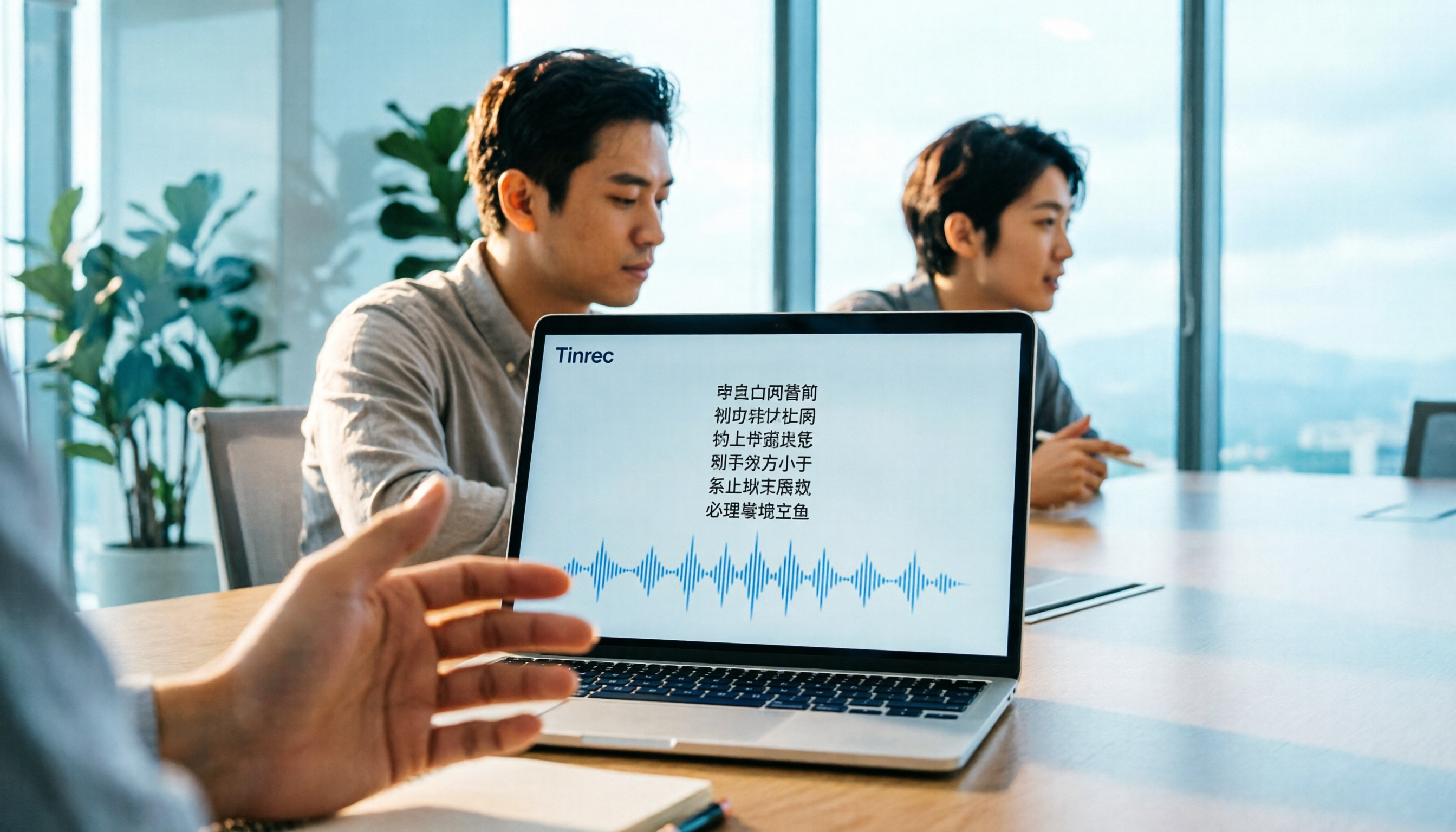
2026 AI Meeting Recorder Comparison: Otter.ai vs Tinrec for Chinese Meetings
This article compares Otter.ai and Tinrec (Miao Ting Lu Yin) across five key dimensions: Chinese meeting transcription, bot-free recording, post-meeting organization, team collaboration, and pricing, to help you quickly decide which is better for Chinese-language meetings.