

Turn recordings into transcripts and summaries in minutes
Upload audio or video for multilingual transcription, AI notes, and action items
Have you ever calculated: 5 hours of meetings per week, plus 3 hours of transcribing and summarizing afterward—that's 8 hours a week spent on "documenting" rather than "doing." If you switch to an AI recording tool and save that time, the long-term cost difference is significant. This article breaks down Plaud's recording platform pricing to help you see if it's worth it.
Meeting Notes Are Time-Consuming and Inefficient? You Don't Need a Tool—You Need a Solution
Two hours in a meeting, another two hours writing up the minutes—that's the daily reality for most professionals. Even more frustrating are multilingual meetings: Chinese and English mixed together, transcription accuracy varies, and you have to manually fix errors afterward.
If you've experienced these issues, the key isn't just buying any voice recorder—it's finding a platform that can automatically transcribe, summarize, and even collaborate. This article uses Plaud as an example to analyze its pricing and plans, helping you see if it's your time-saving solution.
Before Buying AI Recording Gear, Understand These 4 Key Points
Accuracy: Don't Just Trust the Marketing. Many tools claim 98% accuracy, but real meetings have background noise, accents, and overlapping speech, which reduces actual performance. Plaud supports 112 languages and offers speaker identification and custom vocabulary, but we still recommend testing with your own recordings.
Free Tier: Is 300 Minutes Enough? If you only have 1-2 meetings per week, each 30 minutes, the free plan might suffice. But if you have daily meetings or need to transcribe long interviews, you'll hit the cap quickly.
Hardware and Platform Integration. Plaud's strength is deep integration between its hardware recorders and AI platform—record, upload, and transcribe without manual file transfers. But if you only need to transcribe existing audio files, you don't necessarily need the hardware.
Team Collaboration Needs. If you need to share meeting notes among multiple people and manage member permissions, consider a team plan rather than sharing one account.
Plaud Recording Platform Pricing Fully Explained—Our Hands-On Breakdown
Plaud charges separately for hardware (one-time purchase) and AI platform subscription. Hardware like the Plaud Note series includes a free starter plan, but advanced features require a subscription. Here's the current platform pricing from the Taiwan official site:
Free Plan (Starter)
Each Plaud device includes 300 minutes of voice-to-text transcription per month. Suitable for light users, such as occasional meeting, interview, or class notes. The free plan also includes basic AI summarization, but some advanced templates and mind maps may be limited.
Pro Plan
1,200 transcription minutes per month, roughly NT$275/month (billed annually). Suitable for regular users, such as office workers with multiple meetings per week, freelancers, or graduate students. Besides more minutes, it unlocks additional AI templates and advanced features.
Stop organizing recordings by hand
Upload audio or video and automatically get a transcript, summary, and action items
Unlimited Plan
Unlimited transcription minutes and full AI features, roughly NT$665/month (billed annually). Ideal for heavy users who rely on transcription, such as journalists, lawyers, consultants, or anyone who needs to process large volumes of audio.
Team Plan (Plaud Team)
Designed for multi-user collaboration, offering a dedicated team workspace, member management, shared files, and permission controls. Currently, there's a first-year promo: NT$670 per user per month (billed annually), valid until August 31, 2026, after which it reverts to NT$837.5 per user per month. The team plan suits departments or project groups, centralizing meeting notes and usage management.
Note that prices may change with official promotions; always refer to Plaud's official pricing page. If you already own hardware, subscribing to a platform plan unlocks more minutes; if you don't have hardware yet, you can start with the mobile app and free plan.
What Are the Alternatives to Plaud?
Otter.ai: A mature option for English meetings, with 300 free minutes per month, but Chinese transcription is weaker than Plaud, and there's no hardware integration.
Notta: Similar features to Plaud, supporting multilingual transcription and team plans, with 120 free minutes per month, but each recording is limited to 3 minutes, which is restrictive.
Fireflies.ai: Focuses on meeting automation and sales analytics, suitable for teams needing heavy integration, but it's pricier and Chinese support is average.
In comparison, Plaud's advantages are the seamless hardware-plus-platform experience, 112-language support, and compliance with privacy certifications like SOC 2, HIPAA, and GDPR, which appeals to security-conscious users.
Pitfall Guide: 4 Issues to Watch Before Subscribing to Plaud
Pitfall 1: Free minutes reset monthly, not accumulate. Unused 300 minutes don't roll over, so if you suddenly need heavy transcription one month, plan ahead.
Pitfall 2: After canceling, your recordings and transcripts aren't deleted. That's nice, but note: after downgrading to the free plan, you can still access old data, just not use paid features.
Pitfall 3: Get consent before recording. Taiwan law regulates recording; we recommend informing participants in advance to avoid disputes. Plaud also provides suggested wording.
Pitfall 4: Understand team plan seats and roles. Admins can manage members and permissions, but members without a seat can only view data, not upload or edit. Confirm your team's needs before purchasing.
Summary: Which Plan Should You Choose?
If you only occasionally record ideas or meetings, the free plan is sufficient—don't rush to pay.
If you have more than 3 meetings per week or need to transcribe long interviews, the Pro plan's 1,200 minutes per month should cover most needs and offers the best value.
If you're a heavy user who relies on transcription daily, the Unlimited plan, though pricier per month, is more cost-effective in the long run.
If your team needs to share meeting notes and manage members, the Team plan provides collaboration and governance, and the first-year discount is worth grabbing.
We recommend starting with the free plan to test transcription quality and workflow fit before upgrading. That way, you won't waste money.
References
- Plaud Taiwan|Official Website|AI Recording Device Leader
- Plaud Note Pro Unboxing Review|Portable AI Smart Recorder Upgraded! Is It Good? Who Should Buy It? - Mr. Mad
- Plaud Note │ The Smartest AI Recording Card Ever
- PLAUD Smart Recorder | Recorders/Audio Accessories - PChome 24h Shopping
- Plaud AI Plans and Pricing
Turn every recording into actionable outcomes
Get 60 free transcription minutes when you sign in. No credit card required.
Related Reading
You might also like

2026 Complete Guide to Podcast Transcript Apps: From Free Transcription to AI Summaries, These 6 Tools Are Worth Trying
Want to turn your podcast recordings into transcripts but not sure which app to choose? This article covers 6 popular tools, including Tinrec, MyEdit, Transcribe, Otter.ai, Notta, and built-in platform features, from free plans to team collaboration, helping you quickly find the right fit.

Best AI Meeting Note Tools in 2026: Tinrec vs Notta Comparison – Why Tinrec Wins for Chinese Teams
Tired of using LINE ChatGPT to organize meeting notes? This article compares two AI meeting note tools, Tinrec and Notta, across 5 key dimensions—from bot-free recording and Chinese language support to post-meeting organization and team management—to help you choose the best solution for Chinese-speaking teams.

2026 Notion Meeting Notes Template Free Options: A Complete Guide
Looking for a Notion meeting notes template to manually organize meetings? There's actually a more efficient way. This article uses Tinrec as an example to show how AI can automatically generate transcripts, summaries, and action items, and compares free plans and key buying considerations.

How to Choose Mac Transcription Software in 2026? 5 Steps to Replace Otter with Tinrec
Transcribing on a Mac doesn't have to be manual. This article compares Tinrec and Otter.ai, teaching you 5 steps to choose the best AI transcription tool for Hong Kong users, saving time and avoiding overtime.
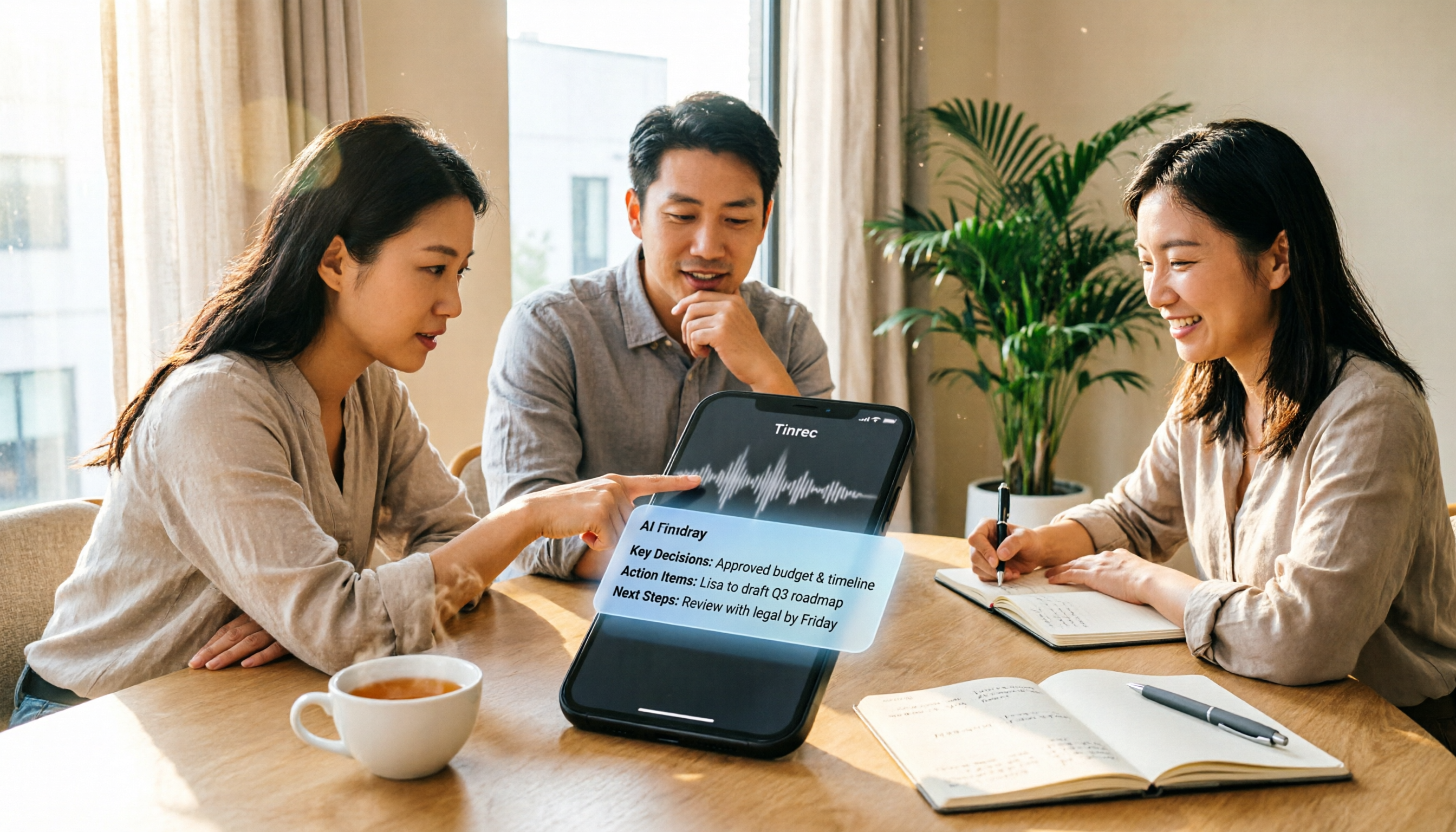
Tinrec vs Plaud Note 2026: 5-Dimension Comparison to Find the Best Meeting Saver
Plaud Note voice recorders are popular, but do you really need to buy hardware? Tinrec offers bot-free recording, AI summaries, and team collaboration through an app. This article compares them across 5 dimensions to help you choose.

Tinrec Online Audio-to-Text in 2026: AI Meeting Summaries Without Extra Hardware
A senior student's hands-on review: Use Tinrec to turn lecture recordings and group discussions into searchable transcripts and key summaries. The free plan is sufficient—no need to spend extra on a voice recorder.

Tinrec vs Plaud Note in 2026: A 5-Dimension Comparison for Meeting Notes
Tinrec (Miao Ting Lu Yin) and Plaud Note are both popular AI recording tools, but one is a software service and the other is a hardware recorder. This article compares them across 5 dimensions: capture method, post-transcription processing, cross-platform support, team collaboration, and pricing, to help you find a truly time-saving meeting notes solution.
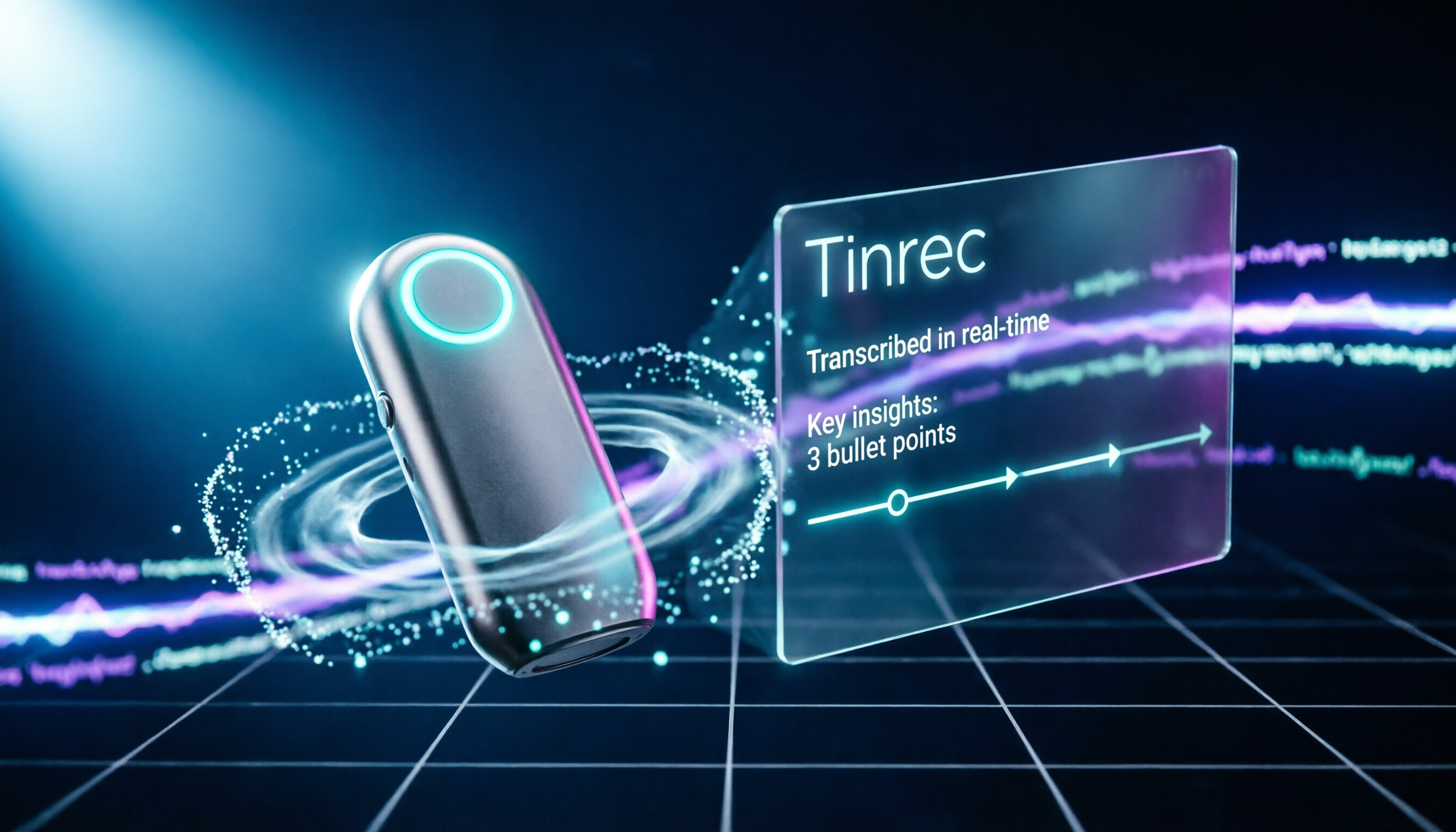
2026 Free Voice Recorder Comparison: Is Plaud Note's Free 300 Minutes Enough?
People searching for 'free Plaud voice recorder' often wonder if the Plaud Note hardware is free and if the monthly 300-minute transcription allowance is sufficient. This article compares Plaud Note, Tinrec, and Otter.ai's free plans, explaining limitations, key buying factors, and pitfalls to avoid, helping you find a truly time-saving and cost-effective recording solution.

2026 AI Recording Tools Compared: Plaud vs Tinrec for Meeting Notes
Thinking about buying a Plaud recorder for meeting notes? Hold off on the hardware. This article compares Plaud's hardware recording with Tinrec's software AI meeting tool from a procurement perspective, analyzing recording sources, transcription, team collaboration, and cost to help you make the most cost-effective choice.