

Turn recordings into transcripts and summaries in minutes
Upload audio or video for multilingual transcription, AI notes, and action items
I Once Turned My To-Do List into a Source of Stress
Many people open a to-do list app and the first thing they do is "dump everything in."
But the longer the list, the less you want to open it.
Eventually, the app becomes a digital junkyard instead of an action guide.
I've made the same mistake.
Later, I realized the problem isn't the tool—it's how we use it.
In this article, I'll share my hands-on experience comparing five popular to-do list apps: Google Tasks, Any.do, Todoist, Microsoft To Do, and TickTick.
But I'm not comparing how many features they have; I'm comparing how well they help us "think less and do more."
Avoid These Three Common Mistakes First
Before we dive into the comparison, let's talk about three common inefficient practices.
Mistake #1: Using Your To-Do List as a Notepad
Many people jot down meeting notes, random ideas, and grocery lists into their to-do list.
As a result, each item is vague, like "handle client issue" instead of "reply to Mr. Wang's quote email."
A to-do item should be "the next actionable step," not "a topic."
Mistake #2: Setting Reminders for Everything, Regardless of Context
"Remind me at 3 PM" sounds reasonable, but if you're in a meeting, the reminder will only distract you.
A better approach is to set "contextual reminders": at home, at work, at your computer, or when you have free time.
Mistake #3: Over-Categorizing, Which Makes It Harder to Find What Matters
I've seen people create over a dozen folders, each with only one or two items.
The purpose of categorization is to quickly filter, not to categorize for its own sake.
Usually, three or fewer categories are enough: Work, Personal, and Waiting For.
Hands-On Test of Five Apps: Which One Fits the Right Method Best?
Google Tasks: Best for Gmail Users
If you're already heavily using Gmail and Google Calendar, Google Tasks requires almost no learning curve.
You can create tasks directly from emails, drag to reorder, and star important items.
It also lets you break multi-step tasks into subtasks, which is great for small projects.
But its downsides are clear: no smart suggestions, no Pomodoro timer, and so on.
If you just need a simple, reliable list, this one is more than enough.
Any.do: Best for Those Who Need a "Today Focus"
Any.do's "My Day" feature is my favorite design.
Each morning when you open the app, it asks you like an assistant: "What do you want to do today?"
You can pick a few tasks from your entire list to put into My Day, keeping your attention on the present.
Stop organizing recordings by hand
Upload audio or video and automatically get a transcript, summary, and action items
It also has smart suggestions that automatically recommend tasks that are due soon but haven't been scheduled for today.
The free version is already quite good, but the interface is a bit flashy, which some people might not like.
Todoist: Best for Advanced Users Needing Cross-Platform Integration
Todoist's strength lies in connectivity.
You can use the Chrome extension to turn Gmail content into tasks directly, and it also connects with Google Assistant or Amazon Alexa.
Its project organization and filters are powerful, making it suitable for managing complex workflows.
But more features also mean a steeper learning curve, and some advanced features require a paid plan.
If you're willing to invest time in setup, Todoist can be a very flexible tool.
Microsoft To Do: Best for Windows Users
Microsoft To Do has a very clean interface and is completely free.
If you're on Windows, you can pin your to-do list to the Start menu and sync with Outlook.
Like Google Tasks, it doesn't have many flashy features, but that's its advantage: focus.
If you don't need a Pomodoro timer or complex filters, this one is worth trying.
TickTick: Best for Those Who Want an "All-in-One" Time Management Solution
TickTick's biggest selling point is its built-in Pomodoro timer and Eisenhower Matrix.
This means you don't need to install a separate focus app; you can manage tasks and track time in the same tool.
It also offers calendar view, habit tracking, and more—it's almost a productivity Swiss Army knife.
However, its interface is relatively complex, and first-time users may need some time to get used to it.
My Verdict: It's Not About Choosing the Most Powerful, but the Most "Natural"
There's no absolute good or bad among these five apps—only what fits you.
If you want zero learning curve, Google Tasks or Microsoft To Do are ideal.
If you need daily focus and smart suggestions, Any.do's My Day is very practical.
If you want high customization and cross-platform integration, Todoist is worth the investment.
If you want a Pomodoro timer and Eisenhower Matrix, TickTick can cover it all.
My current approach: I use Google Tasks as my main tool, paired with a paper notebook for weekly reviews.
Because the method matters more than the tool.
Quick Start Checklist: Three Steps to Begin Your To-Do System
- Choose an app from an ecosystem you already use (Gmail users: Google Tasks; Windows users: Microsoft To Do).
- Create three lists: Work, Personal, and Waiting For—no more, no less.
- Every morning, spend 5 minutes picking 3 tasks from your lists to put into "Today," and hide the rest.
Do this for a week, and you'll feel the difference.
Don't rush to switch tools; start by simplifying your list.
Test gradually, and you'll gradually master this method.
References
Turn every recording into actionable outcomes
Get 60 free transcription minutes when you sign in. No credit card required.
Related Reading
You might also like

4 Best AI Meeting Assistants Compared in 2026: Stop Staying Up Late to Write Meeting Notes
We tested Otter.ai, Notta, Granola, and Tinrec, covering bot-free recording, Chinese meeting transcription, AI Q&A, and team collaboration, to help you find the smart meeting tool that saves you the most time after meetings.

2026 Smart Meeting Collaboration Platforms Compared: Which One Lets You Skip Overtime?
Tired of spending hours after meetings writing minutes? We tested 3 smart meeting collaboration platforms to find the most time-saving solution with Cantonese support and team collaboration features, so you can leave on time.

2026 Smart Meeting Collaboration Tools: No-Bot Recording + Chinese Transcription, Tinrec vs Otter.ai - Which is Better?
This article compares Tinrec and Otter.ai across five key dimensions: no-bot recording, Chinese transcription, post-meeting organization, team governance, and pricing, to help you choose the best AI meeting collaboration tool for your team.

2026 Hands-On Comparison of 4 Smart Meeting Collaboration Tools: Which One Turns Meetings into Searchable Team Assets?
Tired of spending hours organizing meeting notes? This article tests four smart meeting collaboration tools—Tinrec, Otter.ai, Notta, and Granola—covering meeting capture, post-transcription processing, Chinese language support, and team collaboration, to help you find the one that saves you time and turns meeting content into searchable, actionable data.

Tinrec Smart Meeting Collaboration Platform 2026: Bot-Free Recording + AI Summaries & To-Dos
Looking for a smart meeting collaboration platform? This hands-on review of Tinrec covers bot-free meeting recording, AI summaries and action items, and team spaces—showing you how to turn meetings into searchable, collaborative, trackable team knowledge.

Tinrec vs Otter.ai 2026: 5-Dimension Comparison for Chinese Users
Are AI meeting assistants worth it? This article compares Tinrec and Otter.ai across 5 dimensions, from Chinese language experience, bot-free recording, post-meeting organization to team collaboration, helping you decide which is better for office workers in Taiwan.

5 Best AI Meeting Assistants Compared in 2026: Which One Works Best for Chinese Meeting Notes?
This article compares Tinrec, Otter.ai, Notta, Granola, and other AI meeting collaboration platforms, evaluating them on bot-free recording, Chinese transcription, AI Q&A, team collaboration, and pricing to help you find the best tool for Chinese meeting notes.

5 Online To-Do Management Methods Tested in 2026: The Key to Never Missing Meeting Action Items
Online to-dos shouldn't just be manually entered lists. This complete guide centers on Tinrec, showing you how to automatically extract to-dos from online meetings, trace context, and collaborate with your team, turning every discussion into actionable steps.
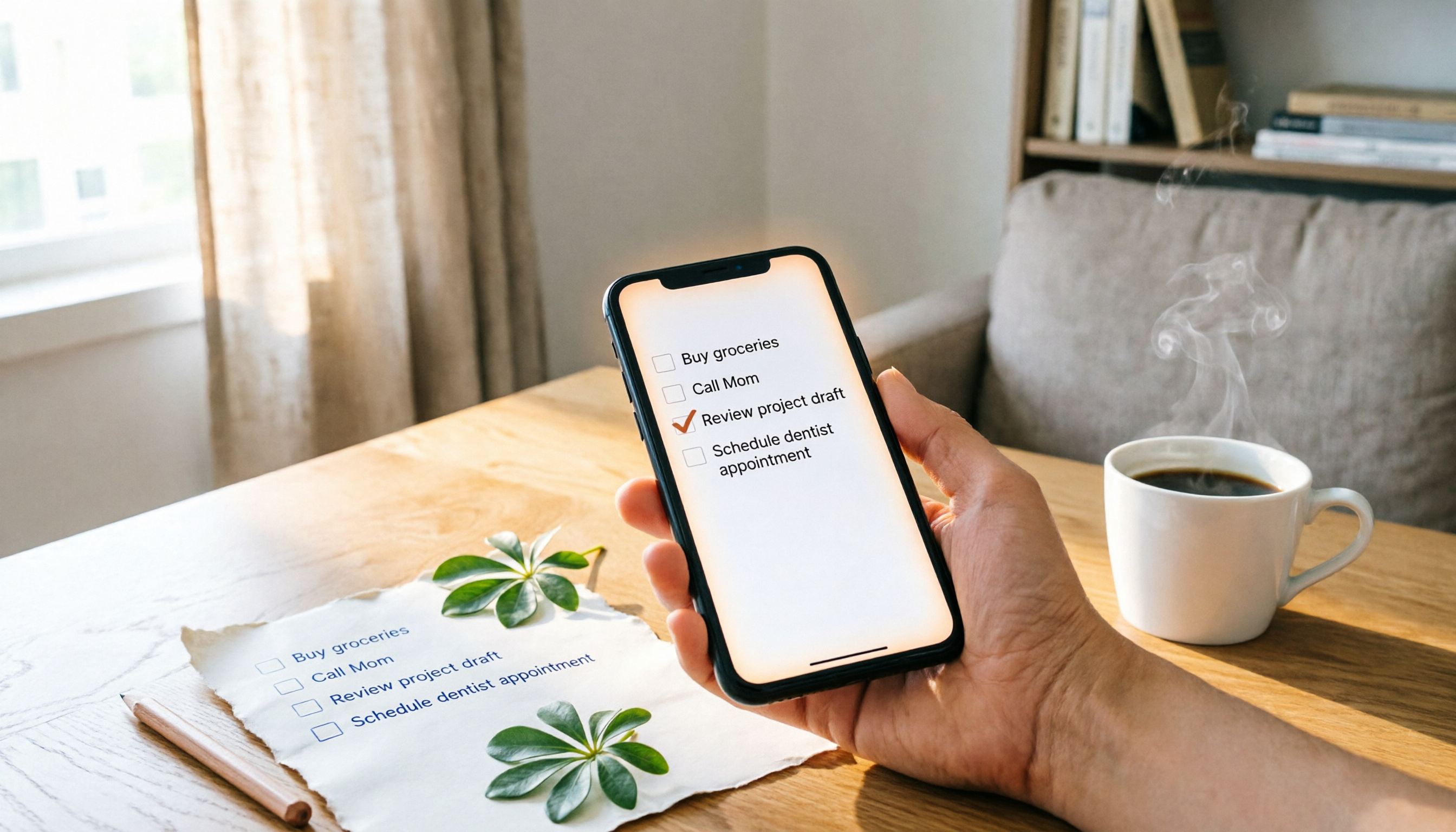
2026 To-Do List App Buying Guide: 5 Tested and Recommended
Struggling to choose a to-do list app? This article tests five free tools—Microsoft To Do, Google Tasks, TickTick, Todoist, and Any.do—and highlights key selection criteria, pros and cons, and ideal use cases to help you find the most convenient list management app.