

Turn recordings into transcripts and summaries in minutes
Upload audio or video for multilingual transcription, AI notes, and action items
Voice Recorder or App? First, Consider Your Meeting Scenarios
When you have a voice recorder in hand or a meeting audio file saved on your phone, the next step is usually to turn the audio into text, then organize it into meeting minutes, to-dos, and follow-up actions. However, the combination of "voice recorder + speech-to-text" actually involves two distinct approaches: one is to buy a hardware recorder with transcription capabilities, and the other is to use software solutions to handle recordings and online meetings.
The key to choosing isn't about "which is more powerful," but rather your meeting patterns. If you often visit clients on the go or attend in-person discussions, the portability of a hardware recorder is indeed an advantage. If your meetings are mostly on Zoom, Google Meet, or Microsoft Teams, then software solutions that can directly capture system audio will be more convenient.
Below, we break down the trade-offs between hardware and software solutions from three perspectives: on-the-go recording, online meetings, and file import.
Hardware Recorders vs. Software Solutions: Trade-offs in On-the-Go Recording, Online Meetings, and File Import
On-the-Go Recording: Advantages and Limitations of Hardware Recorders
Hardware recorders (e.g., PLAUD Note, NotePin) offer the value of "independent of your phone" recording. You don't need to open an app, worry about incoming calls interrupting, just press a button to start recording. They are suitable for long interviews, outdoor reporting, or situations where you need to record discreetly.
However, hardware solutions have two practical issues:
- Cost Barrier: For example, PLAUD's NotePin is priced at approximately USD 159, and the Note Pro at approximately USD 189. Additionally, you need a subscription to access full AI transcription features (Starter offers 300 minutes per month, Pro costs about USD 99.99 per year for 1,200 minutes per month).
- Transcription Workflow: After recording, you typically need to transfer the audio file to the mobile app and then upload it to the cloud for transcription, adding an extra step.
Online Meetings: Software Solutions Are More Direct
If your meetings are online, a hardware recorder isn't helpful—it can only record audio from the microphone, not directly capture the meeting audio played by your computer.
Software solutions (e.g., Tinrec) with a desktop app can directly capture system audio without needing to add a meeting bot to the call. This allows you to record meetings on platforms like Zoom, Meet, and Teams, and generate transcripts in real time. For teams that prefer not to have an extra "bot participant" in meetings, this is a cleaner option.
File Import: Software Solutions Offer More Flexibility
If you already have audio files (whether from your phone, recorder, or meeting platform), software solutions typically support direct upload of audio or video files for transcription. Tinrec supports audio and video file import, handling historical meetings, interviews, or old recordings. Hardware recorders require you to export the file first and then use a transcription tool, which is a longer process.
Comparison of Mainstream Solutions: How to Choose Among PLAUD, Tinrec, Otter, Notta, and Others
Below, we compare several mainstream tools across five dimensions: core positioning, meeting capture method, input sources, Chinese language experience, and post-meeting outputs. Information is based on official pages; actual features may change, so please verify before use.
| Tool | Core Positioning | Meeting Capture | Input Sources | Chinese Experience | Post-Meeting Outputs |
|---|---|---|---|---|---|
| PLAUD Note/NotePin | AI recording hardware | Hardware recording | Primarily hardware recording | Relies on app; Chinese support is decent | Summaries, templates, Q&A |
| Tinrec | AI meeting notes and team collaboration | Desktop app captures system audio without a bot | Live recording, online meetings, file import, mobile | Chinese, Traditional Chinese, multilingual, real-time translation | Summaries, chapters, action items, Q&A, translation, export, Agent post-processing |
| Otter.ai | AI meeting assistant | Bot and desktop app among other methods | Primarily online meetings; also supports file import | More mature for English business meetings | Summaries, action items, Q&A, team analytics |
| Notta | Transcription, translation, and file processing | Meeting bot, desktop app, or upload | File import and some meeting scenarios | Strong multilingual support | Subtitles, translation, summaries |
PLAUD: Suitable for Users Who Prioritize On-the-Go Recording
PLAUD's strength lies in its hardware, making it suitable for long-duration, low-interruption recording. However, note that the hardware cost plus subscription can be significant, and online meeting recording is not its forte.
Tinrec: Suitable for Users Who Need Chinese Meetings and Post-Meeting Workflows
Tinrec is positioned as "turning meetings into searchable, collaborative, and actionable team knowledge." It not only provides transcripts but also automatically generates summaries, chapters, highlights, and action items, and supports AI Q&A, real-time translation, and Agent post-processing—for example, turning action items into action plans, follow-up materials, reports, or tables.
Otter.ai: A Mature Choice for English Business Meetings
Otter is quite mature in transcription and team collaboration for English business meetings, with a free plan offering 300 minutes per month. If your meetings are primarily in English, Otter is a reliable option. However, its Chinese transcription quality and Traditional Chinese support may not be as tailored to the habits of users in Taiwan and Hong Kong as Tinrec.
Stop organizing recordings by hand
Upload audio or video and automatically get a transcript, summary, and action items
Notta: A Balance of Multilingual and File Processing
Notta supports multilingual transcription and file import. The free plan offers 120 minutes per month, with a maximum of 3 minutes per session. The Pro plan, billed annually, costs approximately USD 8.17 per month and includes 1,800 minutes per month. If you need to handle multiple languages or large volumes of files, Notta is a practical choice.
Granola: A Lightweight Option for Bot-Free Note-Taking
Granola is a bot-free AI meeting notes tool that transcribes meetings in real time using your desktop's system audio and microphone, and combines with your handwritten notes to generate more targeted meeting content. It supports real-time transcript viewing, copying, and search, but does not support uploading pre-recorded audio files and does not save meeting audio files. If you need to process existing recordings or retain original audio, Granola may not be suitable.
Fireflies.ai: Meeting Automation and Sales Analytics
Fireflies excels in meeting automation, meeting bots, AI summaries, AskFred, and numerous integrations. Its paid plans advertise "unlimited transcription," but in practice, they are still subject to storage limits, file upload rates, and AI credits, so not all capabilities are truly unlimited. If you handle a high volume of meetings and value sales analytics, Fireflies is a mature option. However, if your meetings are primarily in Chinese, you may need to evaluate its transcription quality.
From Recording to Actionable Data: How Post-Meeting Outputs Affect Your Productivity
When choosing a tool, many people only compare "transcription accuracy," overlooking a key question: What do you get after transcription?
Traditional voice recorders or pure transcription tools typically output only a transcript. But a transcript is just text; the real value lies in extracting decisions, action items, and responsibilities from it.
Take Tinrec as an example: it extends the workflow beyond transcription:
1. Automatically generates summaries, chapters, highlights, and action items: Long meetings are broken down into easy-to-browse structures, and action items are automatically listed.
2. AI Q&A: You can ask follow-up questions about the meeting content, such as "What is the client's bottom line on pricing?" or "What was the deadline decided in the last meeting?"
3. Agent Post-Processing: The AI assistant can use the meeting minutes and context to help turn action items into action plans, follow-up materials, reports, tables, or documents. For example, after a project meeting, the AI assistant can generate a project action plan that includes owners, timelines, and risks based on the discussion.
These post-meeting outputs directly affect "how much time you spend after the meeting" and "whether the data can be used directly."
Team Collaboration and Knowledge Retention: Turning Meeting Data into Team Assets
After a meeting, if the data only exists on personal devices or in chat logs, it's like starting from scratch every time. For teams that need collaboration, sharing and retaining meeting data is more important than "transcription accuracy."
Take Tinrec's team edition as an example: it provides a dedicated team space to centrally store meeting recordings, transcripts, summaries, action items, and post-meeting outputs. Specifically:
1. Create a team space and invite members: Administrators can create a team, invite members via a join link, and assign roles such as owner, admin, and regular member.
2. Share meeting data: After a meeting, upload recordings, transcripts, and action items to the team space, where all active members can view, play, and read them. This way, new members can review past meetings, and the team can uniformly search past decisions and action progress.
The team edition is not about "multiple people sharing one personal account," but a separate collaboration space. Meeting data belongs to the team, so even if a member leaves, the data doesn't disappear with the individual; it can be handed over to other members.
Buying Advice for Different Roles: How Sales, Product Development, and In-House Staff Should Choose
Sales, Business Development, and Account Managers
Your pain point is "quickly organizing client needs, commitments, and next steps after meetings." We recommend prioritizing tools that can handle online meetings and automatically extract action items. Tinrec's Agent can help turn commitments from client meetings into follow-up materials, reducing manual organization time. Hardware recorders (like PLAUD) are suitable for on-the-go recording during client visits, but remember to pair them with transcription software.
Product, R&D, and Design Professionals
Your pain point is "many requirement discussions, but decisions and responsibilities aren't captured." We recommend choosing tools that can generate structured minutes, decision lists, and PRDs. Tinrec's AI Q&A and Agent post-processing can help convert meeting discussions into requirement documents or action items. If your meetings are primarily online, software solutions are more direct than hardware recorders.
In-House Staff
Your pain point is "many meetings, need to write minutes, and need to archive." In-house environments often have higher data sensitivity, so we recommend prioritizing data privacy and manual confirmation mechanisms. Tinrec supports Traditional Chinese transcription, but important decisions and sensitive data still require manual verification. If your meetings are primarily in-person, hardware recorders or phone recording paired with software transcription are both viable. If internal systems are involved, ensure the tool complies with your organization's security policies.
Important Considerations: Accuracy, Privacy, Manual Confirmation, and Legal Boundaries
- Accuracy: Transcription accuracy is affected by recording quality, background noise, accents, overlapping speech, and technical jargon. No tool can guarantee 100% accuracy. For important content, cross-check with the transcript timestamps and the original recording.
- Privacy: For meetings involving clients, internal decisions, or personal data, confirm whether the tool supports data deletion, team permission management, and audit logs. Tinrec's team edition offers roles, seat management, and audit logs, but fine-grained file permissions are not yet fully developed and should not be considered a fully launched feature.
- Manual Confirmation: AI-generated summaries, action items, and documents are for reference only. Important commitments, external communications, and key decisions should be confirmed by the relevant people.
- Legal Boundaries: Before recording or transcribing, comply with local laws and obtain consent from participants when required.
When choosing a voice recorder or speech-to-text tool, first clarify your meeting patterns, what outputs you need after meetings, and whether you need team collaboration. Hardware recorders are suitable for on-the-go recording, while software solutions have advantages in online meetings, file import, and post-meeting workflows. Tools like Tinrec can help turn meeting content from "audio files" into "searchable, collaborative, and actionable team knowledge," making them worth adding to your comparison list.
References
- [2024 Update] Voice-to-Text Recorder Comparison
- Professional IC Recorder Recommendations: 4 High-End Voice-to-Text Models, Preferred by Doctors and Lawyers
- [Recorder Recommendations] Top 7 Models: Buying Guide for Lecture Recording, Evidence Recording, and Text Conversion Recorders!
- Voice-to-Text - Special Offers - April 2026
- Recording, Transcript, and Translation 3-in-1 "Voice Recorder" Makes a Big Difference! Four Key Points to Avoid Buying Traps and Losing Money - 大丈夫週記::486部落格
Turn every recording into actionable outcomes
Get 60 free transcription minutes when you sign in. No credit card required.
Related Reading
You might also like
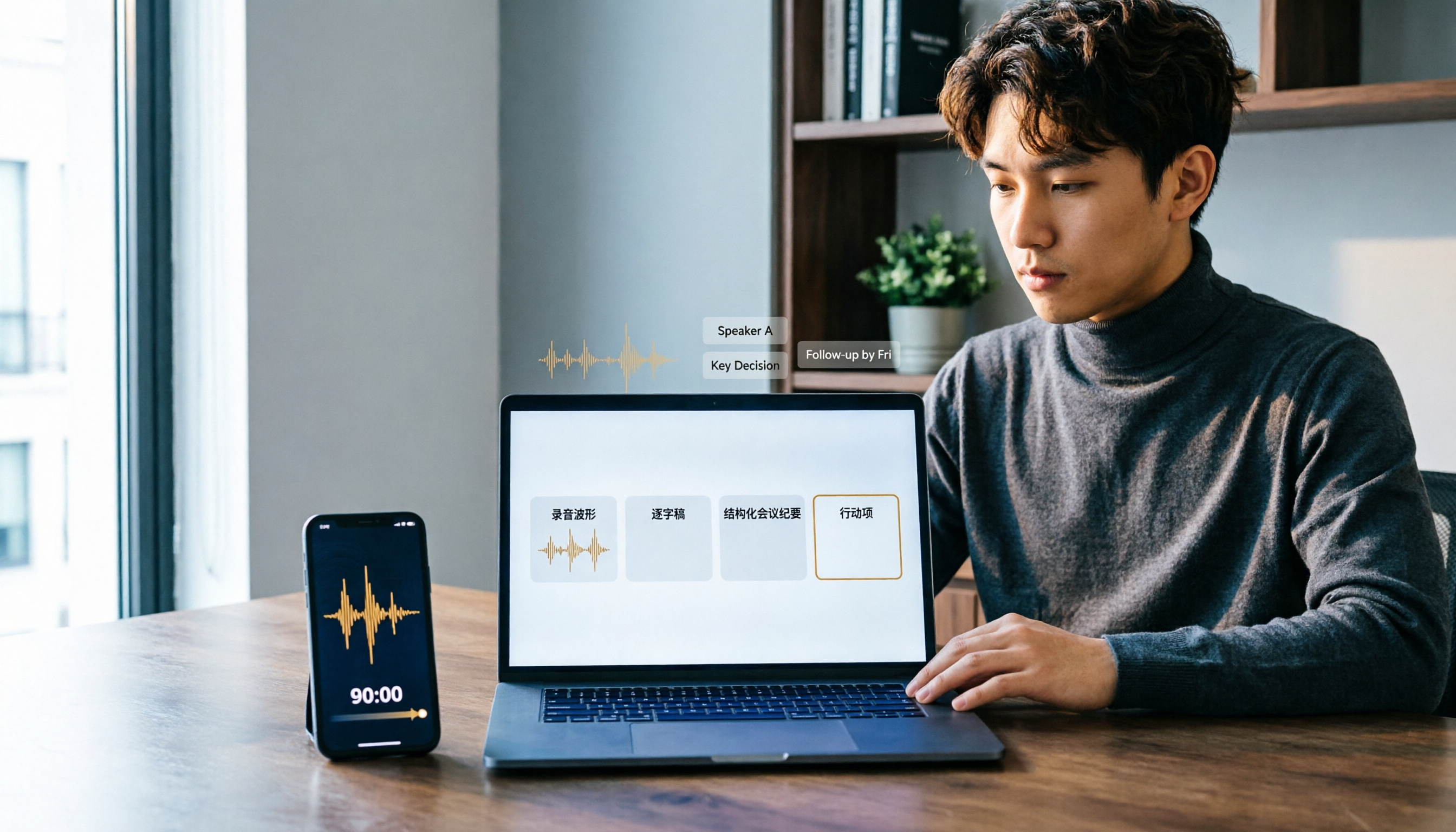
6 AI Meeting Transcription Tools Compared for 2026: From Transcripts to Post-Meeting Summaries
A 90-minute interview recording is sitting on your phone, and the transcript is due tomorrow morning. This article breaks down AI meeting notes into two steps—transcription and organization—and compares six practical solutions, including bot-free recording, multilingual transcription, hardware recorders, and free post-meeting organization tools, to help you choose the right one for your scenario.

2026 AI Meeting Notes Comparison: Tinrec vs Granola for Chinese Transcription and Free Tiers
In Dcard's 2024 AI meeting notes discussions, the most common questions are whether free tiers are sufficient, how well Chinese transcription works, and whether post-meeting summaries can be shared directly. This article compares Tinrec and Granola, two bot-free meeting note tools, across recording retention, old file import, Chinese and bilingual support, post-meeting outputs, team data governance, and pricing to help you decide which fits your meeting scenario.

How to Choose AI Meeting Notes Tools in 2026: 5 Steps to Understand Comparison Tables and Key Selection Criteria
2026 AI meeting notes tool comparison and buying guide: use 5 steps to understand meeting capture, post-transcription processing, Chinese language support, team governance, and pricing quotas, and compare use cases for Tinrec, Otter.ai, Notta, Granola, TurboScribe, and PLAUD.

2026 AI Meeting Notes Comparison: Tinrec vs Notta — Which Is Better for Chinese-Speaking Teams?
A meeting notes table isn't just pasting a transcript. This article uses a typical weekly meeting workflow to compare Tinrec and Notta across five dimensions: meeting capture methods, table output, free quota and pricing, Chinese and real-time translation, and team governance. It also includes a ready-to-use meeting notes table template with fields and a manual verification checklist.
Tinrec vs Notta 2026: 5-Dimension Comparison for Chinese Meeting Notes
Based on the popular PTT discussion about AI meeting notes, we compare Tinrec and Notta across 5 key dimensions: bot-free recording, post-meeting AI Q&A, team data retention, and quota rules, to help you choose the right tool for Chinese meetings.

2026 AI Meeting Notes: Record Online Meetings Without a Bot + Auto To-Dos in One Go
The latest shift in AI meeting notes for 2026 is moving from "inviting a bot into the meeting" to "getting data you can use right after the meeting." This article takes the perspective of a mid-level manager, breaks down 4 key purchasing criteria, tests Tinrec's bot-free recording, automatic to-dos, and AI Q&A, and briefly reviews who Meeting Ink, SeaMeet, and CLOVA Note are each best for.
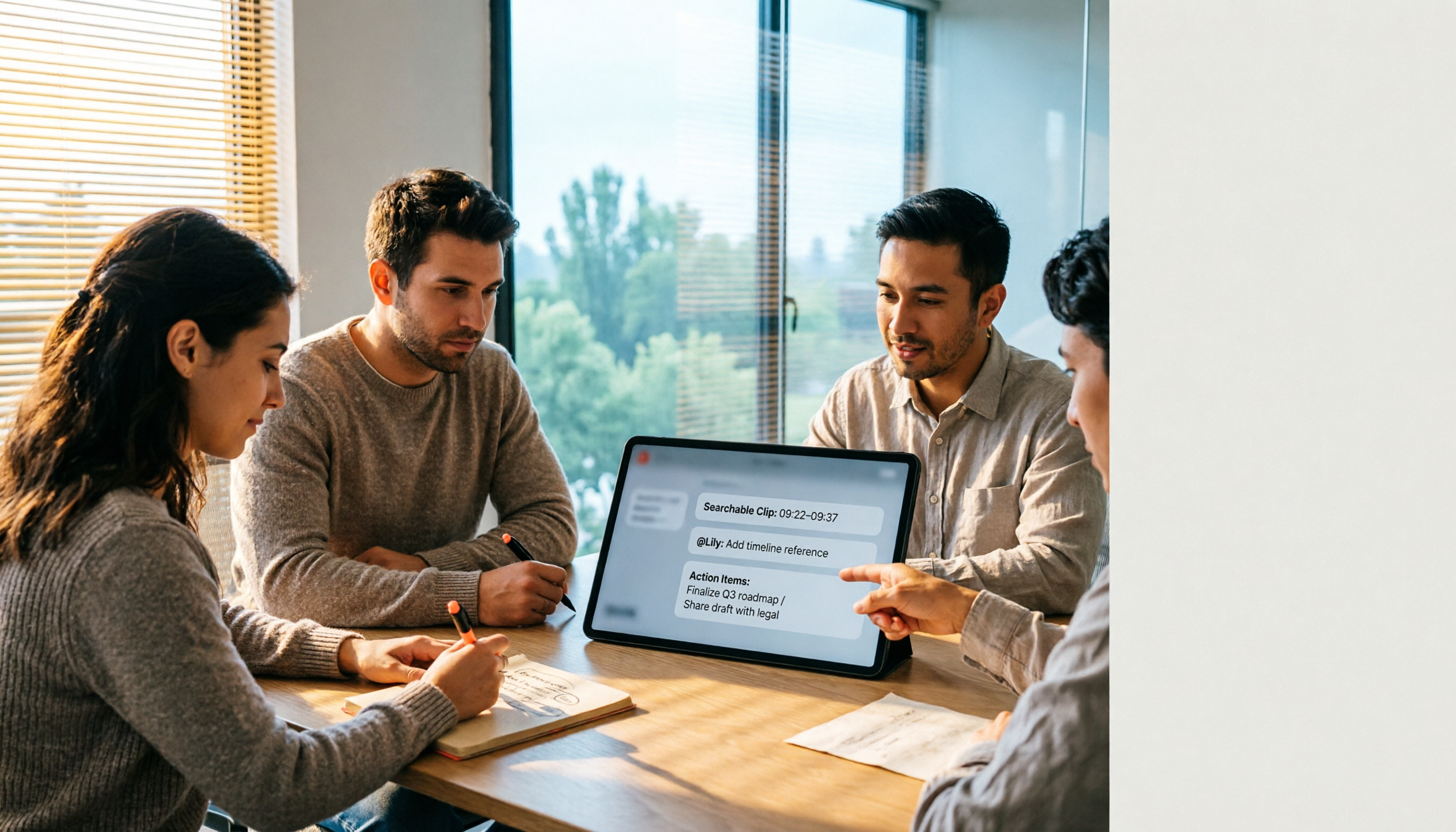
2026 AI Meeting Notes Comparison: Which Latest Version Actually Saves You Time?
A guide to choosing the latest AI meeting notes tools in 2026, covering common pitfalls, core capabilities, real-world use cases, team seat pricing, and how Tinrec turns meetings into searchable, collaborative, actionable data.

2025 AI Meeting Notes Guide: Auto-Generate Transcripts and Action Items in One Go
How to choose an AI meeting notes tool in 2025? We break down 5 key buying factors: meeting capture methods, post-transcript organization, mixed Chinese-English recognition, team data ownership, and quota calculations. Plus, we compare Tinrec, Otter.ai, Notta, and Granola to help you find the right fit.

4 Real-Time Transcription Tools Tested for 2026: Which One Keeps Up as You Speak?
How do you do real-time transcription? We tested 4 tools with the same Chinese meeting recording, comparing live transcription, Chinese and mixed Chinese-English recognition, post-meeting summaries and AI follow-up questions, as well as free quotas, team seats, and pricing, to help you find the approach that truly keeps up during meetings.