
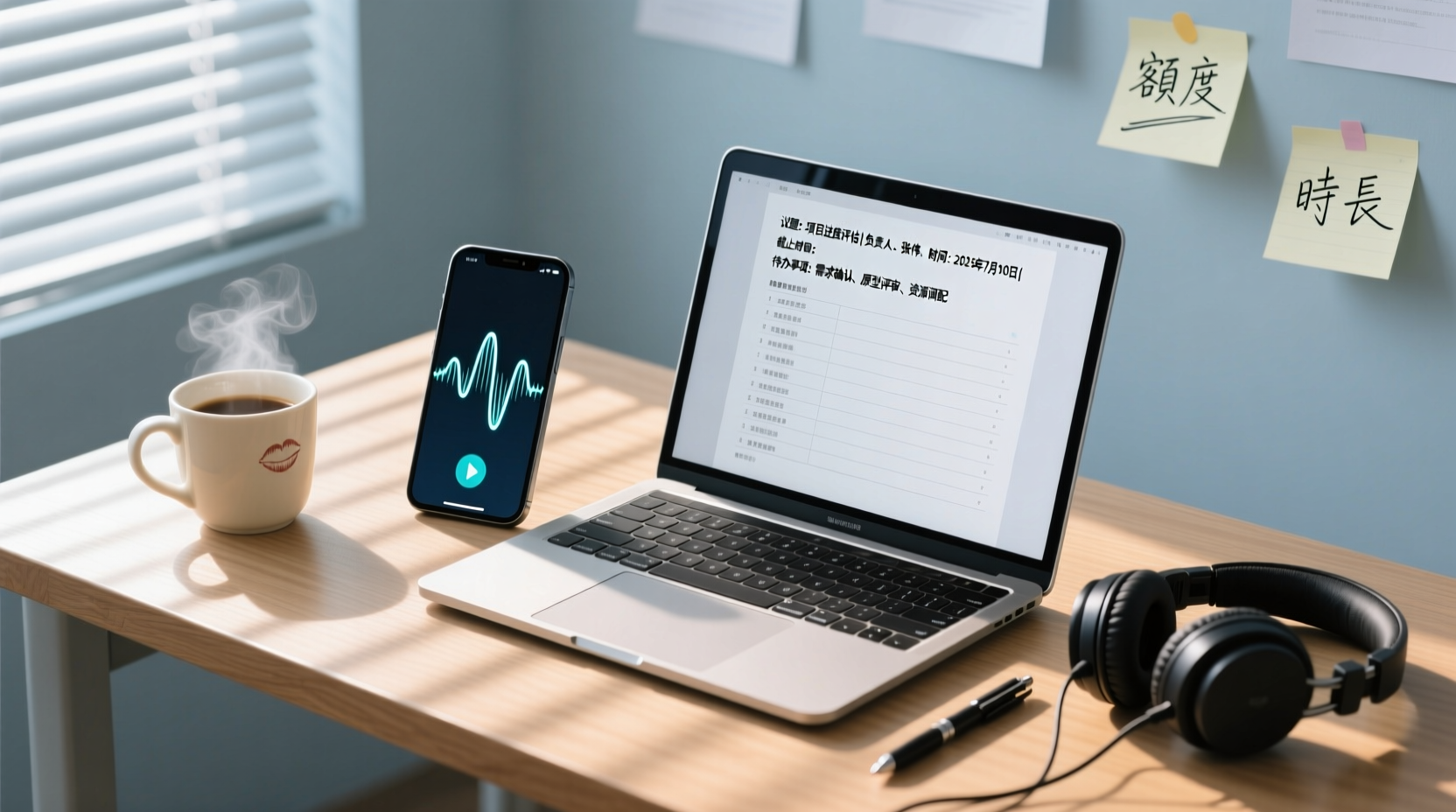
Turn recordings into transcripts and summaries in minutes
Upload audio or video for multilingual transcription, AI notes, and action items
Three Hidden Limitations of Free Speech-to-Text Tools: Quotas, Per-Session Duration, and Feature Restrictions
When you search for "free speech to text," you often see terms like "free trial" or "free credits," but in practice, you'll likely encounter three hidden limitations:
- Quota limits: Most tools offer a fixed number of minutes per month, such as Otter.ai's 300 minutes per month or Notta's 120 minutes per month. Once you exceed the limit, you have to wait for the next period or upgrade to a paid plan.
- Per-session duration limits: Some tools restrict the length of a single transcription. For example, Notta's free plan allows a maximum of 3 minutes per session, while TurboScribe's free plan allows up to 30 minutes per file. Long meeting recordings cannot be processed in one go.
- Feature restrictions: Free plans typically do not include advanced features such as AI summaries, action item extraction, translation, or team collaboration. You only get the raw transcript, and you'll have to do the subsequent organization yourself.
In other words, free plans are suitable for occasional use with short recordings. If you handle multiple meetings every week, your free quota will quickly run out, and you'll need to either switch tools or upgrade to a paid plan.
Comparison of Free Plans from Mainstream Tools: Which One Fits Your Meeting Scenarios?
Below is a comparison of free plans from several common tools. The information is based on official pages and may be subject to change. Please verify before use.
| Tool | Free Quota | Per-Session Duration Limit | Main Limitations |
|---|---|---|---|
| Otter.ai | 300 minutes per month | Check official page | Advanced features require payment |
| Notta | 120 minutes per month | Max 3 minutes per session | Long meetings cannot be processed in one go |
| TurboScribe | 3 files per day | Max 30 minutes per file | Batch processing is limited |
| Fireflies.ai | Free plan | Affected by storage, upload rate, and AI credits | Not completely unlimited |
| Granola | Free plan | Does not support uploading pre-recorded audio | Does not retain meeting audio |
| Tinrec | Free plan offers basic quota | Check official page | Advanced features require payment |
Otter.ai: 300 minutes per month. If each meeting lasts 1 hour, you can process about 5 meetings. However, there may be a per-session duration limit, so check the official page. Suitable for users who have more English business meetings.
Notta: 120 minutes per month, with a maximum of 3 minutes per session. This means recordings longer than 3 minutes must be processed in segments, which is very inconvenient for long meetings. Suitable for users who occasionally process short recordings.
TurboScribe: 3 files per day, with a maximum of 30 minutes per file. If a meeting recording exceeds 30 minutes, it cannot be transcribed in one go. Suitable for scenarios where you process many short files.
Fireflies.ai: The free plan claims unlimited transcription, but in practice, it is subject to storage space, file upload rate, and AI credits, so it is not completely unlimited. Suitable for users who need a meeting bot to join automatically.
Granola: The free plan does not support uploading pre-recorded audio files and does not retain meeting audio. Suitable for real-time meeting notes, but cannot handle historical recordings.
Tinrec: The free plan offers basic quota, allowing you to experience recording, import, summarization, and transcription features. Suitable for users who want to try before deciding to upgrade.
From Recording to Usable Minutes: What Can Free Plans Accomplish?
Free plans typically can accomplish the following:
- Audio-to-text transcription: Convert audio files into verbatim transcripts. This is the basic function.
- Basic summarization: Some tools offer AI summaries, but free versions may limit the number or length of summaries.
- Timestamps: Some tools mark time points for easy reference.
However, free plans typically cannot do the following:
- Action item extraction: Automatically list action items from meetings.
- AI Q&A: Ask follow-up questions about meeting content.
- Multi-format export: Export results to tools like Notion, Google Docs, etc.
- Team collaboration: Share meeting materials with team members and co-edit.
Stop organizing recordings by hand
Upload audio or video and automatically get a transcript, summary, and action items
For example, Tinrec's free version allows you to experience basic transcription and summarization, but if you want to use the AI assistant to turn action items into action plans, follow-up materials, or reports, you need to upgrade to a paid plan.
The Line Between Free and Paid: When Should You Upgrade?
The timing for upgrading to a paid plan depends on your usage frequency and needs:
- Occasional use: If you process 1–2 short meetings per month, the free quota may be sufficient.
- Regular use: If you have meetings every week, the free quota will run out quickly, and upgrading to a monthly or annual plan is more cost-effective.
- Need for advanced features: If you rely on AI summaries, action item extraction, translation, or team collaboration, the free version cannot meet your needs, and upgrading is necessary.
- Team collaboration needs: When meeting materials need to be shared with colleagues and managed centrally, the team edition can provide team spaces, shared meeting materials, and more.
For example, Tinrec offers a free version, weekly plan, Pro monthly plan, and annual plan for individuals, allowing you to choose based on usage frequency.
When Free Quota Runs Out and Meeting Materials Need to Be Shared: How Does Tinrec Team Edition Take Over?
Another common pain point of free plans is that meeting materials remain on personal devices. As you gradually convert several meetings into transcripts and summaries, you'll find that these materials are scattered across different tools, and colleagues cannot see them or take over follow-up tasks. Especially when the meetings you handle require cross-departmental follow-up, or when a colleague needs to check details of a customer commitment, free tools often lack a "sharing" component.
Tinrec Team Edition bridges this gap. You can create a team space to centrally store meeting recordings, transcripts, summaries, and action items. Team members can view, play, and read team materials even without a paid seat. For example, after a sales meeting, you can place the transcript and AI-generated customer commitment items into the team space, and colleagues responsible for follow-up can directly search the original content without asking you for the recording or key points.
The second aspect is the practical operation of "sharing meeting materials." When you place the minutes of a cross-departmental project meeting into the team space, the project manager can view decision records, engineers can verify assigned tasks, and business staff can confirm whether customer requirements have been fully recorded. Compared to sending files back and forth via messaging apps, the team space allows all relevant members to find meeting outputs in one place, and new members can review historical meetings to understand project context. If you find that team meeting materials frequently need to be viewed and followed up by multiple people, consider upgrading Tinrec to the Team Edition to turn every meeting into a searchable, collaborative asset for the team.
Free Plan Recommendations for Different Work Styles: Sales, Product/Engineering, and Institutional Staff
Sales, Business Development, and Account Managers
Meetings focus on customer needs, commitments, and follow-up actions. Free plans can start with Tinrec or Otter.ai to check transcription quality and summaries. If you visit more than 5 customers per week, the free quota may be insufficient, so consider upgrading to a paid plan and using the AI assistant to turn commitments from customer meetings into follow-up materials.
Product, R&D, and Design Personnel
Meetings often involve requirement reviews and technical discussions, requiring preservation of decisions and task assignments. Free plans can start with Notta or TurboScribe, but per-session duration limits may prevent processing long meetings. If you need to convert meeting content into PRDs or action items, consider upgrading to a paid plan and using the AI assistant to generate structured documents.
Institutional Staff
Meeting content is sensitive, with high requirements for privacy and data security. Free plans require attention to data storage location and privacy policies. It is recommended to try Tinrec's free version first to check transcription quality and data processing methods. If you need to retain meeting records long-term, consider a paid plan and ensure data can be exported to internal systems.
Important Considerations: Accuracy, Privacy, and the Boundaries of Human Review
- Accuracy: The accuracy of speech-to-text is affected by recording quality, background noise, accents, and overlapping speech. No fixed accuracy rate can be guaranteed. For important content, cross-check the transcript against the recording.
- Privacy: When handling recordings and transcriptions, comply with local laws and obtain consent from participants when necessary. Free plans may use data for model training, so review the privacy policy carefully before use.
- Human review: AI-generated summaries, action items, and documents are for reference only. Important decisions, externally sent content, and sensitive data must be reviewed by humans.
Conclusion: Free Plans Are a Starting Point, Not the End
Free speech-to-text tools can save you initial organization time, but hidden limitations may cause wasted effort. It is recommended to start with a free plan to see if the tool fits your meeting scenarios and workflow, then upgrade to a paid plan as needed. If your team needs to share meeting materials, consider Tinrec Team Edition to centrally manage meeting data, turning every communication into a searchable, collaborative team asset.
References
- Online AI Speech, Video, and Audio File to Text - Free Trial - cSubtitle
- Audio to Text - Free Speech-to-Text Tool
- Tested 4 Best Online Speech-to-Text Tools Recommended, Free to Convert Recording Files to Transcripts
- 6 Best Online Speech-to-Text Tools, Convert Recording Files to Text in Seconds, Accuracy Up to 98%! - YouTube
- Online AI Speech-to-Text Tool, Free to Convert MP3 or Recording Files to Text Transcripts
Turn every recording into actionable outcomes
Get 60 free transcription minutes when you sign in. No credit card required.
Related Reading
You might also like
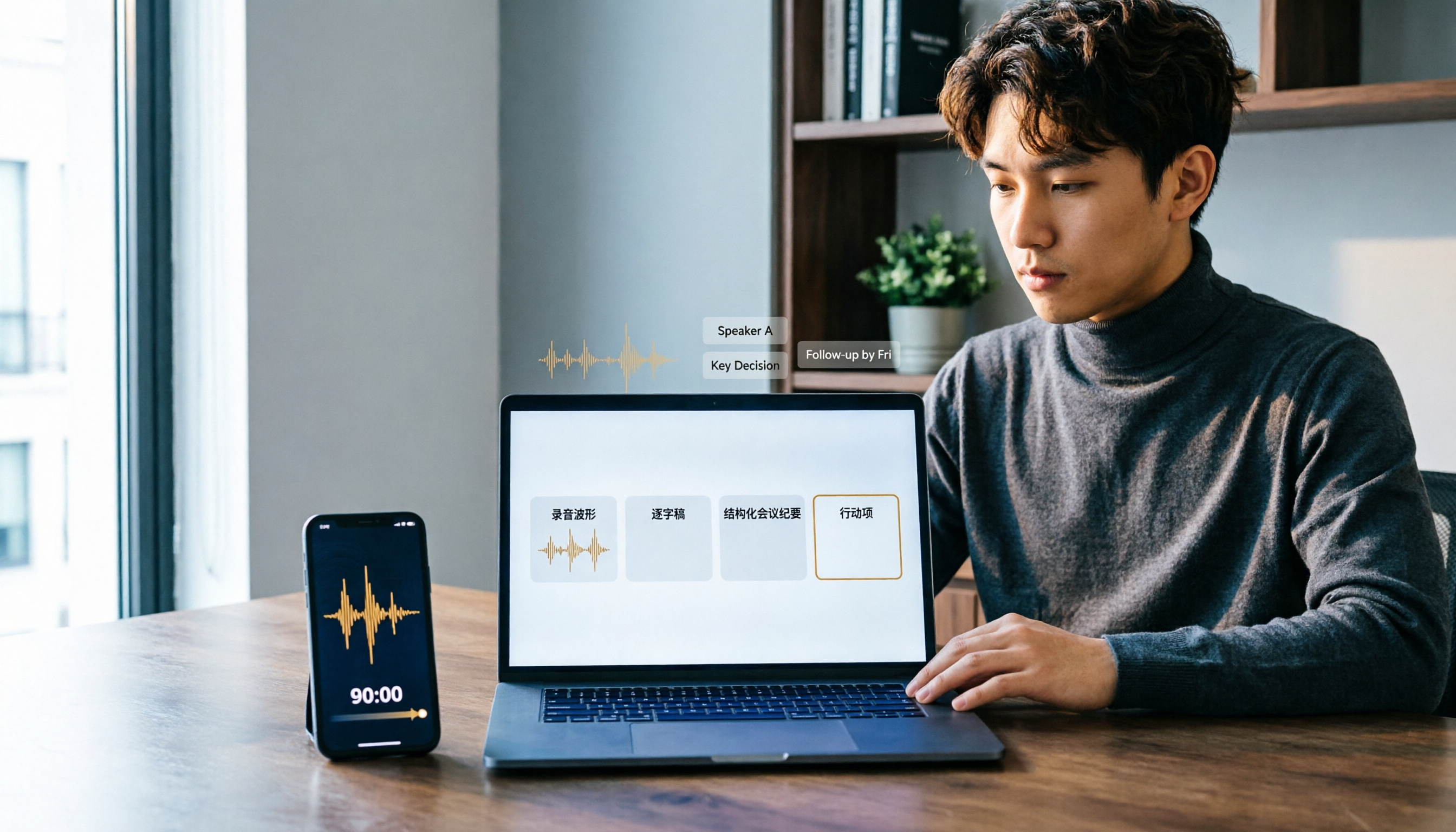
6 AI Meeting Transcription Tools Compared for 2026: From Transcripts to Post-Meeting Summaries
A 90-minute interview recording is sitting on your phone, and the transcript is due tomorrow morning. This article breaks down AI meeting notes into two steps—transcription and organization—and compares six practical solutions, including bot-free recording, multilingual transcription, hardware recorders, and free post-meeting organization tools, to help you choose the right one for your scenario.

2026 AI Meeting Notes Comparison: Tinrec vs Granola for Chinese Transcription and Free Tiers
In Dcard's 2024 AI meeting notes discussions, the most common questions are whether free tiers are sufficient, how well Chinese transcription works, and whether post-meeting summaries can be shared directly. This article compares Tinrec and Granola, two bot-free meeting note tools, across recording retention, old file import, Chinese and bilingual support, post-meeting outputs, team data governance, and pricing to help you decide which fits your meeting scenario.

How to Choose AI Meeting Notes Tools in 2026: 5 Steps to Understand Comparison Tables and Key Selection Criteria
2026 AI meeting notes tool comparison and buying guide: use 5 steps to understand meeting capture, post-transcription processing, Chinese language support, team governance, and pricing quotas, and compare use cases for Tinrec, Otter.ai, Notta, Granola, TurboScribe, and PLAUD.

2026 AI Meeting Notes Comparison: Tinrec vs Notta — Which Is Better for Chinese-Speaking Teams?
A meeting notes table isn't just pasting a transcript. This article uses a typical weekly meeting workflow to compare Tinrec and Notta across five dimensions: meeting capture methods, table output, free quota and pricing, Chinese and real-time translation, and team governance. It also includes a ready-to-use meeting notes table template with fields and a manual verification checklist.
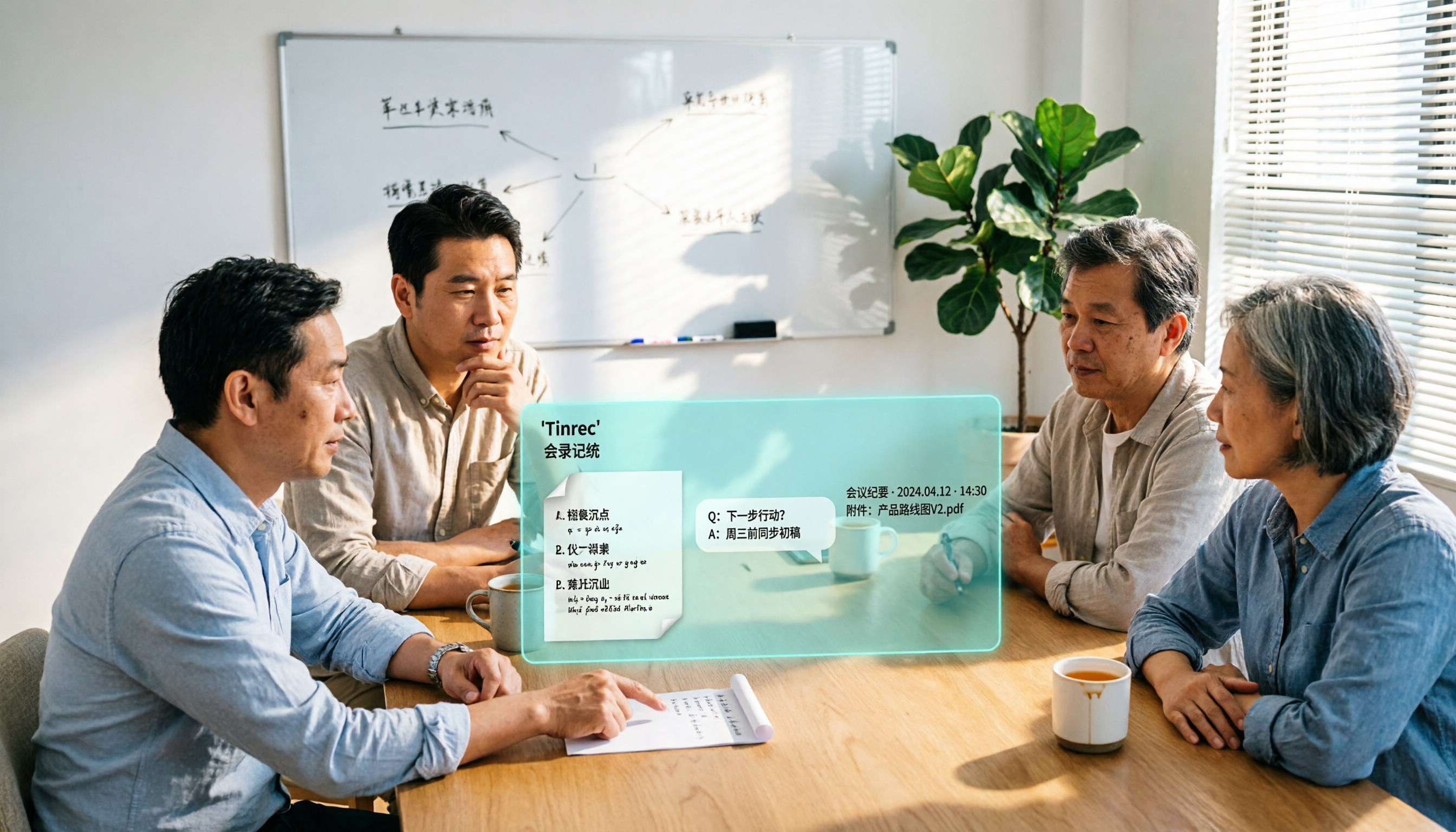
Tinrec vs Notta 2026: 5-Dimension Comparison for Chinese Meeting Notes
Based on the popular PTT discussion about AI meeting notes, we compare Tinrec and Notta across 5 key dimensions: bot-free recording, post-meeting AI Q&A, team data retention, and quota rules, to help you choose the right tool for Chinese meetings.

2026 AI Meeting Notes: Record Online Meetings Without a Bot + Auto To-Dos in One Go
The latest shift in AI meeting notes for 2026 is moving from "inviting a bot into the meeting" to "getting data you can use right after the meeting." This article takes the perspective of a mid-level manager, breaks down 4 key purchasing criteria, tests Tinrec's bot-free recording, automatic to-dos, and AI Q&A, and briefly reviews who Meeting Ink, SeaMeet, and CLOVA Note are each best for.
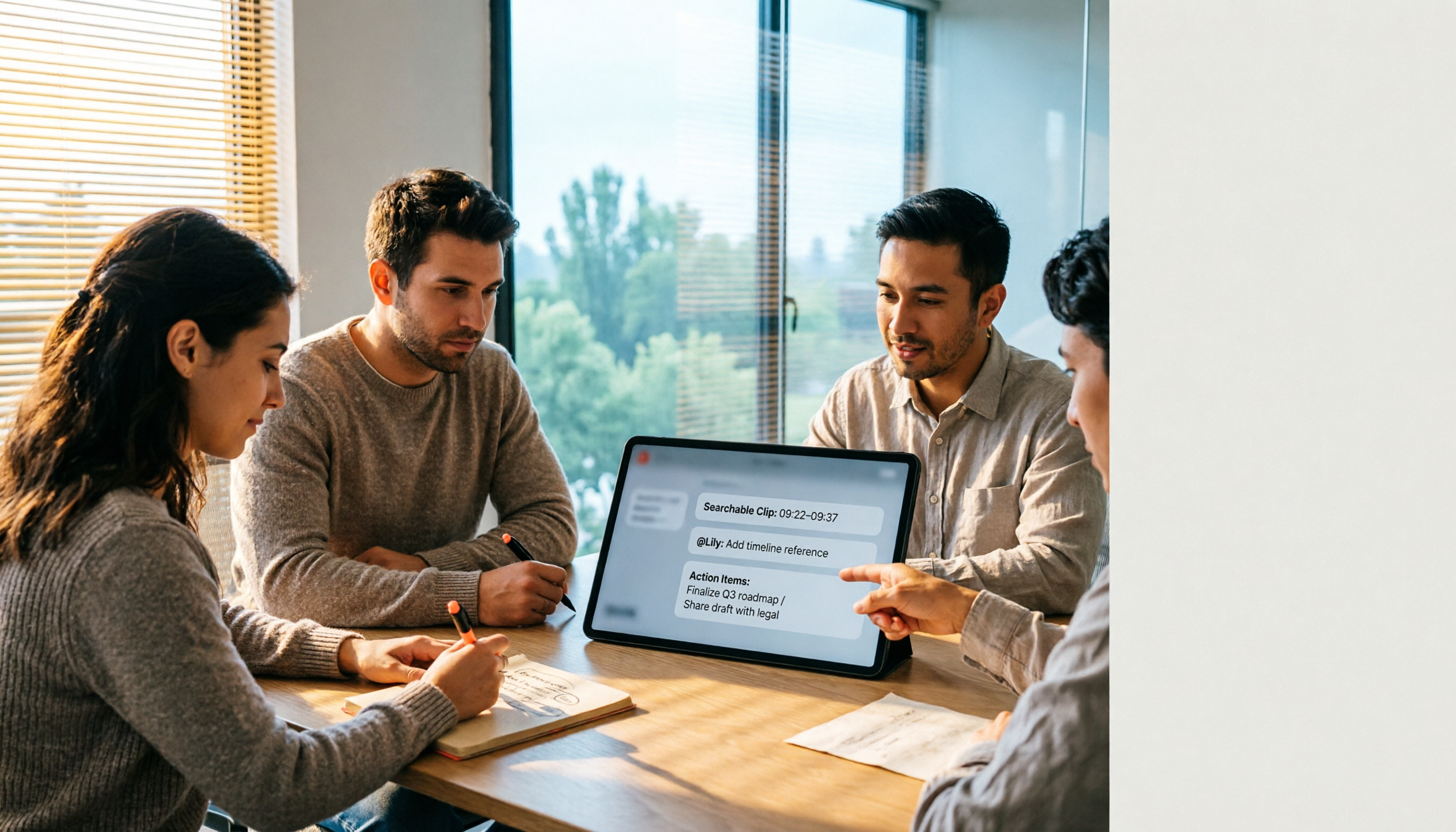
2026 AI Meeting Notes Comparison: Which Latest Version Actually Saves You Time?
A guide to choosing the latest AI meeting notes tools in 2026, covering common pitfalls, core capabilities, real-world use cases, team seat pricing, and how Tinrec turns meetings into searchable, collaborative, actionable data.

2025 AI Meeting Notes Guide: Auto-Generate Transcripts and Action Items in One Go
How to choose an AI meeting notes tool in 2025? We break down 5 key buying factors: meeting capture methods, post-transcript organization, mixed Chinese-English recognition, team data ownership, and quota calculations. Plus, we compare Tinrec, Otter.ai, Notta, and Granola to help you find the right fit.

4 Real-Time Transcription Tools Tested for 2026: Which One Keeps Up as You Speak?
How do you do real-time transcription? We tested 4 tools with the same Chinese meeting recording, comparing live transcription, Chinese and mixed Chinese-English recognition, post-meeting summaries and AI follow-up questions, as well as free quotas, team seats, and pricing, to help you find the approach that truly keeps up during meetings.