
Turn recordings into transcripts and summaries in minutes
Upload audio or video for multilingual transcription, AI notes, and action items
When you search for "free speech to text online," you often see phrases like "free trial" or "free credits," but in practice, you'll encounter three hidden limitations: quota limits, per-session duration limits, and feature restrictions.
Free plans are suitable for "occasional use with short recordings"; if you handle multiple meetings every week, your free quota will quickly run out, forcing you to switch tools or upgrade to a paid plan.
Three Barriers of Free Plans: Quota, Per-Session Duration, and Feature Restrictions
Free plans are free for a reason, usually accompanied by three types of limitations that often surface only after you start using them:
- Quota limits: Most tools offer a fixed number of minutes per month, such as Otter.ai's 300 minutes per month or Notta's 120 minutes per month. Once exceeded, you have to wait for the next cycle or upgrade.
- Per-session duration limits: Some tools limit the length of a single transcription. For example, Notta's free version allows up to 3 minutes per session, while TurboScribe's free version allows up to 30 minutes per file. Long meeting recordings cannot be processed in one go.
- Feature restrictions: Free versions typically do not include advanced features like AI summaries, action item extraction, translation, or team collaboration. You only get the raw transcript, and you have to do the rest yourself.
In other words, free plans are suitable for "occasional use with short recordings"; if you handle multiple meetings every week, your free quota will quickly run out, forcing you to switch tools or upgrade to a paid plan.
Comparison of Mainstream Free Online Speech-to-Text Tools: Which One Suits Your Online Meetings?
Below is a comparison of free plans from several common tools. Information is based on official pages and may change; please verify before use.
| Tool | Free Quota | Per-Session Duration Limit | Main Limitations |
|---|---|---|---|
| Otter.ai | 300 minutes per month | Check official page | Advanced features require payment |
| Notta | 120 minutes per month | Up to 3 minutes per session | Advanced features require payment |
| TurboScribe | 3 files per day | Up to 30 minutes per file | Advanced features require payment |
| Fireflies.ai | Free plan | Check official page | Storage and upload speed limited |
| Granola | Free plan | Does not support uploading pre-recorded audio | Live meetings only |
| Tinrec | Basic quota | Check official page | Advanced features require payment |
Key Notes:
- Otter.ai: 300 free minutes per month, suitable for light users, but advanced features require payment.
- Notta: 120 minutes per month, up to 3 minutes per session, making long meeting recordings inconvenient as they need to be split.
- TurboScribe: 3 files per day, up to 30 minutes per file, suitable for batch processing short files.
- Fireflies.ai: The free plan claims unlimited transcription, but is actually limited by storage space and upload speed.
- Granola: The free plan does not support uploading pre-recorded audio files, only live meetings, and does not retain meeting audio.
- Tinrec: Offers a basic free quota to experience recording, importing, summarization, and transcription features.
For Online Meetings: Difference Between Bot Recording and Desktop Capture
The way you record online meetings directly influences your choice of tool.
- Meeting bots: Join the meeting as virtual participants, such as Otter.ai's meeting bot or Fireflies.ai's Fred. Advantages include automatic joining and easy management; disadvantages include the need to invite the bot, and some meeting platforms may restrict them.
- Bot-free desktop recording: Directly captures your computer's system audio without needing an additional bot to join the meeting. Examples include Tinrec desktop version and Granola. Advantages include higher privacy and no need to invite bots; disadvantages include manual recording initiation and limitation to meetings on your computer.
For users who value privacy or do not want bots in meetings, bot-free solutions are more suitable.
Stop organizing recordings by hand
Upload audio or video and automatically get a transcript, summary, and action items
Traditional Chinese Transcription Quality: Differences Among Free Tools and Support for Mixed Chinese-English
For professionals in Taiwan and Hong Kong, the quality of Traditional Chinese transcription often matters more than the number of features. Tools vary significantly in their support for Traditional Chinese; some tools claim multilingual support, but the output often contains Simplified Chinese characters, wording that does not align with Taiwan or Hong Kong conventions, or errors when Chinese and English are mixed. Free plans typically offer only basic transcription, and the recognition quality for Traditional Chinese may not be as good as paid versions, and they may not support accurate recognition of mixed Chinese-English content. Therefore, it is recommended to test tools before choosing to ensure they can correctly handle your common meeting terminology and mixed-language conversations.
Output and Export in Free Plans: Can They Fit into Your Workflow?
Free plans typically provide only the raw transcript, with limited output formats, possibly only plain text or simple file downloads. They may not support exporting to common formats like Word or PDF, and rarely support direct export to third-party tools like Notion or Google Docs. If you need to bring meeting notes into your existing workflow after the meeting, free plans may not meet your needs. In such cases, consider a paid version to gain more export options and third-party integrations.
From Free to Paid: When Should You Upgrade?
Free plans usually only meet "occasional, short recording" needs. Consider upgrading when you encounter the following:
- Monthly meeting hours exceed the free quota: For example, if your meetings exceed 300 minutes per month, Otter.ai's free version is insufficient.
- Need to process long meeting recordings: Recordings longer than 30 minutes per session often cannot be processed in one go with free versions.
- Need advanced features like AI summaries or action item extraction: Free versions typically only provide the raw transcript and cannot automatically organize key points.
- Need team collaboration and data sharing: Free versions usually do not support sharing meeting data among multiple people.
Free Plan Recommendations for Different Work Scenarios: Sales, Product/Engineering, and Government/Institutional Staff
Sales, Business Development, and Account Managers
- Needs: Client meetings, requirement interviews, follow-ups.
- Free plan recommendations: If most meetings are online and of moderate length, try Otter.ai or Tinrec free versions first to check transcription quality and summary features.
- Upgrade timing: When you need to organize client commitments, generate follow-up materials, or share client meeting records with your team, consider upgrading to Tinrec's paid version to use AI assistants to turn action items into action plans and follow-up emails.
Product, Engineering, and Design Staff
- Needs: Requirement reviews, technical discussions, project meetings.
- Free plan recommendations: If meetings are primarily online, try Tinrec's desktop version with bot-free recording to ensure no meeting content is missed.
- Upgrade timing: When you need to convert discussion outcomes into PRDs, action items, and acceptance documents, the paid version's AI summaries and action item extraction can significantly save organization time.
Government and Institutional Staff
- Needs: Internal meetings, communication and deployment, discussion records.
- Free plan recommendations: Due to sensitive internal data, prioritize data privacy and security. You can first use free versions to test transcription quality.
- Upgrade timing: When you need to retain meeting records long-term and build a searchable internal database, consider paid versions, and pay attention to data storage location and compliance.
Important Considerations: Accuracy, Privacy, and the Boundary of Human Review
- Accuracy: AI transcription accuracy is affected by recording quality, background noise, accents, and technical jargon. For important meetings, compare the recording with the transcript and manually verify.
- Privacy: Online tools typically upload audio files to the cloud for processing. Before use, confirm the service provider's privacy policy, comply with local laws, and obtain consent from participants.
- Human review: AI-generated summaries and action items may miss details or misinterpret meaning. Key decisions and external communications must be reviewed by humans.
Team Collaboration: From Personal Notes to Team Sharing
When you find that free plans cannot meet your meeting organization needs and meeting data needs to be shared with your team and accumulated over time, consider Tinrec's team edition. Tinrec's team edition provides a team space that centralizes meeting recordings, transcripts, summaries, and action items for easy sharing and reference. For example, sales teams can upload client meeting records to the team space, allowing members to review client commitments and follow-up actions at any time; project teams can uniformly store weekly meeting materials, enabling new members to quickly understand project progress. Through team spaces and shared meeting data, meetings become not just personal notes but a sustainable knowledge asset for the team.
References
- Online AI Speech, Video, and Audio File to Text - Free Trial - cSubtitle
- Tested 4 Best "Speech to Text" Online Tools Recommended, Free to Convert Recording Files to Transcripts
- Yating Transcript
- Free Speech to Text Converter Online
- Online AI Speech to Text Tool, Free to Convert MP3 or Recording Files to Text Transcripts
Turn every recording into actionable outcomes
Get 60 free transcription minutes when you sign in. No credit card required.
Related Reading
You might also like
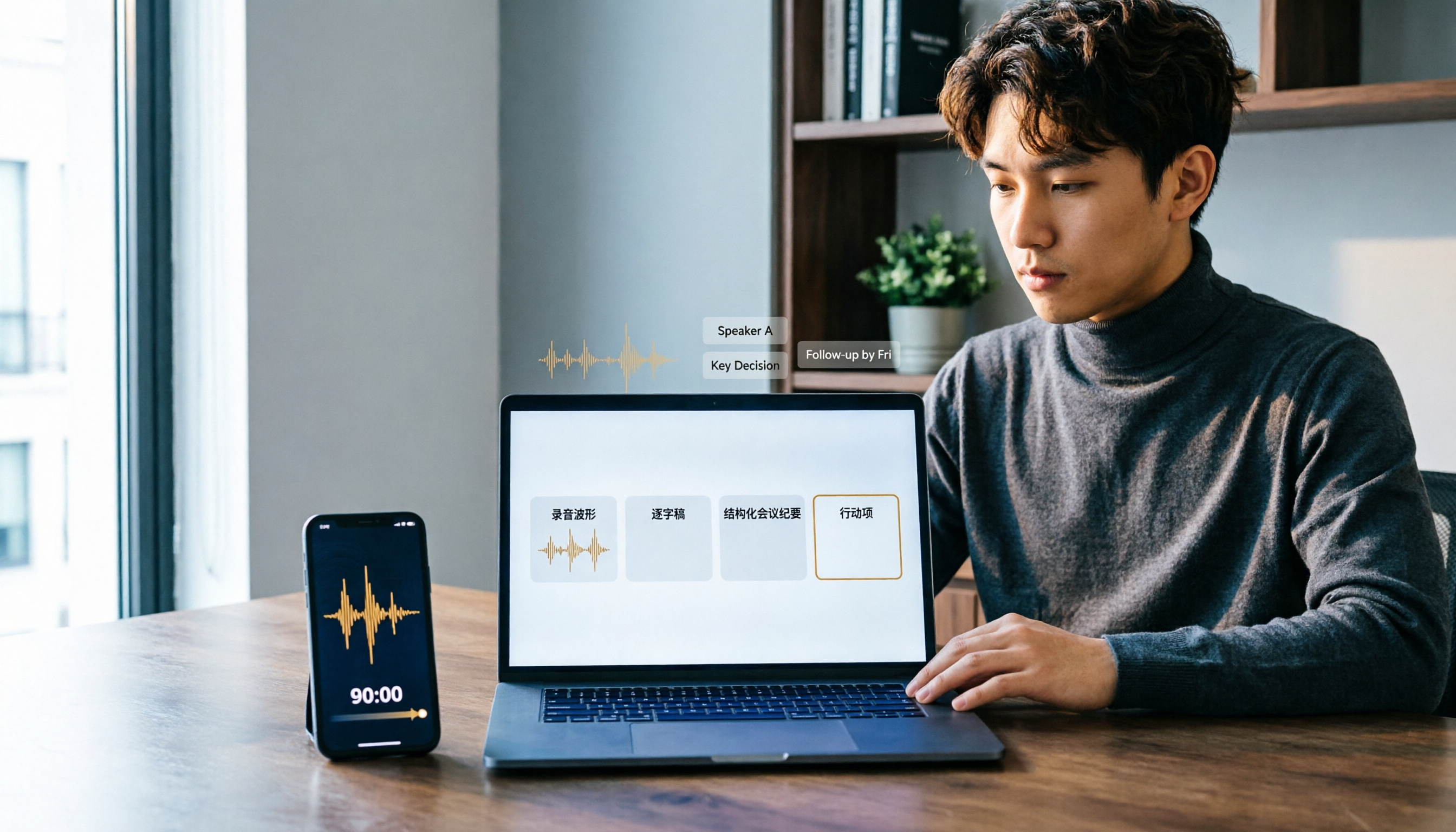
6 AI Meeting Transcription Tools Compared for 2026: From Transcripts to Post-Meeting Summaries
A 90-minute interview recording is sitting on your phone, and the transcript is due tomorrow morning. This article breaks down AI meeting notes into two steps—transcription and organization—and compares six practical solutions, including bot-free recording, multilingual transcription, hardware recorders, and free post-meeting organization tools, to help you choose the right one for your scenario.

2026 AI Meeting Notes Comparison: Tinrec vs Granola for Chinese Transcription and Free Tiers
In Dcard's 2024 AI meeting notes discussions, the most common questions are whether free tiers are sufficient, how well Chinese transcription works, and whether post-meeting summaries can be shared directly. This article compares Tinrec and Granola, two bot-free meeting note tools, across recording retention, old file import, Chinese and bilingual support, post-meeting outputs, team data governance, and pricing to help you decide which fits your meeting scenario.

How to Choose AI Meeting Notes Tools in 2026: 5 Steps to Understand Comparison Tables and Key Selection Criteria
2026 AI meeting notes tool comparison and buying guide: use 5 steps to understand meeting capture, post-transcription processing, Chinese language support, team governance, and pricing quotas, and compare use cases for Tinrec, Otter.ai, Notta, Granola, TurboScribe, and PLAUD.

2026 AI Meeting Notes Comparison: Tinrec vs Notta — Which Is Better for Chinese-Speaking Teams?
A meeting notes table isn't just pasting a transcript. This article uses a typical weekly meeting workflow to compare Tinrec and Notta across five dimensions: meeting capture methods, table output, free quota and pricing, Chinese and real-time translation, and team governance. It also includes a ready-to-use meeting notes table template with fields and a manual verification checklist.
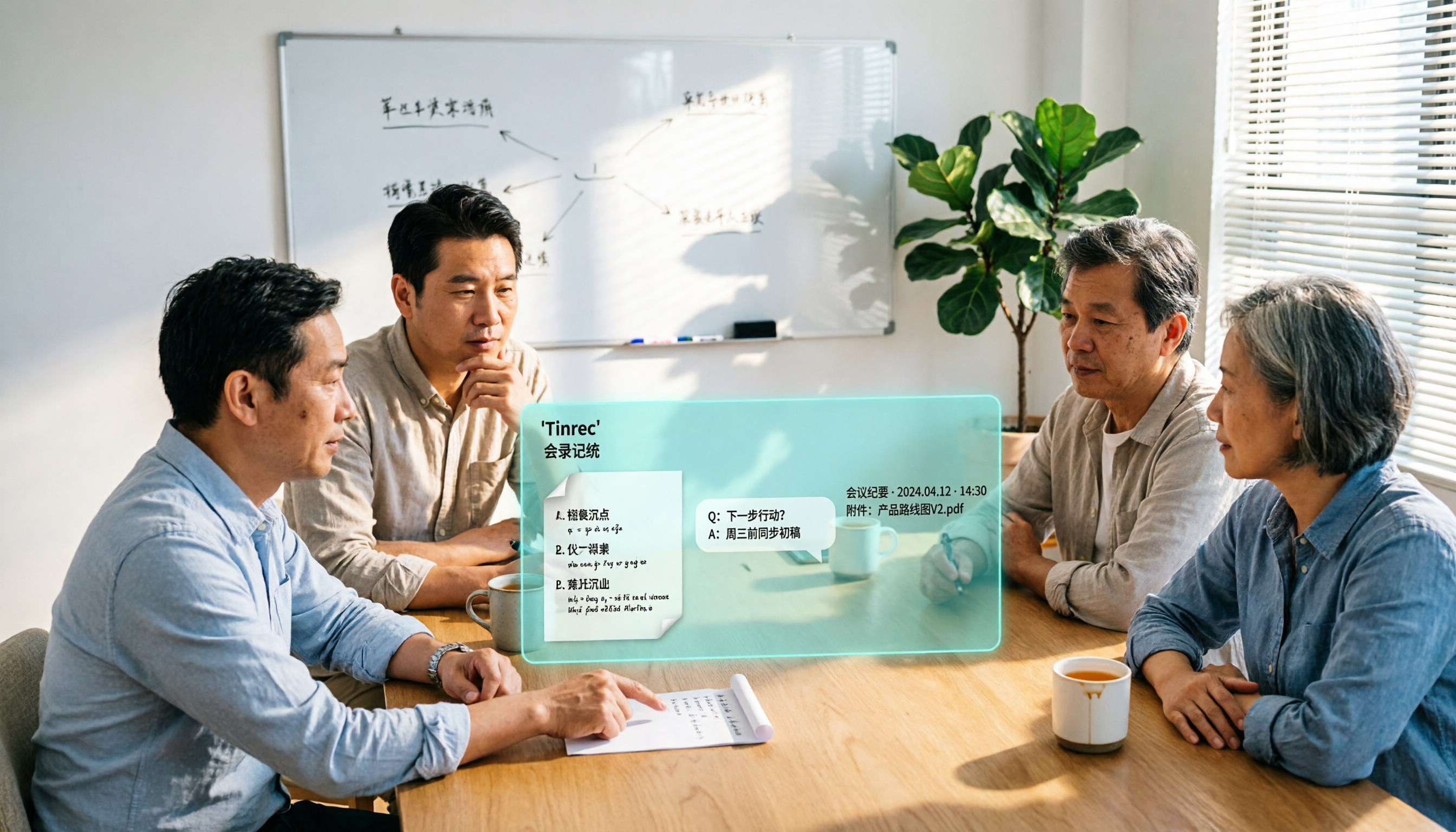
Tinrec vs Notta 2026: 5-Dimension Comparison for Chinese Meeting Notes
Based on the popular PTT discussion about AI meeting notes, we compare Tinrec and Notta across 5 key dimensions: bot-free recording, post-meeting AI Q&A, team data retention, and quota rules, to help you choose the right tool for Chinese meetings.

2026 AI Meeting Notes: Record Online Meetings Without a Bot + Auto To-Dos in One Go
The latest shift in AI meeting notes for 2026 is moving from "inviting a bot into the meeting" to "getting data you can use right after the meeting." This article takes the perspective of a mid-level manager, breaks down 4 key purchasing criteria, tests Tinrec's bot-free recording, automatic to-dos, and AI Q&A, and briefly reviews who Meeting Ink, SeaMeet, and CLOVA Note are each best for.
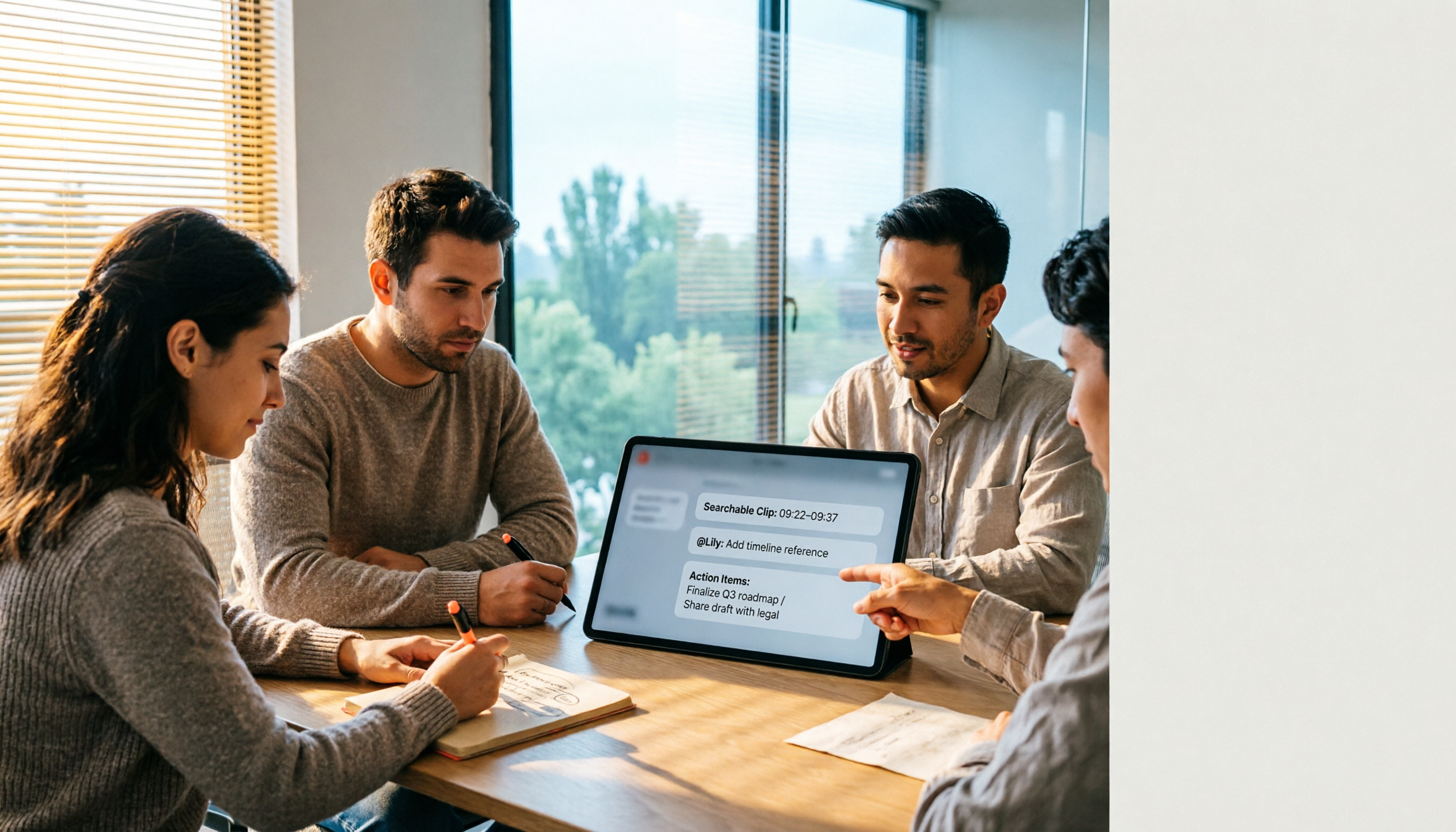
2026 AI Meeting Notes Comparison: Which Latest Version Actually Saves You Time?
A guide to choosing the latest AI meeting notes tools in 2026, covering common pitfalls, core capabilities, real-world use cases, team seat pricing, and how Tinrec turns meetings into searchable, collaborative, actionable data.

2025 AI Meeting Notes Guide: Auto-Generate Transcripts and Action Items in One Go
How to choose an AI meeting notes tool in 2025? We break down 5 key buying factors: meeting capture methods, post-transcript organization, mixed Chinese-English recognition, team data ownership, and quota calculations. Plus, we compare Tinrec, Otter.ai, Notta, and Granola to help you find the right fit.

4 Real-Time Transcription Tools Tested for 2026: Which One Keeps Up as You Speak?
How do you do real-time transcription? We tested 4 tools with the same Chinese meeting recording, comparing live transcription, Chinese and mixed Chinese-English recognition, post-meeting summaries and AI follow-up questions, as well as free quotas, team seats, and pricing, to help you find the approach that truly keeps up during meetings.