
Turn recordings into transcripts and summaries in minutes
Upload audio or video for multilingual transcription, AI notes, and action items
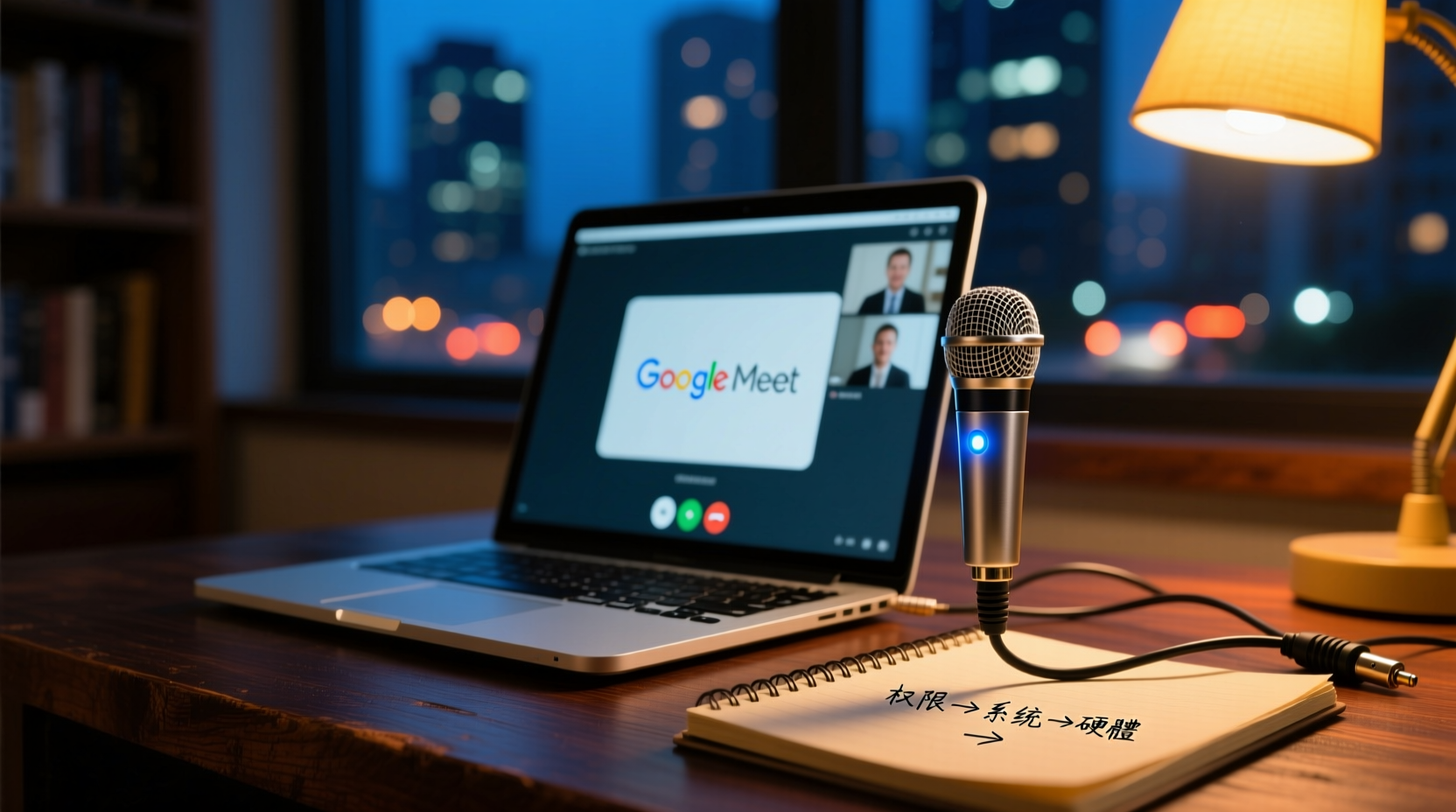
When you're about to speak in a Google Meet meeting and your microphone isn't responding, leaving the other participants unable to hear you, it can throw off the entire meeting. Don't worry—most microphone issues have clear solutions. This article will guide you through troubleshooting step by step, and show you how to use Tinrec to record and preserve meeting content if your microphone can't be fixed right away, ensuring your meeting isn't interrupted by device problems.
Common Causes of Microphone Issues
Google Meet microphone problems are rarely caused by a single factor; they usually stem from permission, software, or hardware issues. Understanding these causes can help you pinpoint the problem faster.
Common causes include:
- Browser permissions not granted: Chrome or another browser hasn't been given permission to access the microphone for Google Meet.
- Microphone is being used by another app: Other software (like Zoom or Teams) is using the microphone, preventing Google Meet from accessing it.
- System privacy settings blocking access: The operating system's microphone permissions haven't been granted to the browser or Google Meet.
- Wrong input device selected: Google Meet or the system has selected the wrong microphone (e.g., an external mic that isn't plugged in).
- Microphone is muted: The microphone is muted in the Google Meet interface or at the system level.
- Driver or hardware issues: The microphone driver is outdated or corrupted, or the hardware itself is faulty.
Troubleshooting Steps: From Browser Permissions to System Settings
1. Check Microphone Status in Google Meet
Before joining a meeting, on the "Ready to join?" screen, click the gear icon in the top-right corner and go to the "Audio" tab. Verify:
- The microphone is not muted.
- The correct microphone device is selected in the dropdown menu.
If you're unsure which device is correct, speak into the microphone and see if the "Microphone volume" indicator responds.
2. Check Browser Permissions
Google Meet needs browser authorization to use the microphone. If you accidentally selected "Block" earlier, it won't pick up sound.
Steps for Chrome:
1. Click the lock icon (or "Site settings" icon) on the left side of the address bar.
2. Find the "Microphone" permission and make sure it's set to "Allow".
3. If it shows "Block" or "Ask", change it to "Allow", then refresh the page.
Other browsers (Edge, Firefox, etc.) have similar permission settings, usually accessible via the icon on the left side of the address bar.
3. Close Other Apps Using the Microphone
If other applications (like Zoom, Teams, or Skype) are using the microphone, Google Meet may not be able to access it simultaneously. Close those apps, or disable the microphone in their settings, then rejoin the meeting.
4. Check System Privacy Settings
Windows:
1. Go to "Settings" > "Privacy" > "Microphone".
2. Make sure "Allow apps to access your microphone" is turned on.
3. Scroll down and confirm that Chrome (or your browser) is also on the allowed list.
macOS:
1. Open "System Preferences" > "Security & Privacy" > "Privacy" tab.
2. Select "Microphone" on the left.
3. Check the box next to Chrome (or your browser) to allow access.
Stop organizing recordings by hand
Upload audio or video and automatically get a transcript, summary, and action items
5. Restart Your Browser or Computer
Sometimes temporary browser or system states can interfere with the microphone. Close your browser and reopen it, or restart your computer, then rejoin the meeting.
Hardware and Driver Checks
If all the software-level checks above fail, the issue might be with the hardware or drivers.
1. Verify Physical Connection
- If using an external microphone, make sure the USB or audio cable is properly plugged in.
- If using a built-in laptop microphone, ensure it hasn't been disabled by a physical switch or a keyboard shortcut (like Fn + F4).
2. Test with Another App
Open your system's recording app (like Voice Recorder on Windows or QuickTime Player on macOS) and test the microphone. If other apps also can't pick up sound, the problem is likely hardware or driver-related.
3. Update or Reinstall Drivers
Windows:
1. In "Device Manager", find "Audio inputs and outputs".
2. Expand it, right-click your microphone, and select "Update driver".
3. If updating doesn't help, try "Uninstall device", then restart your computer—the system will automatically reinstall the driver.
macOS:
macOS drivers are typically updated with the system. Go to "System Preferences" > "Software Update" to ensure your system is up to date.
Backup Plan: Use Tinrec to Record and Preserve Meeting Content
If none of the above steps resolve the microphone issue immediately and the meeting is about to start, you can still preserve the meeting content with Tinrec, ensuring you don't miss important discussions due to device failure.
Tinrec is an AI meeting notes tool that supports recording and transcription across multiple meeting platforms. When your microphone is down, you can use Tinrec's desktop version to capture the system audio and record what other participants say in the Google Meet meeting.
Steps:
1. Before the meeting starts, open the Tinrec desktop app.
2. Select the "Record system audio" mode (or a similar option).
3. Start recording, then join the Google Meet meeting.
After the meeting, Tinrec automatically generates a transcript, summary, and action items, so you can quickly grasp the key points of the meeting—even if your own microphone is faulty, you'll have a complete record of the discussion.
Note: Tinrec desktop records system audio, so it won't capture what you say through your microphone. If you need to speak during the meeting, consider using a phone or another device to record your voice, or fix the microphone issue as soon as possible.
Common Questions and Quick Fixes
Why does Google Meet keep showing "Microphone not available"?
This is usually due to browser permissions or system privacy settings not being enabled. Follow the steps above to check browser permissions and system settings.
I've allowed permissions, but the microphone still has no sound?
It could be that the microphone is being used by another app, or the wrong input device is selected. Close other apps that might be using the microphone, and make sure the correct microphone is selected in Google Meet's audio settings.
The problem persists after restarting my computer?
If the issue remains after a restart, it might be a driver or hardware problem. Try updating the driver, or test with a different microphone.
Summary: Keep Meetings Running Smoothly Despite Device Issues
Microphone issues can be frustrating, but in most cases, they can be resolved through systematic troubleshooting. From browser permissions and system settings to hardware drivers, checking each step usually reveals the root cause.
If you can't fix it right away, don't let the meeting suffer. Use Tinrec to record and preserve the meeting content, ensuring important discussions aren't missed, and address the device issue afterward. That way, even in unexpected situations, your meetings can proceed smoothly.
References
- Why Is Google Meet Microphone Not Working? Full Fix Guide
- Fix audio issues in Google Meet - Computer - Google Meet Help
- Microphone not working in Google Meet - Google Meet Community
- Cannot get microphone to work on Google Meet - Google Meet Community
- 7 ways to fix your Google Meet microphone if it's not working
Turn every recording into actionable outcomes
Get 60 free transcription minutes when you sign in. No credit card required.
Related Reading
You might also like

Tinrec AI Meeting Recorder Review (2026): Bot-Free Recording & Chinese Transcripts
Most people choosing an AI meeting notes app ask 'which one is free' first, but overlook whether it understands Chinese, keeps audio files, and produces usable post-meeting output. This review compares Tinrec and Granola across 5 dimensions, with a 3-step getting-started guide and FAQs to help you decide which fits your meeting scenarios.

2026 AI Meeting Notes Free Plans Compared: 4 Tools at a Glance
Are free AI meeting notes tools good enough? This article compares Tinrec, Otter.ai, Notta, and TurboScribe on free quota calculation, per-session limits, Chinese recognition, and post-meeting organization, with hands-on testing to help you find the most suitable tool without spending money.

Which AI Meeting Notes Tool Is Best in 2026? 5 Steps to Find Your Perfect Fit
Spending extra time organizing meeting notes after a meeting is a common pain point for many office workers. This article starts from real-world usage scenarios and uses 5 steps to help you decide how to choose an AI meeting notes tool. Using Tinrec as an example, it explains how real-time transcription, AI summaries, action item extraction, AI Q&A, and team knowledge retention work in practice, helping you pick the one that truly works for you.

2026 AI Meeting Notes Tools Compared: Which Is Easiest to Learn and Fastest to Use?
Buying a meeting notes tool you can't use is more wasteful than not taking notes at all. Instead of stacking specs, this hands-on comparison looks at ease of learning across Tinrec, Otter.ai, Notta, Granola, and more. It breaks down four key factors that determine how quickly you can get up to speed, and honestly covers each tool's free tier, Chinese-language performance, and real limitations—so you can pick the one you can open and use right away.

2026 AI Meeting Recorder Comparison: 4 Tools Tested for Chinese Meetings and Free Tiers
More AI meeting recorder tools are appearing, but choosing the wrong one is worse than choosing none. This article starts from two decision points—where your meetings happen and what you need afterward—and tests Tinrec, Otter.ai, Notta, and PLAUD Note on recording methods, Chinese language performance, post-meeting output, and free tiers. It also lists three common buying traps to help you choose right the first time.

Tinrec vs Plaud Note in 2026: 5-Dimension Comparison — Should Your AI Meeting Notes Be Software or Hardware?
What are AI meeting notes? They're more than just audio recordings — they turn meeting conversations into transcripts, summaries, decisions, and action items. This article compares Tinrec and Plaud Note across 5 dimensions — online meeting capture, Chinese transcription, post-meeting output, team governance, and cost structure — to help you decide between a cross-device software workflow and a portable recording device.

2026 AI Meeting Notes Guide: Bot-Free Recording + Auto Summaries & Action Items
Just finished a meeting and realized the note-taking is only beginning? This guide tackles real pain points, breaks down 5 key factors for choosing an AI meeting notes tool, and takes a deep dive into how Tinrec achieves bot-free recording, real-time transcription, AI summaries, and action item extraction. It also compares Otter.ai, Granola, and Notta, with 4 common pitfalls to avoid and scenario-based recommendations.

2026 AI Meeting Notes Tools Compared: Which Is Best for Chinese Meetings?
AI meeting notes tools are multiplying, but most people make the wrong choice from the start. This article tackles common misconceptions, outlines 4 key buying criteria, and compares Tinrec, Otter.ai, Notta, PLAUD Note, and Granola—plus a pitfalls guide and scenario-based recommendations to help you find a free tool that works or a paid one that's worth it.
2026 Voice Collaboration Tools Comparison: Is the Vocol.AI 888 v-point Voucher from PTT Still Worth Buying?
Vocol.AI 888 v-point vouchers once appeared on PTT's e-coupon board for NT$40–50, despite a face value of NT$1,200—a huge price gap. But these vouchers expired on June 30, 2024, so they're no longer valid. This article explains the actual voucher rules, the pitfalls of buying serial-number products, and compares 5 voice collaboration tools including Tinrec, Otter.ai, and Notta to help you decide whether to buy a voucher or choose a tool directly.