
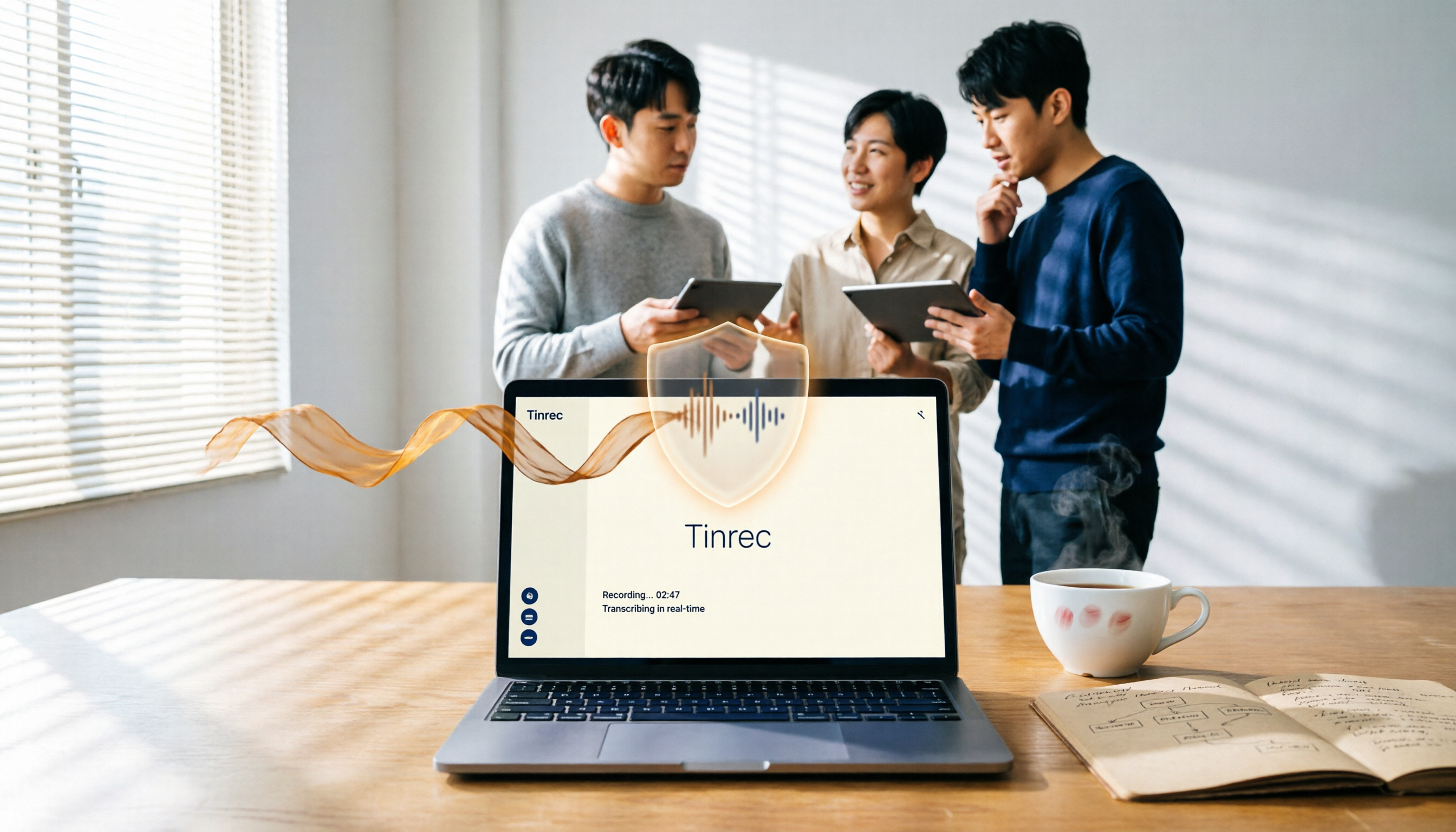
Turn recordings into transcripts and summaries in minutes
Upload audio or video for multilingual transcription, AI notes, and action items
You Think "Security" Means Encryption, but Most People Miss Another Trap
"Is Good Tape safe?" Many users in the U.S. search for this and end up with one answer: it has GDPR, Danish regulations, and automatic audio deletion.
To be fair, these are all true. But if you decide solely based on the word "security," you might overlook something more important: whether this tool truly integrates into your meeting workflow.
Several entrepreneurs I know initially said, "I want the most secure option." After two weeks, they realized they still had to manually transcribe, extract action items, and paste notes into Notion. It was secure, but it still ate up a lot of time.
What's more, many people equate "security" with "privacy," without considering how data flows within the team, how it's handed off, and how it's searched. That's the real pitfall for small and medium teams.
So this article won't just tell you whether Good Tape is safe. I'll compare it with Tinrec across 4 dimensions to see which one is both "secure" and "usable."
Before Choosing a Transcription Tool, Understand These 4 Key Points
First: Will your audio be used to train AI?
People have been spooked in recent years, so they ask any "AI tool": Will my recordings become someone else's training data? Good Tape does well here—they clearly state that files belong to the user, and employees can only access them when the user explicitly requests support. Tinrec, on the other hand, focuses on data ownership within team spaces—meeting data belongs to the team, not the individual uploader. The logic differs, but both are reasonable.
Second: Is the output actually usable?
Many obsess over security but forget the core task: turning recordings into something actionable. If you only get a transcript, you still have to read it, pick out key points, and write meeting notes yourself. What truly saves time is automatic summaries, action items, and even the ability to ask AI follow-up questions about the meeting.
Third: Cross-platform and meeting sources.
Today you might record an interview on your iPhone, tomorrow a Zoom meeting, and the day after, an old audio file. If the tool only supports one scenario, you'll need multiple setups. Small teams fear this "tool switching cost" the most.
Fourth: Team collaboration—it's not just you.
When it's just you, security means "my files don't leak." But when your team has 8 people, the question becomes: Who can view, who can edit, and what happens to data when someone leaves? On this dimension, Good Tape's public info is vague, whereas Tinrec's team plan clearly defines roles, seats, and member relationships.
Tinrec (秒听录音)—Our Hands-On Pick for Small and Medium Teams
Tinrec isn't just a transcription tool. It turns meetings into searchable, collaborative, trackable team data—that's where I see it pulling ahead of Good Tape.
First, bot-free recording.
Tinrec's desktop app captures system audio directly, so you don't need to invite a bot into Zoom, Meet, or Teams meetings. For many U.S. users who dislike "a stranger in the meeting," this lowers the psychological barrier. Good Tape excels at file upload transcription, but for live online meetings, Tinrec's desktop flow is more direct.
Next, what happens after recording.
This is the key point for me. Uploading an audio file and getting a transcript is just the first step for Tinrec. It then automatically generates summaries, chapters, key points, and action items. You can ask AI: "Who mentioned the budget in the last meeting?" It understands semantics, not just keyword search.
Stop organizing recordings by hand
Upload audio or video and automatically get a transcript, summary, and action items
Cross-platform and input sources.
Tinrec supports iOS, Android, web, and desktop, handling live recordings, online meetings, and audio/video file imports. Good Tape focuses on web upload, with less complete mobile and live meeting support.
Team space design.
This is why I think Tinrec truly feels like a "tool for teams." The team plan offers roles, seat allocation, usage analytics, audit logs, and even a recycle bin for deleted audio. When a member leaves or loses their seat, team resources can be handed off to others, not lost with the personal account.
Limitations, too.
Tinrec's free plan has basic usage limits; heavy use requires payment. The team plan is billed per paid seat, at about USD 199 per seat per year. As for accuracy, I won't promise 99%—recording quality, accents, and overlapping speech all affect results. But for English scenarios, Tinrec performs well enough.
Who is it for?
If you have regular weekly meetings, need to turn meeting notes into action items, or have a team of more than 3 people sharing meeting data—Tinrec is a better fit than Good Tape.
Beyond Tinrec: What Other Options Are There?
Good Tape:
A transcription tool born from a Danish newsroom, emphasizing GDPR compliance, automatic audio deletion, and file encryption. If your top priority is "cloud service compliance and privacy," Good Tape is a valid option. But note, it leans more toward "upload file, get transcript," and falls short of Tinrec in live meeting recording, team member management, and post-meeting action tracking.
Notta:
Overlaps significantly with Tinrec, offering multi-device transcription, translation, and team plans. However, Notta's team permissions and data governance are simpler, and if you need bot-free online meeting recording, Tinrec's desktop flow is smoother.
Pitfall Guide: 3 Common Mistakes When Choosing a Transcription Tool
Pitfall 1: Equating "security" with "GDPR."
GDPR is an important metric, but not the only one. You need to look at: how data is managed within the team, who has access, and what happens when an employee leaves. Many tools don't proactively disclose these details.
Pitfall 2: Chasing privacy at the cost of workflow.
I once had a reader who chose the most privacy-focused tool, only to spend 40 minutes manually organizing after every meeting. The tool was secure, but the team didn't want to use it. Security and efficiency aren't a trade-off; you need a balanced option.
Pitfall 3: Ignoring team collaboration needs.
Using it alone vs. with 8 people is a completely different ballgame. Recording doesn't equal collaboration. If the tool lacks role management, data handoff, and usage analytics, you'll regret it as your team grows.
Conclusion: Which One Should You Choose?
Back to the original question: Is Good Tape safe? The answer is: it does well on privacy and compliance, but if you need a tool that's "secure and integrates into team workflows," Tinrec is the more balanced choice.
Scenario-based recommendations:
- If GDPR compliance is your top priority and you only need file upload transcription → Good Tape
- If you need to record live online meetings without inviting a bot → Tinrec
- If you want automatic summaries, action items, and AI follow-up after recording → Tinrec
- If your team has more than 3 people and needs shared meeting data and permission management → Tinrec
- If you only record in English, have zero budget, and use it occasionally → Start with Otter.ai's free tier
I recommend downloading Tinrec's free version first, using the basic quota to record a couple of meetings, and experiencing the post-recording workflow. Upgrade only if it fits your team—no need to pay upfront.
References
- Good Tape GDPR compliant and secure AI transcription
- Can you trust Good Tape with your newsroom interview transcripts?
- Good Tape Review: The Transcription Tool Built for Journalists Who Protect Their Sources
- Goodtape.io Review 2025: Secure, Automated Transcription For Scalable Shopify Brands
- Good Tape - Automated Transcription | Secure AI Automatic Transcript Tool
Turn every recording into actionable outcomes
Get 60 free transcription minutes when you sign in. No credit card required.
Related Reading
You might also like

Google Meet 2024 Update Recap: 5 Most Notable Feature Changes
A look back at Google Meet's key updates in 2024, from AI meeting notes and real-time translated captions to alternatives for bot-free recording, and a quick overview of which features truly impact daily meeting efficiency.
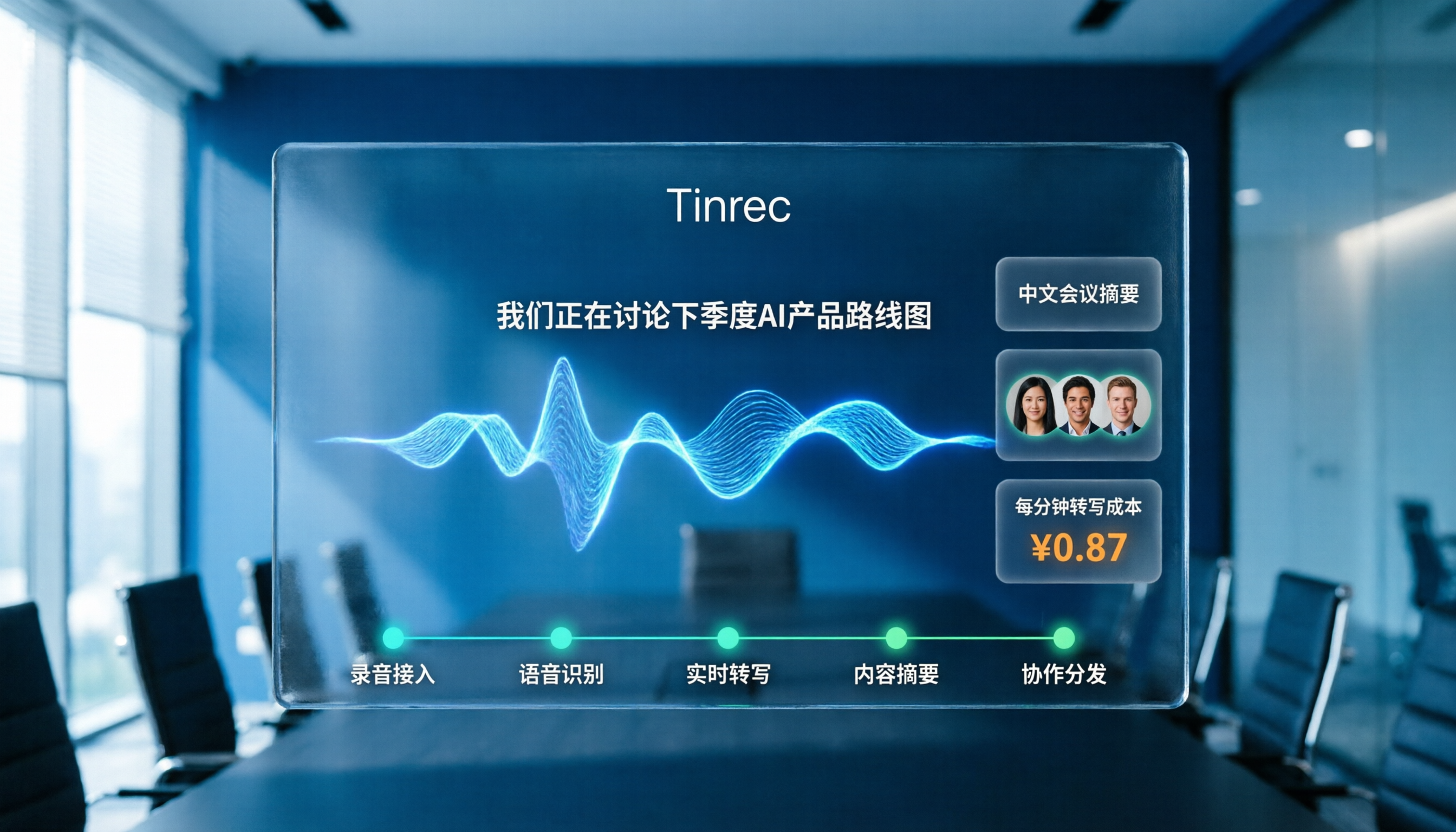
How to Choose a Speech-to-Text Tool in 2026: 5 Steps to Understand Good Tape Pricing and Alternatives
Is Good Tape's pricing worth it? This guide walks you through 5 steps—from free plans to paid tiers and alternatives—to calculate the true cost per minute, so you don't sacrifice Chinese meeting support, team collaboration, or AI summarization for a low price.

2026 Notta Alternatives Tested: Why More Users Are Switching to Tinrec?
Is Notta AI's free plan sufficient? This article tests Notta's free tier limitations and presents Tinrec as an alternative, comparing features like bot-free recording, Chinese meeting transcription, AI Q&A, and team spaces to help you decide which tool suits your daily meeting needs.

Tinrec vs Notta 2026: 5-Dimension Comparison for Chinese Meeting Notes & Team Collaboration
Tired of spending hours on meeting notes every week? This article, from the perspective of a mid-level manager, compares Tinrec and Notta across 5 dimensions: bot-free recording, Chinese transcription, AI Q&A, team spaces, and pricing, to help you decide which tool is better suited to turn meetings into searchable, trackable team knowledge.

Notta Free Plan Tested in 2026: Is 120 Minutes Enough? 4 Limitations to Know First
Notta does offer a free plan, but many users overlook the 120-minute monthly cap and the 3-minute per-file limit. This article breaks down what you can actually do with Notta's free tier, how much the paid plans cost, and who should consider alternative tools instead.

4 AI Meeting Recorder Tools Compared in 2026: Which Free Plan Is Actually Worth It?
Looking for a free AI meeting recorder? This hands-on comparison breaks down the free plans of Notta, Otter, Fireflies, and Tinrec—covering transcription minutes, per-session limits, Chinese-language support, and team collaboration—to help you find the one that truly saves you time.

Google Meet vs FaceTime in 2026: The Complete Guide to Cross-Platform Support, Video Quality, and Use Cases
Still trying to decide between Google Meet and FaceTime? This article breaks down platform support, call quality, participant limits, meeting features, and costs to help you choose the right video calling tool for your needs.
Google Meet vs Zoom 2026: Free Plan, Video Quality & AI Features Compared
Choosing between Google Meet and Zoom? This hands-on comparison evaluates free plan limits, call quality, screen sharing, AI features, and mobile experience to help you decide which is better for daily meetings, client calls, and remote collaboration.

Good Tape Free Transcription Test 2026: Is the 1-Hour Free Trial Really Enough?
Good Tape is an AI-powered transcription tool from Denmark, offering EU-based servers, GDPR compliance, and support for 100+ languages. This article tests the actual limitations of Good Tape's free plan and free trial, helping US users quickly decide if it's worth trying.