

Turn recordings into transcripts and summaries in minutes
Upload audio or video for multilingual transcription, AI notes, and action items
Why You Need an AI Transcription Tool
Taking notes during meetings, replaying interviews to transcribe them manually—these tasks often take more time than the discussions themselves. AI transcription tools convert speech to text first, then go a step further by organizing summaries, key points, and action items, freeing you up for work that truly needs your judgment.
This article reviews six AI transcription tools commonly used in Taiwan, covering free plans, Chinese recognition, meeting notes, and team collaboration. If you're unsure where to start, Tinrec is a solid first pick because its post-transcription organization and collaboration features are relatively complete.
Tinrec—An AI Meeting Notes Tool That Goes Beyond Transcription
Tinrec is an AI meeting notes and collaboration tool designed for individuals and teams. It doesn't just convert speech to text—it also organizes meeting content into searchable, queryable, exportable, and trackable data.
Key Highlights
Record online meetings without a meeting bot
Tinrec's desktop app captures your computer's system audio directly, so there's no need to add a bot to Zoom, Google Meet, Microsoft Teams, or Webex meetings. For those who prefer not to have an extra participant in the room, this approach feels more natural and less disruptive to the meeting flow.
Supports both live recording and file transcription
You can use it to record in-person meetings and interviews, or upload existing audio and video files for quick transcription. If you've got a backlog of recordings you've never had time to process, this is a great entry point.
Keep organizing after transcription
Tinrec automatically generates summaries, chapters, key points, and action items, and lets you ask follow-up AI questions about the meeting content. For example, if you want to know what conditions the client raised during a discussion, you can just ask—no need to replay the entire recording.
Built for teams that need to preserve knowledge
The team plan includes a dedicated workspace where meeting data belongs to the team. Members can review past meetings, and admins can manage roles, seats, usage, and audit logs. When someone leaves the team, their data doesn't disappear with their personal account—it can be handed off to other members.
Pricing
The individual plan offers a free tier, weekly pass, Pro monthly, and Pro annual options, so you can choose based on how often you use it. The team plan is priced per paid seat; check the official pricing page for current rates.
Who It's For
It's ideal for anyone juggling online meetings, in-person interviews, and historical recordings, and who wants to turn meeting content into summaries, action items, and team knowledge. If you only need to transcribe a short clip occasionally, start with the free plan. If you have steady weekly meetings, consider a paid plan.
NotebookLM—Google's Free AI Note-Taking Assistant
NotebookLM is a free AI note-taking tool from Google. Upload a file, and it can generate audio summaries, plus turn audio content into mind maps or presentation videos.
Unlike typical transcription tools, NotebookLM leans more toward "information organization and learning." It's great for turning lecture recordings, interviews, or long-form materials into concise notes. The free access is a clear plus, but if you need precise transcripts, meeting action items, or team collaboration, you'll want to pair it with other tools.
Yating—A Strong Choice for Chinese Recognition and Multi-Speaker Meetings
Yating is well-known among users in Taiwan, focusing on Chinese speech-to-text. It works online with no download or registration required, and automatically adds punctuation and formatting.
Its multi-speaker recognition is widely praised, making it suitable for Chinese interviews, lecture recordings, or meeting notes. However, transcription speed is relatively slow, so if you're processing long recordings in bulk, be prepared to wait.
Vocol.ai—Fast Transcription, but the Interface Takes Getting Used To
Vocol.ai is an AI voice collaboration tool that stands out for its fast transcription speed. It integrates with Google Meet and Microsoft Teams, supports multiple speaker identification, and lets teams co-edit and comment on transcripts.
It's a good fit if you want to turn meeting notes into a collaborative team space. One caveat: some users find the interface less intuitive, so expect a learning curve on first use. The free trial includes 200 minutes, with subscription pricing available on the official site.
Stop organizing recordings by hand
Upload audio or video and automatically get a transcript, summary, and action items
cSubtitle—High Accuracy for Quick Subtitles and Transcripts
cSubtitle is an online AI speech-to-text tool known for its high recognition accuracy. It can turn audio files into transcripts and video files into subtitles, with automatic punctuation added.
It's ideal for quickly processing video subtitles or short recordings. The downside is that editing is less convenient—if you need heavy transcript edits, you may want to export and work elsewhere.
Notta—A Versatile Option with Multi-Platform Transcription and Team Plans
Notta is an AI transcription tool available on web, mobile, and desktop. It supports meeting notes, file uploads, translation, and team plans, with a feature set that overlaps significantly with Tinrec.
The free plan currently offers 120 minutes per month, with a 3-minute limit per session; paid plans are priced on the official page. If you need bulk file transcription, subtitles, and translation, Notta is worth a try. But if you prioritize bot-free online meeting recording, AI Q&A, and team knowledge retention, Tinrec offers a more integrated workflow.
How to Choose Among All These Options
Start by clarifying your primary need.
- Want the most complete meeting workflow—transcription, AI Q&A, action items, and team space → Tinrec
- Want a no-install, quick way to turn Chinese recordings into text → Yating
- Want to turn recordings or videos into subtitles and transcripts fast → cSubtitle
- Want to turn long-form materials into mind maps or presentations for free → NotebookLM
- Want team co-editing of meeting notes with online meeting integration → Vocol.ai
- Want multi-platform transcription, translation, and team plans → Notta
If you only transcribe short clips occasionally, start with a free tool. If you have weekly meetings and don't want to spend hours on post-meeting cleanup, Tinrec bundles transcription, summaries, action items, and team collaboration into one workflow—a more efficient choice.
4 Things to Know Before Using AI Transcription Tools
1. Recording quality directly affects transcription accuracy
No matter the tool, background noise, overlapping speech, accents, and jargon can impact recognition. Before important meetings or interviews, choose a quiet environment and keep the mic close to speakers for more consistent results.
2. A transcript isn't the end—it's the starting point
Once you have the transcript, the real value is turning it into usable summaries, action items, or meeting notes. Tools like Tinrec automatically organize chapters and key points, saving you hours of manual cleanup.
3. Free plans usually come with minute or feature limits
Free tiers are great for testing whether a tool fits your workflow. But if you have weekly meetings, check paid plan limits upfront to avoid running out of minutes mid-recording.
4. Always get consent before recording
Whether it's an in-person meeting, online call, or interview, recording and transcription may involve personal data. Inform participants and get their consent beforehand—it's both a legal safeguard and a basic sign of respect.
Summary
AI transcription tools can dramatically cut down on manual typing, but each has a different focus. If you just need to quickly convert Chinese recordings to text, start with Yating or cSubtitle. If you need to turn meeting content into summaries, action items, and searchable team knowledge, Tinrec is the more complete option.
Try the free plans first to confirm transcription quality and workflow fit, then choose a paid plan based on your meeting frequency.
FAQ
What's the difference between Tinrec and a regular recording app?
Regular recording apps just capture audio. Tinrec goes further by transcribing the audio, organizing summaries, chapters, key points, and action items, and supporting AI Q&A, translation, export, and team collaboration.
Is Tinrec's free plan enough?
For occasional short recordings, the free plan covers basic transcription and summaries. If you have weekly meetings or interviews, consider whether the weekly pass or Pro plan better fits your usage.
Can AI transcription fully replace manual note-taking?
Not entirely. AI reduces the cost of manual note-taking and organization, but for critical content, it's wise to cross-check against the transcript timestamps and audio playback to avoid missing details.
Does Yating require payment?
Yating offers online use with no download or registration, focused on Chinese speech-to-text. Check the official page for current plans and limitations.
Can NotebookLM output transcripts?
NotebookLM is more about turning uploaded files into summaries, mind maps, or presentation videos—it's not a dedicated transcription tool. For precise transcripts and meeting action items, pair it with tools like Tinrec.
Does voice-to-text require an internet connection?
Most AI transcription tools need an internet connection for speech recognition and AI processing. Make sure your connection is stable before uploading or transcribing to avoid interruptions.
References
- Unlimited Time! 3 Free AI Transcription Tools Recommended! AI Voice Notes for Meeting Minutes, Slides, and Mind Maps | 104 Career Force
- [AI Voice Notes] Top 5 AI Speech-to-Text Tools! Generate Transcripts and Meeting Highlights, Free vs. Subscription, Pros and Cons | 104 Career Force
- SoundType AI - Ultra-Precise Transcription, Speech-to-Text, AI Dictation - Google Play
- Does anyone have an AI tool recommendation to convert audio files into transcripts?
- Meeting Ink - 2026 AI Meeting Notes Tool Test: 7 Speech-to-Text and Summary Speed Showdown | Meeting Ink - AI Meeting Notes Assistant, Auto-Transcribe and Summarize
Turn every recording into actionable outcomes
Get 60 free transcription minutes when you sign in. No credit card required.
Related Reading
You might also like

2026 AI Meeting Note Tools Buyer's Guide: 5 Hands-On Tests for Google Meet
Tired of struggling with Google Meet meeting notes? This article tests Tinrec, Otter, Notta, Granola, and Google Meet's built-in features—covering bot-free recording, Chinese transcription, post-meeting organization, and team collaboration—to help you find the best AI meeting note solution.
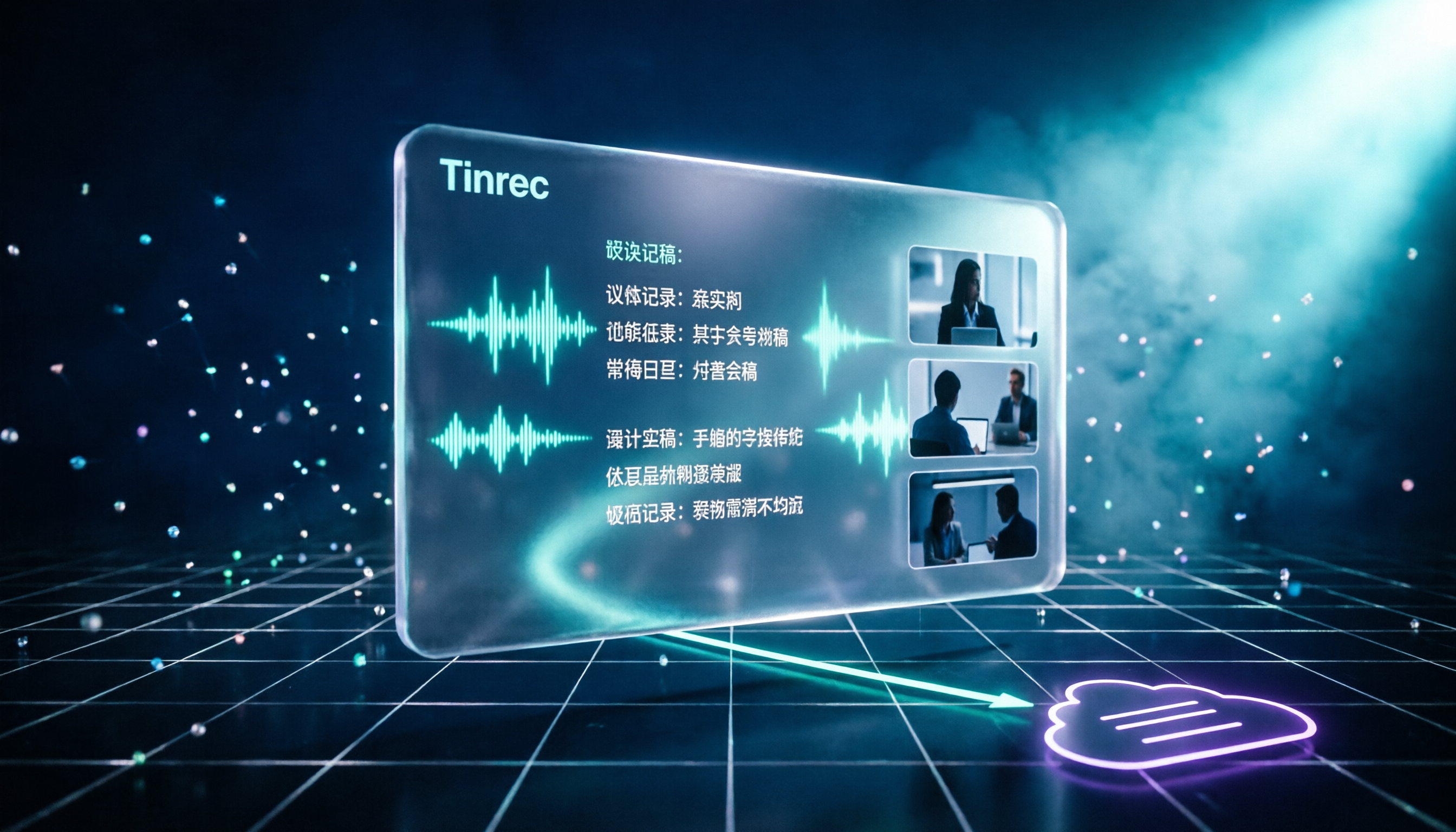
2026 Hands-On Comparison of 3 AI Meeting Recorders: How to Choose a Free Option for Google Ecosystem Users?
Do you use Google Meet for meetings and Google Docs for organizing notes, but still rely on manual meeting minutes? This hands-on comparison tests 3 AI meeting recorders, covering bot-free recording, Chinese transcripts, free tiers, and Google Docs export, to help you find the most time-saving solution for Google ecosystem users.

5 Best AI Meeting Transcription Tools in 2026: Free vs Paid Plans Compared
Struggling to keep up with meeting notes? This article compares 5 AI meeting transcription tools, covering bot-free recording, Chinese speech recognition, AI summaries, and team collaboration. We break down free plan limits and offer practical recommendations to help you find the perfect meeting note assistant.

5 Best AI Meeting Recorder & Note-Taking Tools in 2026: Which Free Plan Is Actually Enough?
AI voice-to-text and meeting note tools come with varying free-tier limits. This article compares 5 practical tools—covering free quotas, recording methods, transcripts, summaries, and team collaboration—to help you decide which fits your meeting scenarios best.

5 Best AI Meeting Note Tools Tested in 2026: Which Free Plan Is Worth It?
Choosing the right AI meeting notes tool can be tricky. This article tests five tools, including Tinrec, on transcription, summarization, team collaboration, and free-tier limits to help you find the most time-saving solution for Chinese and online meetings.

Notion AI Meeting Notes in 2026: Is the Free Plan Enough? 3 Limitations You Should Know
Notion AI Meeting Notes can automatically record, transcribe, and generate summaries, but the free plan, browser version, and mobile app each have their own limitations. This hands-on review covers step-by-step instructions, cross-device differences, audio file locations, and FAQs to help you decide if it's worth using.

Is Notta Safe in 2026? A 4-Factor Hands-On Comparison: Privacy, Security, Pricing, and Alternatives
Is Notta safe? This article helps you determine whether Notta is trustworthy by examining four key areas: data encryption, compliance certifications, privacy policies, and user reviews. It also compares Notta and Tinrec across transcription, meeting summarization, and team collaboration to help you make a more informed choice.
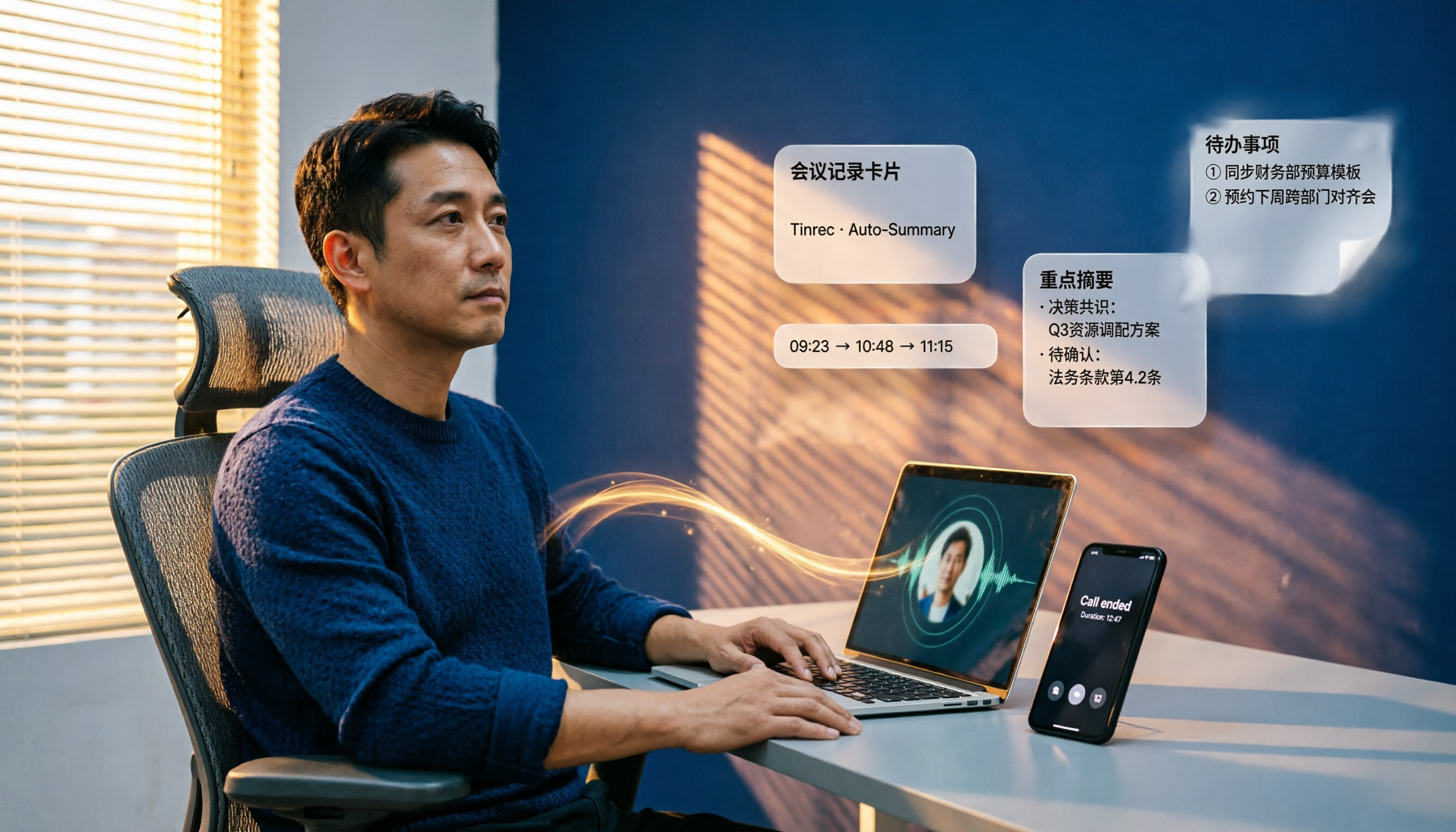
Google Meet vs Facebook Messenger in 2026: Which One for Meetings and Calls?
Based on real meeting needs of a mid-level manager, this article compares Google Meet and Facebook Messenger in terms of meeting records, call quality, cross-platform support, and team collaboration, and explains why tools like Tinrec are needed to fill the gaps after meetings.

Google Meet vs Microsoft Teams in 2026: Which One Should Small Teams Choose?
After using Google Meet and Microsoft Teams, I found that most teams don't need to pick just one. This article covers real meetings, file collaboration, learning curves, and cross-platform experiences to help you decide which tool fits which scenario—and why adding a bot-free AI meeting notes tool can unify your meeting records across both platforms.