

Turn recordings into transcripts and summaries in minutes
Upload audio or video for multilingual transcription, AI notes, and action items
Why You Need an AI Meeting Recorder & Note-Taking Tool
When you're busy scribbling notes during a meeting, then have to re-listen to the recording afterward to catch key points, half a day can easily slip away. Especially in multi-person discussions, client interviews, or cross-departmental meetings, handwritten notes alone often miss critical information.
AI meeting recorder and note-taking tools can convert your recordings into transcripts and automatically organize summaries, key points, and action items. However, free plans vary significantly—some only allow 3-minute recordings, others offer 300 minutes per month, and some claim to be free but are actually just a one-time trial.
This article reviews 5 practical tools, comparing free quotas, recording methods, and organizational capabilities, to help you quickly find the right fit.
Tinrec (Instant Recording) — More Than Transcription: Turning Meetings into Collaborative Assets
Tinrec is an AI meeting notes and collaboration tool. Its core value isn't just converting recordings to text—it transforms meeting content into searchable, queryable, exportable, and shareable team knowledge.
What I like most is its support for "recording online meetings without a bot." Just open the Tinrec desktop app, and it captures your computer's system audio directly—no need to add an extra bot to Zoom, Google Meet, Microsoft Teams, or Webex meetings. This feels much more natural for those who dislike having a stranger join their meetings.
After transcription, Tinrec automatically generates summaries, chapters, key points, and action items. Even better, you can ask questions directly about the meeting content, such as "What was the delivery time discussed?" or "What concerns did the client raise?" It can also generate meeting minutes, reports, and tables, and export them to Notion, Google Docs, OneNote, or Dropbox for further use.
For teams, Tinrec offers a dedicated team space where meeting data belongs to the team. Admins can manage member roles, allocate seats, and view usage trends and activity logs. Members can access historical meeting data, so important content doesn't disappear when someone leaves.
The free version provides basic quotas to experience recording, file import, summarization, and transcription. For short-term intensive use, consider a weekly pass; for long-term use, the Pro annual plan offers better monthly value. Team plans are priced per seat, with annual billing at approximately USD 16.58/seat/month, including 2,000 minutes of shared import quota per month; live recordings don't deduct minutes under active plans and seats.
Best for: Individuals or teams needing Chinese meeting notes, avoiding meeting bots, and wanting centralized meeting data management.
Otter.ai — A Mature Automated Meeting Assistant for English Scenarios
Otter.ai is a well-known AI meeting assistant that supports Zoom, Microsoft Teams, and Google Meet, offering real-time transcription, speaker identification, AI Chat, and workflow management.
Unlike Tinrec, Otter is more mature in English business meeting contexts, with its interface and features designed around English content. Its Basic free plan offers 300 minutes per month, while the Pro plan costs about USD 8.49/month (annual billing), including 1,200 minutes of in-app recording and 10 file imports per month.
Best for: Users primarily conducting English meetings who need mature meeting automation features.
Notta — Excelling in Multilingual Transcription and Translation
Notta is a tool covering multi-device transcription, meeting notes, file import, and translation, with significant feature overlap with Tinrec. Its strengths are a lightweight interface and comprehensive multilingual support, ideal for quick transcription and translation needs.
The free plan offers 120 minutes per month, but each session is limited to 3 minutes, making it more of a trial experience. The Pro plan costs about USD 8.17/month (annual billing) and includes 1,800 minutes per month; the Business plan is about USD 16.67/seat/month (annual billing).
Best for: Individual users needing multilingual transcription and occasional short audio file processing.
MyEdit — An Entry-Level Choice for Uploading Audio and Getting Transcripts
MyEdit is a free online speech-to-text tool from CyberLink. It's very simple: upload your meeting recording, select the language, and the system automatically transcribes audio up to 90 minutes long.
It supports 9 languages, including Chinese, English, Japanese, Korean, German, and French, and provides free daily login points to experience AI features. Note that MyEdit focuses on "upload audio, get transcript" batch processing—it won't automatically organize content into structured meeting minutes. For summaries or action items, you'd typically need to feed the transcript into tools like ChatGPT.
Stop organizing recordings by hand
Upload audio or video and automatically get a transcript, summary, and action items
Best for: Those with zero budget who only need occasional audio-to-text conversion.
PLAUD Note — A Different Approach with Portable Recording Hardware
PLAUD Note differs from the software above—it's a standalone AI recording device designed for portability, featuring a card-style design and phone call recording. After purchasing the hardware, you need a membership plan to use speech-to-text and summarization features.
Currently, the Starter plan offers 300 minutes per month, while the Pro plan costs USD 99.99/year for 1,200 minutes per month. The hardware, PLAUD NotePin, costs around USD 159, adding an upfront expense.
Best for: Users who are frequently on the go and need independent recording without a computer or phone. However, for mostly online meetings, software solutions are usually more convenient.
With So Many Options, How Do You Choose?
• For the most complete meeting organization workflow (transcript + summary + action items + AI Q&A + export) → Tinrec, which goes beyond transcription to turn meeting content into actionable data.
• If you don't want meeting bots joining your online meetings → Tinrec, as the desktop app captures system audio directly, compatible with Zoom, Meet, and Teams.
• For Chinese meetings, mixed Chinese-English content, or real-time translation → Tinrec, whose Chinese experience and multilingual processing are especially suited for users in Taiwan.
• For teams needing centralized management of meeting data, members, and usage → Tinrec for Teams, where meeting data belongs to the team and isn't lost when members leave.
• With zero budget and only occasional audio-to-text needs → MyEdit, which offers daily free points, but summaries and action items require additional AI tools.
• For primarily English meetings needing mature automation → Otter.ai, which has higher integration in English contexts.
• For frequent travel and independent recording hardware → PLAUD Note, but be prepared for the hardware cost.
3 Things to Know Before Using AI Meeting Recorders
1. Distinguish Between Free Quotas and Per-Session Limits
Some tools offer 300 minutes per month but cap each session at 3 minutes; others provide daily free points but lack summarization. Check your usage frequency before signing up to avoid hitting limits in the first month. Tinrec's free version is good for trying the workflow, but if you have weekly meetings, evaluating Pro or Team plans is more practical.
2. Transcripts Aren't the End Goal of Meeting Notes
Getting a transcript is just the first step. What really saves time is the subsequent summary, key points, and action items. Tools like Tinrec automatically generate chapters and to-dos, and even allow you to ask questions about the content; if a tool only provides transcripts, you'll still need to organize everything yourself.
3. Get Consent Before Recording
Whether in-person or online, always inform participants and obtain consent before recording. Legal requirements vary by region, and making it a habit to disclose upfront can prevent disputes later.
Conclusion
AI meeting recorder and note-taking tools have evolved from simple "speech-to-text" to a complete workflow of "organization, Q&A, and collaboration." Free plans vary greatly, so beyond looking at minutes, pay attention to per-session limits and organizational capabilities.
If you need Chinese meeting notes, want to avoid meeting bots, and aim to share meeting data with your team, Tinrec is a strong candidate to try first. Start with the free version to experience recording and transcription, then evaluate upgrades based on your usage frequency.
FAQ
Q: How long can I use Tinrec's free version?
A: Tinrec's free version provides basic quotas to experience recording, file import, summarization, and transcription. Specific quotas are subject to the official page and your account display.
Q: Do I need to buy additional recording equipment for Tinrec?
A: No. Tinrec supports web, desktop, and mobile. For online meetings, the desktop app captures system audio directly; for in-person meetings, use your phone or computer microphone.
Q: Which online meeting platforms can I record with Tinrec?
A: The Tinrec desktop app can handle audio from Zoom, Google Meet, Microsoft Teams, and Webex meetings played on your computer, without inviting a bot to the meeting.
Q: Are free AI meeting note tools really sufficient?
A: If you only need occasional audio-to-text conversion, free tools can suffice. But for summaries, action items, AI Q&A, or team collaboration, free versions often have limitations, so you may need to evaluate paid plans.
Q: Do AI-generated meeting notes require manual proofreading?
A: It's recommended to verify important content. AI performs well with clear audio and common scenarios, but may miss or misinterpret accents, noise, overlapping speech, or technical jargon. Tinrec's transcripts retain timestamps, making it easy to cross-reference with the original recording.
Q: If a team member leaves, will meeting data disappear?
A: With Tinrec's team plan, meeting data belongs to the team, not the uploader. When a member exits or loses their seat, they need to hand over their team resources to another active member; data doesn't simply vanish.
References
- Meeting Ink - 2026 AI Meeting Notes Tool Test: 7 Voice-to-Text & Summary Speed Comparison | Meeting Ink - AI Meeting Notes Assistant, Auto-Transcribe & Summarize
- Top AI Meeting Note Tools in 2026: Time-Saving Essentials for Meetings!
- AI Meeting Notes Software Recommendations: 5 Apps Tested & Compared, Auto-Transcribe for Effortless Meetings!
- Unlimited Time! 3 Free AI Transcript Tools, Highly Recommended! AI Voice Notes for Meeting Minutes, Slides, Mind Maps | 104 Career Center
- AI Meeting Note Taker: Take Meeting Notes with AI Free Online - EaseMate AI
Turn every recording into actionable outcomes
Get 60 free transcription minutes when you sign in. No credit card required.
Related Reading
You might also like

2026 AI Meeting Note Tools Buyer's Guide: 5 Hands-On Tests for Google Meet
Tired of struggling with Google Meet meeting notes? This article tests Tinrec, Otter, Notta, Granola, and Google Meet's built-in features—covering bot-free recording, Chinese transcription, post-meeting organization, and team collaboration—to help you find the best AI meeting note solution.
2026 Hands-On Comparison of 3 AI Meeting Recorders: How to Choose a Free Option for Google Ecosystem Users?
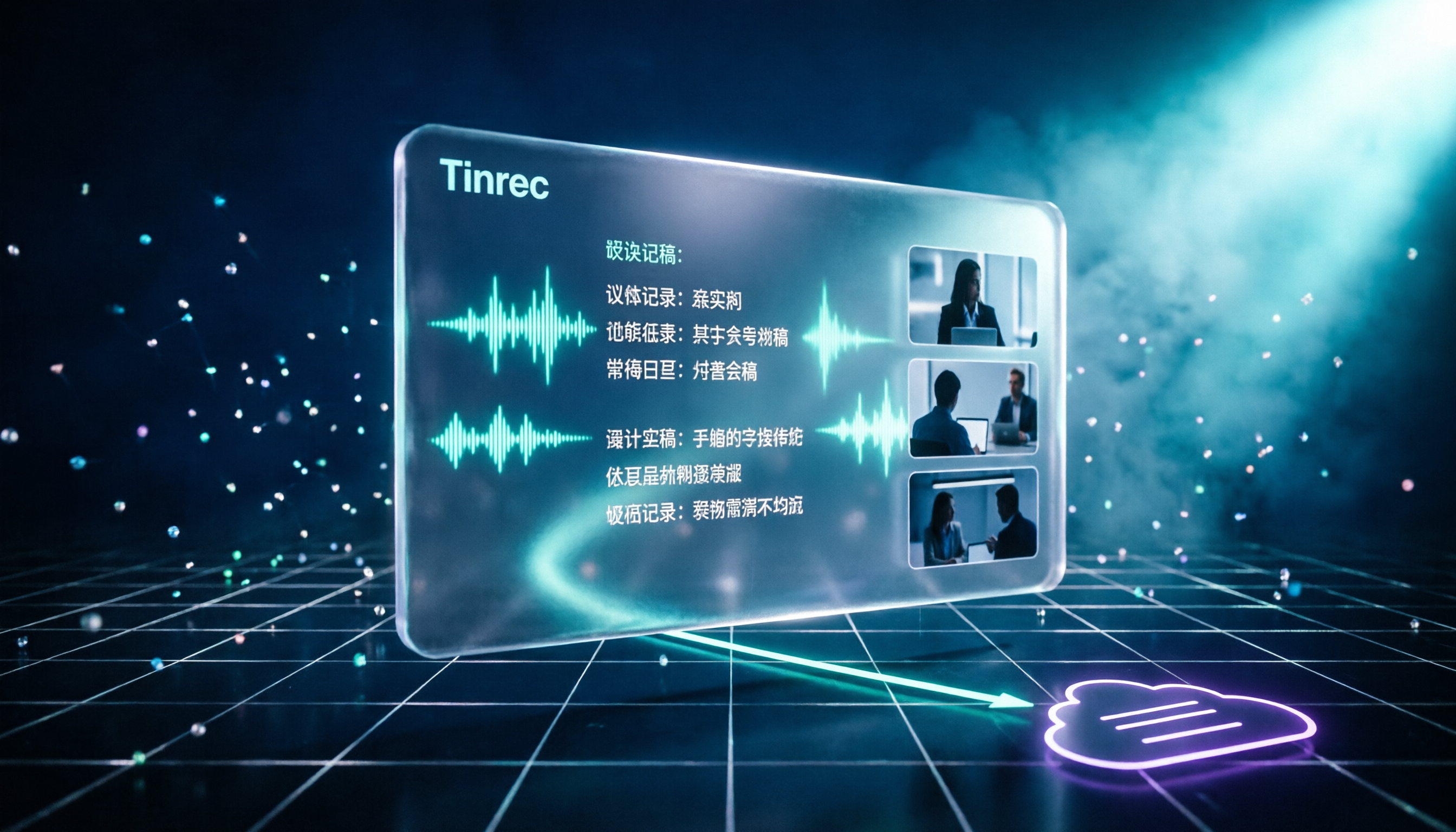
Do you use Google Meet for meetings and Google Docs for organizing notes, but still rely on manual meeting minutes? This hands-on comparison tests 3 AI meeting recorders, covering bot-free recording, Chinese transcripts, free tiers, and Google Docs export, to help you find the most time-saving solution for Google ecosystem users.

5 Best AI Meeting Transcription Tools in 2026: Free vs Paid Plans Compared
Struggling to keep up with meeting notes? This article compares 5 AI meeting transcription tools, covering bot-free recording, Chinese speech recognition, AI summaries, and team collaboration. We break down free plan limits and offer practical recommendations to help you find the perfect meeting note assistant.

6 Best AI Transcription Tools Compared in 2026: Which Free Plan Is Worth It?
A practical comparison of AI transcription and speech-to-text tools worth trying in 2026, including Tinrec, NotebookLM, Yating, Vocol.ai, cSubtitle, and Notta. We break down free allowances, Chinese recognition accuracy, meeting notes, and team collaboration features to help you find the best fit.

5 Best AI Meeting Note Tools Tested in 2026: Which Free Plan Is Worth It?
Choosing the right AI meeting notes tool can be tricky. This article tests five tools, including Tinrec, on transcription, summarization, team collaboration, and free-tier limits to help you find the most time-saving solution for Chinese and online meetings.

Notion AI Meeting Notes in 2026: Is the Free Plan Enough? 3 Limitations You Should Know
Notion AI Meeting Notes can automatically record, transcribe, and generate summaries, but the free plan, browser version, and mobile app each have their own limitations. This hands-on review covers step-by-step instructions, cross-device differences, audio file locations, and FAQs to help you decide if it's worth using.

Is Notta Safe in 2026? A 4-Factor Hands-On Comparison: Privacy, Security, Pricing, and Alternatives
Is Notta safe? This article helps you determine whether Notta is trustworthy by examining four key areas: data encryption, compliance certifications, privacy policies, and user reviews. It also compares Notta and Tinrec across transcription, meeting summarization, and team collaboration to help you make a more informed choice.
Google Meet vs Facebook Messenger in 2026: Which One for Meetings and Calls?
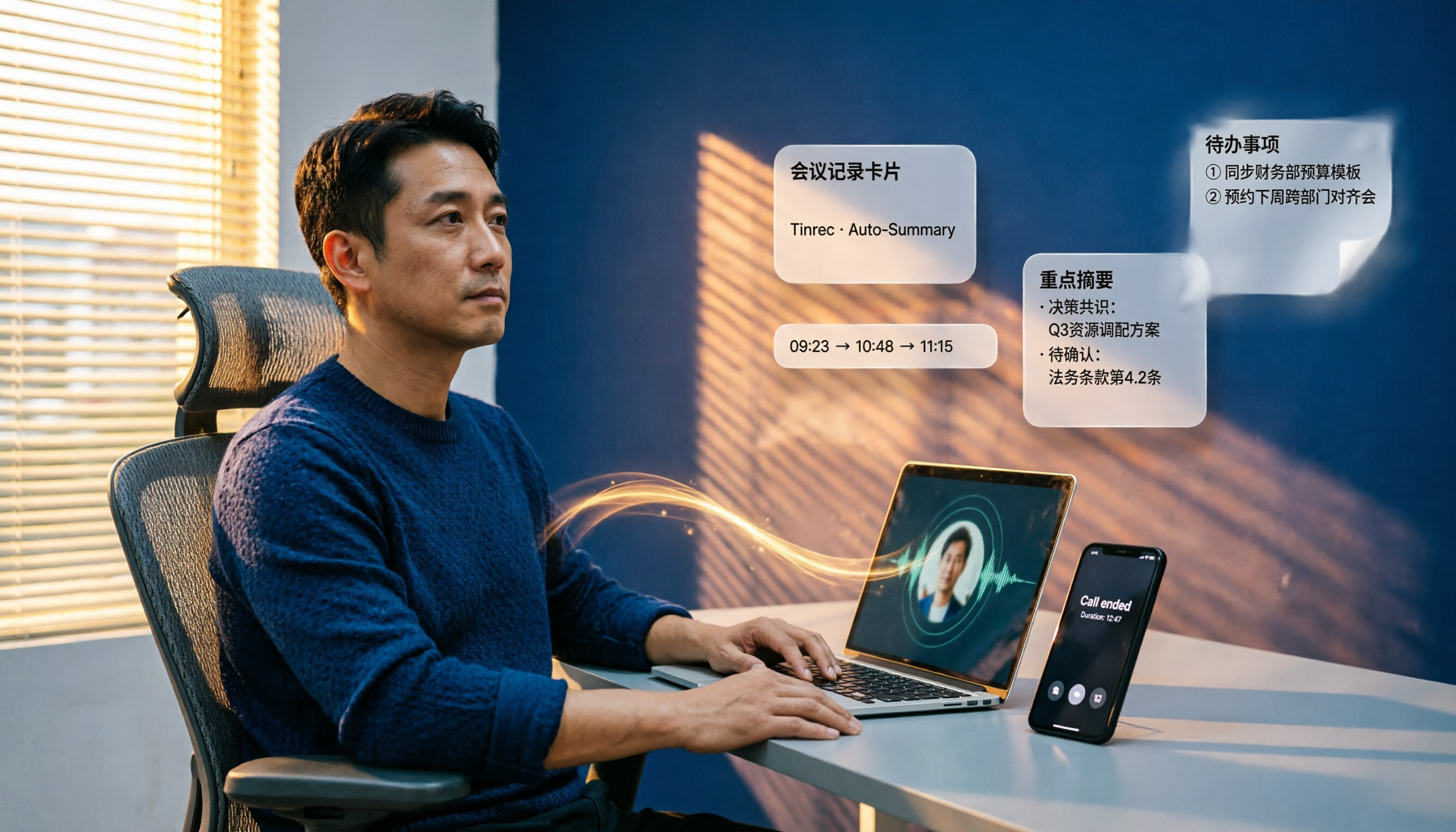
Based on real meeting needs of a mid-level manager, this article compares Google Meet and Facebook Messenger in terms of meeting records, call quality, cross-platform support, and team collaboration, and explains why tools like Tinrec are needed to fill the gaps after meetings.

Google Meet vs Microsoft Teams in 2026: Which One Should Small Teams Choose?
After using Google Meet and Microsoft Teams, I found that most teams don't need to pick just one. This article covers real meetings, file collaboration, learning curves, and cross-platform experiences to help you decide which tool fits which scenario—and why adding a bot-free AI meeting notes tool can unify your meeting records across both platforms.