

Turn recordings into transcripts and summaries in minutes
Upload audio or video for multilingual transcription, AI notes, and action items
Why "Supports Google Meet" Shouldn't Be Your Only Buying Criterion
Here's a common scenario: the meeting happens on Google Meet, you casually record the audio on your phone, but when you get back to your computer you can't find the file—or you find it, only to discover it's just an audio clip, with decisions, owners, and deadlines still buried in the conversation. What you actually need to deliver is a record that can go into a project document or be reported to your manager, not an audio file that requires re-listening.
Almost every meeting notes tool's landing page says "supports Google Meet," but what that means in practice varies widely: some send a meeting bot into your meeting room, some capture system audio on your own computer, and some just let you manually upload a recording afterward. For department staff and project coordinators who host or attend multiple Google Meets each week and switch between phone and computer, the question isn't "can it record?" but the four dimensions below.
Here's the bottom line upfront: the key to narrowing your candidates down to two or three isn't which platform they support, but whether they can handle these four things: how meeting audio gets in, how much output you get after the meeting, how well they handle Chinese and mixed Chinese-English content, and who ultimately holds the data. Each dimension comes with specific questions to ask product pages or vendors, so you can narrow a dozen options down to two or three.
Dimension 1: How Meeting Audio Gets In—Bot Participation vs. System Audio Capture
This is the first question to clarify, because it affects both the meeting experience and the post-meeting workflow.
Meeting bot participation: The tool joins your Google Meet room as an additional participant. The upside is that users barely have to do anything—it's there when the meeting starts. The trade-off is that there's an extra "attendee" in the room, which some external or client meetings may find intrusive, and whether the bot can join smoothly depends on the room's permission settings.
System audio capture: The tool captures system audio directly on your own computer, without adding an extra participant. Take Tinrec's desktop version as an example: it captures device system audio to handle Google Meet, Zoom, Microsoft Teams, Webex, and other online meetings, without needing a meeting bot to join as a participant. The prerequisite for this approach is that the user must actively open the tool to start recording—it doesn't automatically join all calendar meetings.
Post-meeting upload: The tool itself doesn't participate in the meeting. You save the Google Meet recording or audio first, then manually upload it for transcription afterward. This is the simplest approach, but it pushes the organization time later, and the cross-device gap is most likely to appear here—a file recorded on your phone can't be found on your computer, or the format isn't compatible.
Questions to ask product pages or vendors:
- When recording Google Meet, does it send a bot to participate, or capture system audio locally?
- Does the user need to manually start recording? Will it automatically join all calendar meetings?
- Can content recorded on mobile be continued and organized on desktop?
- Does it support "meeting audio played through speakers," or does it require installing an additional plugin?
Dimension 2: How Much Output You Get After the Meeting—Transcript, Summary, Action Items, or Deliverable Documents
The second dimension determines how much post-meeting work time you save. Even though they're all called "post-meeting output," the levels vary significantly:
- Transcript: Turns audio into text that's searchable and reviewable. It solves the hassle of "listening to recordings" but doesn't solve the hassle of "reading long text."
- Summary and chapters: Breaks a long meeting into structured highlights so you can quickly grasp the discussion.
- Action items: Extracts action items from the discussion, which is especially critical for project meetings and client meetings.
- Deliverable documents: Reports, tables, meeting minutes, and other outputs that can go directly into project documents or be reported to managers.
Take Tinrec as an example: it organizes meeting recordings into transcripts, summaries, chapters, highlights, and action items, and supports AI Q&A around meeting content. On top of that, an AI assistant (Agent) can use the meeting context to help further process action items into action plans, follow-up materials, reports, tables, or documents. One caveat: important commitments, externally sent content, and key decisions should still be confirmed by a human before sending.
Questions to ask product pages or vendors:
- Does it only provide a transcript after the meeting, or also summaries, chapters, and action items?
- Can action items be tagged with owners and deadlines, or at least be easy for you to fill in manually?
- Can it further produce deliverable documents like reports, tables, or meeting minutes?
- Can the output be exported to Notion, Google Docs, OneNote, Dropbox, or other tools in your existing workflow?
Dimension 3: The Experience of Organizing Chinese and Mixed Chinese-English Meetings
If your Google Meet meetings are primarily in Chinese, or frequently mix Chinese and English, this dimension directly affects your willingness to read the transcript.
In practice, differences usually show up in three places: first, whether Chinese sentence segmentation and punctuation are natural; second, whether English proper nouns get fragmented when Chinese and English are mixed; third, whether company internal terminology, product codes, and client abbreviations can be consistently recognized.
Stop organizing recordings by hand
Upload audio or video and automatically get a transcript, summary, and action items
Tinrec covers Chinese, Traditional Chinese, and multilingual meeting scenarios, supports real-time translation and bilingual viewing, and provides team hotwords to maintain commonly used team terminology. Keep in mind that actual results are affected by recording quality, noise, accents, overlapping speakers, and specialized terminology. It's not advisable to judge by a fixed accuracy rate, and important content should still be verified against transcript timestamps and recording playback.
Questions to ask product pages or vendors:
- Are Chinese transcript sentence segmentation and punctuation directly readable?
- How are English proper nouns handled when Chinese and English are mixed?
- Is there a custom vocabulary or hotword feature to reinforce company internal terminology?
- Does it support real-time translation and bilingual comparison?
Dimension 4: Does the Data Stay in a Personal Account or a Team Workspace
The final dimension determines whether this meeting record can still be found three months from now.
If the data stays in a personal account, the upside is simplicity and clear privacy boundaries. The trade-off is that when the person responsible for organizing takes leave, transfers departments, or leaves the company, the record goes with their personal account, and the team has to ask again, "What was that decision last time?"
If the data goes into a team workspace, meeting recordings, transcripts, action items, and post-meeting outputs are stored centrally. New members can view the team's historical data, and meeting content can be searched, queried, and further processed. Take Tinrec's team edition as an example: it provides an independent team collaboration space where meeting data belongs to the team, and members can be invited via join links, roles such as owner/admin/regular member can be set, and seats can be assigned, reclaimed, or transferred.
It's important to distinguish two concepts here: roles determine who can manage the team, members, auditing, and team settings; seats determine whether a member can record, upload, edit, import/export, and use team resources. Active members without seats can still view, play, and read team data, but cannot perform resource-using operations like uploading or editing. The current team edition is primarily team-level sharing, not document-level or member-level granular permission control.
Questions to ask product pages or vendors:
- Is meeting data stored in a personal account or a team workspace?
- When a member leaves, how is the meeting data they were responsible for handed over?
- What's the difference between roles and seats? What can people without seats see, and what can't they do?
- Does it support document-level or member-level granular permissions? If not, does team-level sharing fit your data boundaries?
Two Practical Steps Where the Team Edition Fits into the Google Meet Workflow
Here are two specific steps to illustrate how the team edition handles post-meeting work for Google Meet.
Step 1: Moving meeting data from personal devices into the team workspace
The original workflow obstacle: the meeting happens on Google Meet, but the recording and transcript stay in the host's personal account, so other attendees have to ask the host again for updates. How it works: the host uses Tinrec's desktop version to capture system audio, completes the Google Meet recording and transcription, then puts the meeting's recording, transcript, summary, and action items into the team workspace. Roles involved include the host, attendees, and the person responsible for organizing. The deliverable is meeting data that all team members can view, search, and query. The boundary: the team edition currently uses team-level sharing, where all active members can read team data—it's not per-file visibility settings.
Step 2: Data handover when members change
The original workflow obstacle: the colleague responsible for organizing meeting notes transfers departments or leaves, the data goes with their personal account, and the team has to piece together the historical context again. How it works: because team resources belong to the team, when a member exits, is removed, or loses their seat, the team resources they were responsible for can be handed over to other active members, preserving historical meeting data. The roles involved are the team owner or admin. The deliverable is meeting assets that remain searchable and queryable after handover. The boundary: this is a team resource ownership and handover mechanism, and should not be understood as being able to set independent access permissions for each file.
If your Google Meet meetings have grown to the point where someone needs to regularly organize them, and you often deal with member turnover, you can start by evaluating the team workspace and shared meeting data, then check the official purchase page or consult with the vendor to confirm plan details.
Recommendations for Different Meeting Types
Applying the four dimensions back to your actual meeting types, the narrowing directions are roughly as follows:
- External client meetings: Prioritize confirming "will there be an extra bot participant?" If the client is sensitive to additional participants, the system audio capture approach is usually more suitable. Also confirm whether it can produce follow-up materials you can send directly.
- Cross-department project meetings: Focus on action items and owners. Confirm whether the tool can extract action items from the discussion, and whether those action items can go into the team workspace for ongoing follow-up.
- Mixed Chinese-English technical or product meetings: Prioritize confirming how Chinese sentence segmentation and mixed Chinese-English content are handled, and whether there are hotwords or custom vocabulary to reinforce internal terminology.
- Weekly recurring meetings: High meeting volume, low per-meeting value. Focus on "organization cost" and "data retention." Confirm whether transcripts, summaries, and action items are all delivered at once, and whether historical meetings can be searched.
- Mobile-only, pulled into a meeting last minute: Prioritize confirming whether content recorded on mobile can be continued and organized on desktop, avoiding the "recorded on phone, can't find on computer" gap.
After going through the four dimensions, you'll usually have two or three candidates left. Next, don't rush to compare prices—instead, take the meeting type you host most often and actually walk through the "record → transcribe → organize → deliver" workflow to see which tool lets you deliver the record within half an hour after the meeting.
Recording and transcription involve personal data and communication content. Please comply with local regulations when using them, and obtain attendee consent when needed.
If these records need to be maintained by more than one person, consider Tinrec for Teams for a more consistent collaboration workflow.
References
Turn every recording into actionable outcomes
Get 60 free transcription minutes when you sign in. No credit card required.
Related Reading
You might also like

Google Meet 2026 Meeting Notes Capabilities: Where Built-In Transcription Ends and How to Split Post-Meeting To-Dos and Deliverables
Google Meet 2026 recording and transcription are not automatically enabled by default, and post-meeting summaries, to-dos, and deliverables still have coverage boundaries. This article walks through the actual workflow to assess built-in platform capabilities, explains the differences in organizing Chinese and mixed Chinese-English meetings, the distinction between data storage and team spaces, and offers recommendations for dividing post-meeting to-dos, deliverables, and data storage.
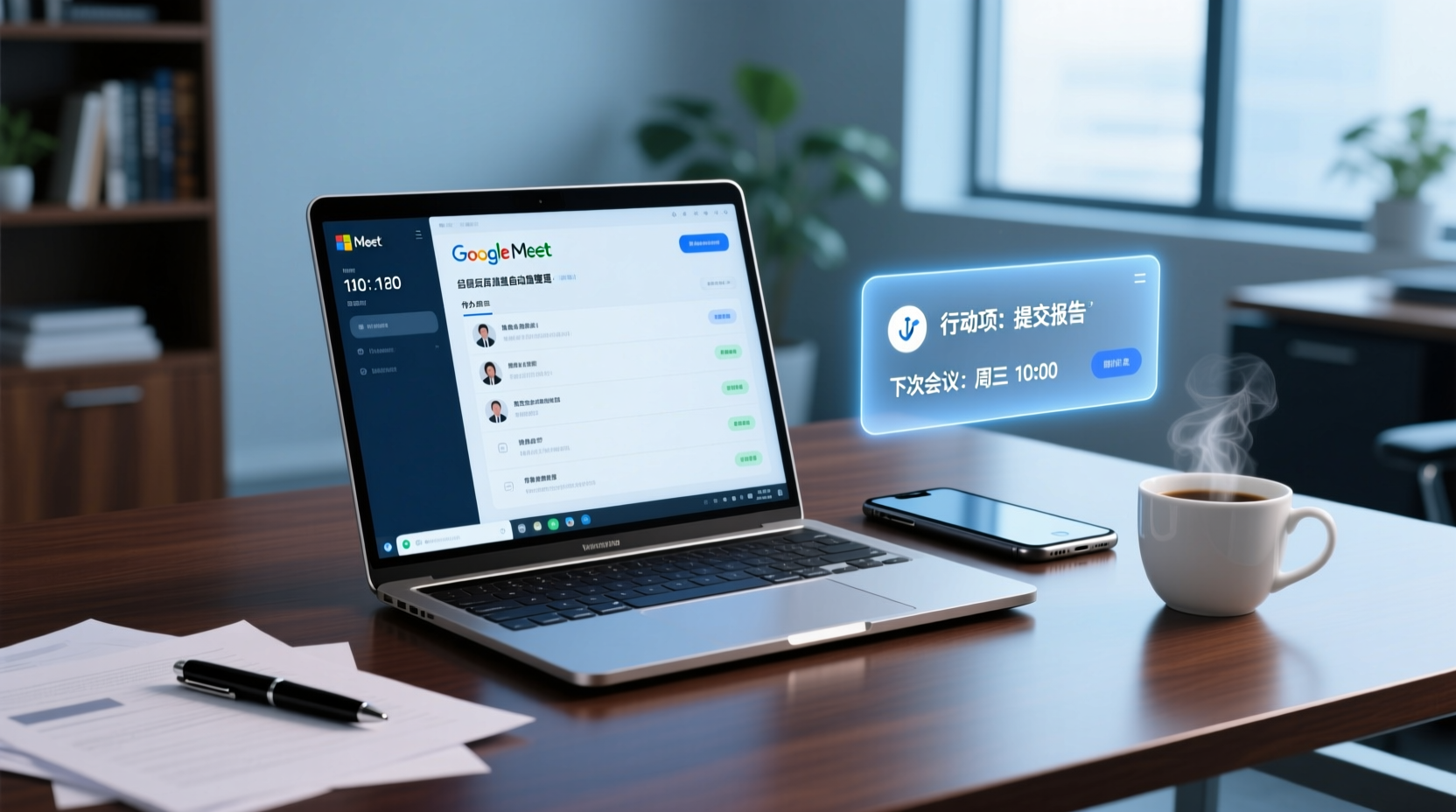
How to Choose a Google Meet Note-Taking Tool for Windows: Four Dimensions to Narrow Down from Cross-Device Gaps to Two or Three Options
Meetings happen on Google Meet on a Windows PC, but organizing often gets picked up on a phone or another device. This article uses four dimensions (how audio gets in, how far post-meeting output goes, the organizing gap between Windows and phone, and whether data stays in a personal or team space) to narrow down candidate tools to two or three, with specific questions to ask product pages or vendors for each dimension.
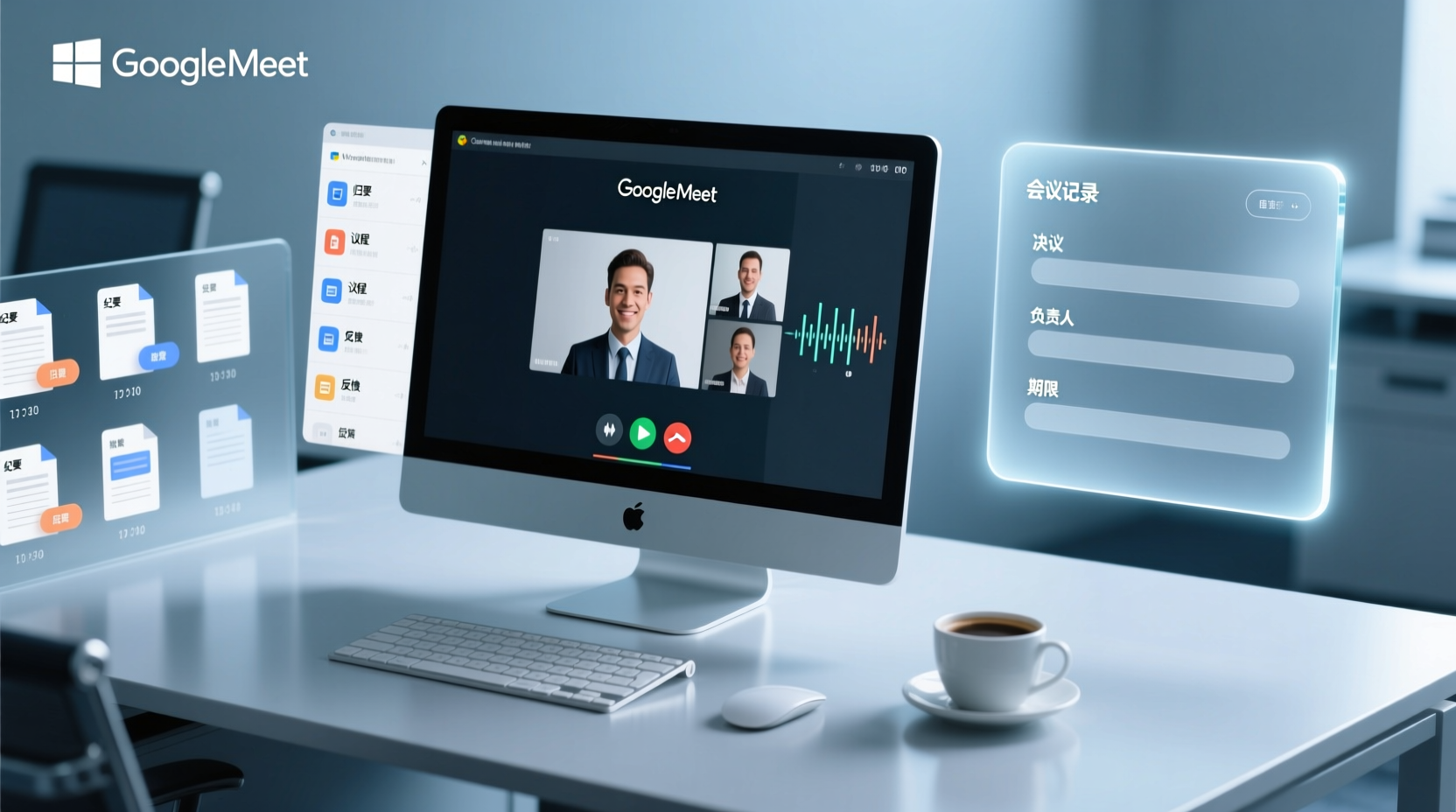
How to Choose a Google Meet Meeting Notes Tool for PC: Narrow a Dozen Options to Two or Three with Four Dimensions, and What to Confirm with Vendors for Each
After a Google Meet call on a Windows PC, what you actually need to deliver is decisions, owners, deadlines, and an archivable record. This article uses four dimensions to help you narrow a dozen tools that claim Google Meet support down to two or three, with specific questions to confirm on product pages or with vendors for each dimension.

What You Need for Google Meet: Pre-Meeting Role Checklist and Post-Meeting Handoff
From the perspective of administrative assistants and project coordinators, this guide breaks down the prerequisites for joining or hosting a Google Meet by role, including account requirements, organizational settings, recording permissions, and extra conditions for external attendees. It also provides a pre-meeting checklist and a post-meeting handoff sequence for transcripts, decisions, and action items.

Does Google Meet Record Automatically? Recording Requirements, File Locations, and What to Do If You Missed It
Google Meet does not record automatically by default; recording requires a host or permitted participant to manually start it. This article explains how recording permissions relate to account types, where recordings are stored and how they are shared, three real-world limitations, and how to capture a record using desktop bot-free recording when a meeting was not recorded, plus a post-meeting workflow for turning recordings into transcripts and action items.

Does Google Meet Record Automatically? Recording Permissions, File Location, and a Handoff Checklist for Missed Recordings
Google Meet does not record automatically by default; someone with permission must manually start the recording. This article, from a staff handoff perspective, explains who can record, where the files are stored, plan and admin restrictions, and how to use desktop no-bot recording to fill in transcripts, decisions, and action items when a meeting wasn't recorded.

How to Choose a Google Meet Meeting Notes Tool: Four Dimensions to Narrow Your Options to Two or Three
Project and department staff who host multiple Google Meet meetings each week often find that after the meeting ends, no one can clearly say who is responsible for what. This article uses four selection dimensions—how audio gets in, how far post-meeting output goes, Chinese-language organization experience, and where data is stored—to narrow down a dozen tools claiming Google Meet support to two or three, and explains what questions to ask for each dimension.

Does Google Meet Require an Account? Differences Between Invitees and Hosts, Plus a 3-Step Process for Joining, Confirming Recording, and Post-Meeting Handoff
Got a Google Meet link but hit a login screen? This article explains the account requirements for invitees versus meeting hosts by role, and provides a three-step handoff process for joining a meeting, confirming recording status, and organizing transcripts and action items. Suitable for administrative and project coordination staff.

Google Meet Requirements: What Attendees and Hosts Need Before a Meeting
If you're arranging or joining a Google Meet for the first time, start by figuring out whether you're an invitee or the host. This guide breaks down account, browser, device, recording permission, and external attendee requirements by role, plus a pre-meeting checklist covering who records, who takes notes, who hands off, and how to capture a transcript and action items without a bot if the meeting wasn't recorded.