

Turn recordings into transcripts and summaries in minutes
Upload audio or video for multilingual transcription, AI notes, and action items
4 Best Audio-to-Text Apps in 2026: Chinese Meetings & AI Q&A Compared
The moment the meeting ends, the real trouble begins
3 PM cross-department meeting, two hours, five people taking turns speaking.
After the meeting, you open the recording. The progress bar shows 1:58:32. So you start listening, pausing, and typing. By the time you finish summarizing, it's already dark outside.
What's worse is the mixed Chinese-English in Chinese meetings. A colleague says "let's review this version's retention next week," and the transcript might turn into something you have to guess at.
If you've been in these situations, this article is for you.
I actually tried several apps that can "record and transcribe simultaneously." Here are my observations from real use.
Before choosing an audio-to-text app, understand these 4 key points
1. Don't just look at official accuracy numbers
Official accuracy rates are mostly measured in quiet environments. Real meeting rooms have air conditioning noise, keyboard sounds, and people interrupting. I suggest testing with your own meeting recordings—the difference will be obvious immediately.
2. After transcription, can you use it directly?
A tool that only gives you a transcript is like trading typing for "proofreading and organizing." The key to saving time is whether it can automatically generate summaries, extract action items, and let you ask questions about the content afterward.
3. How do you capture audio from online meetings?
One way is to send a meeting bot to join as a "participant"; another is to record system audio directly on your computer, without an extra bot in the meeting. The latter is less intrusive for meetings with external clients.
4. Are free quotas and cross-platform support sufficient?
Recording on mobile and organizing on computer is almost the norm. If your team needs to share, consider whether data is centralized in one space rather than scattered across individual phones.
Tinrec — My most-used app after testing
Tinrec is an AI meeting notes and collaboration tool for individuals and teams, supporting iOS, Android, and web.
It not only converts audio to text but also organizes meetings into searchable, queryable, and exportable data.
Online meetings: No bot invitation needed
The desktop version directly captures your computer's system audio, handling meetings on Zoom, Google Meet, Microsoft Teams, Webex, etc. You just open Tinrec and start recording—no need to add a bot account to the meeting.
Note: This does not mean it automatically joins all meetings on your calendar; you still need to manually start recording.
Post-meeting: AI Q&A is what sets it apart
After the meeting, Tinrec automatically generates transcripts, summaries, chapters, and action items. My favorite feature is AI Q&A: I can ask "What was the final timeline decided in this meeting?" and it answers based on the meeting content, rather than giving me a bunch of keyword search results.
Tools in the same price range mostly stop at "giving you a transcript."
Translation, organization, and export
For multilingual meetings, you can view original text, translation, or bilingual content while recording. The organized results can be exported to Notion, Google Docs, OneNote, Dropbox, etc., and can further generate reports, tables, and meeting minutes, directly integrating into your existing workflow.
About accuracy, I'll be honest
I won't give you a pretty number. Actual performance depends on recording quality, noise, accents, overlapping speech, and technical terms. For Chinese and mixed Chinese-English meetings, Tinrec performed relatively smoothly in my tests; but for important content, I still recommend cross-checking with transcript timestamps and audio playback.
Pricing and limitations
Stop organizing recordings by hand
Upload audio or video and automatically get a transcript, summary, and action items
The personal plan has a free version (basic quota), weekly pass, Pro monthly, and annual. For occasional recording, start with free; for short-term intensive meetings, weekly pass; for regular weekly meetings, Pro; for long-term data accumulation, consider annual.
The team plan offers a 7-day trial (1 free seat, 300 minutes shared team import quota); paid seats are USD 29.80/month or USD 199/year (about USD 16.58/month), each paid seat provides 2,000 minutes of shared team import quota per month. Under an active plan and active seat, live recording currently does not deduct minutes. Prices and promotions are subject to the official purchase page.
Limitations to note: The team plan is "team-level sharing," not file-level permission control. Members without a seat can view, play, and read team data but cannot record, upload, or edit; file import consumes shared team quota.
Who it's for
For those who have weekly meetings, meetings with Chinese or mixed Chinese-English, want to use AI to find key points after meetings, or need to switch between mobile and computer, Tinrec is my current top recommendation. For teams needing to accumulate historical meetings and action items, its team space, member seats, usage analytics, and audit logs also align well with management needs.
Besides Tinrec, what other options are there?
Otter.ai
A veteran choice for English meetings. Basic free plan offers 300 minutes/month; Pro annual is about USD 8.49/user/month, including 1,200 minutes of in-app recording and 10 file imports per month. If your meetings are almost entirely in English, its maturity is attractive. But Chinese and mixed Chinese-English are not its strong suit, and it lacks Tinrec's "ask questions directly about meeting content after recording" workflow.
Notta
The closest competitor to Tinrec, with multi-platform transcription, translation, and team plans. Free: 120 minutes/month, max 3 minutes per session; Pro annual about USD 8.17/month, 1,800 minutes/month; Business annual about USD 16.67/seat/month, including unlimited transcription and usage reports. The difference is that Tinrec's desktop version can directly capture system audio without a bot joining the meeting, and its post-meeting AI Q&A and Agent post-processing are current strengths.
Granola
Also a "no bot" AI meeting notes tool. Basic is free, Business is USD 14/user/month. It emphasizes combining your handwritten notes with AI, but does not support uploading pre-recorded audio files and does not save meeting audio. If you need to keep recordings, organize existing audio files, want a Chinese experience, and team data management, these are exactly what Tinrec fills in.
Prices and plans above are subject to each official page.
Pitfall guide: 4 most common mistakes when choosing an audio-to-text app
Pitfall 1: Buying based only on official accuracy rates. Test with your own recordings on the free version—that's more accurate than any promotional number.
Pitfall 2: Treating the tool as just a typewriter. If you only use it for transcripts, you're only using one-third of its features. Summaries, action items, and AI Q&A are where the real time savings are.
Pitfall 3: Thinking "having a recording" equals "having a record." If recordings stay on individual phones, when a colleague leaves or changes phones, data is scattered. For team use, confirm the tool has a separate team space and member handover mechanism, not multiple people sharing a personal account.
Pitfall 4: Ignoring recording consent and regulations. Before recording and transcribing, remember to comply with local laws, obtain consent from participants when necessary, and confirm data storage and deletion methods.
Conclusion: Which one should you choose?
In one sentence: For Chinese meetings plus post-meeting AI organization, Tinrec is my smoothest choice after this round of testing.
- Need Chinese, mixed Chinese-English meeting transcripts → Tinrec (Chinese experience and real-time translation)
- Want to use AI to find key points and action items after recording → Tinrec (AI Q&A and Agent post-processing)
- Don't want an extra bot in online meetings → Tinrec (desktop captures system audio)
- Record on mobile, organize on computer, or team needs to share data → Tinrec (multi-platform use plus team space, seats, and usage management)
- Meetings almost entirely in English, limited budget → Otter.ai (mature English scenarios, generous free quota)
I suggest starting with Tinrec's free version and trying it with a real meeting recording. Upgrade only if it works for you—no need to pay upfront.
References
Turn every recording into actionable outcomes
Get 60 free transcription minutes when you sign in. No credit card required.
Related Reading
You might also like

Best Recording Software 2026: Tinrec vs Otter.ai in 5 Steps
Which recording software is best? This article breaks down Tinrec and Otter.ai across 5 dimensions: Chinese and multilingual transcription, bot-free meeting recording, post-meeting summaries and AI Q&A, file import, and team spaces and seat management. It compares the two in real work scenarios and offers clear recommendations to help you find the recording tool that best fits your meeting habits.

2026 iPhone Audio to Text Showdown: 4 Tools Tested—Which One Turns Recordings into Actionable Meeting Notes?
Turning iPhone recordings into text is easy with the built-in Voice Memos transcription, but language support and post-meeting organization are limited. This hands-on comparison tests four common approaches: Apple's built-in tool, Tinrec, Otter.ai, and Notta. We break down Chinese language support, summarization and action items, cross-device use, and team data ownership, plus highlight four common pitfalls to help you choose the method that truly saves time.

4 Meeting Minutes Tools Tested in 2026: How to Organize a Leader's Speech Fastest?
A senior intern personally tested 4 meeting minutes tools, starting from the meltdown of 'the manager spoke for 40 minutes, and all I remembered was everyone keep it up,' and compiled 4 key points for organizing a leader's speech, comparing the actual differences among Tinrec, Notta, Otter.ai, and PLAUD in Chinese meetings, bot-free recording, and AI Q&A.
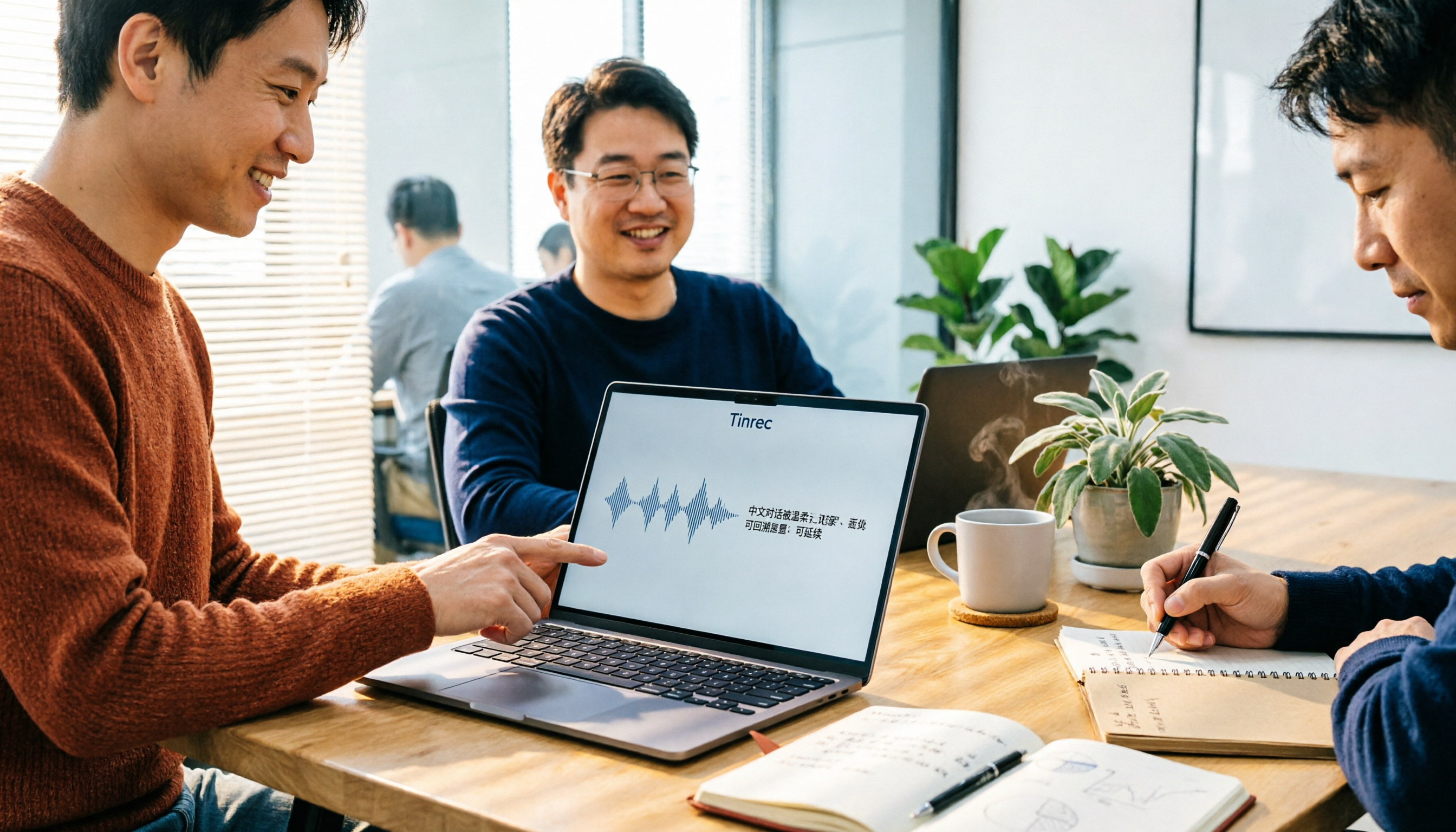
4 Best Speech-to-Text Software in 2026: Which Is Fastest for Chinese Meeting Notes?
We tested Tinrec, Notta, Otter.ai, and PLAUD to find the best speech-to-text tool for Chinese meetings. Compare accuracy, free limits, team features, and pitfalls to save time on transcripts and meeting notes.

2026 Comparison of 3 Audio-to-Text Tools: Why Notta Users Are Switching to Tinrec
Tinrec is an AI meeting notes and collaboration tool for individuals and teams, supporting bot-free online meeting recording, real-time audio-to-text transcription, AI summaries, action item extraction, conversational search, and team knowledge retention. This article addresses common pain points for Notta users, compares Tinrec's differences in Chinese meetings, post-meeting workflows, and team governance, and provides practical use cases and purchasing advice.

4 Meeting Transcription Tools Tested in 2026: Which One Actually Turns Your Recording Into Actionable Notes?
Meeting transcription tools are multiplying, but the real difference isn't transcription speed—it's whether your recording becomes usable data after the meeting. This article walks through a real post-meeting workflow, covers 4 key factors for choosing a tool, compares how 4 popular 2026 tools handle the process, and shares how I connect transcripts, summaries, action items, and follow-up questions into one streamlined flow. It ends with the most common pitfalls to avoid.

Tinrec vs Otter.ai 2026: 5-Dimension Comparison for Chinese Meeting Transcription
How to choose a meeting transcription tool in 2026? This article compares Tinrec and Otter.ai across 5 key dimensions, explains the positioning of Granola and Notta, common pitfalls, and offers selection advice based on budget and use case.
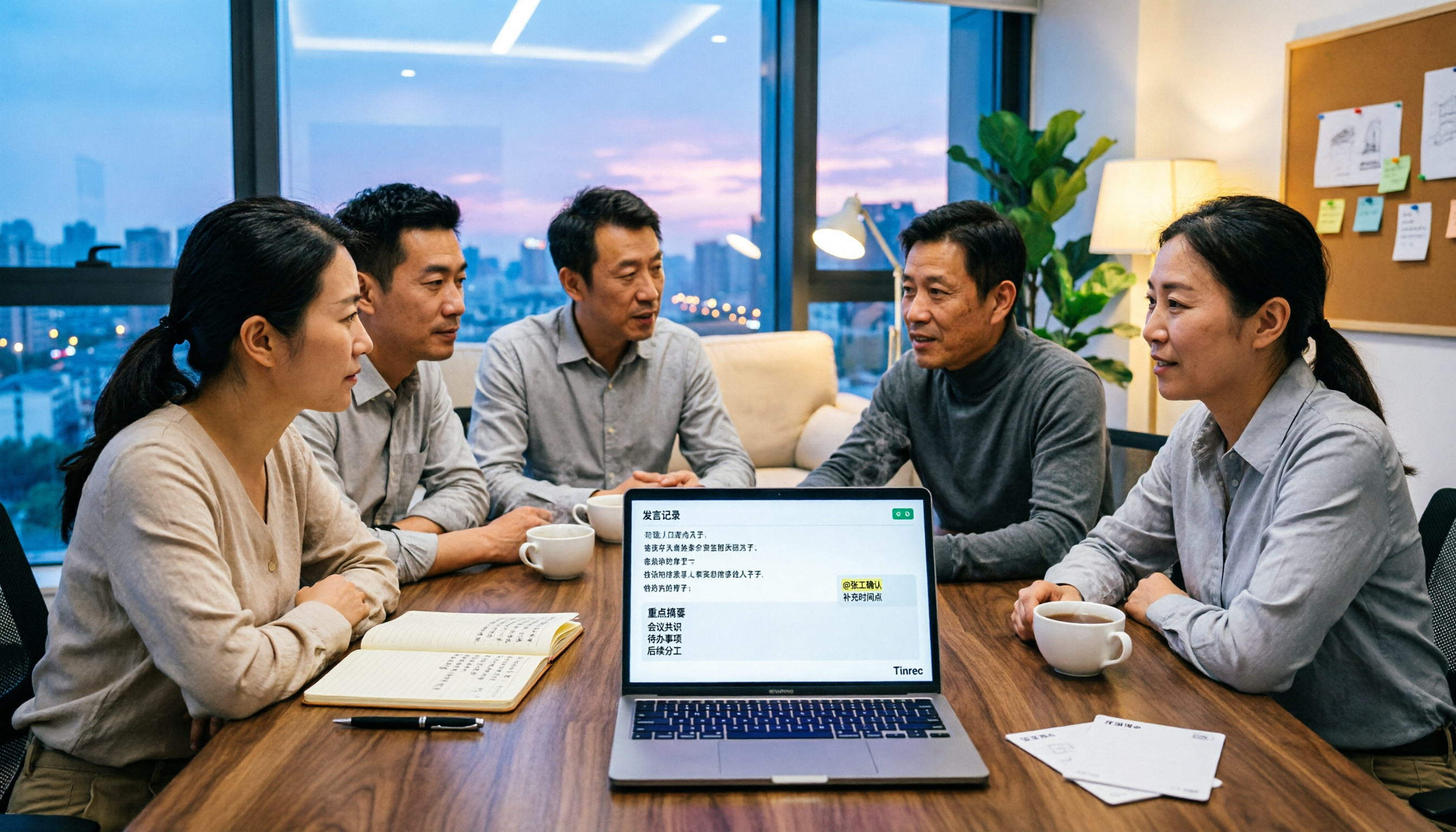
2026 Best 4 Chinese Meeting Transcription Tools Tested: Which Is Most Accurate for Chinese Meetings?
Still typing meeting minutes by hand? We tested 4 meeting transcription tools under real Chinese meeting conditions, comparing Chinese recognition, post-meeting organization, and team collaboration. We also cover 4 key buying factors, a pitfall checklist, and scenario-based recommendations to help you find a truly time-saving solution.

2026 Meeting Transcription Free Plans Compared: 4 Tools Reviewed
Starting from the costly inefficiency of re-listening to meetings, this article reviews the free plans and practical differences of 4 meeting transcription tools in 2026, and shares hands-on experience with Tinrec for Chinese meetings, bot-free online recording, post-meeting AI queries, and team knowledge retention, helping you decide if the free quota is enough and when to upgrade.