

Turn recordings into transcripts and summaries in minutes
Upload audio or video for multilingual transcription, AI notes, and action items
5 AI Speech-to-Text Apps Tested in 2026: How Tinrec Turns Transcripts into Usable Data
When choosing an AI speech-to-text app, the first mistake most people make is treating "accuracy" as the only metric. So you start comparing free quotas, file length limits, and supported formats, and end up choosing a tool that outputs one big block of text—then you realize you still have to spend an afternoon organizing it. Today's common approaches fall into roughly five categories: general file transcription tools, AI meeting bots that join meetings as a participant, bot-free tools like Tinrec that capture system audio via desktop app, AI recording hardware, and built-in transcription in online meeting platforms. The real question is: after transcription, how much work do I still have to do?
Why do many people try several AI speech-to-text apps and still find them insufficient?
Most people start simple: turn meeting, class, or interview recordings into text. But in practice, they usually get stuck on three things.
The first mistake is comparing only transcription minutes. Minutes matter, of course, but ten pages of transcript doesn't equal meeting conclusions; if summaries, chapters, and action items still need to be redone manually, the time saved is limited.
The second mistake is ignoring how the meeting gets recorded. Recording an online meeting by pointing your phone at computer speakers usually yields poor audio quality; and bots that must join as a participant may not be convenient in some company and client meetings.
The third mistake is using personal accounts to handle team needs. Meeting data gets scattered across individual accounts, and when a colleague leaves, the context goes with them. Later, when you want to find the discussion behind a decision, it's often nowhere to be found.
If you've experienced one or two of these, the problem usually isn't that the app isn't powerful enough—it's that it only handles the first half of the workflow. What's worth knowing about Tinrec is that it handles the second half too.
Tinrec vs. general speech-to-text apps: What's different in the core experience?
Meeting capture method: Do you need an extra bot?
This is a practical issue many offices face. Tinrec's desktop app directly captures your computer's system audio, handling Zoom, Google Meet, Microsoft Teams, Webex, and other online meetings without inviting a meeting bot or propping up a phone next to the speaker. For those who meet with external clients, having one less unfamiliar account on the participant list reduces a layer of communication friction. To be clear, this is user-initiated recording via Tinrec—it does not automatically join every meeting on your calendar.
What you get after transcription: A transcript, or usable data?
General speech-to-text apps usually end at the transcript. Tinrec goes further: it automatically generates summaries and chapters, extracts action items from discussions, lets you ask follow-up questions with AI Q&A around meeting content, and can further produce reports, tables, and documents. The difference is that the former gives you raw material; the latter gives you a semi-finished product. If your meeting notes habit is "record first, listen later when you have time," this gap is especially noticeable.
Input sources and cross-platform: Is file upload enough?
Tinrec covers live recording, desktop online meetings, audio and video file uploads, mobile recording, and can also handle some public web link content. The practical benefit is not having to switch tools for different scenarios: record offline interviews on your phone, use desktop for online meetings, upload historical recordings directly—all end up in the same database. Tools that only support file upload require workarounds for impromptu meetings.
Team collaboration and data ownership: Is data personal or team-owned?
Personal plan data is managed under individual accounts. Tinrec's team plan provides a separate team space where meeting data belongs to the team, with member invitations, roles (owner, admin, regular member), seat management, usage analytics, audit logs, and an audio recycle bin. Roles determine who can manage the team; seats determine whether members can record, upload, edit, and export; active members without seats can still view, play, and read team data. When a member leaves or loses a seat, team resources must be handed over to other members—data doesn't disappear with the person.
Chinese and multilingual meetings: Can it understand mixed Chinese and English?
Tinrec covers Chinese, Traditional Chinese, and multilingual meeting scenarios, supports real-time translation during recording, allows switching between original, translated, or bilingual views, and provides team hotwords for maintaining common terminology. Actual results are still affected by recording quality, ambient noise, accents, simultaneous speakers, and technical jargon, so fixed accuracy rates should not be assumed; important content should still be verified against the recording and timestamps.
Stop organizing recordings by hand
Upload audio or video and automatically get a transcript, summary, and action items
Tinrec's core features at a glance
Live recording to text: Press record and text appears in sync. During meetings, you can check for missed key points while reading, and the transcript is ready the moment the meeting ends—ideal for offline meetings, interviews, and on-site notes.
Bot-free online meeting recording: The desktop app captures system audio, initiated by the user, with no extra account joining the meeting. Organize directly in Tinrec after the meeting.
AI summaries, chapters, and action items: Break long meetings into browsable structure and extract action items from discussions—great for weekly meetings, project meetings, and client calls.
AI Q&A: After recording, ask directly "What were the conclusions of this meeting?" or "Who is responsible for which item?" The system answers based on semantic understanding, so you don't have to scroll through the entire transcript.
Translation, export, and post-processing: Supports real-time translation and bilingual view, exports to Notion, Google Docs, OneNote, Dropbox, and other tools, and uses Agent post-processing to generate reports, tables, and documents.
Team space: Centrally stores team recordings, transcripts, summaries, and action items. New members can look up past meetings, managers can view usage and audit logs, and accidentally deleted audio can be restored within the recycle bin retention period.
Real-world use cases
Cross-department weekly meetings: Use the desktop app to capture meeting audio directly; summaries, chapters, and action items are generated automatically. Notes that used to take one to two hours to organize can now often be confirmed within ten-plus minutes after the meeting.
Client interviews and requirements meetings: Transcribe client needs, concerns, and commitments into text, then use AI Q&A to pull out key points, and export to documents for internal follow-up when needed. Obtain participant consent before recording in accordance with local regulations.
Classes and lectures: Upload long recordings and convert them to transcripts, review quickly with chapters and summaries, and keep timestamps for easy reference.
Personal and team knowledge accumulation: Centralize meeting recordings scattered across phones, computers, and chat apps into one space. Search by keyword or ask AI follow-up questions when needed, turning old meetings into reusable data instead of files sitting on a hard drive.
What to look for when choosing an AI speech-to-text app
Workflow after transcription: First ask yourself how much time you'll spend organizing after getting the transcript. If summaries, chapters, and action items all need to be done manually, you've only saved half the work.
Meeting capture method: Does your company restrict external bots from joining meetings? Desktop system audio capture, meeting bots, and hardware recorders each have their own use cases—confirm your work style first.
Chinese and mixed Chinese-English performance: Test with your own actual meeting recordings; that's more accurate than any spec sheet. Teams with lots of industry jargon should check whether hotword support is available.
Team data ownership and permissions: When multiple people share, confirm whether data lives in personal accounts or a team space, and how members, roles, and seats are distinguished. Tinrec's team plan currently focuses on team-level sharing, not granular file-level permissions.
Quotas and pricing: Tinrec's team plan current pricing is USD 29.80/month per paid seat, or USD 199/year per paid seat (about USD 16.58/month). Paid seats include 2,000 minutes of team shared import quota per month; eligible new teams can try 7 days, 1 free seat, and 300 minutes of shared import quota. Under an active plan, live recording currently does not deduct minutes; file and web imports use the team shared quota. Actual prices, currencies, and promotions are subject to the official purchase page.
Conclusion: Is Tinrec worth a try?
If you only occasionally need to turn a recording into text, many tools on the market can do that. But if you're in meetings every day, produce meeting notes every week, and your team needs to share the same data, the evaluation focus shouldn't be just accuracy—it should be "can I use it right after transcription?" Tinrec fills in three areas more completely: recording online meetings without a bot, generating summaries, action items, and Q&A directly from transcripts, and storing data in a team space rather than personal accounts.
It's not necessarily for everyone. Those doing one-off bulk file transcription, or video/audio professionals who only need subtitle files, may find more features than they need. But for meeting-heavy professionals and teams that need to accumulate meeting assets, Tinrec is worth adding to the comparison list. We suggest starting with the free plan's basic quota, testing with one of your own meeting recordings, and then deciding whether to upgrade—that's more direct than any review.
Finally, recording and transcription involve other people's conversations. Before use, please confirm compliance with local regulations and obtain necessary consent.
References
- Online AI speech, video, audio file auto-transcription - Free trial - cSubtitle
- Audio to text - Free speech-to-text tool
- SoundType AI Ultra-Accurate Transcript, Speech-to-Text, AI Dictation App - App Store
- SoundType AI Ultra-Accurate Transcript, Speech-to-Text, AI Dictation - Google Play App
- No time limit! 3 free AI transcript tools, highly recommended! AI voice notes generate meeting records, presentations, mind maps | 104 Career Power
Turn every recording into actionable outcomes
Get 60 free transcription minutes when you sign in. No credit card required.
Related Reading
You might also like

5 Text-to-Speech Tools Tested and Compared in 2026: Which Free TTS with No Word Limit Sounds Most Natural?
We tested and compared five text-to-speech tools—Luvvoice, Yating, Ondoku, Toolbar, and Read Out—covering free quotas, voice naturalness, download features, and adjustable parameters to help you find the best TTS solution.

4 Video Summarizer Apps Tested in 2026: Which Free Version Is Actually Enough?
How do you pick a free video summarizer app? This hands-on comparison of Tinrec, Monica AI, WayinVideo, and Glarity covers free quotas, handling videos without subtitles, post-summary workflows, and team collaboration, plus 5 key buying factors and 4 common pitfalls to help you find the one that truly saves time.

The Complete Guide to Video-to-Text Transcription in 2026: A Practical Workflow from Upload to Proofreading
Recorded videos just sit on your hard drive, and to quote a single line you have to watch the whole thing? This guide walks through the complete video-to-text transcription workflow, covering four angles: video sources, Chinese speech recognition, post-meeting organization, and team collaboration. It also compares Tinrec, Notta, TurboScribe, and PLAUD to help you find the right approach.
2026 Computer Speech-to-Text Software Buying Guide: 4 Hands-On Tests and Selection Advice
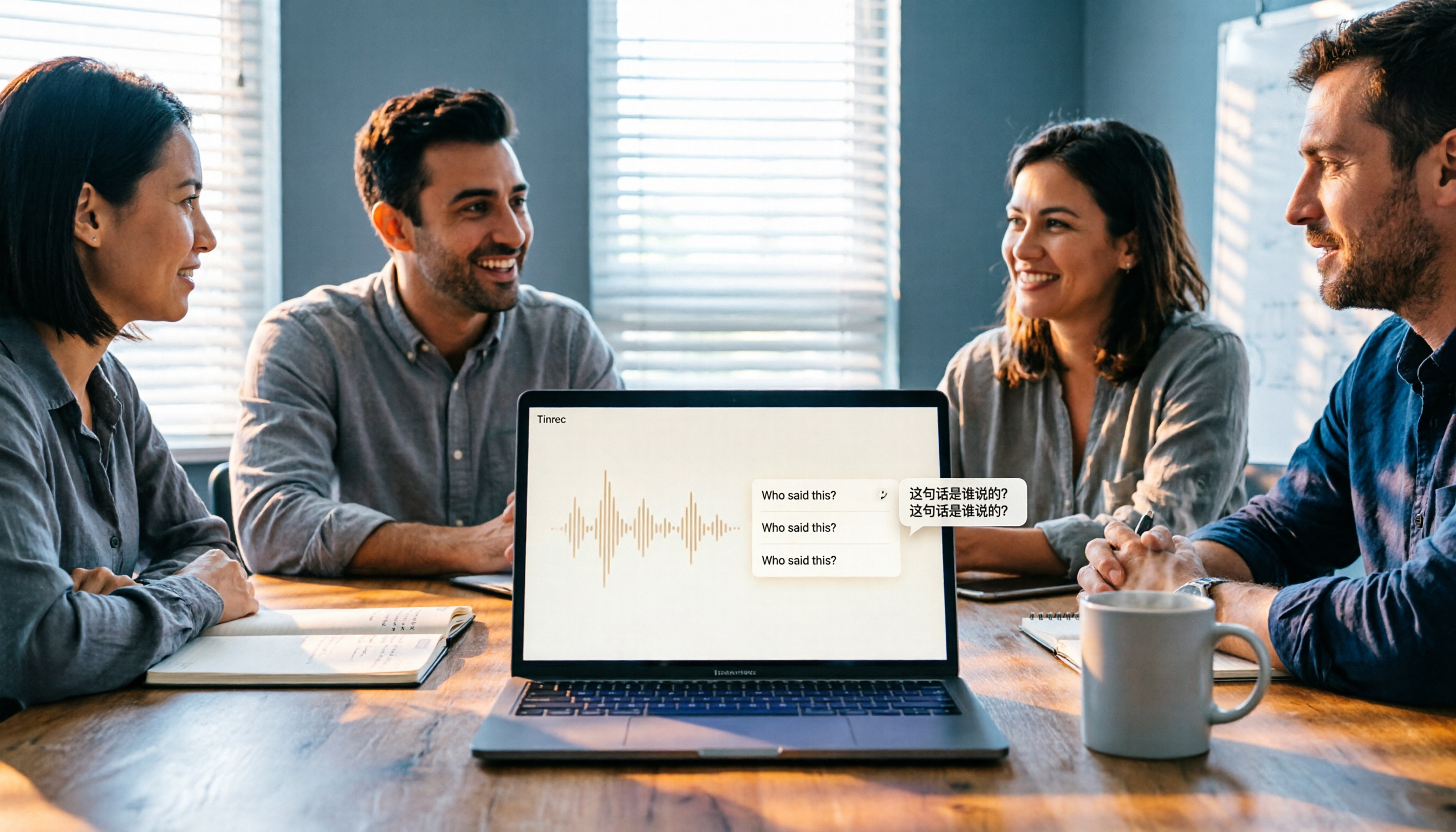
Still stuck writing transcripts after meetings? This guide starts with key buying criteria, then hands-on tests and compares Tinrec, Otter.ai, Notta, and Granola. It explains differences in bot-free meeting recording, AI Q&A, real-time translation, and team data retention, and covers common pitfalls and scenario-based recommendations.

2026 Complete Guide to Speech-to-Text Tools: How to Choose and Use Free Tools
After the meeting ends, the real work begins. This article compares the free plans and positioning of Tinrec, Otter.ai, Notta, and TurboScribe from four angles: free quota, output content, input sources, and Chinese recognition. It also outlines key purchasing factors and three common pitfalls to help you find the right tool.

Tinrec vs Otter.ai 2026: 5-Dimension Comparison for Chinese Meeting Scenarios
If you attend over a dozen meetings a week, post-meeting organization is the real nightmare. This article compares Tinrec and Otter.ai from a mid-level manager's practical perspective across five dimensions: Chinese recognition, meeting capture methods, post-meeting output, cross-platform export, and pricing. It includes hands-on insights, pitfalls to avoid, and purchasing advice.
6 Free Speech-to-Text Software Compared in 2026: Which Offers the Best Free Tier and Chinese Recognition?
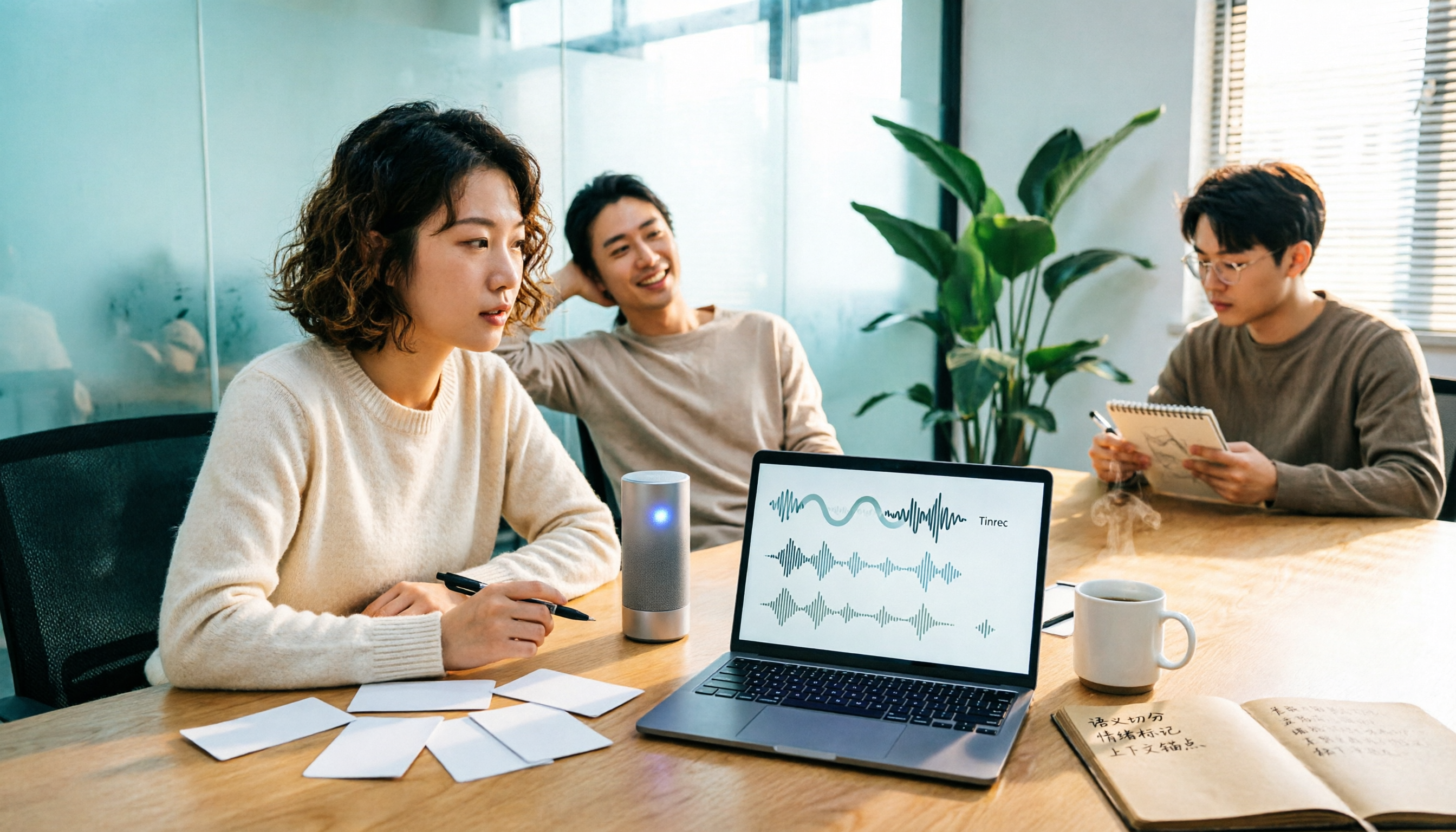
We tested and compared 6 free speech-to-text software in 2026, covering free quotas, Chinese recognition, post-meeting organization, and team collaboration. We also highlight common pitfalls and offer selection advice.

3 Free Online Speech-to-Text Tools Tested and Compared in 2026: Which One Offers the Best Free Quota, Chinese Recognition, and Post-Meeting Organization?
There are many free online speech-to-text tools, but the differences are significant when it comes to how free quotas are calculated, whether they can handle Chinese and mixed Chinese-English content, and whether the transcript can be used afterward. This article compares Tinrec and MyEdit dimension by dimension through hands-on testing, and also includes the positioning of pure upload transcription tools like cSubtitle, to help you determine which free solution is truly sufficient.

5 Speech-to-Text Tools Tested and Compared in 2026: Free Tiers, Chinese Recognition, and Post-Meeting Organization — Which One Is Enough?
Starting from three mistakes students actually make, this guide covers what to look for in 2026 when choosing a speech-to-text tool: how free tiers are calculated, Chinese recognition, post-meeting organization, and team collaboration. It uses Tinrec to demonstrate a complete workflow for classroom recordings, group meetings, interviews, and cross-language courses.