
Turn recordings into transcripts and summaries in minutes
Upload audio or video for multilingual transcription, AI notes, and action items
Running a podcast is a creative process, but many creators quickly hit a wall: post-production and content organization are too time-consuming. From relistening to recordings, writing show notes, editing short videos, to producing social media posts, these administrative tasks often take up 80% of your time. This article reviews 5 AI assistants tailored to different needs, using concrete comparison dimensions and practical applications to help you find the most productive tool.
Quick Navigation Conclusions:
- If you need automated social media marketing posts: Check out Podsqueeze
- If you focus on editing long videos into TikTok/Reels: Check out Wisecut
- If you need accurate transcripts and AI-powered content retrieval: Check out Tinrec
Why Do Podcast Creators Need "Content Organization" AI?
As the podcast market becomes more competitive, simply uploading audio files is no longer enough to attract a large audience. The main pain points creators face include:
- Content enclosed: Audio content cannot be indexed by Google search engines (not SEO-friendly).
- High repurposing cost: To write a blog post or extract a quote, you have to repeatedly listen to a one-hour interview.
- Multi-platform distribution pressure: One episode needs to be converted into text, short videos, newsletters, and other formats.
The core purpose of using AI tools is to transform "unstructured" audio into "structured" visual assets.
Top 5 Podcast AI Tools Review for 2026
Based on different creative scenarios, here are the best-performing AI tools on the market:
1. Podsqueeze: The Best Choice for Automated Marketing Content Generation
For creators who aren't good at writing marketing copy, Podsqueeze is like a virtual Chief Content Officer (CCO). Its core value lies in "one-click generation" — just provide an RSS feed or upload an audio file, and it produces tweets, blog posts, newsletters, LinkedIn posts, and more.
- Core features: Auto-generate show notes, timestamps, and attention-grabbing titles.
- Ideal for: Creators who want to quickly turn a single episode into content for multiple social platforms.
- Pricing: Free plan available; paid plans start at around $15/month.
2. Tinrec (Miao Listening Recording): Deep Content Organization and Transcript Expert
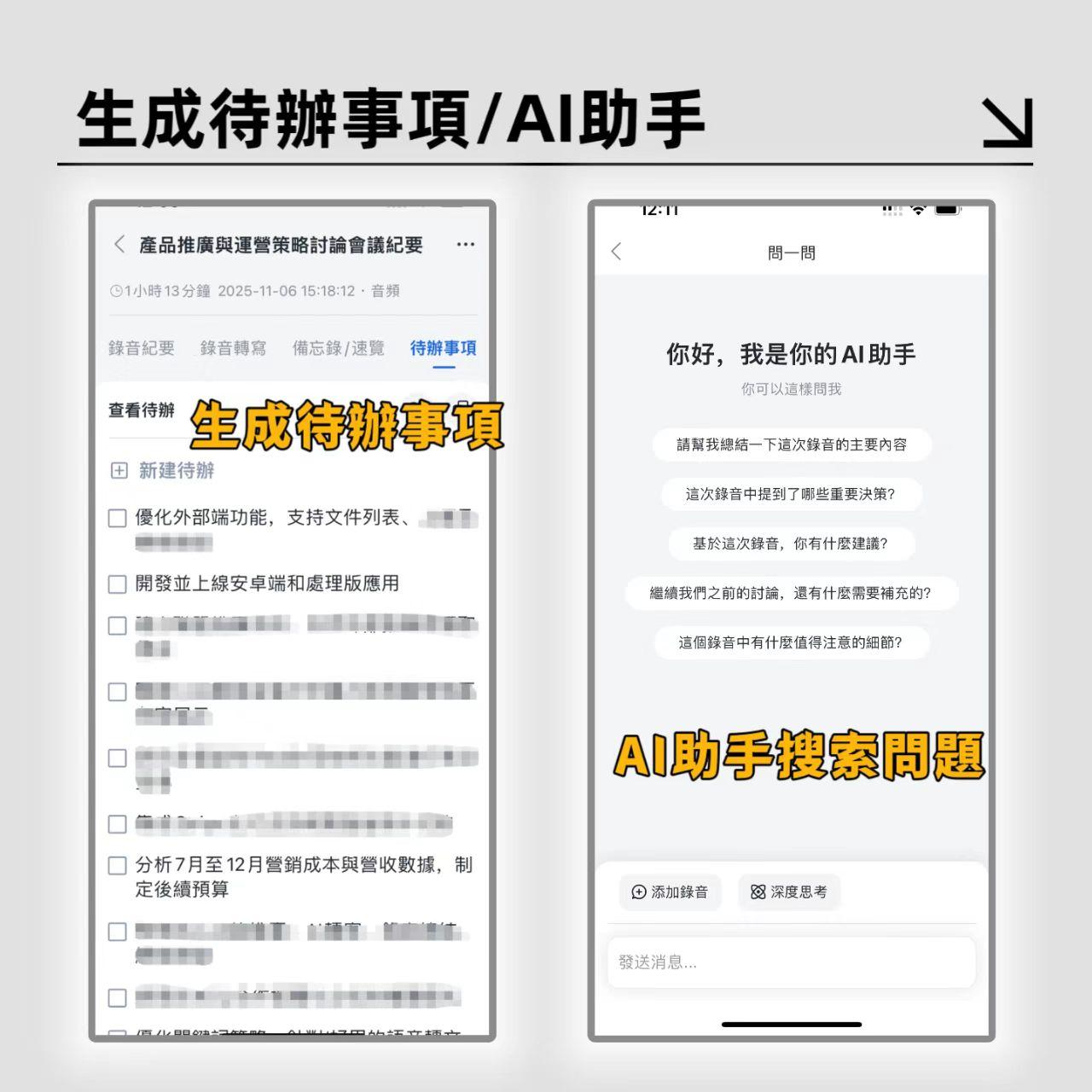
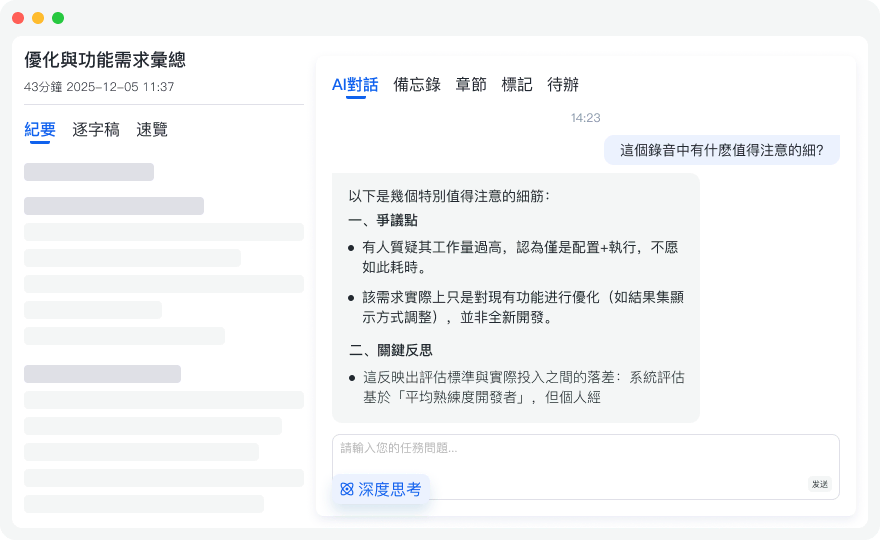
Unlike tools focused on external marketing, Tinrec emphasizes "content understanding" and "data retention." For interview-style podcasts or knowledge creators, Tinrec converts recordings into high-accuracy transcripts and structured summaries. Its unique "AI conversation query" feature allows creators to search through recordings as if asking a person, e.g., "What was the third book the guest mentioned?" — drastically reducing the time spent relistening.
- Core features: Real-time speech-to-text, AI key point summaries, action item extraction, multilingual recognition (including Mandarin, Taiwanese, Cantonese, etc.).
- Ideal for: Creators who need to organize in-depth interviews, turn episodes into articles, or produce cross-language content.
- Differentiator: Tinrec provides a complete workflow from recording to understanding, and supports converting YouTube video links directly into text notes.
3. Wisecut: Auto-Convert Long Videos into Short Clips
If your podcast also has a video version (Video Podcast), Wisecut is an AI tool that saves a lot of editing time. It automatically identifies highlights in long videos and cuts them into short vertical videos (Shorts) suitable for TikTok or Reels.
- Core features: Auto-cut silence, auto-background music, AI audio noise reduction.
- Ideal for: Video creators managing YouTube Shorts or Instagram Reels.
- Pricing: Free plan available; paid plans start at around $15/month.
4. Podder: Listener Data Analytics and Insights
After producing content, understanding your audience is crucial. Podder offers deeper data than typical hosting platforms, including listener demographics (education, income, family status) and sentiment analysis of reviews.
Stop organizing recordings by hand
Upload audio or video and automatically get a transcript, summary, and action items
- Core features: Cross-platform data integration, listener purchase intent analysis, Apple chart tracking.
- Ideal for: Creators who need precise data to optimize podcast direction or secure brand sponsorships.
5. Inflection AI: Script Inspiration and Idea Generation
Before recording, Inflection AI acts as your creative partner. Compared to rigid search engines, it offers more conversational and friendly responses, perfect for brainstorming or writing script outlines.
- Core features: Friendly conversational AI, supports integration with WhatsApp/Messenger.
- Ideal for: Creators in the planning stage who need idea sparks.
Tool Feature Comparison Table
| Comparison Dimension | Tinrec (Miao Listening Recording) | Podsqueeze | Wisecut | Podder | Inflection AI |
|---|---|---|---|---|---|
| Primary focus | Transcripts and deep content organization | Automated marketing material generation | Automated video editing | Listener data analytics | Idea generation for planning |
| Core advantage | AI conversation query, high-accuracy multilingual transcription | One-click multi-platform post creation | Auto silence removal, long-to-short conversion | Detailed demographic data | High-friendliness conversation |
| Chinese support | Excellent (includes Taiwanese/Cantonese) | Depends on underlying AI model | Supports subtitle translation | Interface primarily English | Supports multiple languages |
| Input format | Recording/audio/video link | RSS/audio file | Video file | RSS/data integration | Text conversation |
| Ideal scenario | Interview organization, article rewriting, meeting notes | Episode promotion, social media management | Short video production | Channel growth optimization | Script writing |
Practical Tutorial: How to Quickly Organize Podcast Interview Content with AI
One of the biggest headaches for creators is "post-interview organization." Below is a demo of how to use an AI-powered tool (using Tinrec as an example) to quickly turn a one-hour interview into usable material:
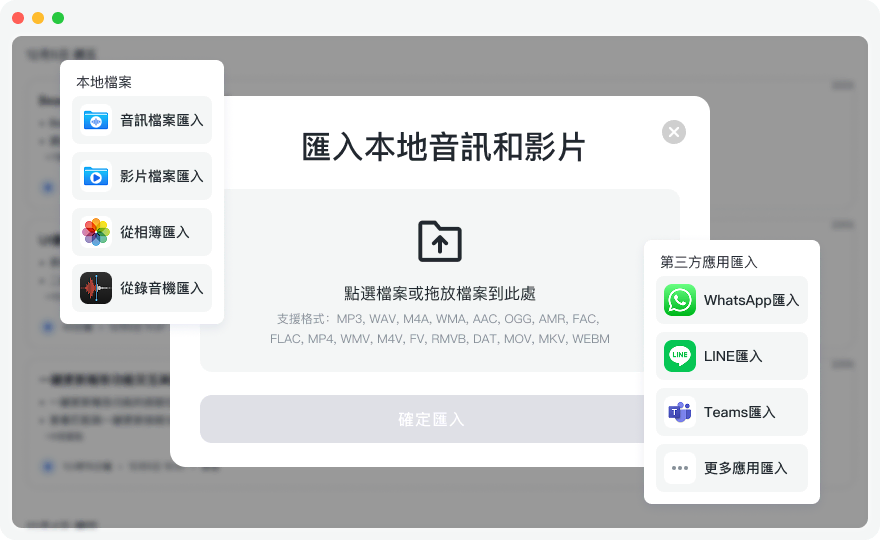
Step 1: Import audio or video source
Upload the recorded podcast audio file (MP3/WAV, etc.) to the tool. If your material is already published as a video podcast on YouTube, you can directly paste the video link, saving download time.

Step 2: Run transcription and speaker diarization
Start the transcription function. For two-person or multi-person interviews, the system automatically identifies different speakers (speaker diarization), splitting the content into dialogue sections for "host" and "guest." This is very helpful for later organizing Q&A-style articles.
Step 3: Use AI to extract key action items and summary
Traditional transcripts are too long and hard to read. Use the AI-generated "meeting minutes" or "summary" function to quickly capture the episode's highlights. If the interview mentions specific books, websites, or action recommendations, Tinrec's task extraction feature can isolate them and let you copy directly into show notes.
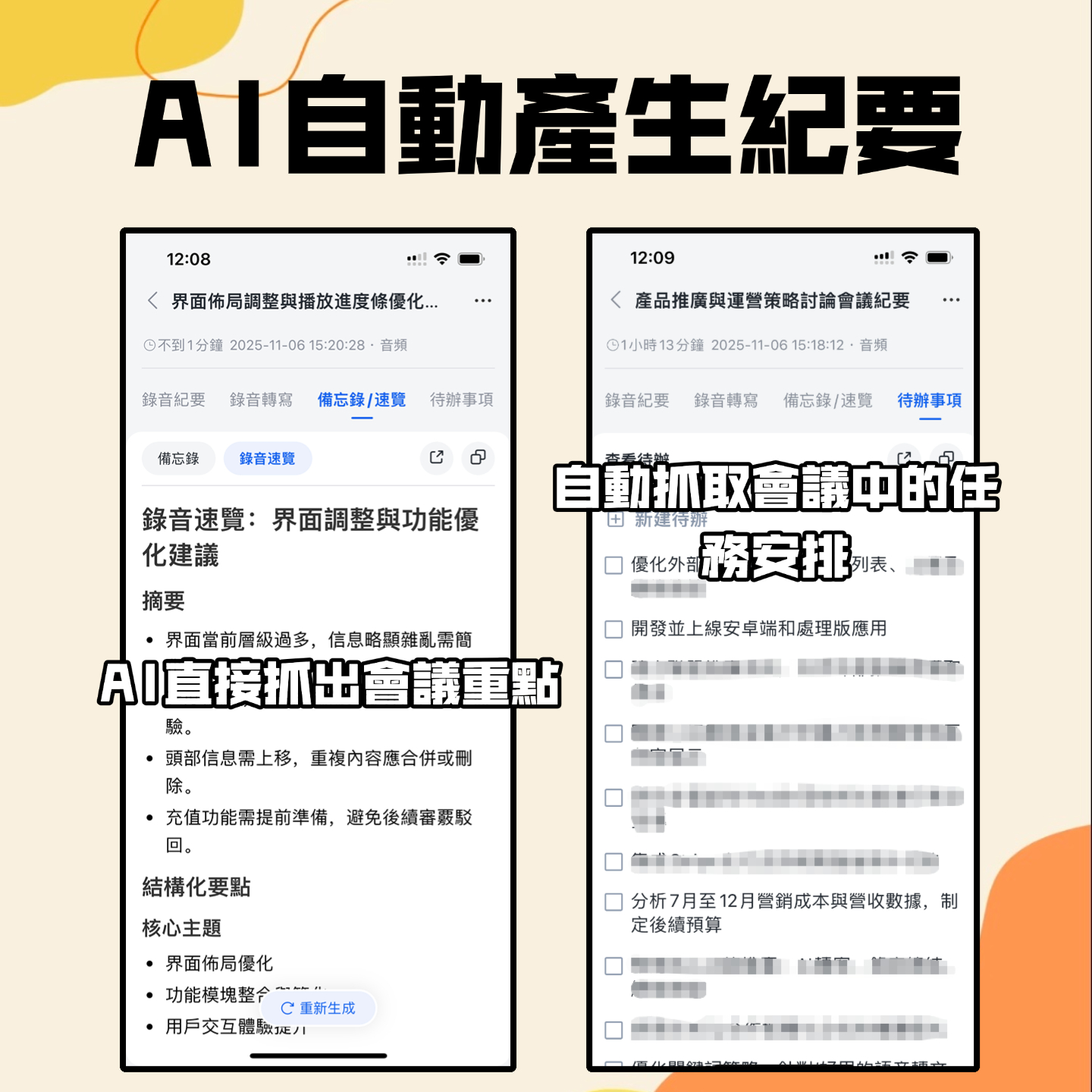
Step 4: Use AI conversation for content repurposing
This is the most critical step. Instead of just reading the transcript, open the "AI conversation query" window and enter commands:
- "Based on this recording, write a 100-word Instagram post introduction."
- "List the three key marketing strategies mentioned by the interviewee."
This way, you can directly transform the raw recording into a draft for blog posts or social media updates.
FAQ
Q1: Do these AI tools support Chinese recognition? How accurate are they? Most international tools (e.g., Podsqueeze) have varying Chinese support depending on the underlying model. Tools optimized for Asian languages, like Tinrec, specifically support mixed recognition of Mandarin, Taiwanese, Cantonese, Japanese, and Korean, so they are usually more accurate when handling localized content.
Q2: What are the typical limitations of free plans? Most tools use a "freemium" model. For example, free plans for Podsqueeze and Wisecut usually limit monthly processing minutes or include watermarks on output. Tinrec's free plan offers 100 minutes of transcription per month, suitable for beginners to try.
Q3: Can I record directly on my phone and convert to text? Yes. Many tools offer mobile apps. Tinrec supports both iOS and Android, allowing you to record interviews directly on your phone and generate transcripts instantly without transferring files to a computer.
Q4: If I only have a YouTube video link, can I organize it into a text transcript? Some tools support this. Tinrec can parse YouTube links; just enter the URL and it converts the video content into text and provides AI summaries. This is very convenient for organizing competitor analysis or learning from other podcasts.
Q5: Do AI-generated transcripts need manual proofreading? Although AI technology (like the Whisper model) is highly accurate, it is still advisable to quickly proofread for proper nouns, names, or special accents. Choosing a tool with an "audio-to-text alignment playback" feature can speed up proofreading.
Q6: How do I choose the right tool for me? Work backward from your "output goal." If the goal is social media traffic, go with Podsqueeze; for video audience growth, choose Wisecut; for content retention and repurposing (e.g., writing articles, organizing interview highlights), Tinrec's AI conversation and note-taking features are a better choice.
Turn every recording into actionable outcomes
Get 60 free transcription minutes when you sign in. No credit card required.
Related Reading
You might also like
4 Meeting Minutes Templates Tested in 2026: Are Free Templates or AI Tools Enough?
Free meeting minutes templates are easy to find, but incomplete notes, missed decisions, and lost action items are the real pain points. This article starts with common pitfalls, then compares free templates with tools like Tinrec, Otter.ai, Notta, and Granola. We explain how to choose based on free limits, Chinese-language meetings, post-meeting summaries, and team sharing—so you can find a meeting documentation solution that truly saves time.

How to Turn Meeting Recordings into Requirements Documents in 2026: 3 Steps with Tinrec
Meeting recordings aren't just for transcripts—they should generate requirements documents, decision logs, and action items. This guide walks you through a repeatable methodology that connects Tinrec's transcription, AI Q&A, Agent post-processing, and team spaces into one workflow, turning meeting content directly into deliverable work documents.

Tinrec vs Otter.ai 2026: 5-Factor Comparison for Sales Call Follow-Up Emails
After a sales call, the follow-up email often determines whether the deal closes. This article uses 5 criteria to evaluate 6 tools that turn calls into usable materials—from bot-free recording, transcripts, and action item extraction to document generation and team governance—to help you choose the best fit for your sales follow-up workflow.

2026 Comparison of 4 Sales Call-to-Notes Tools: Which Can Generate CRM-Ready Meeting Minutes?
In 2026, we tested 4 sales call-to-notes tools, comparing Chinese transcription, post-call summaries, action item extraction, and CRM export. Sharing first-hand insights from a student intern's perspective. Tinrec stood out for Chinese calls, bot-free recording, and AI Q&A. This article also covers key buying factors and pitfalls to avoid.

2026 Comparison of 3 Meeting Notes Tools: Which Saves Product Managers the Most Time After Meetings?
The meeting ends, but the product manager's busiest moment begins. This article starts from the real pain points of post-meeting organization, breaks down 4 key selection criteria, tests Tinrec's bot-free recording, AI Q&A, and action item extraction, and compares Otter.ai, Granola, and Notta. It also includes a pitfalls guide and a 6-step starter checklist.

2026 Sales Meeting Follow-Up Tools Compared: Which Boosts Post-Meeting Efficiency?
After a sales meeting, the real key to closing deals is post-meeting follow-up. This article compares Tinrec, Fireflies.ai, Notta, and Granola across four dimensions: action item extraction, AI Q&A, cross-platform recording, and team data retention. It also provides a pitfalls guide and selection advice to help you choose the best follow-up tool for your sales team.

Which AI PRD Generator Is Best? 3 Key Buying Factors for 2026: If Your Requirements Notes Are Incomplete, Even the Fastest PRD Will Need Rewriting
AI PRD generators aren't a magic bullet—what really slows down PRD progress is missing or incomplete requirements material. This article starts with common misconceptions and explains how Tinrec uses live transcription, AI summaries, action item extraction, and team spaces to turn requirements interviews and cross-department meetings into searchable, queryable raw material. It also covers 5 things to consider before buying an AI PRD tool in 2026 and answers common questions.

2026 Best AI Sales Call Summarizers Compared: Which Tool Saves the Most Time on Cantonese Recordings?
Sales calls often suffer from having recordings but no records. This article breaks down four key factors for choosing an AI sales call summarizer, then hands-on compares Tinrec, Notta, Otter.ai, and PLAUD Note on Chinese meeting experience, bot-free recording, AI Q&A, and team knowledge retention. Includes pitfalls to avoid and scenario-based recommendations.

3 AI Meeting Notes Tools Tested for 2026: Which One Is Good Enough for Turning Meeting Notes into a PRD?
After a requirements meeting, you sit down to write the PRD but can't remember who said the key decision? This article walks through the complete workflow for turning meeting notes into a PRD, from transcripts and AI summaries to action item extraction and export. It uses Tinrec as a hands-on example, plus 5 things to watch when choosing a tool and answers to common questions, helping you turn the meeting itself directly into source material for your product requirements document.