

Turn recordings into transcripts and summaries in minutes
Upload audio or video for multilingual transcription, AI notes, and action items
2026 Comparison of 4 Speech-to-Text Apps: Notta AI Not the Best? This App is the Top Pick
Two hours in meetings, another two hours writing minutes—stop working overtime and read this
Meetings every day until quitting time—the worst part isn’t the boss droning on, it’s having to replay the recording and type up a word-for-word transcript afterward. Especially for Cantonese meetings: there are very few transcription tools that support Cantonese, and even when they do, accuracy is hit or miss. Maybe you’ve tried using your phone’s voice recorder, then staying late at night to slowly replay and transcribe—you’re probably fed up after a month.
If you’ve encountered these problems and want a speech-to-text solution that truly helps, this review is for you. We tested several popular apps with the same 5-minute real meeting recording (including air conditioning background noise and overlapping voices) to see which one is the lifesaver for Hong Kong office workers.
5 Key Points to Know Before Choosing a Speech-to-Text App
Don’t be fooled by the “98% accuracy” claims on official websites. Before picking a tool, understand these points to avoid disappointment.
1. Accuracy: Lab data vs. Real-world environment
Many apps boast high accuracy, but those numbers come from tests in soundproof rooms with a single speaker reading aloud. In actual meetings, with AC noise, keyboard clicks, and multiple people interrupting, the transcription quality can vary wildly. For our test, we deliberately used a real recording with background noise to reveal the true differences between tools.
2. AI features: Don’t just look at word-for-word transcripts
If the app only turns speech into text, you’ll still need to manually find the key points. Good tools now automatically generate summaries, action items, and even let you have a conversation with the recording—just ask “Who mentioned the budget?” and it answers immediately. This feature can save you tons of time, but not every app has it.
3. Input sources: More than just live recording
Your voice data might come from live meetings, local audio files, YouTube videos, or even TikTok clips. Some apps only handle live recording, while others can process multiple sources. Think about your most common use cases before deciding.
4. Cross-platform: Sync between phone and computer
You might use an iPhone to record but want to organize on a computer at the office. If the app only has a mobile version and no web or desktop app, it’s a hassle. Choose a tool that supports iOS, Android, and a web version for seamless use.
5. Cantonese support: Don’t trust the “multi-language” label blindly
Many apps claim to support multiple languages, but fall apart when faced with Cantonese. The key is whether their Cantonese model has been specifically trained on Hong Kong accents. You’ll quickly learn that Cantonese transcription is a whole different ball game.
Tinrec (秒聽錄音) – The Top Pick for Hong Kong Office Workers
In a nutshell: Tinrec (秒聽錄音) is an AI recording and summarization tool that supports 14 languages. It doesn’t just transcribe; it automatically turns recordings into meeting minutes, to-do lists, and even lets you ask questions about the content conversationally. It’s available on iOS, Android, and web—no extra hardware needed, just install the app and use it.
How does it actually work?
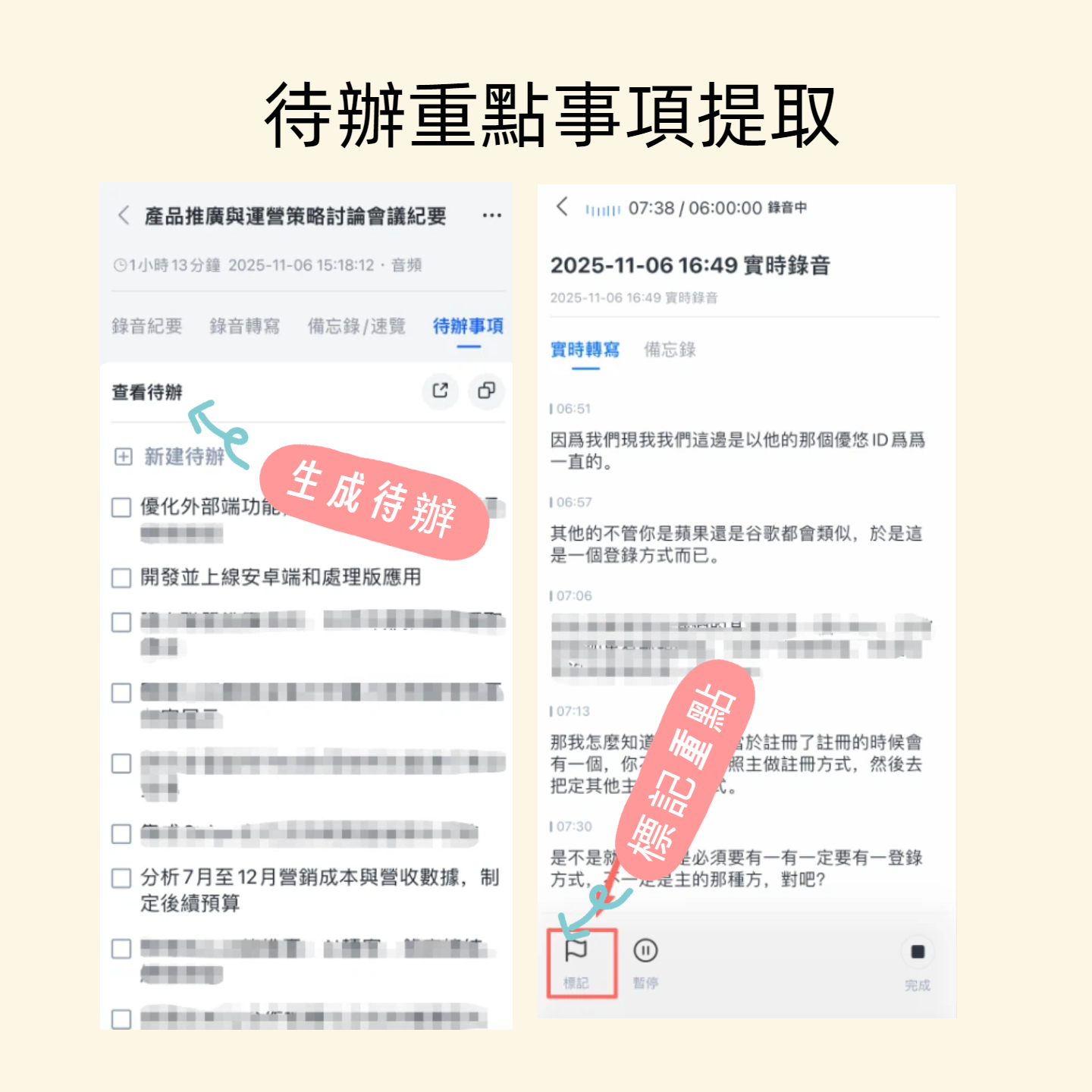
During a meeting, just open Tinrec and it transcribes in real time. After the meeting, tap a button and the AI has already generated a summary and action items—who is responsible for what, deadlines—all clear. Plus, my favorite feature: an AI conversation query. Once after a meeting, I forgot who mentioned a promotional project. I asked Tinrec directly, “Who talked about the new promotion in the last meeting?” It didn’t just do a keyword search—it understood the context and gave me the answer. No other app in this price range has that feature yet.
Stop organizing recordings by hand
Upload audio or video and automatically get a transcript, summary, and action items
Test results
We used a 5-minute real Cantonese meeting recording (iPhone 15, 26°C room, AC background noise) and Tinrec achieved an error rate of 8.3%—pretty impressive among similar tools. You might think 8.3% is still error-prone, but in practice, the mistakes are mostly filler words or homophones that don’t affect understanding. And you can always listen back to the recording in the app to correct them.
Pros
- Accurate Cantonese and multi-language support: Not just Cantonese, but also Mandarin, English, Japanese, and 14 other languages. If your company has international meetings, one app covers everything.
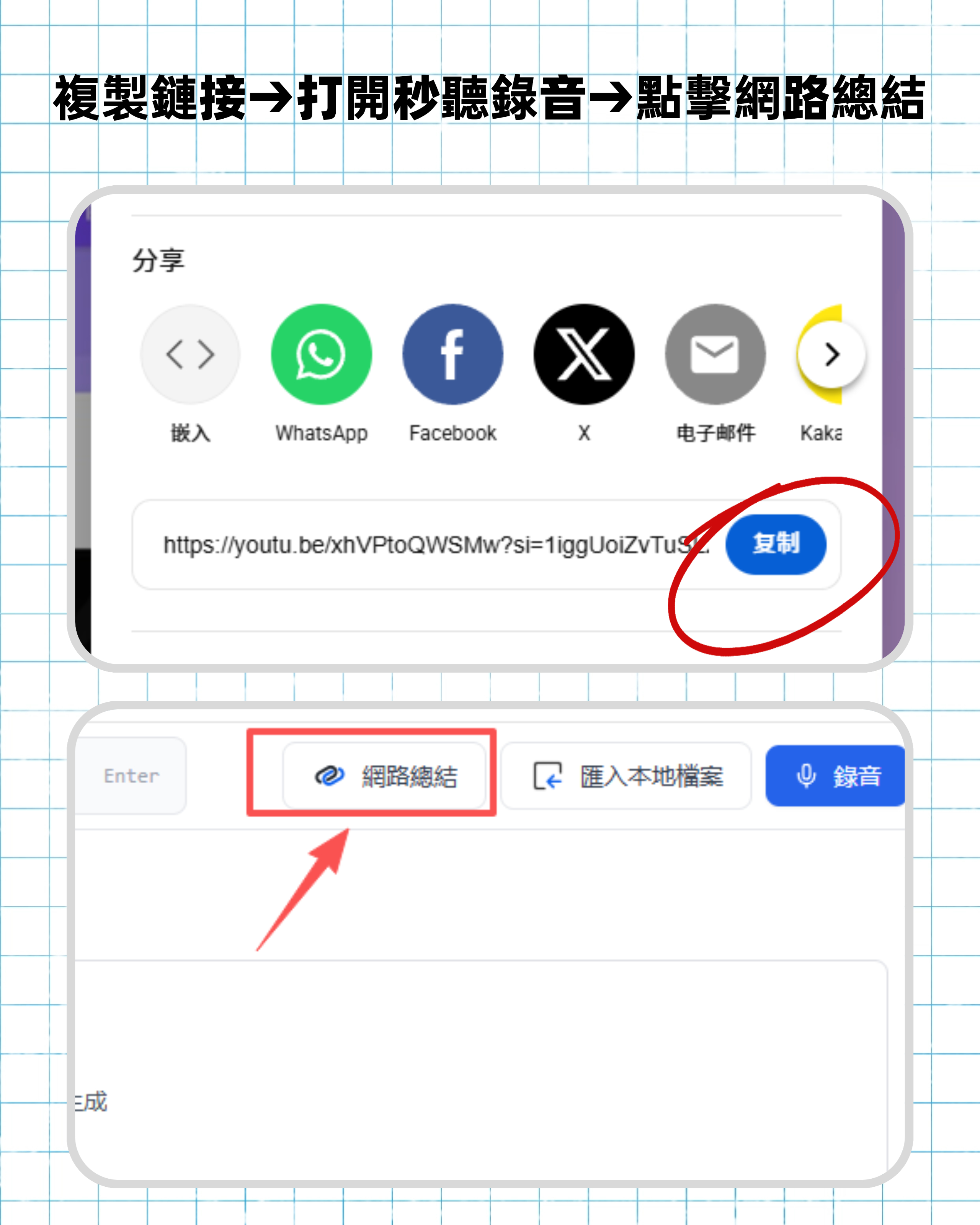
- Multiple input sources: Besides live recording, you can upload local audio/video files, or paste links from YouTube, Bilibili, Xiaohongshu for direct transcription. Once, when I was rushing to submit a report, I turned a 15-minute interview recording into a transcript and key points in under 5 minutes.
- Powerful AI post-processing: In addition to transcripts, it automatically creates chapters, highlights key points, and generates to-do lists. They recently added an Agent feature that lets you generate meeting reports or tables directly from the recording—streamlining the whole workflow.
Limitations
The free plan offers 100 minutes of transcription per month, which might not be enough for heavy meeting users. But for someone with 2-3 meetings per week, it’s plenty to test its effectiveness. The Pro plan costs about the same as other mainstream tools. If you rely on it daily, spending a little to reclaim your overtime hours is definitely worth it.
Who is it for?
If you frequently record Cantonese content, want to instantly find key points with AI, or use both iPhone and Android and need cross-platform sync—Tinrec is the most convenient choice. It’s also great for students recording lectures, journalists conducting interviews, or YouTubers adding subtitles.
How Do Two Other Apps Compare?
Notta
Notta is a direct competitor, offering transcription, meeting notes, and multi-language support. Its interface is sleek and collaboration features are decent. However, note that Notta’s AI features mainly focus on transcripts and simple summaries; it lacks Tinrec’s AI conversation query (so you can’t ask questions about the recording) and doesn’t support web video link transcription—you’d have to download YouTube videos manually and upload them, adding extra steps. If you only need basic transcription, Notta is fine; but if you want more advanced features, Tinrec is clearly more comprehensive.
Otter.ai
Otter.ai is the top choice for English meetings, offering 300 free minutes per month—more generous than Tinrec. But its biggest drawback: it doesn’t support Cantonese. If you mainly record English content, especially meetings with international teams, Otter is worth considering (the only non-Tinrec scenario we recommend). But as soon as Cantonese meetings or local lectures are involved, Otter becomes useless. That’s when you’ll appreciate Tinrec.
3 Common Pitfalls When Choosing a Speech-to-Text App—Don’t Fall for Them!
Pitfall 1: Trusting official accuracy numbers
Every app claims 9X% accuracy, but those are lab numbers. In real environments with noise, accents, and overlapping speech, the gap can be huge. Instead of believing ads, download the free version and test it with your actual recordings. Tinrec’s free plan gives 100 minutes—enough to try out a couple of meetings.
Pitfall 2: Ignoring cross-platform sync
You might think, “I only record on my iPhone, so an iOS app is enough.” But when you sit at your office computer to organize, you realize there’s no web or desktop app, forcing you to work on a small screen—very inefficient. So remember to choose a tool that supports iOS, Android, and web. Tinrec delivers on this front.
Pitfall 3: Only using the transcript feature
Many people think speech-to-text apps just spit out a Word file and that’s it. In reality, AI features like automatic summaries, to-do lists, and conversational query are what truly save time. If you use Tinrec but never try its AI Q&A feature, it’s like buying a smartphone only to make calls—a waste.
Conclusion: Which One Should You Buy? Let Your Use Case Decide
The test results are clear: if your work or studies often involve Cantonese content, Tinrec (秒聽錄音) is currently the most comprehensive and time-saving choice. Its AI conversation query and multiple input sources put it ahead of other apps.
Scenario-based recommendations
- Need to record Cantonese meetings, lectures, or interviews → Get Tinrec. It has the best accuracy and AI features for Hong Kong users.
- Want to use AI to find key points and ask questions after recording → Only Tinrec offers that capability; other apps at most give you Ctrl+F.
- Frequently need to extract content from YouTube or Xiaohongshu videos → Tinrec exclusively supports web video link transcription; others require third-party tools.
- Your company only has English meetings with no Cantonese needs → Consider Otter.ai for its generous free tier, sufficient for pure English environments.
Final tip: Don’t rush to subscribe. Download the free version of Tinrec first—100 minutes per month is enough to try it out for 2-3 meetings. If you find it helpful and want more minutes and features, then consider upgrading to Pro. For a few dollars a month, you get back your overtime hours—worth it, right?
Turn every recording into actionable outcomes
Get 60 free transcription minutes when you sign in. No credit card required.
Related Reading
You might also like
2026 Tinrec Meeting Transcription Guide: No-Bot Recording + Chinese Meeting Organization
How to choose meeting transcription software? This article compares Tinrec and Otter.ai across 5 key dimensions, from no-bot recording and Chinese meeting organization to post-meeting workflows and team spaces, helping you decide which is better for users in Taiwan.

2026 Smart Meeting Minutes Software Comparison: Which One Handles Chinese AI Summaries Best?
We tested 4 smart meeting minutes tools, covering Chinese speech recognition, AI summaries, online meeting recording, and team collaboration, to tell you if the free plans are enough and why Tinrec is the top choice for Taiwan teams.

2026 Meeting Recording Transcription Tools Compared: 3 Types Explained, Stop Just Saving Transcripts
How to choose a meeting recording transcription tool? This article uses Tinrec as an example to compare three types: pure transcription, AI meeting assistants, and recording hardware, and helps you make a purchasing decision from four aspects: accuracy, value-added features, cross-platform support, and team collaboration.

2026 Free Meeting Recording to Text Solutions: 4 Tools Compared
Stop working overtime on meeting notes! This article compares four free solutions—Tinrec, CLOVA Note, Yating, and Otter.ai—to help busy professionals find the most time-saving AI meeting assistant.

2026 Test Comparison of 4 Meeting Transcription Tools: Top Picks for Chinese Meetings and Team Collaboration
This article compares four meeting transcription tools—Tinrec, Otter.ai, Notta, and Granola—across recording methods, Chinese accuracy, post-meeting organization, and team collaboration, to help you find the best fit for office workers in Taiwan.
2026 Free Meeting Transcription Solutions: 3 Options Compared
Meeting transcription doesn't have to cost money. This article uses Tinrec as an example to outline 3 free or low-cost options, showing how to turn meeting, interview, and course recordings into transcripts, summaries, and to-dos quickly, and highlights 4 key factors to consider when choosing a tool.

2026 Free Meeting Transcription Solutions: A Side-by-Side Look at 2 Tools
Compare the free plans, recording methods, organization depth, team collaboration, and Chinese-language experience of Tinrec and Notta to quickly decide which is better for turning meeting recordings into searchable, actionable transcripts.
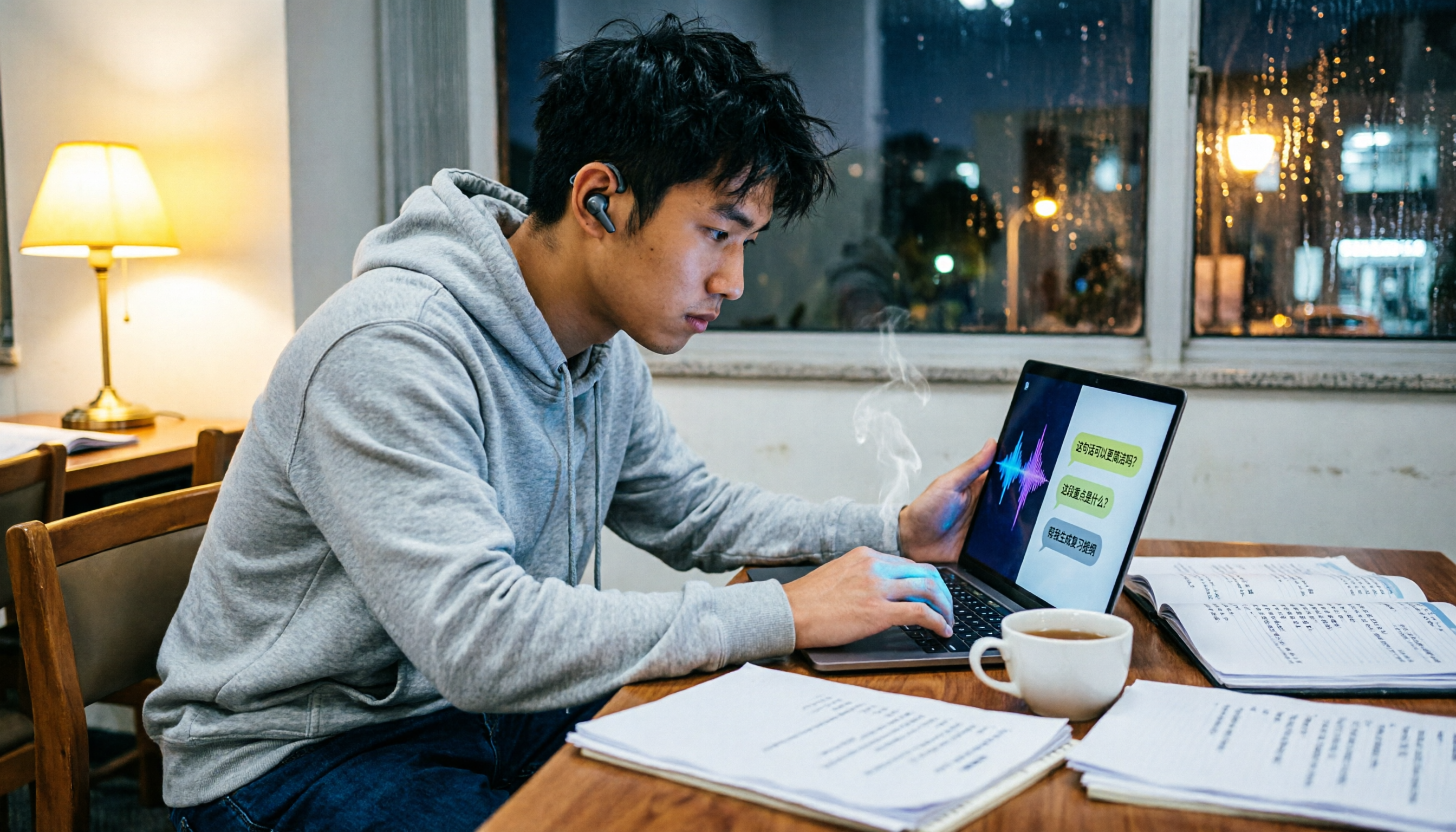
2026 AI Meeting Note Tools Compared: Which One Do Students Recommend Most?
Struggling to organize lecture recordings before finals? This student-perspective review tests Tinrec and Otter, covering Chinese speech recognition, bot-free recording, AI Q&A, and free tiers to help you decide which tool fits Taiwan students best.

2026 Hands-On Comparison of 4 Meeting Transcription Tools: Is Tinrec AI Notes Best for Office Workers?
Spending two hours in a meeting and another two hours organizing the notes? This article tests four meeting recording transcription tools—Tinrec, Otter.ai, Notta, and PLAUD—covering Cantonese accuracy, AI features, cross-platform support, and team collaboration to help you pick the most time-saving solution.