
Turn recordings into transcripts and summaries in minutes
Upload audio or video for multilingual transcription, AI notes, and action items
The other day, after a corporate training session, a student came up to me and asked, "Teacher, Google Meet now has AI meeting notes. Does that mean we don't need another tool?"
My answer was, "It depends on your needs."
But after trying it myself a few times, I realized that for most knowledge workers, the built-in AI alone falls a little short.
It's not that the built-in feature is bad.
It's that it only solves a small part of "recording," without turning your meetings, courses, and interviews into truly searchable, queryable, and reusable "knowledge."
So today, I want to share a workflow that shows you how, with a tool like Tinrec, you can turn Google Meet recordings from a long, hard-to-digest audio file into actionable material.
And this method isn't just for meetings.
You can apply the same logic to any audio or video content.
What Can Google Meet's AI Meeting Notes Do for You? First, Recognize Its Limitations
Google Meet's AI features mainly provide real-time captions during meetings and automatically send a summary after the meeting.
This is convenient for those who just want a quick recap of "what was roughly discussed."
But if you're a professional who needs to organize, assign tasks, and cross-reference later, you'll quickly run into a few issues:
- Summaries are too brief: The emailed summary is usually just a few lines, missing discussion details, different people's positions, and action items.
- Can't ask follow-up questions: You can't ask the AI, "What was the final budget figure?" — it's not possible.
- Recordings are stuck in the cloud: It's hard to combine this recording with others from the same project to build your own database.
- No cross-platform integration: If you have in-person meeting recordings, lecture audio, or technical talks from YouTube, Google Meet can't help.
These limitations are exactly why I started using Tinrec to handle the second half of the organization work.
(Screenshot: Google Meet meeting screen and Tinrec icon, arrow pointing to workflow from meeting recording to complete organization)
Tinrec's Core Capability: Not Just Recording, But Understanding and Action
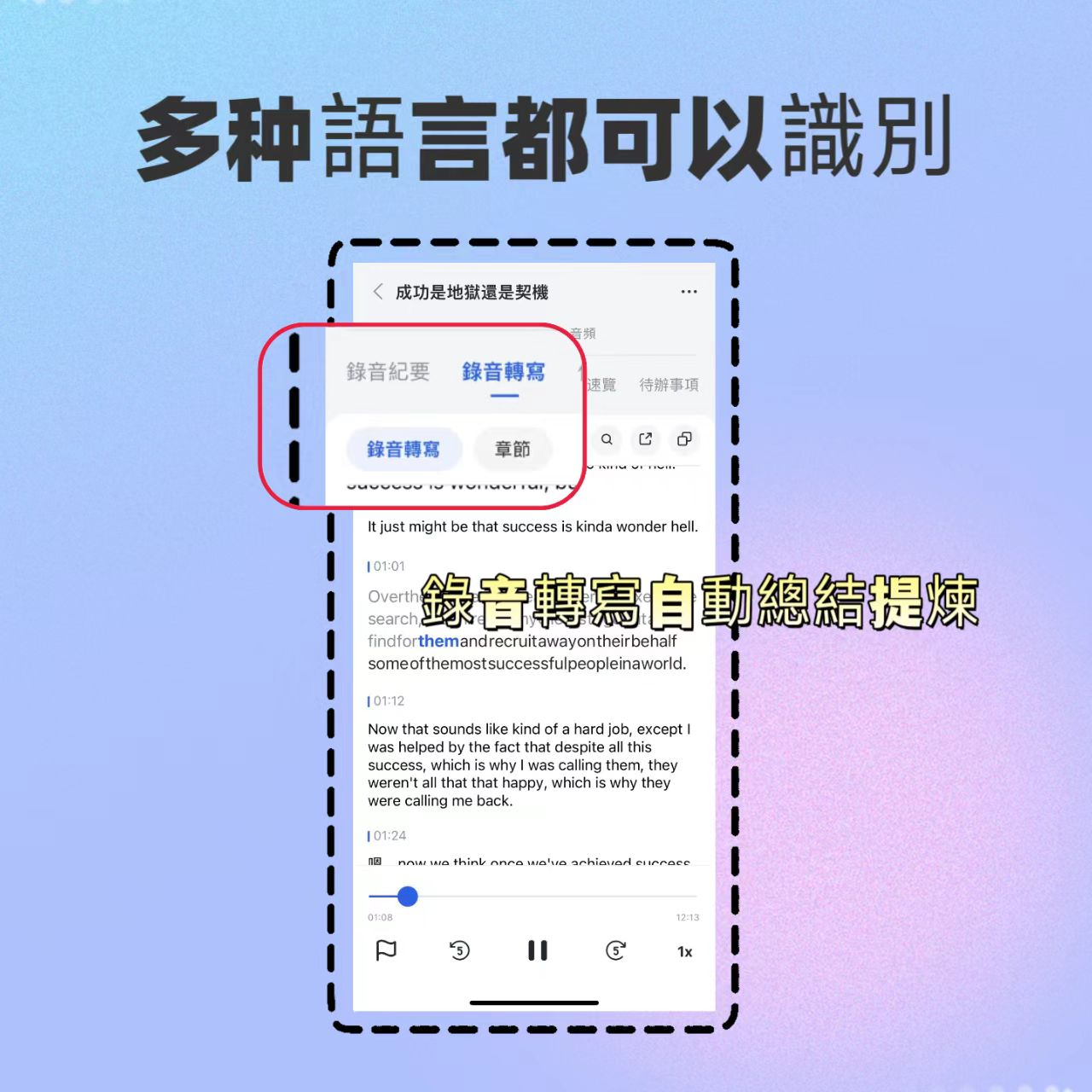
When I put a Google Meet recording into Tinrec, the first thing it does is transcribe it to text.
But then, it's completely different.
1. Real-time transcription, text as you record
You can certainly turn on captions in Google Meet, but Tinrec saves both the recording and text simultaneously, and later you can click on any word to jump to that moment in the audio.
(Screenshot: Real-time transcription 1, arrow pointing to the live transcription text block)
2. Structured AI Summary
It doesn't just condense the transcript into a paragraph.
Tinrec lists the meeting topic, conclusions, action items, and responsible persons separately.
This is much clearer than Google Meet's summary—I don't have to re-listen to find key points.
(Screenshot: Quick listen meeting summary, arrow pointing to sections for summary, conclusions, action items)
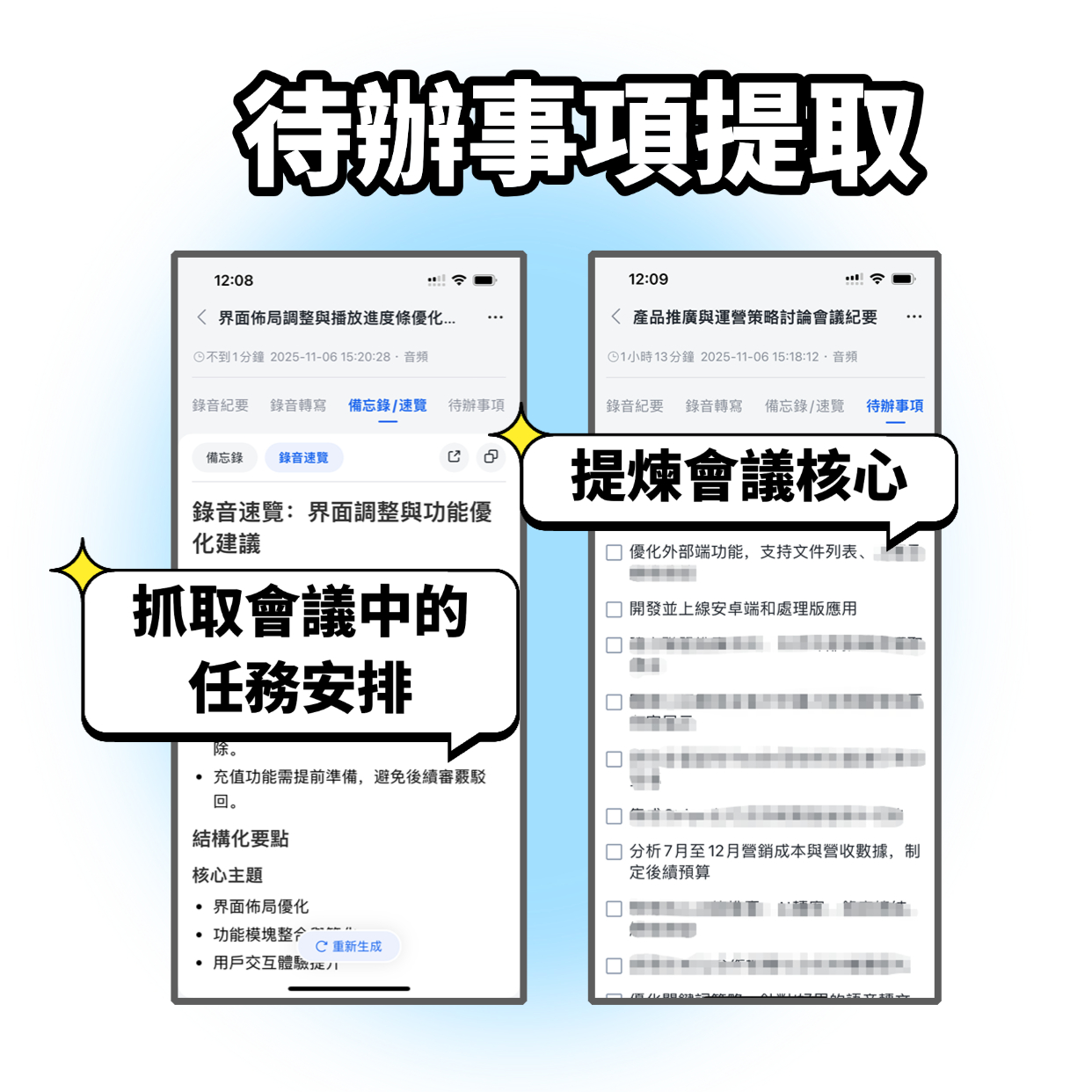
3. Automatic Extraction of Action Items
This is my favorite feature.
During meetings, people talk over each other, and afterward, it's easy to miss "who should do what."
Tinrec directly extracts action items from the conversation, even organizing deadlines.
(Screenshot: Action item extraction 1, arrow pointing to each action item and responsible person)
4. AI Chat Query: Turn Recordings into a Q&A Database
Google Meet ends after recording.
But in Tinrec, you can directly ask: "In last week's product meeting, what timelines did the marketing team propose?"
It searches based on semantics, so you don't have to dig through the transcript yourself.
(Screenshot: AI chat query 1, arrow pointing to question input box and answer content)
5. Multi-format Export, Connecting Back to Your Workflow
Whether you need to generate meeting minutes, organize into a table, or export to Notion or Google Docs, Tinrec integrates with your existing work habits.
(Screenshot: Multi-format file export, arrow pointing to export menu)
Stop organizing recordings by hand
Upload audio or video and automatically get a transcript, summary, and action items
Real-World Use Cases: From Meetings to Courses, One Method Covers All
Scenario 1: Online Project Meeting
I hold a meeting on Google Meet and simultaneously open Tinrec to record.
When the meeting ends, I already have the transcript, summary, and action items.
I paste the action items into the team group chat, and everyone knows what to do immediately.
(Screenshot: Meeting minutes - key notes anytime, arrow pointing to one-click share button)
Scenario 2: Online Course or Lecture
Many knowledge workers use Google Meet for courses and lectures.
The built-in recording file is hard to review.
After putting it into Tinrec, not only can I view the transcript, but I can also use the chapter feature to split a two-hour session into a dozen topic segments, clicking to jump directly to the part I want to review.
(Screenshot: Speaker differentiation and chapter splitting, arrow pointing to chapter titles and timestamps)
Scenario 3: Client Interviews or User Research
Interview recordings often last an hour or more, and finding key quotes is painful.
Using the AI chat query, I ask: "What examples did the interviewee give when mentioning pain points?"
Tinrec directly pulls out the relevant passages and original text, making report writing much faster.
(Screenshot: AI Q&A, arrow pointing to dialogue-based answer from recording)
Scenario 4: Turn YouTube Technical Talks into Written Notes
Google Meet doesn't cover public online videos.
But Tinrec can directly paste a YouTube link, transcribe the entire video into a text summary, and let you ask questions about its content.
(Screenshot: YouTube online video analysis and summary, arrow pointing to the link input field and generated summary)
You see, both use AI, but the difference is: one passively sends you a summary email; the other lets you actively turn content into callable knowledge.
5 Key Points to Consider Before Choosing an AI Meeting Organization Tool
If you're considering adding a tool beyond Google Meet, evaluate from these angles:
1. Do you only need to organize meetings?
If your audio/video sources are only Google Meet, the built-in feature might barely suffice.
But if you have any course recordings, offline meetings, interviews, or video note-taking needs, you need a tool that handles multiple sources.
Tinrec is very comprehensive in this regard—it supports almost all common audio/video formats.
2. What's the next step after organizing?
If you just want a text file for reference, any transcription tool will do.
But if you need to extract actions, repeatedly query, or even generate reports, then "post-transcription processing" capabilities are key.
Tinrec integrates summaries, action items, Q&A, and export—in my experience, it has the smoothest workflow.
3. Quality of Chinese content processing
Google Meet's AI summary often lacks detail for Chinese meetings.
In my tests, Tinrec's summaries and action items are much more complete for Chinese meetings and mixed Chinese-English contexts.
4. Cross-platform and data consolidation
If you want all meeting and learning recordings in one place, searchable and queryable at any time, built-in platform features won't work because they're locked inside the meeting software.
Tinrec has iOS, Android, and web versions, with unified management of recordings and results—crucial for building a personal knowledge base.
(Screenshot: Supports iOS, Android, and web, arrow pointing to each device icon)
5. Pricing and flexibility
Many tools require a monthly fixed fee, but you may not have heavy meetings every month.
Tinrec has a free trial and weekly cards for short-term needs, which is friendlier for those with occasional intensive meetings or courses.
Frequently Asked Questions
Q: Do I need to install a plugin or grant permission to use Tinrec with Google Meet?
No. Just open Tinrec on your computer or phone, select record, and it will capture your device's system audio and microphone audio.
No changes are needed on the Google Meet side.
Q: Are the recorded files secure?
All recordings and transcriptions are encrypted and stored in your account, accessible only by you.
You can delete them at any time.
Q: Is the free version sufficient?
If you have only one or two meetings per week, the free version's monthly allowance is enough to try the full workflow.
If you have intensive courses or projects, adding a weekly or monthly card will be more than sufficient.
Q: Can multiple people share the same recording?
Currently, Tinrec uses a personal account model.
But you can export the organized summaries and action items to share with your team.
(Screenshot: Action item list, arrow pointing to share or export button)
Conclusion: Make Your Google Meet Recordings Truly Your Knowledge Assets
In my experience, when you separate "recording" from "organization," your needs become clear.
Google Meet's AI handles the first step of recording.
And Tinrec handles the truly valuable second half: understanding, action, and consolidation.
If you're already using Google Meet for meetings, courses, and interviews, but still in the "receive a summary email and forget it" state,
I suggest you try putting the same recording into Tinrec.
You'll find that a recording can be more than just an archive—it can be truly usable data.
You can do it too, three quick steps to get started:
- Download Tinrec (iOS, Android, or web) and create a free account.
- Next time you're on Google Meet, open Tinrec and start recording simultaneously.
- After the meeting, check the summary and action items, try asking the AI questions, and experience the difference organization makes.
Try it step by step, and you'll gradually master this method.
Turn every recording into actionable outcomes
Get 60 free transcription minutes when you sign in. No credit card required.
Related Reading
You might also like
iPhone Call Recording in 2026: Do You Still Need Tinrec? 3 Reasons to Convince You
iPhone's built-in call recording in iOS 18.1 is handy, but organizing recordings still takes time. This article shows how Tinrec turns call recordings into searchable notes, summaries, and to-dos to boost learning and work efficiency.

2026 Hands-On Comparison of 4 Computer Recording Tools: More Than Just Recording, They Help You Organize Key Points
Struggling to organize your computer recordings after capturing them? This test of 4 computer recording tools — from free options to AI-powered organization — helps you find the most suitable solution.

2026 Complete Guide to AI Meeting Minutes: Auto-Generated Transcripts and Action Items to Double Meeting Efficiency
Still wasting time on meeting minutes? This article shows how to use AI recording tools to auto-generate transcripts, summaries, and action items, with hands-on comparisons of Tinrec, Notta, Otter.ai and more to help you pick the best solution.

2026 iPhone Screen Recording with Audio: 2 Methods Compared — Is the Built-in Feature Good Enough?
Can iPhone screen recording capture audio? This hands-on comparison tests the built-in screen recorder against two third-party apps, showing how to record system sounds and ambient sound, and explains the common causes of no-audio issues and how to fix them.

2026 Hands-On Comparison of 2 PC Screen Recording Audio Fixes: Tinrec vs. QuickTime Player – Which One Saves You Effortlessly?
Silent screen recordings are a common headache. This article compares Tinrec, an AI recording and media organizer, with Mac's built-in QuickTime Player across four dimensions—recording capabilities, post-processing, cross-platform support, and pricing—to help you find the best audio-video sync solution.

2026 Free Speech-to-Text Tools Compared: 4 Apps Reviewed
Is it legal to record conversations? There are legal restrictions, but the bigger challenge is managing your recordings. We tested 4 speech-to-text tools, compared their free plans, and shared practical insights to help you choose the right one without wasting time.
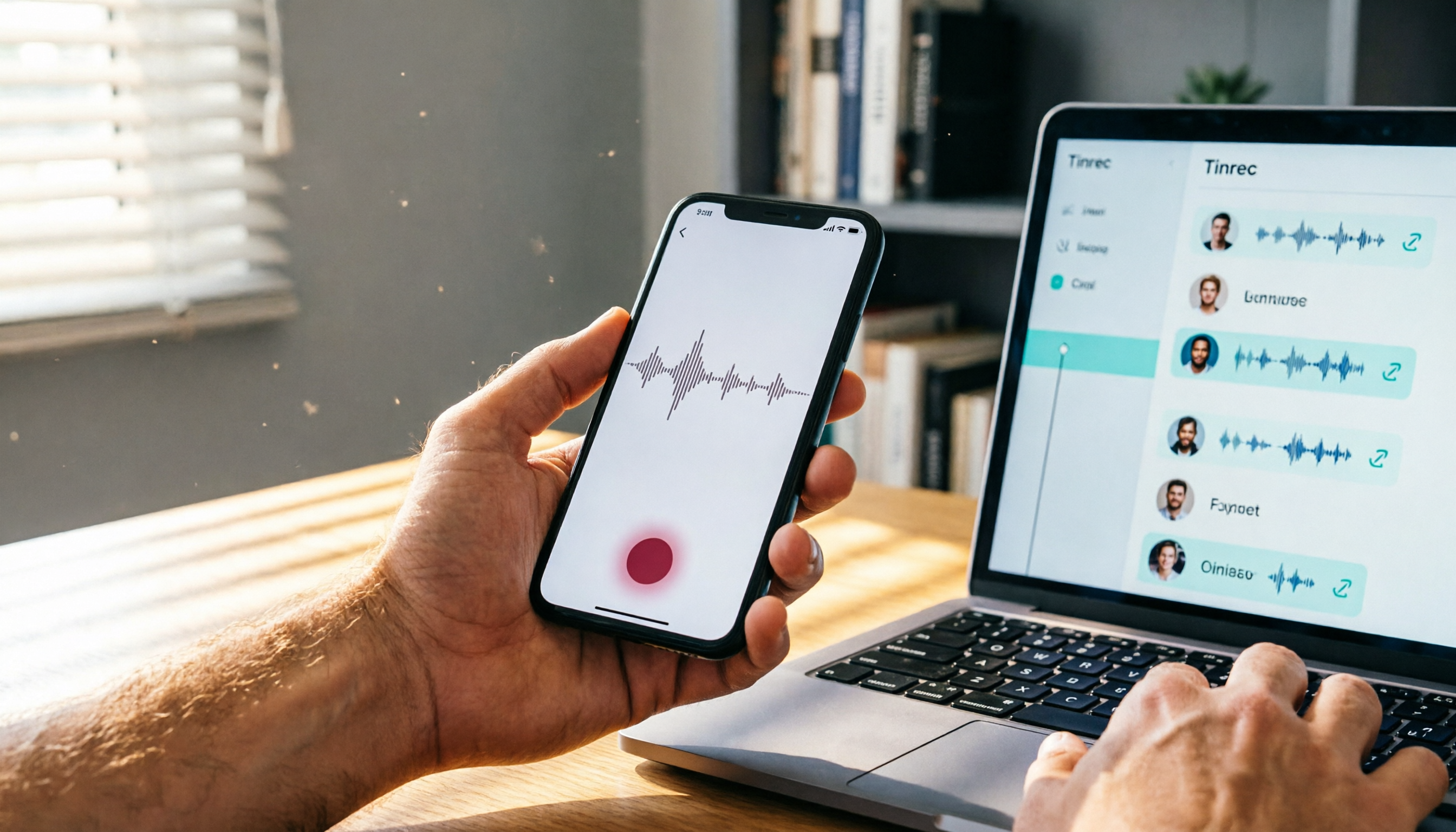
Where Are iPhone Voice Recordings in 2026? 5-Step Guide and a Better Alternative
Can't find your iPhone recordings? This article walks you through 5 steps to record, export, and share with Voice Memos, and offers an in-depth comparison with the AI tool Tinrec to show why Tinrec is a more complete audio/video organization solution for most users.

2026 AI Meeting Notes Tools: How to Choose Between Tinrec and Otter.ai in 5 Steps
There are many AI meeting notes tools on the market, so how do you choose between Tinrec and Otter.ai? This article compares the two across five key dimensions—Chinese speech recognition, audio/video source support, AI organizational capabilities, pricing plans, and cross-platform experience—and uses hands-on testing to help you quickly see the differences and find the best fit for users in Taiwan.

2026 Web Recording Tools Comparison: Which One Organizes Online Audio More Efficiently?
Want to record audio from web meetings, courses, or videos? This article compares Tinrec and Otter.ai in real-world tests, covering online video transcription, AI summaries, Chinese support, and pricing, to help users in Taiwan find the best web recording tool for organizing online audio.