
Turn recordings into transcripts and summaries in minutes
Upload audio or video for multilingual transcription, AI notes, and action items
A while ago, I had a Google Meet reunion with some old friends living in different countries. We talked about the silly things we did together back in the day and laughed nonstop.
But after it ended, I suddenly thought, "What was the name of that restaurant Xiao Wang mentioned?"
I searched through the chat history, only to find a bunch of blurry screenshots.
That's when I realized that even the happiest conversations can lose their details easily.
So I started recording every Google Meet friend gathering and using Tinrec to organize them into searchable, memorable records.
Today, I'm sharing my experience from this experiment and how you can also use Tinrec to turn the laughter and plans from your friend gatherings into true memory assets.
What Can You Keep from a Google Meet Friend Gathering Besides the Chat?
After a friend gathering, you're usually left with just some vague impressions.
What's worse, the things you agreed to do together, the links shared, and the impromptu plans often disappear as soon as the window closes.
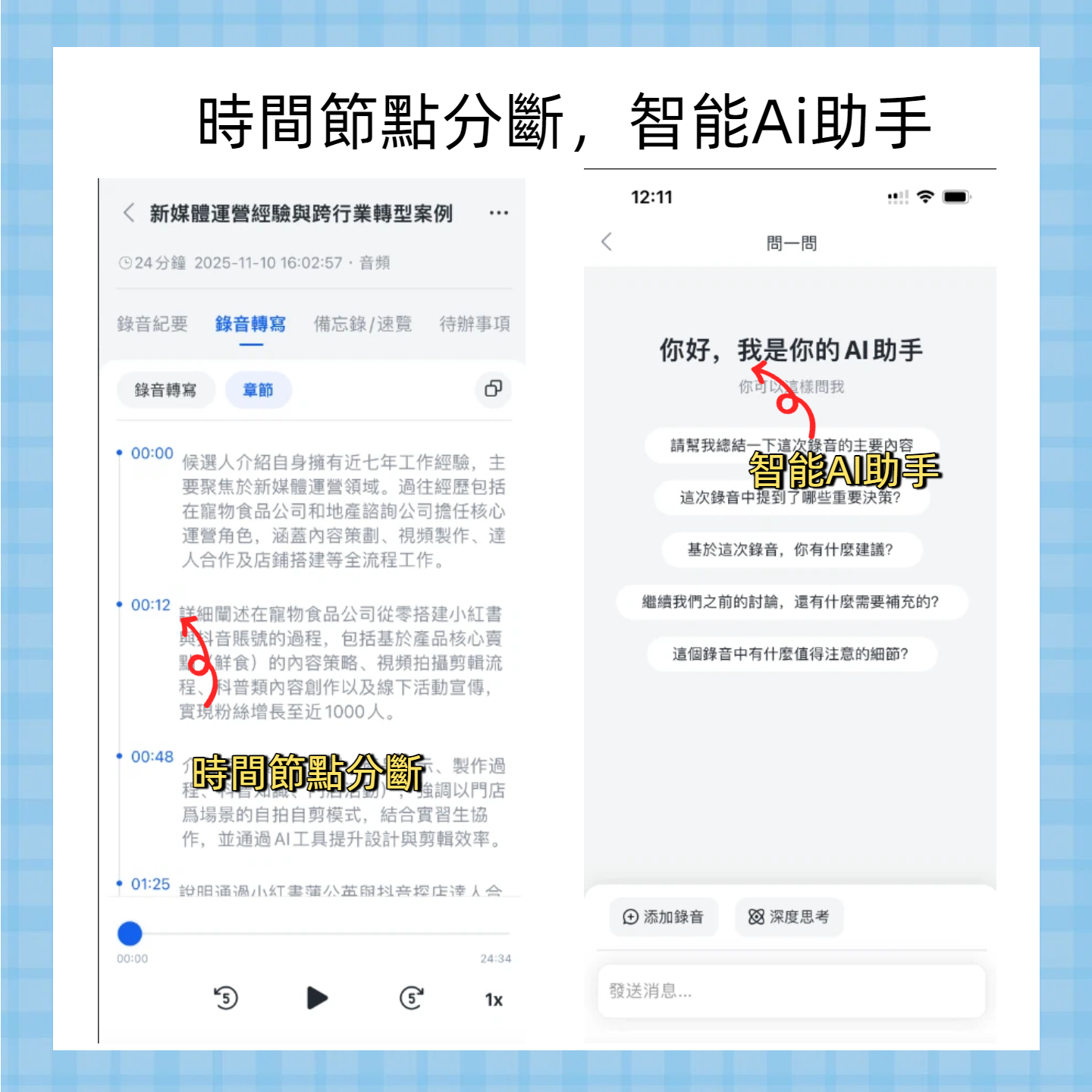
From my own experience, recording the meeting and letting Tinrec transcribe it in real time not only preserves the full conversation but also automatically organizes key points afterward.
(Screenshot: Real-time transcription interface, arrow pointing to the live text appearing)
Even if you feel awkward recording during the gathering, you can save the Google Meet recording first and then upload it to Tinrec for transcription.
(Screenshot: Interface for importing audio files for transcription, arrow pointing to the "Import" button)
This way, every gathering becomes more than just a "meetup" — it becomes a database you can revisit and even mine for inspiration.
How Does Tinrec Help Create More Valuable Records of Friend Gatherings?
I've used some audio transcription tools before, but most just give you a plain transcript.
What really won me over about Tinrec is that it focuses on organizing and using the content after transcription.
Here are some core features I find especially useful for friend gatherings.
1. Real-Time Transcription, Words Appear as You Talk
Tinrec's real-time transcription has almost no lag. You can watch the text appear as you talk and make sure you're not missing any key names or funny moments.
(Screenshot: Close-up of real-time transcription, arrow pointing to the text being transcribed)
After the gathering, you don't need to re-listen to hours of audio; just reading the text brings back the memories.
2. AI Summaries, Condensing Long Conversations into Key Points
When five or six people gather online, chatting for two to three hours is common.
Tinrec's AI summary automatically breaks down the conversation into topics, lists conclusions, and highlights who said what.
(Screenshot: AI summary results showing structured meeting highlights)
Last time, I told my friends, "Look, this is the summary of our gathering last month." Everyone was amazed.
3. Task Extraction, Turning Banter into Action Items
One of the most common topics in friend gatherings is "Where should we go next time?"
But it's often just talk, and no one remembers later.
Tinrec can automatically extract to-dos from the conversation, like "Xiao Wang is responsible for booking" and "I'll look up transportation."
(Screenshot: To-do list showing tasks extracted from the conversation)
After the gathering, share this list in the group chat, and everyone immediately knows what they need to do.
4. AI Q&A, Search Past Conversations Like a Search Engine
This is my favorite feature.
You can simply ask Tinrec: "What was the name of that cake shop Xiao Mei recommended during our last gathering?"
It will give you the answer directly based on past recordings.
(Screenshot: AI Q&A interface, showing the answer after entering a question)
No need to listen to hours of audio or scroll through endless group messages.
Stop organizing recordings by hand
Upload audio or video and automatically get a transcript, summary, and action items
5. Web Video Link Analysis, Organizing Shared Topics
Friend gatherings often involve sharing YouTube or social media videos and discussing them together.
Tinrec allows you to paste a video link, and it will analyze the video content and generate a summary.
(Screenshot: Interface showing automatic analysis after pasting a YouTube link)
That way, you get two sets of organized information: video highlights and your discussion, making it easy to review later.
Real-Life Use Cases
Scenario 1: Regular Online Gatherings, Building a Memory Database
A group of college friends and I have a fixed Google Meet gathering every month.
Here's what I do: open Tinrec for real-time recording, and set the meeting title.

After the gathering, the AI automatically generates a summary, and I save the summary and to-dos into my cloud notes.
Over time, we've accumulated a "banter record" spanning half a year, where you can even find who told which cheesy joke and when.
(Screenshot: Multi-format export options, arrow pointing to export to Notion or Google Docs)
Scenario 2: Discussions After Watching a Show or Sports Game Together
Several of us watch the broadcast simultaneously on Google Meet, and we inevitably argue afterward.
I make it a habit to record the discussion with Tinrec, then mark key moments in the transcript.
Later, if a friend forgets, I just search for the keyword and paste it back into the group chat.
Having a text record is far more accurate than relying on memory.
Scenario 3: Friends Collaborating on Travel Plans
The worst thing when planning a trip is missing out on anyone's needs.
Tinrec's task extraction is super useful here — it automatically lists who books the hotel, who rents the car, who finds restaurants.
I also use the AI Q&A feature to ask, "What was everyone's conclusion about the budget?"
This way, even if we discuss until late and our heads are spinning, the details won't be lost.
(Screenshot: AI Q&A query with a question about the budget)
Scenario 4: Organizing Recordings from Past Gatherings
If you've recorded Google Meet sessions in other ways before, you can upload those files to Tinrec.
It supports multiple audio formats, and after transcription, you can still use Q&A and summaries.
(Screenshot: Option to import local audio files)
I once fed in a two-year-old gathering recording, and Tinrec actually answered whether we had discussed Christmas gift exchange.
3 Things I Pay Special Attention to When Choosing a Recording Organization Tool
If you want to start recording friend gatherings, here's how to evaluate tools.
1. It's Not Just About Transcription — Can It Actually Help You Organize?
Most tools only give you a transcript, but Tinrec adds summaries, to-dos, and AI Q&A, essentially providing "organized highlights" directly.
This is especially important for informal settings like friend gatherings — nobody wants to read through three hours of chat logs.
2. Can It Work Across Platforms and Devices?
You might use Google Meet on your computer but want to review or search the content on your phone afterward.
Tinrec has iOS, Android, and web versions, and records sync across them, which is very convenient.
(Screenshot: Multi-device sync illustration showing both phone and computer)
3. Privacy and Data Ownership
Conversations with friends often involve personal topics, so it's best to inform them before recording and choose a platform you trust.
Tinrec stores data in the cloud, and you can manage or delete recordings at any time — at least you have control.
FAQ
Q: Do I need consent from others to record a Google Meet gathering with Tinrec?
A: Yes, out of respect, it's recommended to let your friends know before the gathering. When you share the highlights Tinrec produces, they'll usually find it fun and even look forward to the summaries.
Q: Can Tinrec handle conversations that mix Chinese and English?
A: In my own tests, the recognition for mixed-language conversations was pretty good. Of course, heavy accents or overlapping speech can affect accuracy, but it's enough to capture the key points.
Q: Is the free version sufficient?
A: There's a basic transcription quota each month. A friend gathering usually lasts one to two hours, so you can try the free version first. If you like it, consider the weekly or Pro plan.
Q: Will the recording files be too large?
A: File size depends on the length and audio quality, but Tinrec processes quickly. I uploaded a one-hour recording and it finished transcription in just a few minutes.
Conclusion
Using Google Meet to gather with friends is a great way to maintain relationships in modern times.
But if you, like me, feel that the content of many gatherings just fades away, why not try using Tinrec to turn them into reviewable, searchable records.
You don't need to aim for perfection from the start — just begin by turning on real-time recording at your next gathering.
Quick Start Checklist
- Before the gathering, tell your friends you'll be recording and have Tinrec ready (mobile or desktop).
- When the gathering starts, hit the real-time recording button; you may want to test the volume first.
- During the conversation, if something important comes up, press "Mark" for easy reference later.
- After the gathering, open the AI summary and to-dos to check if any action items were missed.
- Export the results to a group note or calendar to keep everyone aligned.
- Later, when you have time, ask a few questions using AI Q&A to verify that the content was recorded correctly.
By testing step by step, you too can gradually turn your friend gatherings into a valuable memory collection.
Turn every recording into actionable outcomes
Get 60 free transcription minutes when you sign in. No credit card required.
Related Reading
You might also like
Google Meet vs Discord in 2026: Which to Choose? 5 Steps to Boost Meeting Notes Efficiency with Tinrec
Which is better for your team, Google Meet or Discord? This article not only compares the two platforms but also highlights the limitations of built-in recording features and tests how Tinrec fills the gaps in transcription, summarization, and follow-up organization, turning meeting recordings into actionable data in 5 steps.

Is Google Meet a Video Call Service in 2026? Record Meetings with These 5 Tools: Tinrec is the Most Complete
Google Meet is a video call service provided by Google, suitable for remote meetings and online education. This article answers questions about Google Meet's features and recommends 5 meeting recording tools, including live transcription, AI summaries, and to-do lists, to help you fully preserve meeting highlights.

2026 Hands-On Comparison of 3 Google Meet Meeting Note Tools: Where's the Chat Box? One-Click Meeting Summaries
Google Meet is one of the most widely used video conferencing platforms, but many users struggle to locate the chat box or quickly turn meeting discussions into text. This article compares three meeting note tools for Google Meet—from free to professional—and explains where to find the Meet chat box and how to use it.
2026 Free Google Meet Recording and Transcription: 2 Tools Compared
Looking to record and transcribe Google Meet meetings for free? This article compares Tinrec and Google Meet’s built-in transcription feature across recording flexibility, transcription quality, post-meeting organization, and pricing to help you choose the right tool.

2026 Comparison of 3 Google Meet Virtual Background Methods: From Built-in to Professional
Want to change your Google Meet background without the hassle? This article compares three options—built-in features, free virtual cameras, and professional hardware—to help you find the best fit for your meeting scenario.
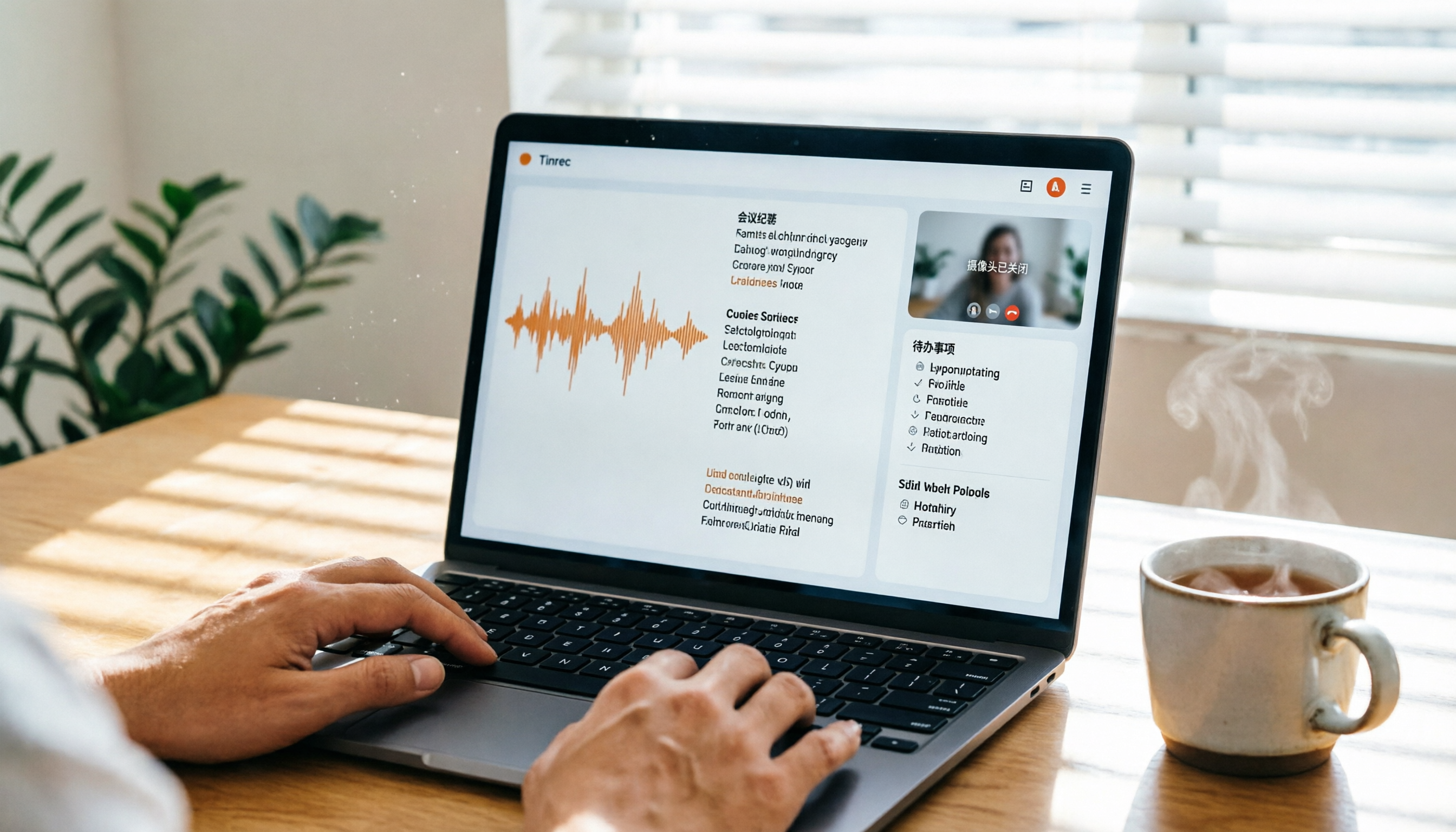
Tutorial: How to Turn Off Video in Google Meet in 2026 and Use Tinrec for Audio-to-Text Transcription & Automatic Meeting Minutes
This tutorial shows how to turn off your video in Google Meet meetings while using Tinrec to record, transcribe, generate meeting minutes, and export them. Perfect for professionals who want to keep their camera off but still have a complete record. Free trial available.
![[Tutorial] How to Use Google Meet Without an Account in 2026: Real-time Audio Transcription + Auto Meeting Minutes](https://record-img.tos-accelerate.volces.com/images/2026/07/18/1784377657091046075.png)
[Tutorial] How to Use Google Meet Without an Account in 2026: Real-time Audio Transcription + Auto Meeting Minutes
Join Google Meet without a Google account, and use Tinrec for real-time recording, transcription, and automatic meeting minutes. This tutorial walks you through step by step so you never miss a thing.

2026 Google Meet Meeting Notes: 5-Step Guide to Transcribe with iPhone
Learn how I record Google Meet meetings on my iPhone, use Tinrec to transcribe audio into text, and automatically generate meeting summaries—turning audio files into actionable data.

The Ultimate 2026 Guide to AI Meeting Notes: The Essential Tinrec Alternative for Google Meet Users
This article shows how to break free from Google Meet's built-in limitations, using Tinrec to turn meeting recordings into searchable, organizable, and exportable actionable knowledge, ideal for professionals who want to truly improve post-meeting efficiency.