

Turn recordings into transcripts and summaries in minutes
Upload audio or video for multilingual transcription, AI notes, and action items
Before You Start | What You Need
Last semester, while rushing through final papers, my group used Google Meet for discussions and Teams for project meetings. Notes were a mess until I discovered Tinrec. This article not only compares two major video tools but also shows you how to use Tinrec to turn any online class or meeting recording into your personal notes database.
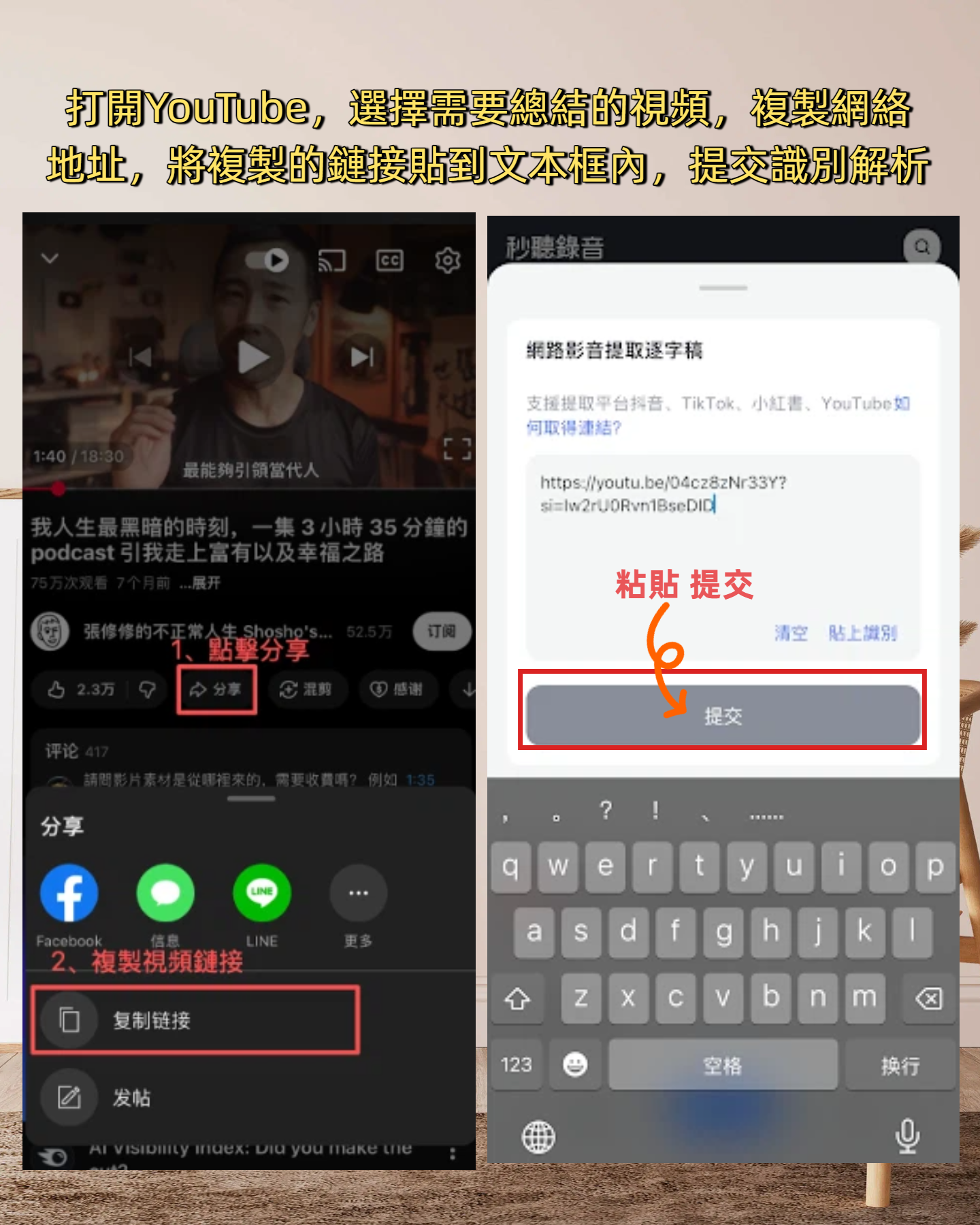
Before you start, get these ready:
• A smartphone or computer (iPhone, Android, Windows, Mac – Tinrec supports all platforms with both the mobile app and web version)
• Download the Tinrec app (free from App Store or Google Play, sign in with Google or Apple ID)
• A Google Meet or Microsoft Teams account (school email usually gives free access; both platforms are used by students)
• A stable internet connection (real-time recording and transcription require internet; for offline use, download language packs)
• A desire to ditch handwritten notes – trust me, this trick doubled my final exam review efficiency last semester.
Step 1 | Record Your Online Meeting or Class
The goal is to get a clean audio recording – all AI processing depends on it.
Open Tinrec, tap the record button on the main screen, then switch back to Google Meet or Teams to start your class or discussion. You can record directly via the phone speaker, but I recommend using the computer's internal recording (Tinrec's web version supports system audio capture) to capture the instructor's voice and slide narration clearly.
I initially used Google Meet's built-in recording feature, but the files were huge and lacked text records. Later, I tried Teams recording, but converting to text required Word Online – slow and often missing sentences. Then I discovered Tinrec records and transcribes in real time, so a word-for-word transcript is ready when class ends – a lifesaver.
Why use Tinrec specifically? Because built-in recordings only save video, while Tinrec simultaneously converts audio to text with timestamps, saving you post-processing time. It also supports noise reduction, so even if you're recording in a dorm with a roommate gaming in the background, AI can isolate the instructor's voice.
After recording, you'll see the audio file on Tinrec's main screen with its duration. If you record on a computer, the mobile app syncs it too – I often record on my computer and review on my phone during commutes.
(Illustration: A student at a dorm desk with a laptop open to a Teams meeting, a phone next to it running Tinrec recording, with real-time transcript text streaming on the screen)
Step 2 | Let AI Generate a Transcript
If you recorded live, the transcript was already generated in real time; if you import an existing Meet or Teams recording, this step is for you.
In Tinrec, open the recording and tap “Transcribe” below. AI will convert audio to text. A typical 1-hour class takes about 5-10 minutes, with accuracy over 90% (though mumbling or background noise may reduce it).
Why is this step important? Handwritten notes capture at most 30% of key points, but a transcript preserves 100%. When you can't remember whether the professor said “will be on the exam” or “won't be,” just search the keyword. Last semester, Tinrec's transcripts saved me from writing two notebooks.
After transcription, each line has a timestamp; tap to jump to the original audio – a huge advantage over Meet or Teams' basic text records.
(Illustration: Mobile screen showing a class transcript with clear text, a timeline on the side, and buttons like “Summary” and “To-Do” below)
Step 3 | Quickly Proofread the Transcript
AI may still mishear terms like “Information Management” as “Infor Mation Management,” especially for jargon. But don't worry – proofreading in Tinrec is faster than you think.
Stop organizing recordings by hand
Upload audio or video and automatically get a transcript, summary, and action items
You can edit directly in the transcript while listening: tap a timestamp to play audio from that second, then correct the text. I usually finish proofreading a 2-hour class in 10 minutes, since most is correct; only a few keywords need fixing.
Tip: Enable “Smart Noise Reduction” and “Professional Vocabulary” in settings, and input common course terms beforehand to boost transcription accuracy. Meet and Teams lack this feature entirely.
Once proofread, the transcript becomes your ultimate review material – perfect for collaborative notes.
Step 4 | Let AI Generate Meeting Minutes (or Class Notes)
This is my favorite feature – the one that elevated Tinrec from a transcription tool to an organizational tool.
On the transcript page, tap “AI Summary,” and Tinrec automatically produces structured highlights:
- Today's topic
- Key discussion points (or class sections)
- Action items (super useful for group assignments)
- Key conclusions
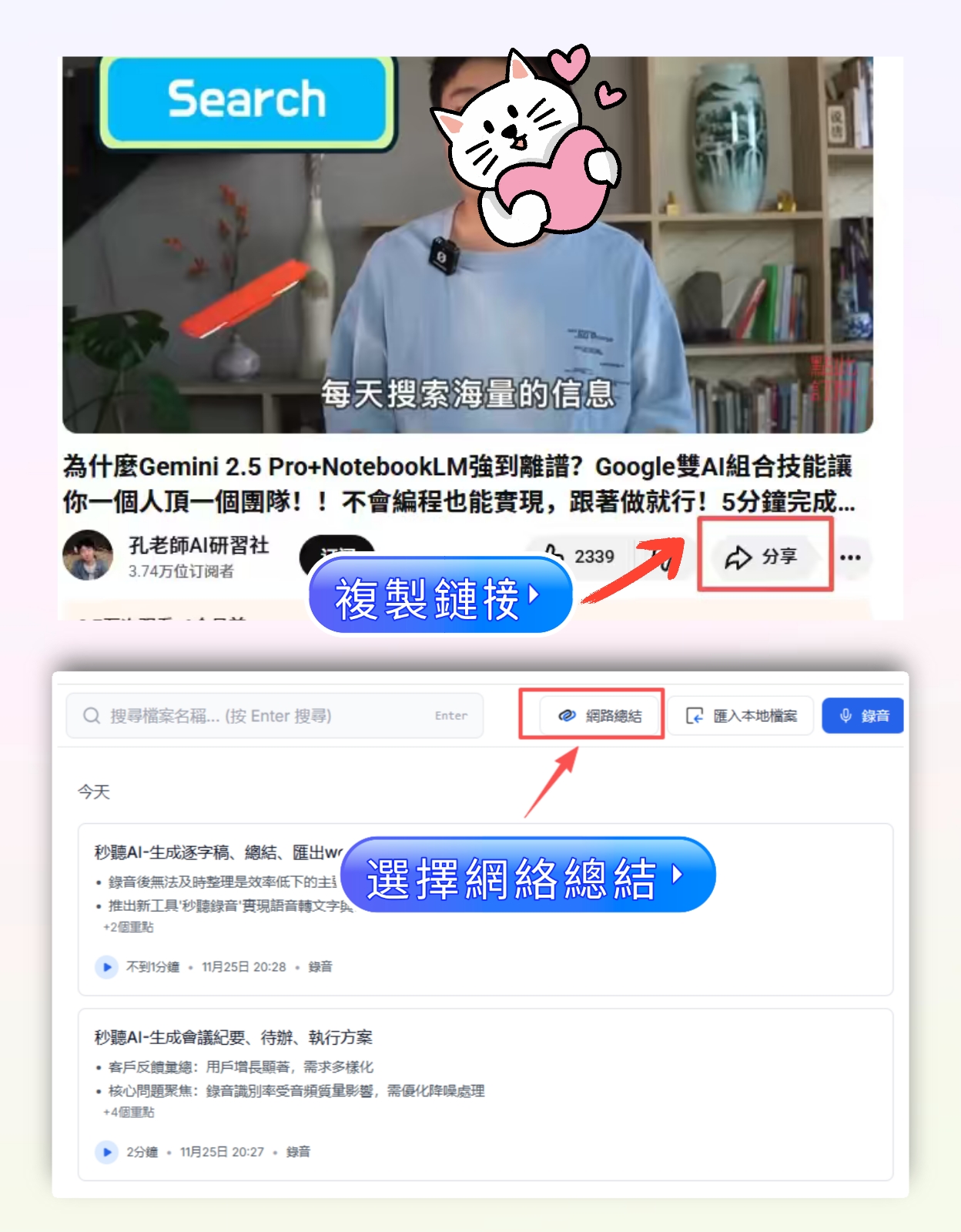
It can even distinguish different speakers (if audio quality is good), essentially labeling “Xiao Ming said this, the professor responded with that.”
Now, when my group meets via Google Meet, I drop the Tinrec summary into the group chat afterward, so nobody asks “What did we just discuss?” Teams' AI meeting notes are only available in Teams Premium (paid), which students can't afford; Tinrec's free version includes summary, with 100 minutes per month – enough for 4-5 key classes.
(Illustration: A clearly structured meeting minute with sections like topic, chapters, to-do list – clean style reminiscent of a Notion page)
Step 5 | Export and Share
After organizing, you'll need to share. Tinrec offers many export options – it's a productivity tool in itself.
You can export as:
- Plain text or Word file (print for classmates)
- PDF (archive in Notion)
- SRT subtitle file (for educational videos)
- Directly sync to Notion, Google Docs, OneNote, Dropbox (I set up auto-export, so each transcript goes straight to my course database)
My usual workflow: class recording → Tinrec transcript + summary → export to Notion, one page per course, searchable and reviewable at finals. Neither Meet nor Teams can do this entire workflow.
Frequently Asked Questions
Q: Which records more clearly, Google Meet or Teams?
Both recording qualities depend on your network and device, not the platform. However, Tinrec's noise reduction and voice enhancement compensate for both – I tested in the same dorm room, and transcript accuracy was nearly identical for both Meet and Teams. So don't stress about the platform; use Tinrec to record.
Q: Can I use Tinrec to record while in a Meet or Teams meeting? Will it conflict?
Not at all. Use the phone for Tinrec recording and the computer for the video call – they operate independently. Or use Tinrec's web version to capture system audio on the same computer during the meeting. I use this method to generate live transcripts without the professor noticing.
Q: Is the free version sufficient?
Tinrec's free plan gives 100 minutes of transcription per month. For students recording only key classes (about 3-4 per week), it's enough. If you record every class like I do, the Pro plan costs around $5/month – skip two snacks and you're set. Compared to Teams Premium or Otter Pro, this price is student-friendly.
Advanced Tips | 3 Ways to Double Tinrec's Efficiency
These three features are unique to Tinrec – once used, there's no going back.
1. AI Chat Query: Turn Recordings into a Personal Assistant
During finals, you can ask Tinrec directly: “Which chapters did the professor say would be on the exam?” or “What's the deadline for the group project?” AI searches all historical recordings for answers – ten times faster than flipping through notes. Meet and Teams only search chat logs, nowhere near this.
2. Web Video Link Parsing: Organize YouTube Videos Teachers Share
Some classes have supplementary videos; just paste the link into Tinrec, and it converts to text and key points – no need to watch the whole thing. I use this for flipped classroom videos, saving tons of time.
3. Cross-Platform Sync: Record on Phone, Edit on Computer Seamlessly
I record in class on my phone, then edit and export on my computer via Tinrec's web version – all data synced. Built-in tools can't offer this convenience.
Alternatives If You Don't Use Tinrec
Of course, other tools exist, but each has trade-offs.
• Built-in transcriptions in Meet or Teams: Free versions offer only basic captions, no summaries, to-dos, or content search. Suitable only for those wanting “rough text.”
• Otter.ai: Strong meeting bots, but the free plan offers 300 minutes/month, and Chinese transcription accuracy is lower than Tinrec – lower value for students.
Looking back, Tinrec integrates recording, transcription, organization, export, and Q&A into one, with a generous free quota for students – the most convenient classroom note-taking solution I've used.
Conclusion
Master these 5 steps, and whether you're using Google Meet or Teams for classes or meetings, you can automatically generate transcripts, class notes, and action items with Tinrec. No more hand cramps or missed points.
Next step: Download the free version of Tinrec and try it on your own online class recording. 100 free minutes per month are enough for 2-3 test runs. Trust me – after using it, you'll be recommending it to your entire class like I did.
Turn every recording into actionable outcomes
Get 60 free transcription minutes when you sign in. No credit card required.
Related Reading
You might also like
2026 Tinrec vs Google Meet: A 5-Dimension Comparison – Which Is the Top Choice for Student Meeting Recording?
Searching for whether Google Meet or Zoom is cheaper? A student's real-world test shows price isn't the key – meeting notes and organization efficiency are what really matter. Tinrec not only transcribes audio to text but also auto-generates summaries, to-do lists, and AI Q&A, far surpassing built-in transcription features.

2026 Google Meet vs Teams: A 5-Dimension Comparison, Tinrec Tops for Meeting Notes
Google Meet and Microsoft Teams offer similar features, but the real pain point is post-meeting note organization. After hands-on testing of both platforms, this article recommends a more efficient speech-to-text workflow centered on Tinrec, with side-by-side comparisons to Otter.ai and Notta, plus a pitfall avoidance guide and selection tips.

How to Record Google Meet Meetings and Convert to Text in 2026: Real-Time Transcription & AI Summary Generation
After recording a Google Meet meeting, how can you quickly organize it into text and key points? This tutorial tests two popular tools, telling you which is best for Chinese meetings, whose AI summaries are most accurate, and whether the free plans are sufficient.

2026 Google Meet & Zoom Meeting Notes Alternative: Why I Switched to Tinrec?
A middle manager with 15 meetings per week shares real experience: from Google Meet's built-in transcription to Zoom meeting notes, finally choosing Tinrec. It handles not only meetings but also online videos and audio files in one place.

Tutorial: 2026 Google Meet Meeting Notes with Tinrec – Auto Summaries & To-Dos in One Go
When sharing your screen during a Google Meet, manually compiling meeting notes is always time-consuming and tiring. This article shows you how to use Tinrec to record meetings and automatically generate summaries and action items, so you can focus on what matters most.

2026 Google Meet vs Microsoft Teams Complete Guide: Comprehensive Comparison of Features, Integrations, and Pricing
Which is better for Hong Kong office workers, Google Meet or Microsoft Teams? We break it down across five dimensions: meeting features, ecosystem integration, pricing, security, and ease of use, so you can stop worrying.
Google Meet Time Limits 2026: AI Recording & Note-Taking Tips for Students
Google Meet's free version only allows 60-minute sessions. This guide shares my experience using AI recording tools to bypass the time limit, from free options to cost-effective upgrades, helping you record lectures, get transcripts, and create summaries without the hassle.
Google Meet vs FaceTime: Which is Better? 2026 Real-World Test with Tinrec for Complete Meeting Notes
Are you torn between Google Meet and FaceTime for online meetings? This article tests both across 5 dimensions—transcription, AI summaries, to-do lists, and more—and shows why adding Tinrec makes meeting notes more complete, boosting team productivity.

2026 Google Meet vs WhatsApp: A 5-Dimension Showdown for Better Meeting Notes
Tired of spending hours transcribing meeting recordings? This article compares built-in features of Google Meet and WhatsApp for note-taking, then introduces Tinrec, a professional AI-powered audio/video organizer, to help you find the ideal workflow.