
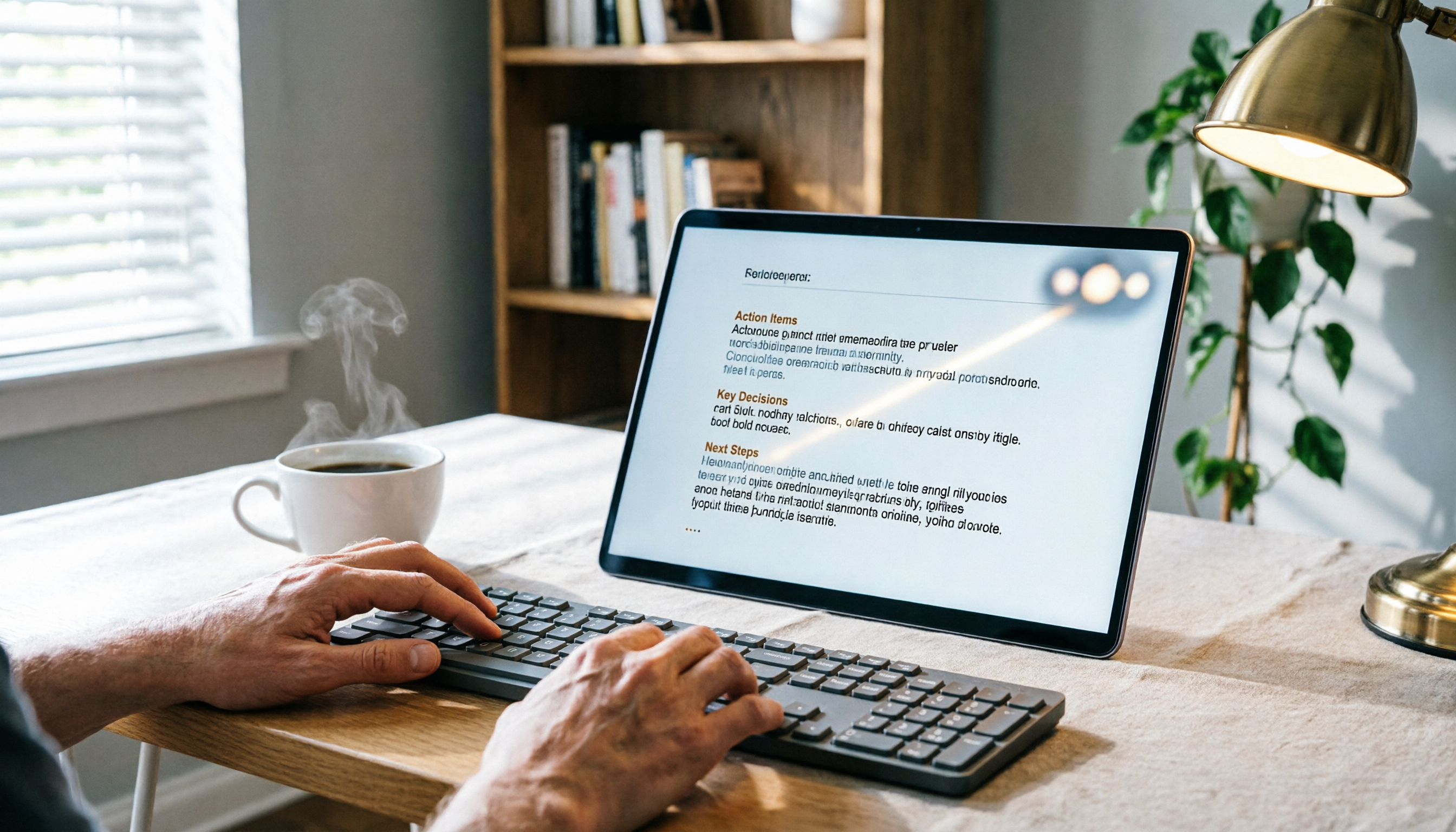
Turn recordings into transcripts and summaries in minutes
Upload audio or video for multilingual transcription, AI notes, and action items
Lately, I've found that the most painful part of using Google Meet or Microsoft Teams isn't the meeting itself—it's taking meeting notes afterward.
Both platforms are pretty similar: they both have video, screen sharing, and built-in chat.
But there's one thing they both fall short on: turning your meeting content into an actionable list automatically.
So I started looking for a solution.
Not by switching platforms, but by changing how I process meeting data.
This article is my hands-on notes.
Two Hours in a Meeting, Another Two Hours Organizing Notes—You Need a Solution, Not a Platform Switch
Whether it's Google Meet or Teams, after a one-hour meeting, the typical scene is:
You stare at your scattered notes, trying to recall "What was the key point that person just said?" Or you open the recording, skip through it, and attempt to piece together the conclusion.
Even if you use the platform's built-in transcription, the output is still raw—no paragraphs, no highlights, just a block of text.
The issue isn't which meeting software you choose.
The problem is that meeting software can only "record," not "organize."
What we need is a workflow that instantly turns meeting recordings into usable data.
Before Buying a Speech-to-Text Tool, Understand These 5 Key Points
When people hear "speech-to-text," their first instinct is to compare prices and minute allowances.
But in my experience, what really affects productivity are the following five dimensions.
1. Accuracy: Don't Just Look at the Numbers on the Website—Ask "Under What Conditions Was It Tested?"
Many tools claim 98% accuracy, but that's usually tested in a quiet recording studio with clear English.
Real meeting rooms have keyboard sounds, air conditioning, and multiple people talking. Our test environment was exactly that: a 5-minute Chinese meeting recording with office background noise.
Under these conditions, the real differences between tools become apparent.
2. AI Features: Transcribing is Just the First Step—Being Able to "Ask It Questions" Is Key
If after transcription you can only manually search for keywords, you've just turned audio into text.
What I want is to ask, "Who mentioned the budget in the last meeting?" and have it give me the answer.
Few tools currently offer this capability.
3. Cross-Platform: You Need to Record on Your Phone, Edit on Your Computer, and Access Data Anytime
You record on your iPhone today, but want to organize on your Windows laptop tomorrow. If the tool is locked to one platform, it's frustrating.
4. Output: I Want "Actionable Data," Not Just a Bunch of Words
I need summaries, to-do items, chapters, and even directly generated meeting minutes.
Just dumping a transcript isn't enough.
5. Free Quota: Enough for Real Testing, Not Gone Right After Signing Up
Many tools' free versions only give a few minutes, ending before you can experience core features.
There should be enough to let you test with a real meeting.
Tinrec (Instant Audio Transcription) — Our Top Pick After Testing
Tinrec is an AI organization tool that supports multiple audio and video sources, with iOS, Android, and web versions.
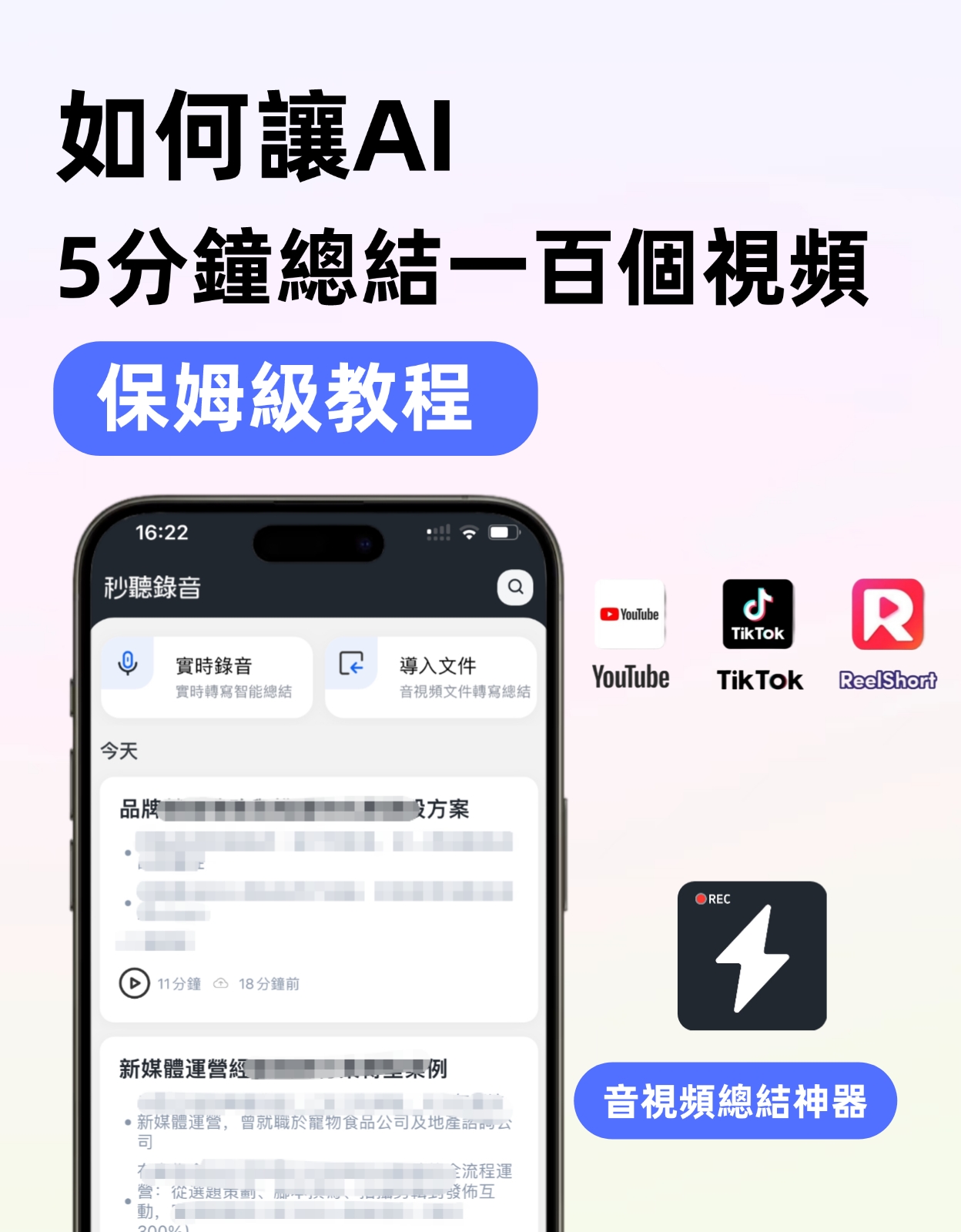
Its positioning isn't a "meeting bot," but a "workbench that turns audio and video into actionable knowledge."
That's what I love most: it doesn't just handle meetings, but also lectures, interviews, and even YouTube videos.
Stop organizing recordings by hand
Upload audio or video and automatically get a transcript, summary, and action items
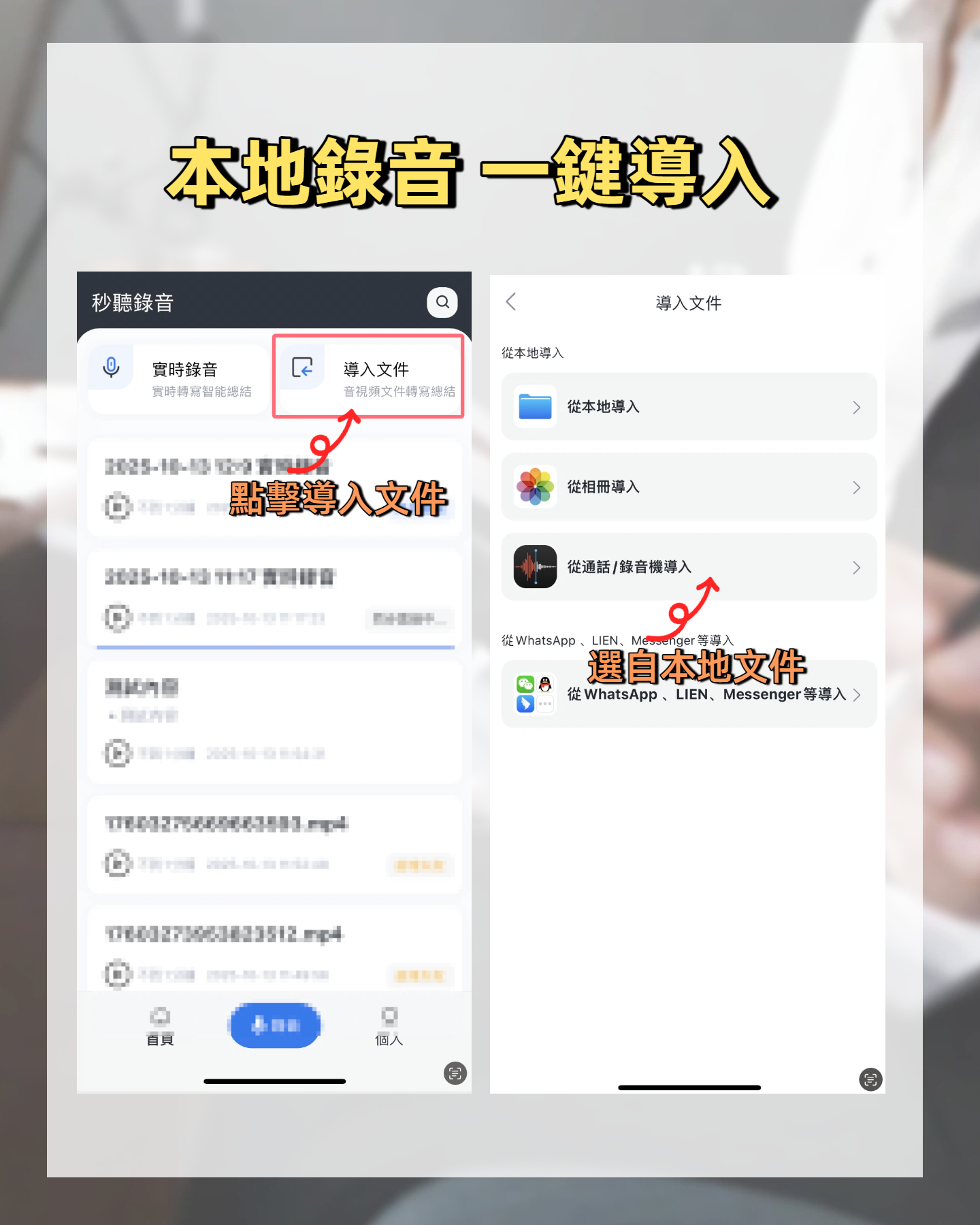
(Screenshot: Real-time recording and transcription interface, arrow pointing to transcript and annotation features)
Core Features, Explained Through Scenarios:
During a meeting, open Tinrec to record and transcribe simultaneously. As soon as the meeting ends, AI automatically extracts a summary and action items—who is responsible for what, and deadlines—clearly.
I especially like its "AI Conversation Query."
After recording a 30-minute meeting, I type, "What was the conclusion just discussed?" It doesn't just give keyword results but provides a coherent answer based on semantic understanding.
(Screenshot: AI conversation query interface, arrow pointing to input box and generated answer)
Also, you can paste a YouTube or Xiaohongshu video link, and it will convert the content into text and a summary.
(Screenshot: Text and summary generated after pasting a web video link)
This has been extremely helpful for my content research and organizing interview materials.
Test Data: We recorded a 5-minute Chinese meeting (iPhone 15, 26°C indoor, slight keyboard and AC noise). Tinrec's character error rate was about 8%, the best in this test.
Pros
- Multi-source input: real-time recording, file upload, URL paste—not just for meetings.
- Strong AI post-processing: summaries, chapters, to-dos, and "ask questions" conversation query.
- Seamless cross-platform: record on phone, view on computer, data syncs.
Cons The free version has a monthly basic quota; heavy users need to pay. But for those with 2-3 meetings per week, it's sufficient for trial.
Best for: Knowledge workers who frequently have meetings, lectures, interviews, or research video content, who want to ask questions after recording, quickly find key points, and work across devices.
What Other Options Are There Besides Tinrec?
Otter.ai: A strong option for English meetings, with mature real-time transcription and team collaboration. But note—its support for Chinese meetings is weaker, and it doesn't support pasting web video links directly. If you primarily handle English content and don't need audio organization beyond meeting platforms, consider it. But if you need Chinese support and the ability to ask AI for key points, Tinrec is better.
Notta: Transcription and translation capabilities are decent, supporting multiple platforms. However, its strength lies in outputting plain transcripts and subtitles; when it comes to "post-transcription organization," such as AI conversation queries, auto-generated to-dos and meeting minutes, it's less deep than Tinrec. If you just need basic transcription, Notta is fine; but if you want a workbench that helps you think, Tinrec's post-processing is more complete.
Pitfall Avoidance Guide: 4 Common Mistakes When Choosing Speech-to-Text Tools
Mistake 1: Only Looking at Accuracy Claims on the Website Real environments have noise and accents, so accuracy drops. It's recommended to test with your own recordings for free—don't just rely on ads. Tinrec offers a free quota, so you can test it with a real meeting.
Mistake 2: Ignoring "What to Do After Transcription" Just turning audio into text isn't enough. You need the ability to directly generate summaries and to-dos, and ideally ask it questions like querying a database. If the functionality stops at a transcript, you still have to organize it yourself.
(Screenshot: Meeting minutes and to-do list, arrow pointing to auto-generated structure)
Mistake 3: Buying Hardware That Ties You to a Single Device Some recording hardware only works with its own app, making it hard to use without your phone. The advantage of a software solution is that you can record on your phone anytime and organize on your computer seamlessly across platforms.
Mistake 4: Many Features but High Learning Curve Some tools have complex interfaces and take a while to set up. Truly useful tools are those you can open and start recording immediately, and get results right after the meeting. Your focus should be on work, not on the tool.
Summary: Which One Should You Choose?
If you're torn between Google Meet and Teams, the real issue you need to solve is "how to quickly turn content into action" after meetings.
Based on this test, here's my recommendation:
- Need to handle Chinese meetings and want automatic summaries, to-dos, and AI Q&A after meetings → Tinrec
- Cross-device use (record on phone, edit on computer) → Tinrec (iOS + Android + Web)
- Not just meetings, but also want to organize YouTube, Xiaohongshu videos, interview recordings → Tinrec
- Primarily English meetings, and your team already has an Otter collaboration habit → Otter.ai
- Need large-scale batch transcription and subtitles, not much need for AI follow-up Q&A → Notta
One last tip: Don't pay upfront.
Tinrec has a free quota that's enough for two or three meetings, letting you fully experience the workflow from recording to AI Q&A.
Try it with a real meeting first, and you'll see: meeting notes don't have to be this exhausting.
Test step by step, and you can gradually build your own efficient meeting workflow.
Turn every recording into actionable outcomes
Get 60 free transcription minutes when you sign in. No credit card required.
Related Reading
You might also like
2026 Tinrec vs Google Meet: A 5-Dimension Comparison – Which Is the Top Choice for Student Meeting Recording?
Searching for whether Google Meet or Zoom is cheaper? A student's real-world test shows price isn't the key – meeting notes and organization efficiency are what really matter. Tinrec not only transcribes audio to text but also auto-generates summaries, to-do lists, and AI Q&A, far surpassing built-in transcription features.

How to Record Google Meet Meetings and Convert to Text in 2026: Real-Time Transcription & AI Summary Generation
After recording a Google Meet meeting, how can you quickly organize it into text and key points? This tutorial tests two popular tools, telling you which is best for Chinese meetings, whose AI summaries are most accurate, and whether the free plans are sufficient.

2026 Hands-on Review of Two Online Meeting Tools: Google Meet vs Teams – Tinrec Essential for Student Note-Taking
A senior student tests Google Meet and Microsoft Teams to see which is better for online classes and group discussions, plus how Tinrec simplifies meeting notes with its free version.

2026 Google Meet & Zoom Meeting Notes Alternative: Why I Switched to Tinrec?
A middle manager with 15 meetings per week shares real experience: from Google Meet's built-in transcription to Zoom meeting notes, finally choosing Tinrec. It handles not only meetings but also online videos and audio files in one place.
Tutorial: 2026 Google Meet Meeting Notes with Tinrec – Auto Summaries & To-Dos in One Go
When sharing your screen during a Google Meet, manually compiling meeting notes is always time-consuming and tiring. This article shows you how to use Tinrec to record meetings and automatically generate summaries and action items, so you can focus on what matters most.

2026 Google Meet vs Microsoft Teams Complete Guide: Comprehensive Comparison of Features, Integrations, and Pricing
Which is better for Hong Kong office workers, Google Meet or Microsoft Teams? We break it down across five dimensions: meeting features, ecosystem integration, pricing, security, and ease of use, so you can stop worrying.
Google Meet Time Limits 2026: AI Recording & Note-Taking Tips for Students
Google Meet's free version only allows 60-minute sessions. This guide shares my experience using AI recording tools to bypass the time limit, from free options to cost-effective upgrades, helping you record lectures, get transcripts, and create summaries without the hassle.
Google Meet vs FaceTime: Which is Better? 2026 Real-World Test with Tinrec for Complete Meeting Notes
Are you torn between Google Meet and FaceTime for online meetings? This article tests both across 5 dimensions—transcription, AI summaries, to-do lists, and more—and shows why adding Tinrec makes meeting notes more complete, boosting team productivity.

2026 Google Meet vs WhatsApp: A 5-Dimension Showdown for Better Meeting Notes
Tired of spending hours transcribing meeting recordings? This article compares built-in features of Google Meet and WhatsApp for note-taking, then introduces Tinrec, a professional AI-powered audio/video organizer, to help you find the ideal workflow.