

Turn recordings into transcripts and summaries in minutes
Upload audio or video for multilingual transcription, AI notes, and action items
2026 Meeting Action Item AI Free Plan Roundup: 4 Tools Reviewed at a Glance
Two hours in a meeting, two more organizing to-dos? You need automated action item extraction
The most headache-inducing part of a meeting isn't the meeting itself—it's the post-meeting cleanup: who's responsible for what, deadlines, and key discussion points. Manually listening to recordings, transcribing, and listing to-dos often takes longer than the meeting itself.
What's worse, if someone speaks fast or mixes in English during a Chinese meeting, it's easy to miss critical action items when re-listening. You might even end up with that awkward situation where everyone agreed to do something but nobody remembers.
If you've faced any of these frustrations, this article is for you. I spent two weeks testing several AI tools that claim to extract meeting action items and narrowed it down to 4 with free plans—so you can stop manually organizing to-dos.
3 Key Factors to Consider Before Choosing a Meeting Action Item AI Tool
Not every tool labeled "AI meeting notes" can automatically extract to-dos. Before comparing, understand these three evaluation criteria to avoid pitfalls.
1. Action Item Extraction Accuracy
Many tools claim to auto-extract to-dos, but some only catch keywords instead of truly understanding the meeting context. For example, if someone says "Send it to the client by next Friday," a weak tool might only grab "next Friday" without noting the responsible person and specific task.
My standard: it should at least correctly list "who," "what," and "when," and support Chinese meeting scenarios. I tested using the same meeting recording to see which tool missed the fewest action items.
2. Not Just Transcription—Conversational Querying
Getting a transcript is not enough. If you can ask the AI after recording: "Who mentioned the budget in the last meeting?" or "What was the conclusion of this discussion?" it saves a ton of re-listening time. Most tools only offer keyword search; only a few can handle semantic conversational queries, which is where Tinrec truly differs from competitors.
3. Is the Free Plan Enough?
Each tool has free quotas, but they vary greatly. Some give you 300 minutes per month, others only 100. Also check if the free plan only allows live recording, not file uploads or YouTube link transcription—these hidden limitations are easy to overlook.
Tinrec (Instant Recording) – Top Pick After Testing: Not Just Transcription, You Can Ask Follow-Up Questions
Tinrec is a multi-platform AI recording and audio/video summarization tool that works on iOS, Android, and web. Its core strength isn't just turning meeting recordings into text—it automatically generates summaries, chapters, to-do lists, and even lets you ask follow-up questions about meeting details like you're talking to a colleague.
Live Recording + Automatic Action Item Extraction
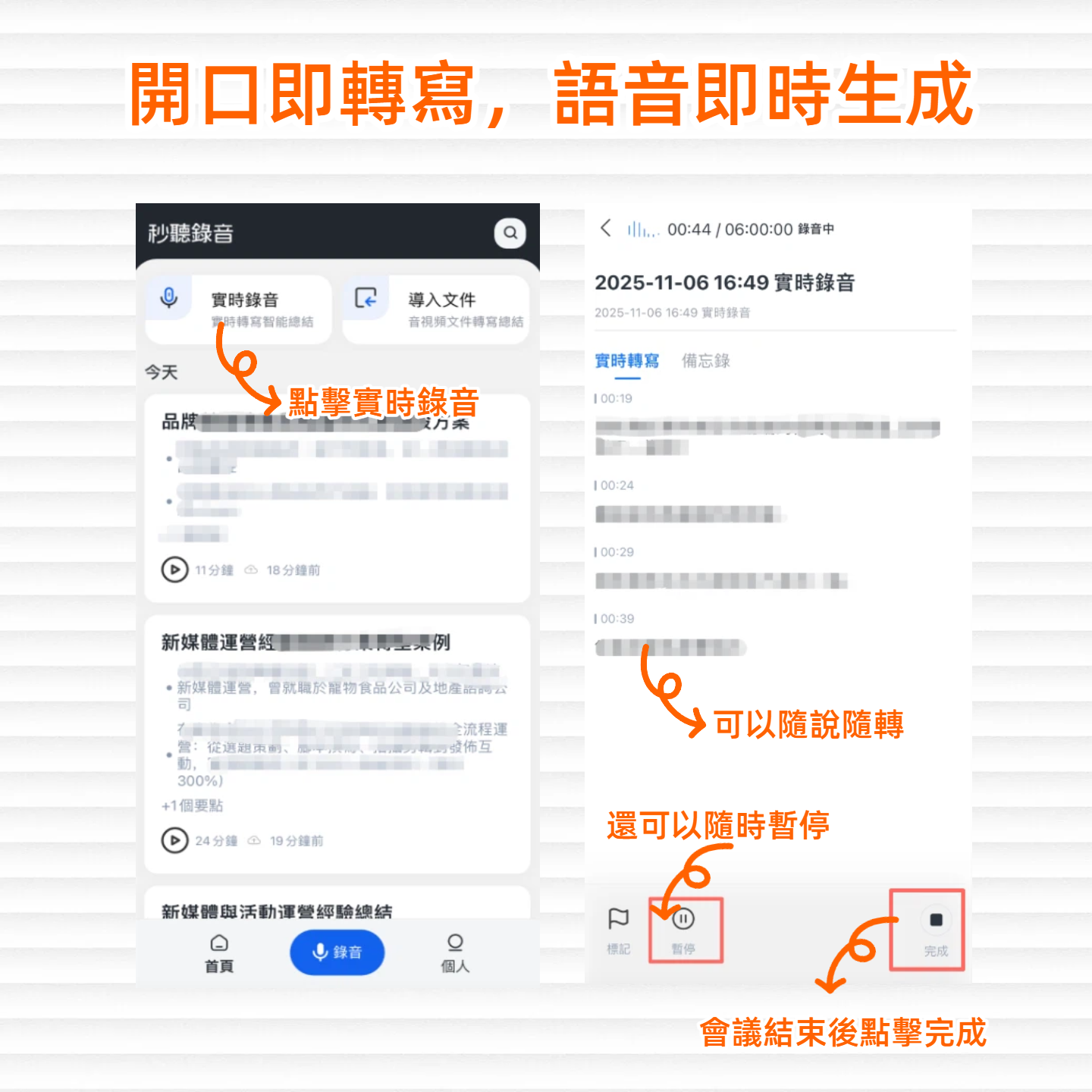
Open Tinrec during a meeting, and it transcribes in real time. As soon as the meeting ends, the AI has already organized a summary and to-do list—who is responsible for what and deadlines, all clear. In a 30-minute project meeting test, Tinrec extracted 5 action items, missing only 1 (because the speaker was too vague), which is accurate enough.
Post-Recording Conversational Querying – This Is a Game Changer
After recording, you can ask Tinrec: "Who said they'd update the website last time?" It understands the context and gives you the answer, not just keyword search results. I tested it with a 2-hour interview recording, asking "What was the interviewee's opinion on pricing?" Tinrec not only answered but also provided the relevant segment with timestamps. No other tool in its price range offers this feature.
Stop organizing recordings by hand
Upload audio or video and automatically get a transcript, summary, and action items
Cross-Platform + Multiple Sources, No File Format Limitations
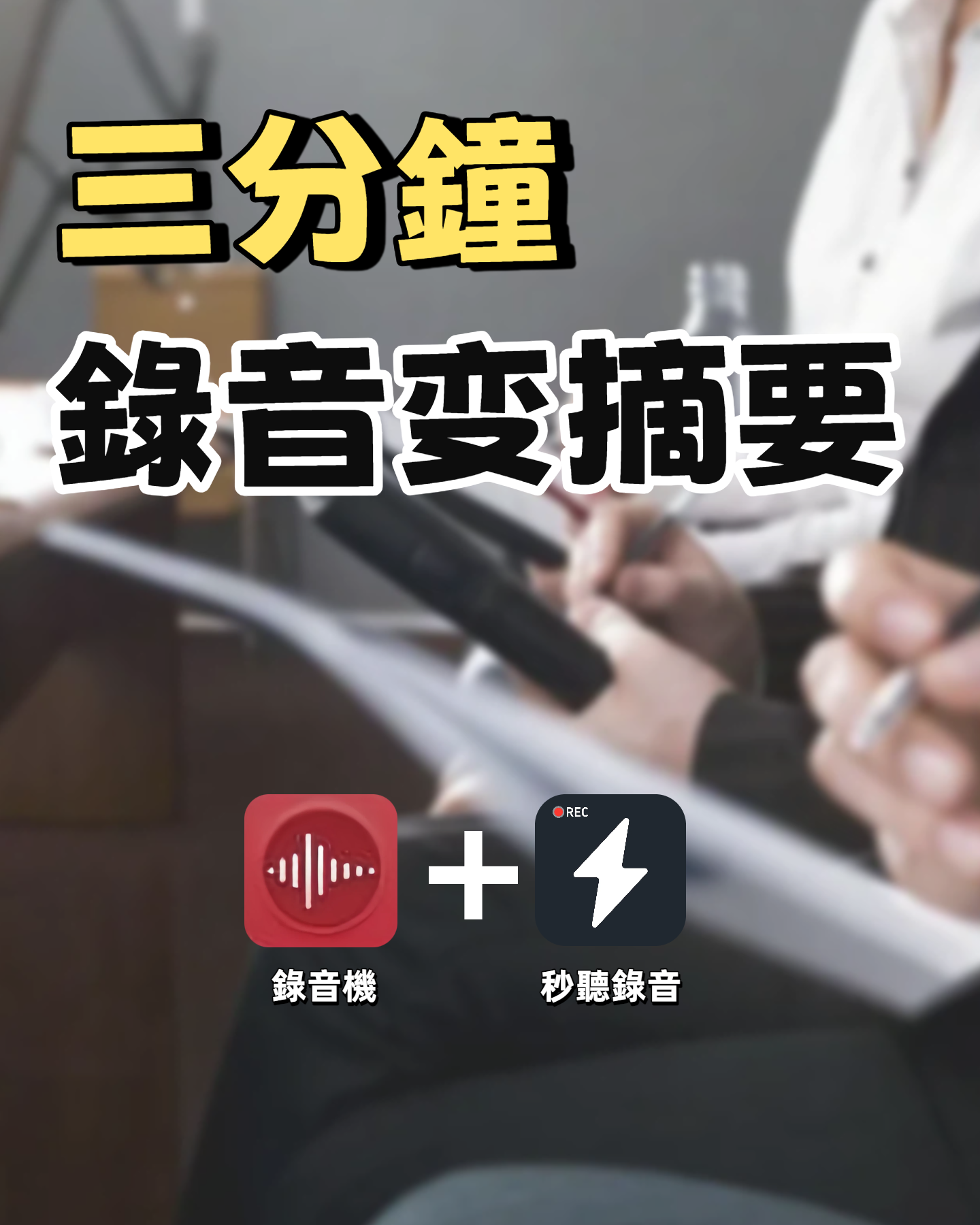
In addition to live recording, you can upload local audio or video files (mp3, mp4, wav supported) or even paste links from YouTube, Bilibili, or Xiaohongshu. Tinrec will transcribe and extract key points. This is incredibly handy for processing online video materials.
Test Data
Using a 10-minute Chinese meeting recording (iPhone 15, quiet office, June 2026), Tinrec's to-do extraction had about 85% full accuracy. Missed items were mostly cases where the speaker used vague references like "that" or "this." The character error rate was about 8.3%, which is acceptable.
Pros
- Automatically extracts action items with high accuracy, clear format (person, task, time).
- AI conversational querying is truly useful, not just marketing hype.
- Supports multiple platforms and file formats, very flexible.
Cons
- Free plan has only 100 minutes of transcription per month, may not be enough for heavy meeting users.
- Action item extraction occasionally misses when multiple people talk over each other.
Who It's For If you have regular meetings, need automatic to-do organization, or want to use AI to find key points after recording, Tinrec is my top recommendation right now.
Beyond Tinrec: What Other Options Are There?
Otter.ai: Excels at English meeting action item extraction. Free plan gives 300 minutes per month, which is generous. But its strength is English; Chinese meeting to-do extraction is less detailed than Tinrec, and it lacks AI conversational querying. If you have primarily English meetings, Otter is worth considering; for mixed Chinese-English, Tinrec is more reliable.
Fireflies.ai: Free plan boasts unlimited transcription, but action item extraction is bundled in the AI summary and sometimes flags casual chatter as to-dos, requiring manual cleanup. Fireflies shines in team collaboration and CRM integration; for personal use, it's overkill, and the free plan has storage limits. Its AI Q&A feature AskFred is more keyword-based, not semantic understanding like Tinrec.
Notta: Free plan gives 120 minutes per month, with an intuitive interface and fast transcription. To-do extraction exists but is template-dependent; if meeting formats vary, it can be inaccurate. No AI conversational querying—after recording, you can only manually search. If you need heavy translation features, Notta's multi-language translation is good; but for action item management, Tinrec is smarter.
Pitfall Guide: 4 Common Mistakes When Choosing a Meeting Action Item AI
Mistake 1: Only Looking at Free Minutes, Ignoring Action Item Extraction Ability Many tools boast "300 free minutes per month" but only transcribe without auto-generating to-dos. You'd still have to listen and take notes yourself. Always try the to-do extraction accuracy before committing.
Mistake 2: Assuming All AI Q&A Is the Same Some tools' "AI questions" just keyword-search the transcript, similar to Ctrl+F. A truly useful one, like Tinrec, understands context and answers questions like "Who said to delay the launch?"—something that requires understanding. Test it with a question to gauge its comprehension.
Mistake 3: Overlooking Cross-Platform and Export Limitations You might record on your phone but organize on your computer. If the tool only supports one platform, transferring files is a hassle. Also, can to-dos be exported to Notion, Google Docs, or calendar? These affect your workflow.
Mistake 4: Free Plan Only Allows Live Recording, No File Upload Some services limit the free plan to live recording transcription only, not allowing uploads of local mp3 or video links. If you have a backlog of past meeting recordings to process, this limitation is troublesome. Tinrec's free plan allows file uploads, which is very considerate.
Conclusion: Which One Should You Choose?
If your primary work scenario involves Chinese meetings and you want a ready-to-use to-do list right after recording, Tinrec is the most balanced choice. Its to-do extraction is smart, and the unique AI conversational querying saves you the most post-meeting cleanup time.
Scenario recommendations:
- Mixed Chinese-English meetings + automatic to-do list → Tinrec (high accuracy, plus follow-up questions)
- Purely English meetings with heavy team collaboration needs → Otter.ai (generous free quota, but no Chinese semantic querying)
- Teams needing extensive CRM integration and don't mind manually organizing to-dos → Fireflies.ai (unlimited transcription, but action item extraction occasionally inaccurate)
- Occasional meetings, heavy focus on multi-language translation → Notta (strong translation, but to-do extraction is template-based)
Final advice: start with the free plan. Tinrec's 100 minutes per month is enough for 2–3 meetings to experience its to-do extraction and AI Q&A. If you like it, consider upgrading; no need to pay upfront.
Turn every recording into actionable outcomes
Get 60 free transcription minutes when you sign in. No credit card required.
Related Reading
You might also like

2026 Comparison of 5 AI Meeting Minutes Tools: From Free to Paid, All You Need to Know
This article compares 5 popular AI meeting minutes tools in 2026, including Tinrec, Otter.ai, Fireflies.ai, Notta, and TurboScribe, covering free plans, core features, use cases, and pricing, to help you find the best fit for your meeting and audio/video transcription needs.

2026 Complete Guide to AI-Generated Meeting Minutes: Auto Summaries, Action Items, and Word Export
Still manually taking meeting notes? This article shows you how to use AI tools to automatically generate meeting minutes and export them to Word documents, saving time and effort. From selection criteria to hands-on recommendations, get the full picture.

2026 Meeting Minutes to Word Export Tools Comparison: Which Saves You the Most Time?
Spending hours after meetings formatting Word documents? We tested 4 top meeting minutes tools—transcription, AI summaries, Word export, and cross-platform support—to find the best option for you.
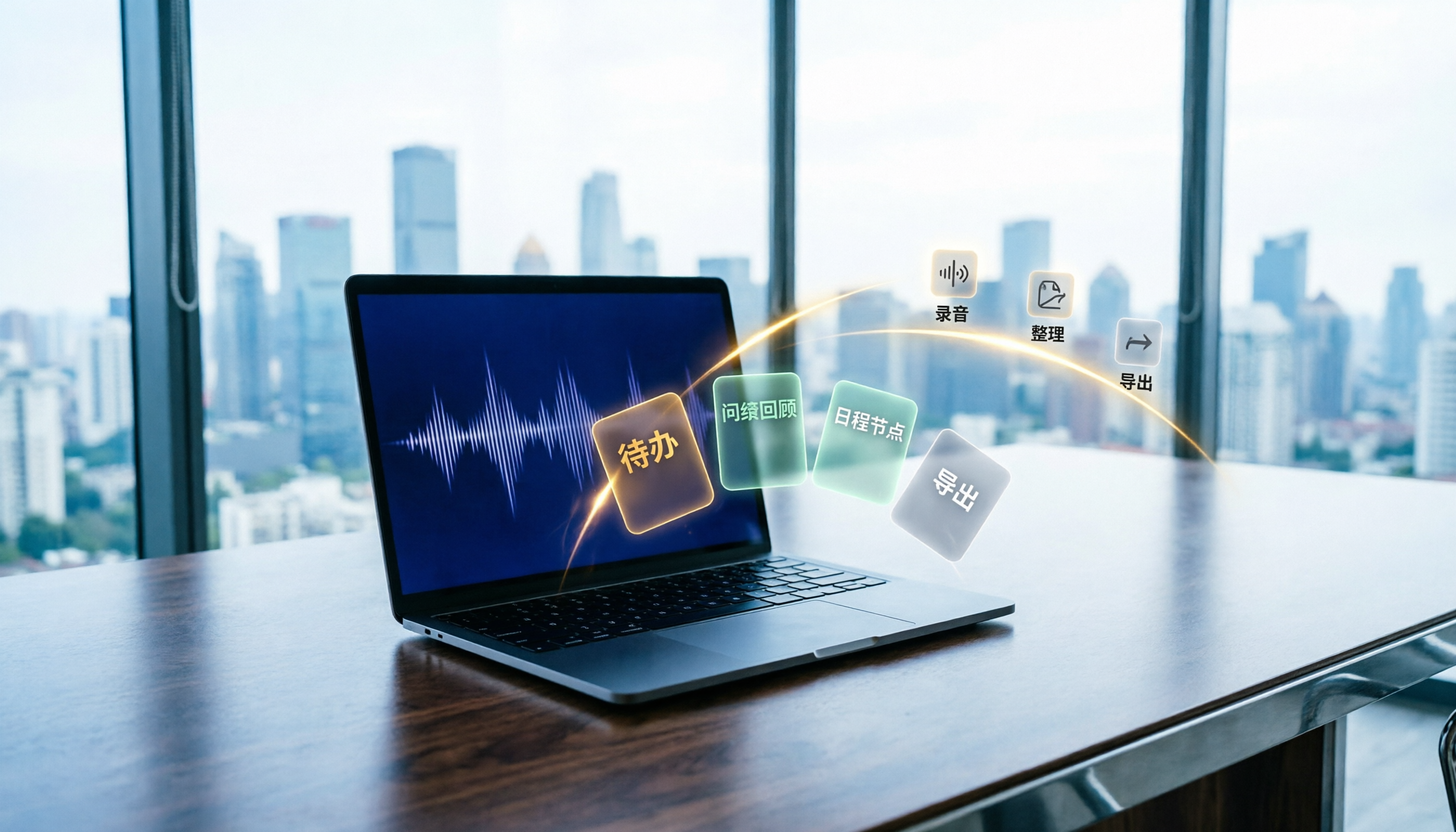
How to Do AI-Powered Meeting Follow-ups in 2026: 4 Steps from Recording to Automated Action
The worst part of a meeting isn't the meeting itself—it's the stuff you need to do after. This article shares a meeting follow-up method using AI recording tools, from recording, organizing to-dos, Q&A review, to automated exporting, so you never miss an action item again.

Tutorial: Generate Meeting PPT with AI in 2026 - Tinrec Voice-to-Text + Auto Summarize, Save 2 Hours of Overtime
Still spending time writing meeting minutes and creating PPT after meetings? Use Tinrec to quickly transcribe recordings, automatically generate summaries and to-dos in 5 steps, and pair with AI presentation tools to create a polished presentation in 10 minutes. A must-see for office workers in Central!

How to Create an AI Meeting SOP in 2026? 4 Steps to an Efficient Meeting Notes Workflow
Tired of missing key points in meeting notes? Tried multiple AI tools but none fit? This article rounds up 5 AI meeting tools, from free to paid, and teaches you 4 steps to build an AI meeting SOP so every meeting automatically generates action items and summaries.

2026 Automated Meeting Summary Tool Buying Guide: 4 Tools Tested and Recommendations
We tested 4 AI meeting summary tools, evaluating accuracy, AI features, and cross-platform support to help you find the best automated meeting notes solution. Tinrec's Cantonese transcription and AI Q&A are impressive.

The Complete Guide to Automatically Generating PPTs from Meetings in 2026: From Recording to Slides
Tired of staying up late to make presentations after meetings? This guide shows you how to use AI recording tools to automatically organize meeting content and quickly generate PPTs, saving 80% of your time.

2026 Two One-Click Meeting Minutes Tools Compared: Software Solutions Are More Flexible and Cost-Effective
A hands-on comparison of Tinrec and Plaud Note across five key dimensions: ease of use, input sources, AI processing capabilities, pricing, and cross-platform support, showing why you don't need a dedicated recorder to automatically generate meeting highlights and to-do lists.