
Turn recordings into transcripts and summaries in minutes
Upload audio or video for multilingual transcription, AI notes, and action items
Can't Keep Up with Meeting Pace? You Don't Need a Notebook – You Need an AI Efficiency Agent
Two hours in a meeting, then another two hours taking minutes. Even worse: your boss suddenly asks, "Who brought up the budget issue last meeting?" You remember it happened, but you can't find it anywhere in the transcript. This frustration is all too familiar for most professionals.
Especially when you're dealing with meetings in Mandarin, Cantonese, or even a mix of Chinese and English, most tools either support only English or produce error-ridden Chinese transcripts. Another common pain point: you've recorded a lecture, an interview, or a YouTube video, but they all sit there untouched because just transcribing them is a hassle, let alone extracting key points.
If you've experienced any of these, this comparison is for you. We've pitted two of the most talked-about AI efficiency tools – Tinrec and Otter.ai – across 5 real-world dimensions to help you decide which one truly saves you time.
Before You Choose an AI Efficiency Agent, Understand These 5 Key Points
Rather than just looking at brand names, first clarify what problem you need to solve. Based on our hands-on evaluation experience, here are 5 selection dimensions to guide you so you won't make a wrong choice.
Language Support: Are your meetings and lectures primarily in Chinese or English? Many AI tools claim multilingual support, but actual performance varies widely in code-switching scenarios, Cantonese, or Taiwanese Mandarin. If your content is mainly in Chinese, prioritize options with stable performance in Chinese contexts; otherwise, even the cheapest plan is a waste of time.
Input Source Diversity: Do you only need meeting transcription, or also video and audio files? Some tools focus solely on online meeting bots that automatically join Zoom or Teams recordings. But in reality, audio and video sources are diverse – YouTube tutorials, interview recordings, podcast content, even spur-of-the-moment voice memos. If you need a tool that integrates all sources, broad input support is crucial.
Post-Transcription Organization: Is a raw transcript enough? Transcription is just the first step. What truly saves time is whether the AI can automatically generate meeting summaries, action items, chapter highlights, or even let you ask questions about the recording conversationally. If a tool only hands you a transcript, you still have to comb through it yourself.
Cross-Platform and Export Flexibility: Do you need to switch between phone and computer? Recording often happens on a phone (like in-person meetings, class recordings), but organization is usually done on a computer. The tool must support iOS, Android, and web, and allow export to multiple formats (Word, PDF, Notion, etc.) to seamlessly integrate into your existing workflow.
Price and Free Allowance: How often will you use it? Don't just look at the monthly subscription; first estimate how much you'll record each month. Some tools offer generous free allowances but only for English; others require additional hardware purchases. Check the limitations of the free trial and whether the paid plan meets your workload before committing.
We've applied these five dimensions directly to the Tinrec vs Otter.ai comparison below for clarity.
Tinrec – Our Top Pick After Hands-On Testing
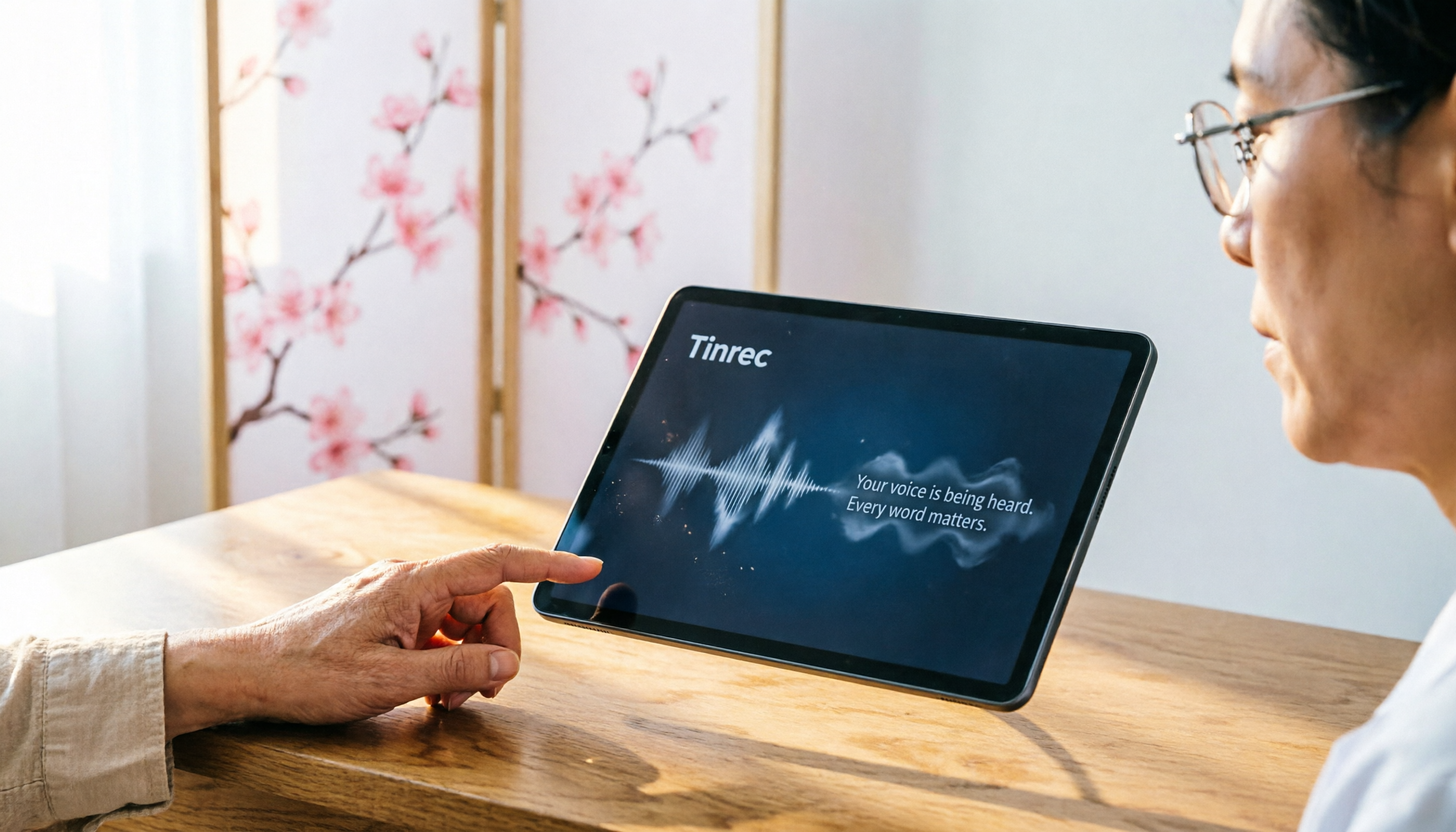
Tinrec is an AI recording and audio/video organization tool that supports 14 languages, fully covering iOS, Android, and web. In our trials, its biggest highlight isn't transcription itself, but the smart organization that follows.
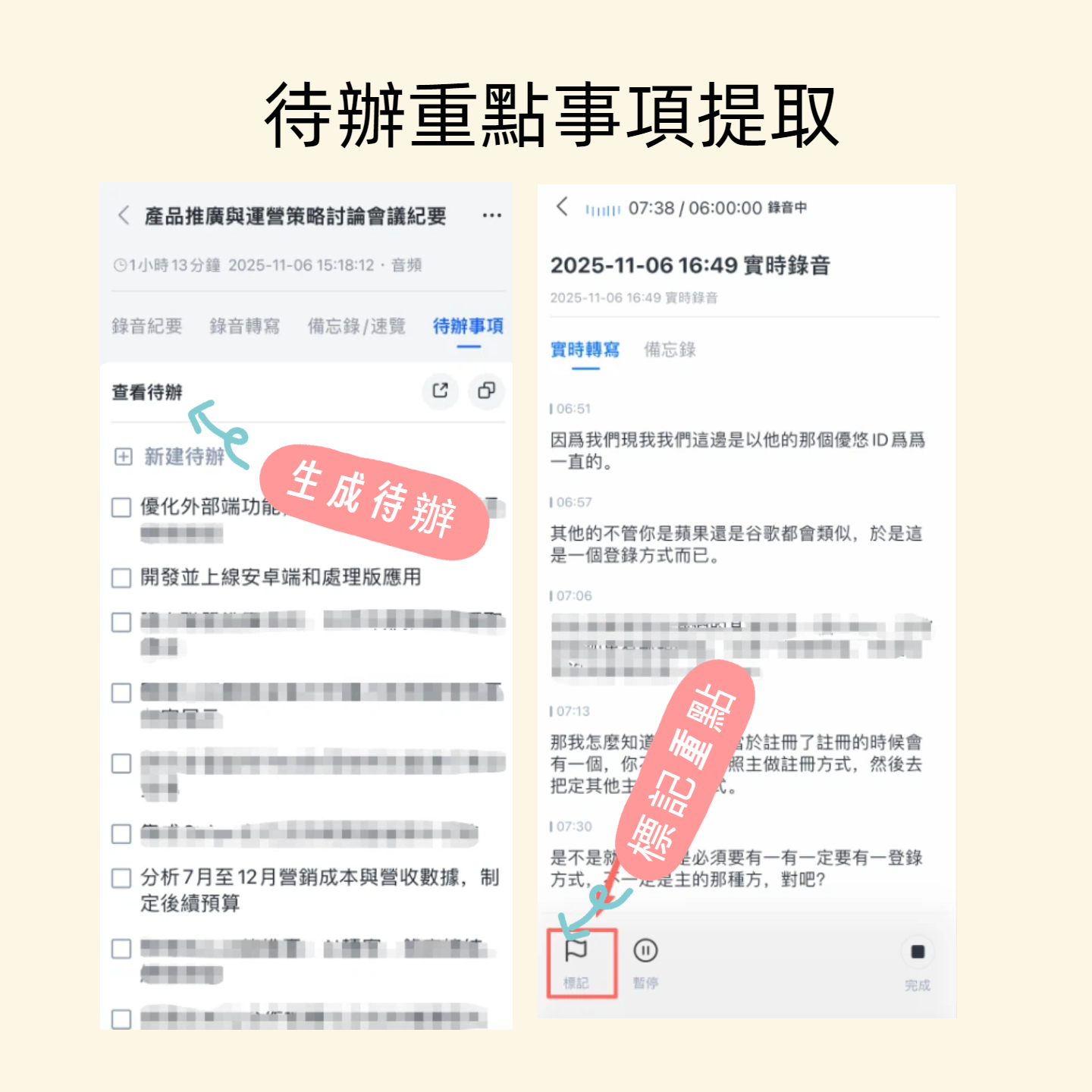
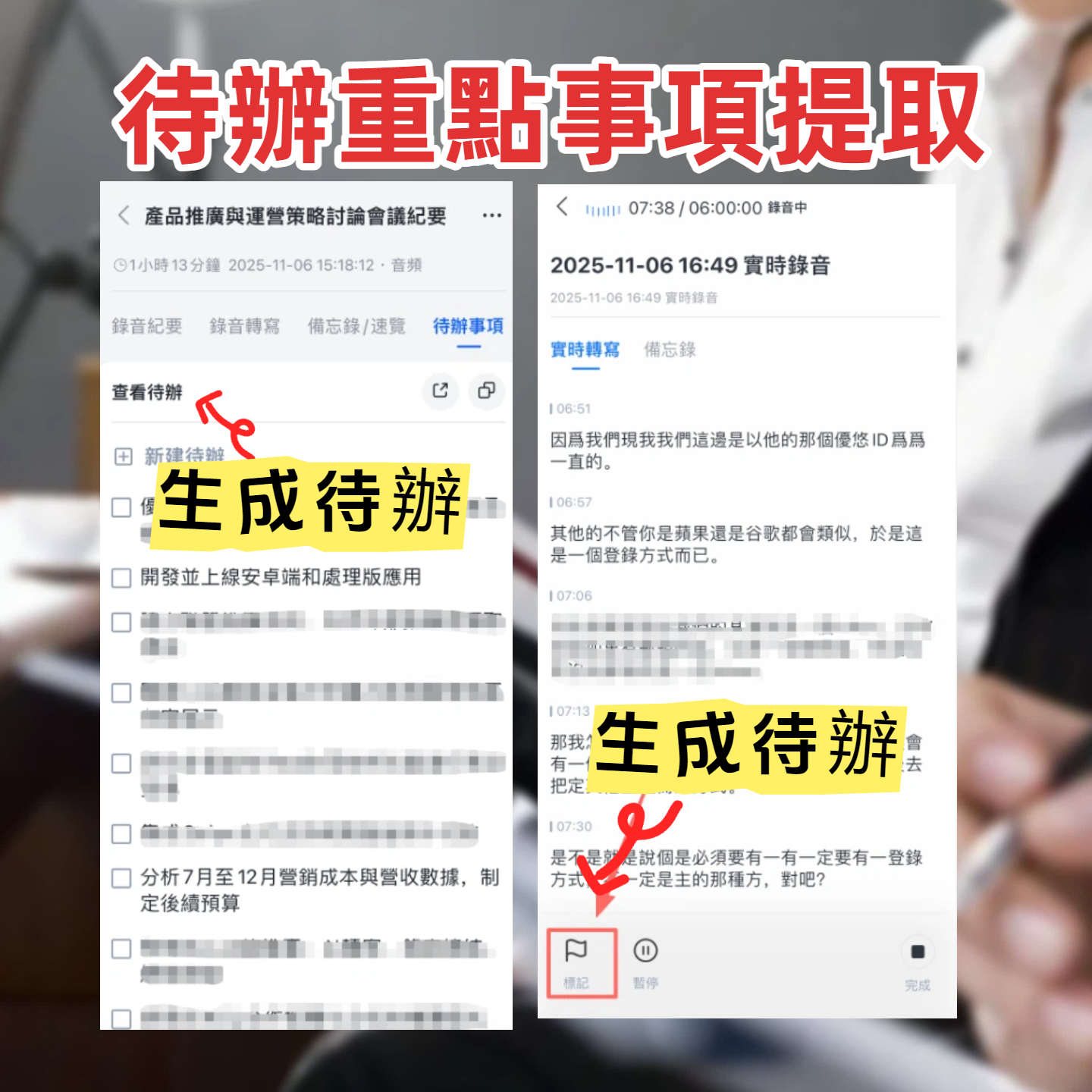
More Than Transcription: Turn Recordings into a Searchable Knowledge Base In a meeting scenario, open Tinrec to record and transcribe in real time. As soon as the meeting ends, AI summaries and action items are automatically generated – who is responsible for what, deadlines at a glance. Even more useful is the "AI Chat Query" feature: you can ask Tinrec, "Who mentioned the budget in the last meeting?" It doesn't just return keyword search results; based on semantic understanding, it directly tells you the answer. This capability is nearly unique among competitors in its price range.
Wider Input Source Coverage Tinrec handles not only meetings but also allows you to upload existing audio files or paste YouTube or TikTok video links, and it will transcribe and generate summaries. For those who need to organize online courses, interview materials, or research data, it's a one-tool solution for all audio/video content.
Stop organizing recordings by hand
Upload audio or video and automatically get a transcript, summary, and action items
Real-World Chinese Experience In our testing, Tinrec demonstrated reliable transcription quality for Chinese meetings, mixed Chinese-English discussions, and even accented speech (actual results may vary depending on recording environment and clarity). Plus it automatically splits chapters and extracts action items, significantly reducing post-processing time.
Pros Summary
- AI Chat Query: Ask questions about recording content and find details – a feature most competitors lack.
- Diverse Input Sources: Handles live recording, audio/video files, and public video links – one app for all scenarios.
- Core Features Available in Free Version: Monthly basic transcription allowance is enough to test meetings, lectures, etc. Only consider paid version if it really works for you.
Limitations
- Free allowance may be insufficient for heavy users (e.g., multiple meetings daily), requiring an upgrade to Pro. However, for most office workers with 2–3 meetings per week, it's enough for trial and evaluation.
- While AI summaries and Q&A are convenient, for important decisions, we recommend cross-referencing with the original recording or transcript to ensure no omissions.
Who Is It For? If you need an AI efficiency tool that handles Chinese (even multilingual) content, goes beyond transcription to generate summaries and action items, and frequently deals with online videos or audio files, Tinrec is currently the most integrated choice.
Otter.ai: Great for English Meetings, but Struggles with Chinese
Otter.ai is a pioneering AI meeting note-taking tool. Its strengths lie in automatically joining online meetings like Zoom and Google Meet, providing live transcription, speaker identification, meeting summaries, and team collaboration. It has an excellent reputation in the English business community.
Strengths Scenario: If your work revolves around English online meetings, Otter.ai is a nearly seamless choice. Its high level of automation means participants receive organized notes after meetings, and team collaboration features are mature.
Limitations for Chinese Users: In practice, Otter.ai's Chinese support is notably weaker than English. In Chinese meetings, code-switching discussions, or accented content, transcription error rates increase significantly. More importantly, it doesn't support direct transcription from public video links, nor does it have an AI chat query feature like Tinrec (Otter's AI Chat is mainly based on meeting summaries, not deep questioning of recording details).
Price Considerations: Otter.ai's free version offers 300 minutes of transcription per month, which seems generous, but its core value is still in English. If most of your work is in Chinese, those 300 minutes may be spent on inaccurate transcriptions, yielding limited benefit. The Pro plan costs about $8.33/month annually, suitable for heavy English meeting users.
Bottom Line: Otter.ai is the top choice for English meetings, but if you need a tool that handles Chinese, videos, files, and offers deep AI interaction, Tinrec is the more comprehensive AI efficiency agent.
Pitfall Guide: 3 Common Mistakes When Choosing an AI Recording Tool
Pitfall 1: Only Looking at Transcription Minutes, Ignoring Organization Many tools advertise "unlimited transcription" or high allowances to attract buyers. But if you still have to organize highlights and find action items from a pile of transcripts, the time saved is limited. What matters is whether the tool helps you "understand" the content, not just "transcribe" it. Features like Tinrec's AI summary and chat query are the real time-savers.
Pitfall 2: Ignoring Real-World Language and Accent Performance The advertised 99% accuracy is usually measured in a quiet recording studio. Your meeting room may have AC noise, keyboard clicks, or people talking over each other. Chinese users should especially check: how well does the tool support Taiwanese Mandarin, Cantonese, and code-switching? We recommend testing with your actual recordings in the free trial, not just looking at marketing numbers.
Pitfall 3: Using Your Phone Only as a Recorder, Missing Cross-Platform Flexibility Many people record on their phone but prefer to organize on a computer. If the tool doesn't support a web version or cross-device sync, you'll have to manually transfer files, which is inefficient. Make sure the tool allows seamless editing and export from computer after recording on phone, so you're not locked into one device.
Final Verdict: Which One Should You Choose?
After comparing across five dimensions, the answer is clear: If over 80% of your work is in English online meetings and you want maximum automation, Otter.ai remains the top choice. But for virtually every other scenario, Tinrec is the more practical and comprehensive AI efficiency agent.
Here's a quick decision guide by scenario:
- Precise organization of Chinese meetings, lectures, interviews → Tinrec: best language support and AI organization.
- Multiple source materials like audio files, YouTube videos, podcasts → Tinrec: widest input support, one tool covers all.
- Need to ask questions about recording content and quickly find key points → Tinrec: unique AI chat query feature.
- Cross-platform use (record on phone, organize on computer) on a budget → Tinrec: free version supports all platforms with enough allowance to test core features.
- Pure English, high-frequency online meetings with team collaboration → Otter.ai: still professional in this specific scenario.
In short, Tinrec expands the scope of AI efficiency from "meeting notes" to "organization and reuse of all audio/video material." For most Chinese users, it directly solves the core pain point of "listened and recorded but no time to digest."
We recommend you download the free version of Tinrec to try it out. The monthly allowance is enough for 2–3 meetings or several course videos, so you can experience the time savings firsthand. If you find it useful, then consider the Pro plan based on your usage – no need to pay upfront.
Turn every recording into actionable outcomes
Get 60 free transcription minutes when you sign in. No credit card required.
Related Reading
You might also like
![[Tutorial] Tinrec Interview Transcription 2026: Real-Time Transcription, AI Summaries & Q&A](https://record-img.tos-accelerate.volces.com/images/2026/07/24/1784906660573545479.png)
[Tutorial] Tinrec Interview Transcription 2026: Real-Time Transcription, AI Summaries & Q&A
This article compares Tinrec and Plaud Note for interview recording management, covering recording sources, transcription capabilities, organization features, and pricing plans, helping you choose the right interview tool.

Tinrec Audio to Text Tutorial 2026: Supports Cantonese, AI Auto-Organizes Medical Meeting Notes
Hong Kong healthcare professionals often deal with a large number of audio recordings? This Tinrec tutorial teaches you how to use your phone or computer to quickly transcribe medical recordings and meeting discussions into text, with AI automatically organizing summaries and key points, saving you plenty of time.

Which Speech-to-Text App is Best? 2026 Hands-on Test of 4 Apps – This One is Perfect for Bloggers
As a blogger, you often need to edit videos and organize interview recordings, so finding an accurate and convenient speech-to-text app is crucial. After testing 4 tools, I found that Tinrec not only transcribes but also offers AI summaries and task extraction, perfect for content creation. Find out why it's the top choice for bloggers!
Tutorial: Use Tinrec in 2026 to Efficiently Organize Academic Conference Notes – Real-time Transcription, AI-Generated Summaries & To-Dos
The biggest pain about academic conferences isn't understanding the talks – it's failing to take notes and not wanting to re-listen to recordings. With Tinrec, I turned three days of international conference recordings into structured summaries, searchable transcripts, and actionable checklists. This article shares how I used one app to transform audio files into truly usable data.
Tinrec vs Notta in 2026: A 4-Dimensional Comparison, the Best Tool for Clinical Notes
Physicians face lengthy dialogues daily, and manual or post-visit note-taking is time-consuming. This article tests two AI speech-to-text tools, Tinrec and Notta, comparing accuracy, AI post-processing, privacy, and cross-platform usability to help you find the best solution for clinical documentation.

2026 Workplace Meeting Note Tool Buying Guide: Hands-on Review of 2 Tools and Recommendations
A mid-level manager compares Tinrec and Otter.ai in real-world tests, covering transcription accuracy, multi-source input, AI post-processing, and pricing, to give practical buying advice.

Top 5 Audio-to-Text Transcription Tools for Field Research 2026: Tested Apps Researchers Trust
Field researchers often waste hours transcribing interviews. This article reviews 5 audio-to-text tools including Tinrec, Notta, Otter, TurboScribe, and PLAUD, covering free and professional plans. Find the best AI assistant for interviews, documentation, and analysis.

How to Do Speech-to-Text for Writers in 2026? A 4-Step Complete Guide with Comparison
Writers can save time organizing ideas and interviews with speech-to-text, but how to choose among so many tools? This article, from a journalistic perspective, compares Tinrec and PLAUD Note across recording sources, AI processing, Cantonese recognition, and cross-platform support, teaching you 4 steps to pick the right tool, with detailed pros and cons and suitable user types.

Best Court Recording to Text Tool? 2026 Comparison of 2 Options: Software Offers Better Value
You don't need expensive hardware for court recording transcription. This article compares Tinrec and PLAUD Note across 5 key dimensions—cost, cross-platform support, AI features, input sources, and privacy—to show why Tinrec is the more cost-effective choice for most legal professionals.