

Turn recordings into transcripts and summaries in minutes
Upload audio or video for multilingual transcription, AI notes, and action items
2026 Comparison of 3 Must-Have Interview Transcription Tools for Journalists: From Recording to Publishing in One Go
What Can Transcription Do for Journalists?
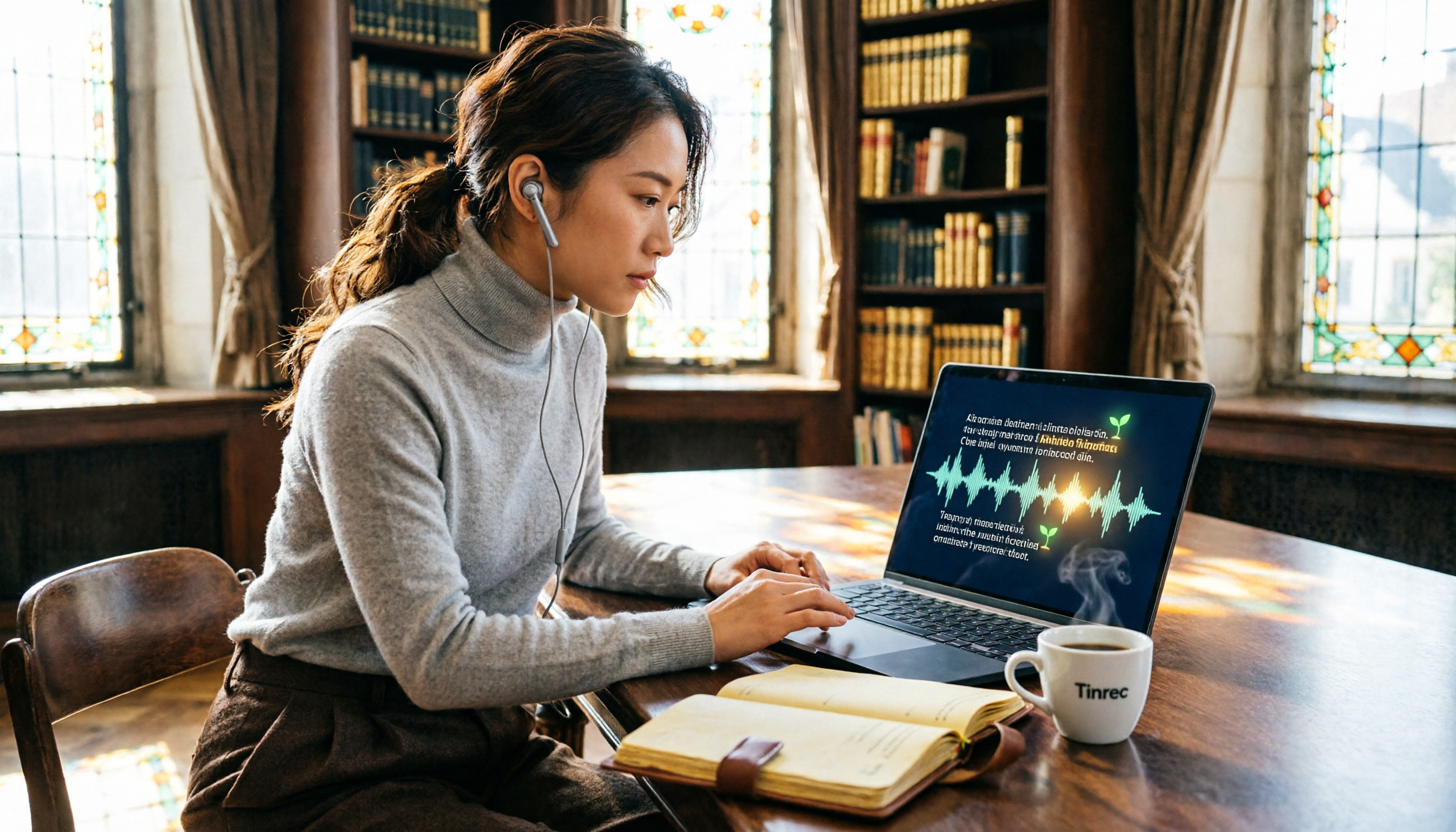
For journalists, transcribing interviews is often the most time-consuming invisible task. A one-and-a-half-hour interview can take three to four hours to manually type up. But now, AI transcription can drastically reduce that time, even allowing you to grasp key points in real-time as you record.
Scenario 1: Get a Transcript 5 Minutes After the Interview, Publish Quickly
In the past, after a long in-depth interview, you'd have to rush back to the office, put on headphones, and slowly type up the transcript. Now with Tinrec, the AI converts your recording into full text the moment the interview ends, complete with filler words like "um" and "ah." You can search for key passages, copy quotes, and start writing immediately.
Scenario 2: Phone or Online Interviews, Real-time Transcription for Confirmation
During phone or remote video interviews, it's hard to take notes and ask follow-ups at the same time. Tinrec's live transcription feature displays text on your screen as you talk, like having an invisible stenographer. If you notice a discrepancy with what the interviewee said, you can ask right away instead of regretting it later when listening to the recording.
Scenario 3: Press Conferences or Panel Recordings, Auto-Generated Summaries
Attending a two-hour press conference with multiple speakers, only a few key pieces might be usable in your report. Tinrec automatically generates AI summaries and chapters after recording, organizing key discussions, conclusions, and related data so you can quickly find usable material without listening to the whole thing.
Scenario 4: Multilingual Interviews, Quick Translation and Understanding
When interviewing foreign subjects or processing recordings from international conferences, language is often a barrier. Tinrec supports transcription in 14 languages and offers a translation feature, allowing you to convert interviews into Chinese text first, then organize them into reports. This makes cross-language interviews much easier.
What Are the Core Capabilities of Transcription?
Transcription isn't just about converting voice to text. A truly time-saving tool for journalists should offer more than transcription—it should help with organization and reuse. Below, we use Tinrec as an example to illustrate key capabilities.
Real-time Transcription
Record and transcribe simultaneously with less than a second delay. This is critical for journalists needing quick turnaround, especially for breaking news or live reports. You can verify content on site to ensure no key statements are missed.
Import Audio Files for Transcription
Beyond live recording, Tinrec also supports uploading existing interview recordings, whether from a phone, a recorder's WAV file, or MP3. Previously unprocessed interviews can now be transcribed and reused.
AI Summaries and Chapters
For hour-long recordings, Tinrec automatically divides them into chapters and generates a summary for each. Like a book's table of contents, you can click on sections of interest to listen to the original audio or view the transcript, without scrolling through the entire file.
AI Query
This might be the most workflow-changing feature. After transcription, you can ask Tinrec questions like "What is the interviewee's view on market trends?" or "Who mentioned the budget in the meeting?" The AI answers based on semantic understanding and provides the original source for quick verification.
Action Item Extraction
Stop organizing recordings by hand
Upload audio or video and automatically get a transcript, summary, and action items
During interviews, phrases like "I'll provide the data later" or "I'll get back to you on this" often come up. Tinrec automatically identifies such action items from the recording and compiles a to-do list to remind you to follow up.
Practical Use Cases
In-depth Personal Interviews
For one-on-one feature interviews, you need accurate quotes and an uninterrupted conversation flow. Using Tinrec to record live, you get the transcript and summary immediately after the interview. You can quickly highlight the interviewee's best quotes and verify numbers, greatly boosting efficiency.
Press Conferences
At a press conference, start recording with Tinrec. Real-time text lets you double-check statements. Afterward, use AI summaries to extract key policies, data, and announcements, delivering a complete report faster than others.
Remote Phone Interviews
Phone interviews often suffer from unclear audio and note-taking distractions. Activate Tinrec's live transcription to read the text as you talk, ensuring you catch every word. By the time you hang up, the entire conversation is already searchable text.
Multilingual Interviews
Interviewing foreign scholars, artists, or athletes? Language barriers can double your workload. Tinrec's transcription and translation convert English or Japanese recordings into Chinese transcripts, then use AI query to pinpoint key points, saving you back-and-forth translation time.
4 Points to Consider When Choosing a Transcription Tool
There are many transcription tools on the market, from meeting bots to hardware recorders. How do you choose? Below are four priorities for journalists, with Tinrec's approach.
1. Transcription Accuracy: Don't Just Look at Official Numbers
Every tool claims high accuracy, but actual performance depends on recording environment, accents, and content. The best test is to use a real interview recording. Tinrec performs reliably in normal interview settings, but if background noise is heavy or multiple people speak at once, it's still advisable to cross-check.
2. AI Organization: Transcription Is Just the First Step
If the tool only gives you a raw transcript, you still have to do the organizing yourself. What saves time is "what happens after transcription." Tinrec doesn't just provide a transcript; it auto-summarizes, creates chapters, extracts action items, and lets you query key points—that's where the value lies.
3. Cross-Platform and Input Sources
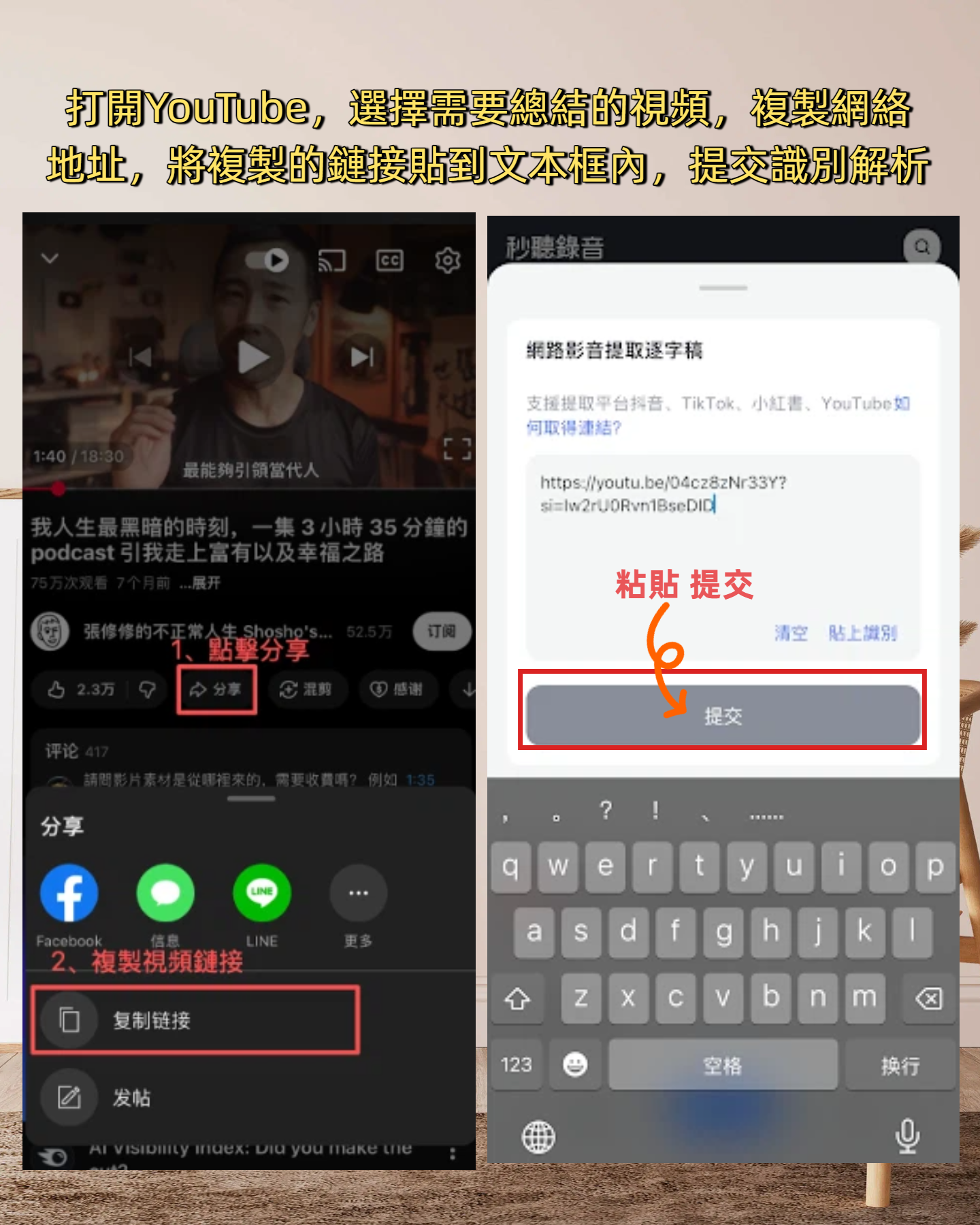
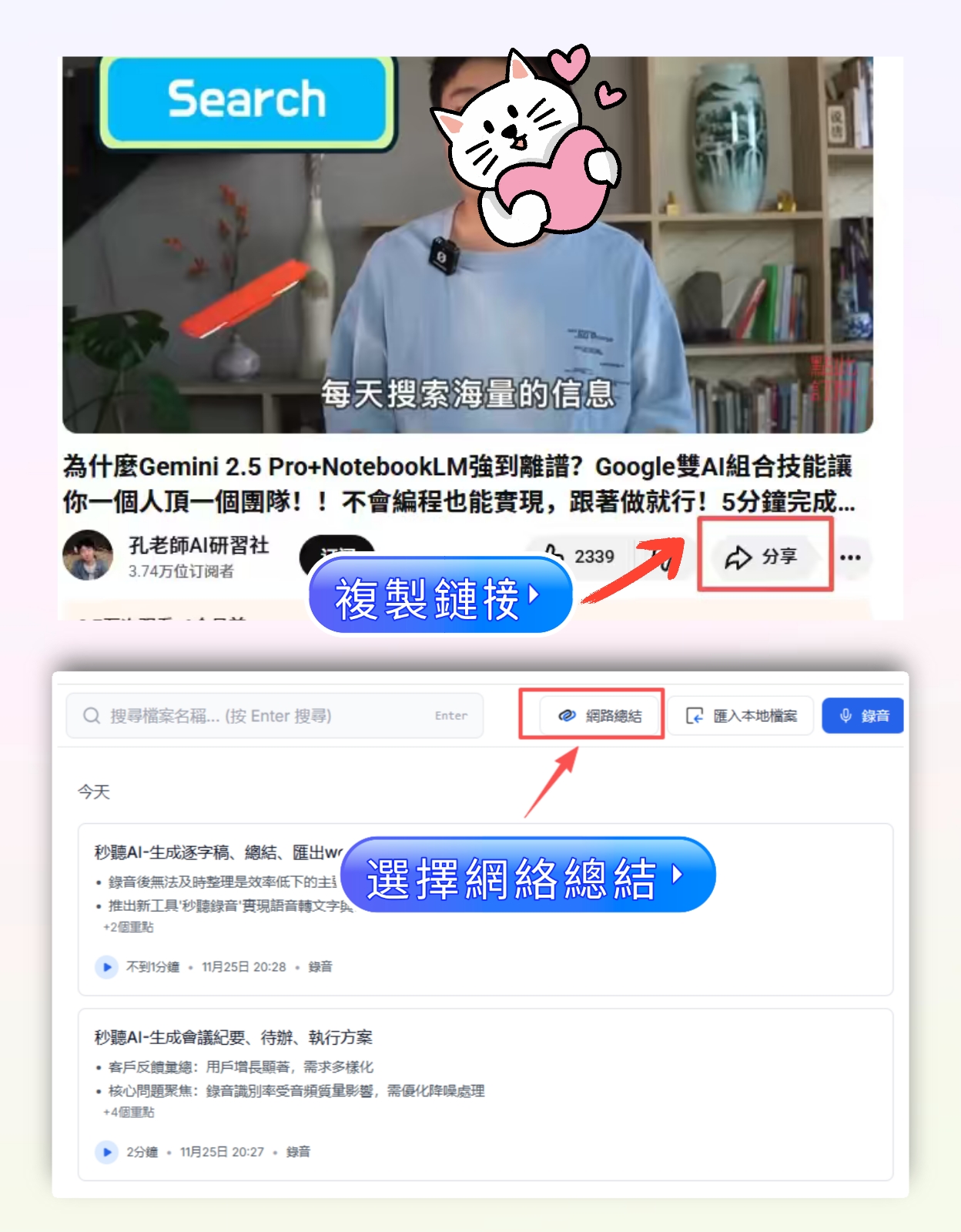
Journalists record on phones, computers, and sometimes need to convert old recordings or public videos. Make sure the tool supports all your devices. Tinrec has iOS, Android, and web versions, supports audio uploads, and even extracts text from online video links (e.g., YouTube), offering comprehensive input sources.
4. Privacy and Security
Interview content may involve unpublished information or interviewee privacy. Choosing a trustworthy tool with data protection is essential. Tinrec uses cloud encryption, allows users to delete recordings and transcripts anytime, and lets you export and remove all data completely.
Frequently Asked Questions
Q: How accurate is Tinrec's transcription? A: In clear recording conditions with a single speaker and no major background noise, Tinrec's transcription quality is excellent. However, real interview environments have many variables, so 100% accuracy cannot be guaranteed. We recommend using the transcript as a quick reference and verifying important quotes against the recording.
Q: What languages are supported? A: Tinrec currently supports 14 languages, including Chinese (Traditional), English, Cantonese, Japanese, Korean, etc. This is sufficient for journalists handling multilingual interviews.
Q: What export formats are available for recordings and transcripts? A: You can export in common formats like TXT, Word, and PDF, or sync directly to tools like Notion, Google Docs, OneNote, and Dropbox for easy use in your writing workflow.
Q: Is the free version enough for journalists? A: Tinrec's free plan offers a monthly base transcription quota, suitable for occasional interviews or trying it out. If you have many interviews (more than 2 per week) or need long recordings, consider the weekly or Pro monthly plan.
Q: Can it distinguish between different speakers? A: Yes, Tinrec can identify different speakers and label their segments, which is especially useful for multi-person interviews or panel discussions.
Q: Can it transcribe online video links? A: Yes. Just paste a public YouTube, Bilibili, or social media video URL, and Tinrec will generate a transcript and summary—great for processing online press conferences or reference videos.
Summary
AI transcription is now a mature, reliable tool that saves journalists enormous time processing interview recordings. From live transcription and verbatim transcripts to auto-summaries and Q&A-based searching, these features streamline news workflows. If you haven't tried it yet, start with Tinrec's free plan—it offers a monthly base quota. Run a couple of interviews and experience the feeling of having a transcript ready as soon as the interview ends.
Turn every recording into actionable outcomes
Get 60 free transcription minutes when you sign in. No credit card required.
Related Reading
You might also like

How to Choose an Interview Recorder in 2026? 5 Steps from Recording to AI Summary - Recommended List
Interview recorders are not just hardware; AI transcription tools help you quickly organize transcripts and summaries. This article reviews 5 recommended solutions, from free to professional, from a middle manager's testing perspective, guiding you to choose the right interview organization tool, saving time for decision-making.

2026 Tinrec vs Notta: 5-Dimension Showdown: Which is Better for Chinese Speech-to-Text?
Compare two major speech-to-text tools, Tinrec and Notta, in a deep 5-dimensional analysis covering core features, input sources, organization, Chinese experience, and pricing. Also includes Otter.ai, Fireflies.ai, TurboScribe, and more to help you find the best speech-to-text tool.
![[Tutorial] 2026 Screenwriter Recording to Text: AI Chat Search + Auto-Organize Interview Materials](https://record-img.tos-accelerate.volces.com/images/2026/07/24/1784906635885412776.png)
[Tutorial] 2026 Screenwriter Recording to Text: AI Chat Search + Auto-Organize Interview Materials
Quickly organize screenwriter interviews, fieldwork recordings, and inspiration materials. A hands-on test of 5 recording-to-text tools, from free to professional solutions.

2026 Voice-to-Text App Comparison: Capture Ideas Accurately and Quickly
Tired of scrambling for a pen during meetings, lectures, or when inspiration strikes? This article tests 4 voice-to-text tools on accuracy, AI features, and efficiency to help you find the best assistant for recording ideas.
![[Tutorial] Tinrec Interview Transcription 2026: Real-Time Transcription, AI Summaries & Q&A](https://record-img.tos-accelerate.volces.com/images/2026/07/24/1784906660573545479.png)
[Tutorial] Tinrec Interview Transcription 2026: Real-Time Transcription, AI Summaries & Q&A
This article compares Tinrec and Plaud Note for interview recording management, covering recording sources, transcription capabilities, organization features, and pricing plans, helping you choose the right interview tool.

Tinrec Audio to Text Tutorial 2026: Supports Cantonese, AI Auto-Organizes Medical Meeting Notes
Hong Kong healthcare professionals often deal with a large number of audio recordings? This Tinrec tutorial teaches you how to use your phone or computer to quickly transcribe medical recordings and meeting discussions into text, with AI automatically organizing summaries and key points, saving you plenty of time.

Which Speech-to-Text App is Best? 2026 Hands-on Test of 4 Apps – This One is Perfect for Bloggers
As a blogger, you often need to edit videos and organize interview recordings, so finding an accurate and convenient speech-to-text app is crucial. After testing 4 tools, I found that Tinrec not only transcribes but also offers AI summaries and task extraction, perfect for content creation. Find out why it's the top choice for bloggers!
Tutorial: Use Tinrec in 2026 to Efficiently Organize Academic Conference Notes – Real-time Transcription, AI-Generated Summaries & To-Dos
The biggest pain about academic conferences isn't understanding the talks – it's failing to take notes and not wanting to re-listen to recordings. With Tinrec, I turned three days of international conference recordings into structured summaries, searchable transcripts, and actionable checklists. This article shares how I used one app to transform audio files into truly usable data.
Tinrec vs Notta in 2026: A 4-Dimensional Comparison, the Best Tool for Clinical Notes
Physicians face lengthy dialogues daily, and manual or post-visit note-taking is time-consuming. This article tests two AI speech-to-text tools, Tinrec and Notta, comparing accuracy, AI post-processing, privacy, and cross-platform usability to help you find the best solution for clinical documentation.