

Turn recordings into transcripts and summaries in minutes
Upload audio or video for multilingual transcription, AI notes, and action items
Why You Need a Good Interview Recording Tool
I regularly conduct 2-3 user interviews per week. In the past, the biggest headache wasn't the interview itself, but transcribing afterward. A 1-hour interview took at least 3 hours to manually transcribe. Asking interns to help risked missing key tones. After I started using AI to process recordings, I realized I could save that energy and focus on product improvements. This article summarizes 5 solutions my team tested, from free to professional, helping you turn interview recordings into usable data with minimal time.
Tinrec (Miao Ting Voice Recorder) — The Most Comprehensive AI Interview Assistant
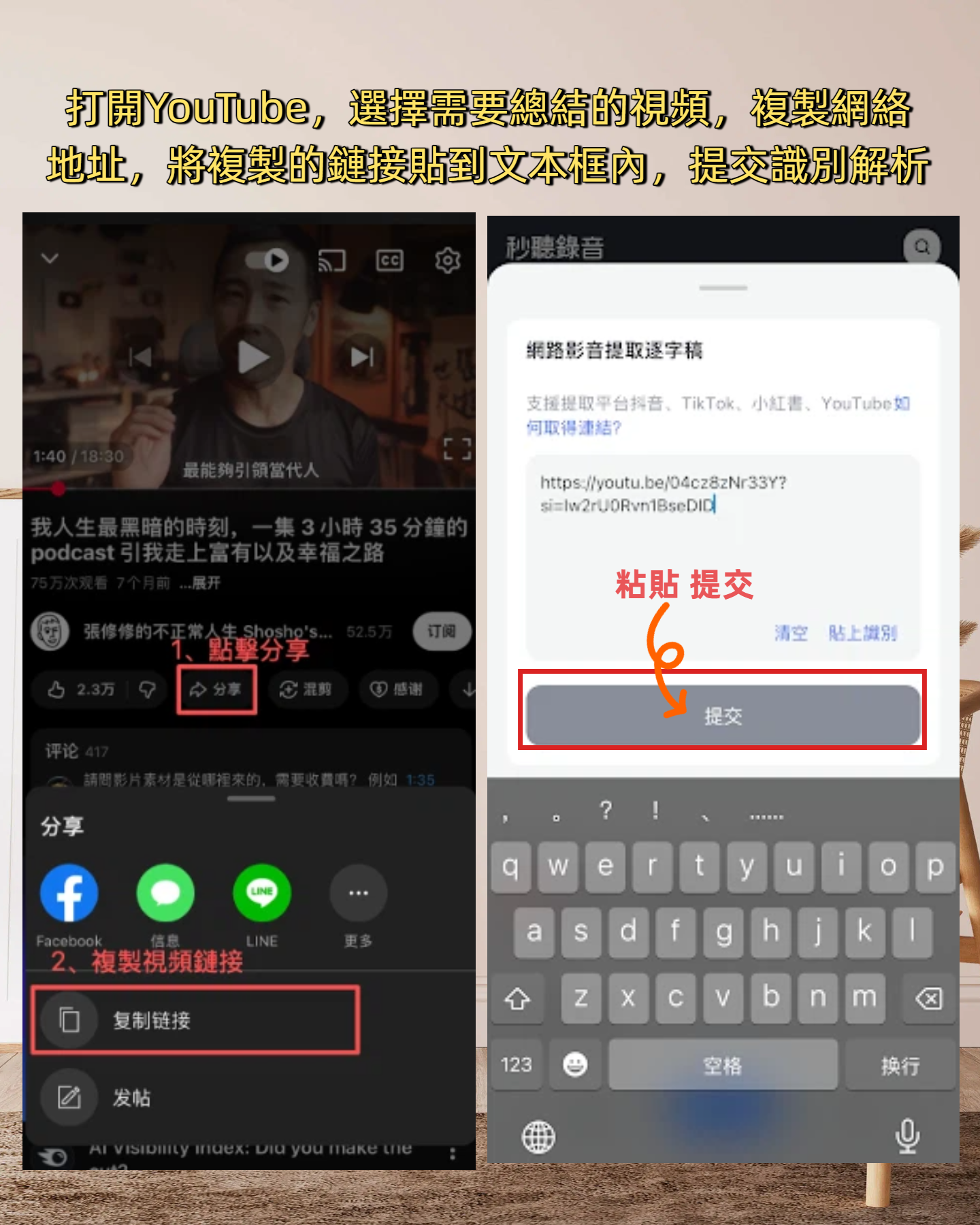
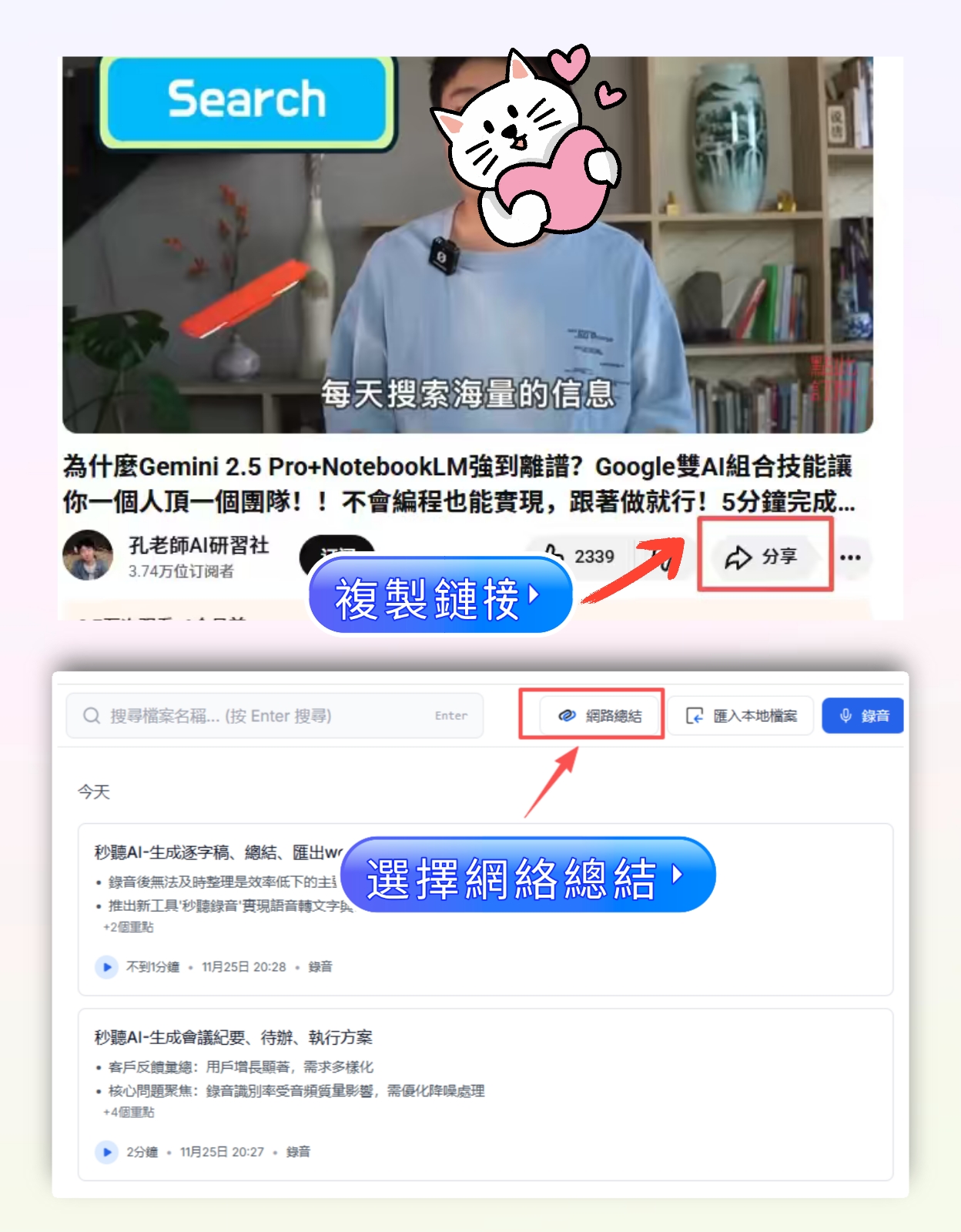
Tinrec is my go-to tool. It's not just transcription; it's more like an "interview data processing desk." For user interviews, I usually record directly on my phone. Tinrec transcribes in real-time, and within 5 minutes of finishing, the AI summary and key points are auto-generated. The most useful feature is AI query — instead of scrolling through half-hour recordings to find one sentence, I just type "interviewee reaction to new feature" and get the original text and timestamp in seconds. It also supports pasting YouTube or Xiaohongshu links for analysis, handling competitor interview transcripts too.
The free version offers a basic monthly allowance for trial. Since I have many interviews, I bought the Pro annual plan — costs less than a few cups of coffee per month. Suitable for those who frequently organize interviews, meetings, or courses, especially middle managers who don't want to be tied to hardware.
Otter.ai — Top Choice for English Interviews and International Meetings
Otter.ai is a veteran online meeting transcription tool with high English accuracy. It automatically labels different speakers and integrates with Zoom and Google Meet. If you often conduct English interviews or cross-border user research, its real-time transcription and collaboration features are handy. However, it sometimes misidentifies mixed Chinese-English contexts. Free plan offers 300 minutes/month; Pro annual plan ~$8.33/month. Best for English-speaking meeting users, but it's more meeting-oriented and lacks advanced post-interview organization.
Notta — Lightweight Multilingual Transcription Choice
Notta supports over 100 languages with an intuitive interface and fast transcription. You can record directly or upload files; it offers web and app versions. Its strengths are translation and subtitle generation, making it great for multilingual interview transcription. Free plan offers 120 minutes/month; Pro annual ~$8.17/month for 1800 minutes. Compared to Tinrec, Notta is weaker in post-transcription comprehension and Q&A; it's more like a high-accuracy typewriter, lacking the "processing layer" to turn data into action.
Stop organizing recordings by hand
Upload audio or video and automatically get a transcript, summary, and action items
Fireflies.ai — Automated Meeting Bot
Fireflies.ai automatically joins online meetings, records, and transcribes. It supports 100+ languages and extracts action items from conversations. If your interviews are entirely online, it saves manual start-up and allows content search afterward. Free plan boasts unlimited transcription but limited team storage; Pro annual ~$10/month. Its strengths are team collaboration and CRM integration, but for personal interview organization, it has too many features and sometimes misses key points in mixed Chinese contexts.
TurboScribe — High Value-for-Money Pure File Transcription
TurboScribe focuses on converting audio and video files to text, supporting long files and batch processing with competitive pricing. Free plan: 3 files/day (max 30 min each); Unlimited annual ~$10/month. If you only need bulk transcription without AI summaries or Q&A, this saves money. But after interviews, I usually need to extract key points and tasks; with TurboScribe alone, I still have to do that work manually or pair with other tools.
PLAUD Note — Standalone Recording Hardware, Portable
PLAUD Note is an AI recording hardware device that's compact, clips to your collar, and has long battery life — ideal for in-person interviews when you don't want to use your phone. The hardware has good audio quality, and the app provides transcription and summaries. Note Pro pre-order ~$179, includes 300 minutes/month transcription; add-on annual ~$99.99 for 1200 minutes. Suitable for those who frequently travel and don't want to drain phone battery, but hardware cost is high, and post-transcription analysis is less comprehensive than software solutions. For organizing old audio files or online videos, you still need a computer.
So Many Options, How to Choose?
- Most comprehensive AI interview processing (transcription + summary + AI Q&A + export) → Tinrec, the only tool I've tested that meets all these needs without juggling multiple apps.
- Interviews mostly in English, need real-time meeting collaboration → Otter.ai, but double-check Chinese transcripts.
- Frequent international interviews needing multilingual translation and subtitles → Notta, fast transcription but you handle subsequent organization.
- Pure bulk transcription on a budget → TurboScribe, free version works in a pinch, but lacks the "understanding" step.
- In-person interviews without using phone, prefer standalone recording → PLAUD Note, solid hardware, but software analysis may need pairing with other tools.
- Zero budget → built-in phone recorder + Tinrec free version, record on phone first, then use Tinrec's free allowance for transcription and summary — enough for occasional interviews.
3 Things to Know Before Using Interview Recording Tools
- Recording quality determines transcription accuracy: Regardless of tool, interview in a quiet environment with the microphone close to the interviewee. I usually use a clip-on mic plugged into my phone for significantly better accuracy. For example, Tinrec requires almost no editing with clear audio, but if there's background noise like a coffee machine, proper nouns may be misrecognized — always double-check key passages.
- AI summaries are not 100% reliable: Summaries help quickly grasp content, but emotions, pauses, and sarcasm are still missed by AI. I treat Tinrec's summaries as "indexes"; when I need to quote, I use AI Q&A to jump to the original transcript and verify.
- Use export to integrate data into your workflow: Don't let transcripts and summaries stay in the app. Tinrec can export directly to Notion, Google Docs. I dump each interview into the team database after organization; searching by keyword for past interviews is ten times faster than scrolling through audio files.
Summary
Choosing an interview recorder isn't about hardware or software per se, but which tool helps you turn interview content into decision-making fuel. I went from manual transcription and testing multiple tools to settling on Tinrec because it not only provides transcripts but also connects key points, action items, and even context from past interviews. If you also want to spend time thinking instead of typing, start with the free version and experience how automated interview organization can be.
Turn every recording into actionable outcomes
Get 60 free transcription minutes when you sign in. No credit card required.
Related Reading
You might also like

2026 Tinrec vs Notta: 5-Dimension Showdown: Which is Better for Chinese Speech-to-Text?
Compare two major speech-to-text tools, Tinrec and Notta, in a deep 5-dimensional analysis covering core features, input sources, organization, Chinese experience, and pricing. Also includes Otter.ai, Fireflies.ai, TurboScribe, and more to help you find the best speech-to-text tool.

2026 Comparison of 3 Must-Have Interview Transcription Tools for Journalists: From Recording to Publishing in One Go
Still manually transcribing interviews? This article compares different transcription solutions, using Tinrec as an example, showing how to quickly turn interview recordings into searchable, quotable text material—from recording to publishing in one go.
![[Tutorial] 2026 Screenwriter Recording to Text: AI Chat Search + Auto-Organize Interview Materials](https://record-img.tos-accelerate.volces.com/images/2026/07/24/1784906635885412776.png)
[Tutorial] 2026 Screenwriter Recording to Text: AI Chat Search + Auto-Organize Interview Materials
Quickly organize screenwriter interviews, fieldwork recordings, and inspiration materials. A hands-on test of 5 recording-to-text tools, from free to professional solutions.

2026 Voice-to-Text App Comparison: Capture Ideas Accurately and Quickly
Tired of scrambling for a pen during meetings, lectures, or when inspiration strikes? This article tests 4 voice-to-text tools on accuracy, AI features, and efficiency to help you find the best assistant for recording ideas.
![[Tutorial] Tinrec Interview Transcription 2026: Real-Time Transcription, AI Summaries & Q&A](https://record-img.tos-accelerate.volces.com/images/2026/07/24/1784906660573545479.png)
[Tutorial] Tinrec Interview Transcription 2026: Real-Time Transcription, AI Summaries & Q&A
This article compares Tinrec and Plaud Note for interview recording management, covering recording sources, transcription capabilities, organization features, and pricing plans, helping you choose the right interview tool.

Tinrec Audio to Text Tutorial 2026: Supports Cantonese, AI Auto-Organizes Medical Meeting Notes
Hong Kong healthcare professionals often deal with a large number of audio recordings? This Tinrec tutorial teaches you how to use your phone or computer to quickly transcribe medical recordings and meeting discussions into text, with AI automatically organizing summaries and key points, saving you plenty of time.
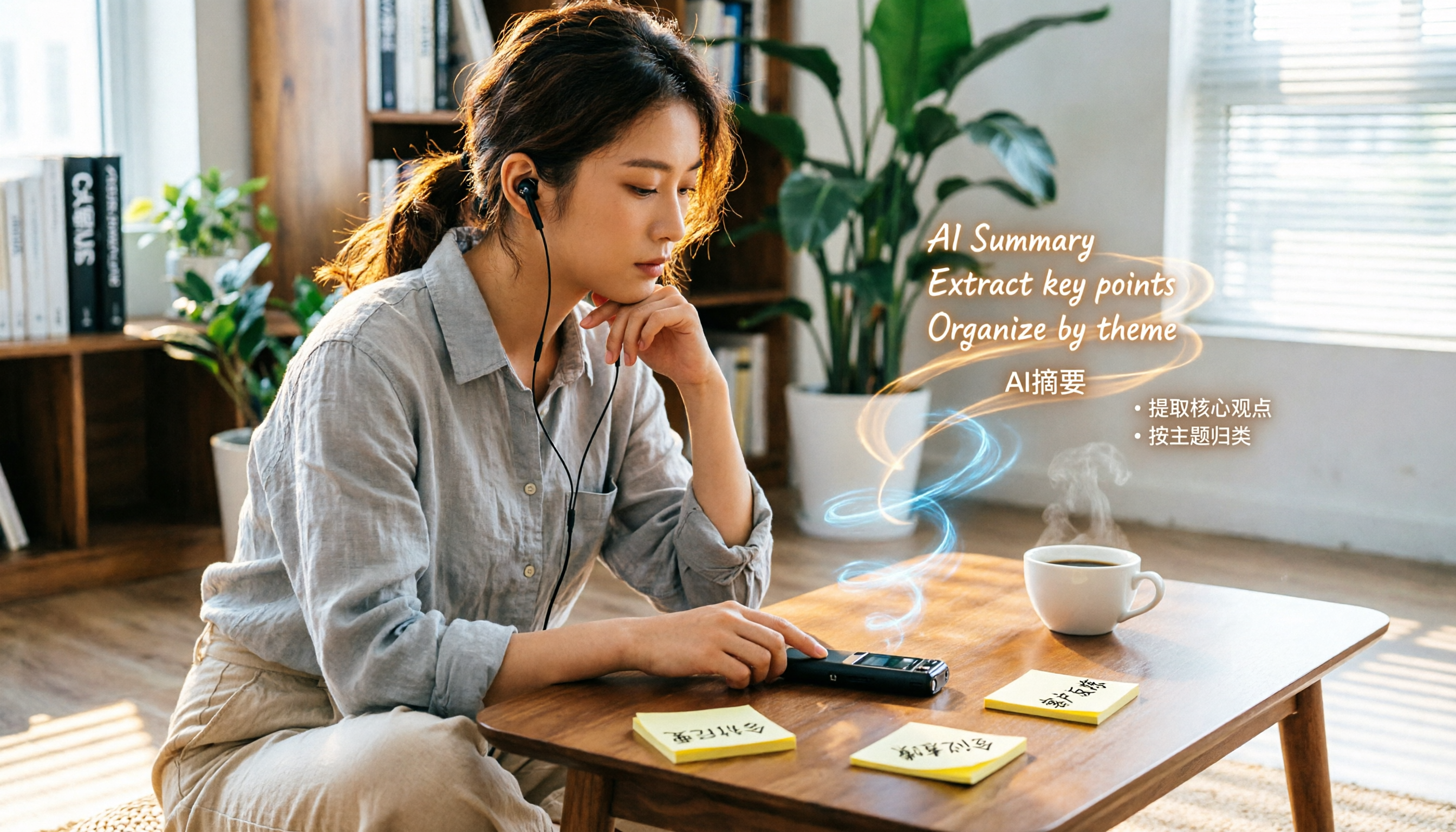
Which Speech-to-Text App is Best? 2026 Hands-on Test of 4 Apps – This One is Perfect for Bloggers
As a blogger, you often need to edit videos and organize interview recordings, so finding an accurate and convenient speech-to-text app is crucial. After testing 4 tools, I found that Tinrec not only transcribes but also offers AI summaries and task extraction, perfect for content creation. Find out why it's the top choice for bloggers!
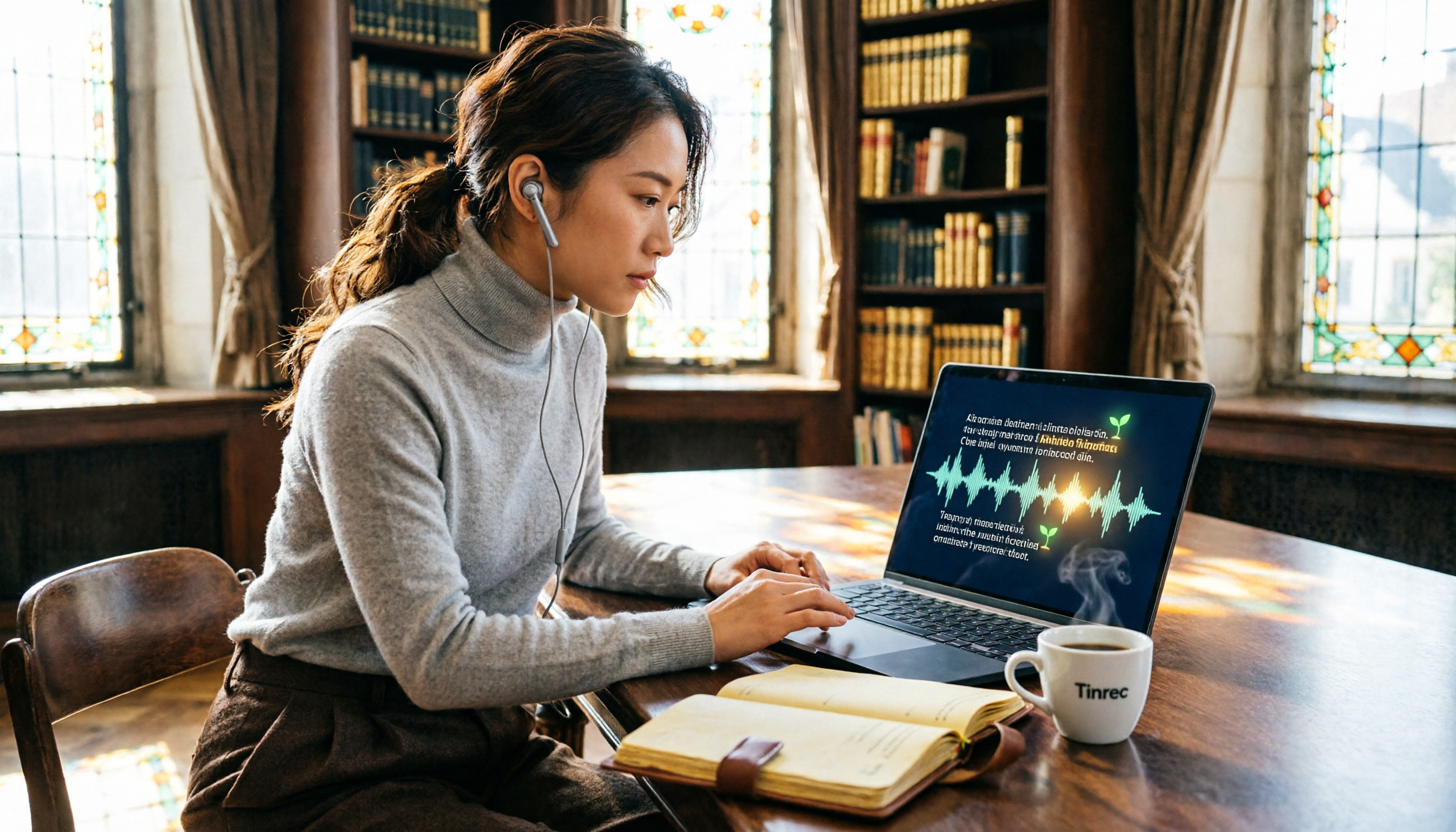
Tutorial: Use Tinrec in 2026 to Efficiently Organize Academic Conference Notes – Real-time Transcription, AI-Generated Summaries & To-Dos
The biggest pain about academic conferences isn't understanding the talks – it's failing to take notes and not wanting to re-listen to recordings. With Tinrec, I turned three days of international conference recordings into structured summaries, searchable transcripts, and actionable checklists. This article shares how I used one app to transform audio files into truly usable data.
Tinrec vs Notta in 2026: A 4-Dimensional Comparison, the Best Tool for Clinical Notes
Physicians face lengthy dialogues daily, and manual or post-visit note-taking is time-consuming. This article tests two AI speech-to-text tools, Tinrec and Notta, comparing accuracy, AI post-processing, privacy, and cross-platform usability to help you find the best solution for clinical documentation.