
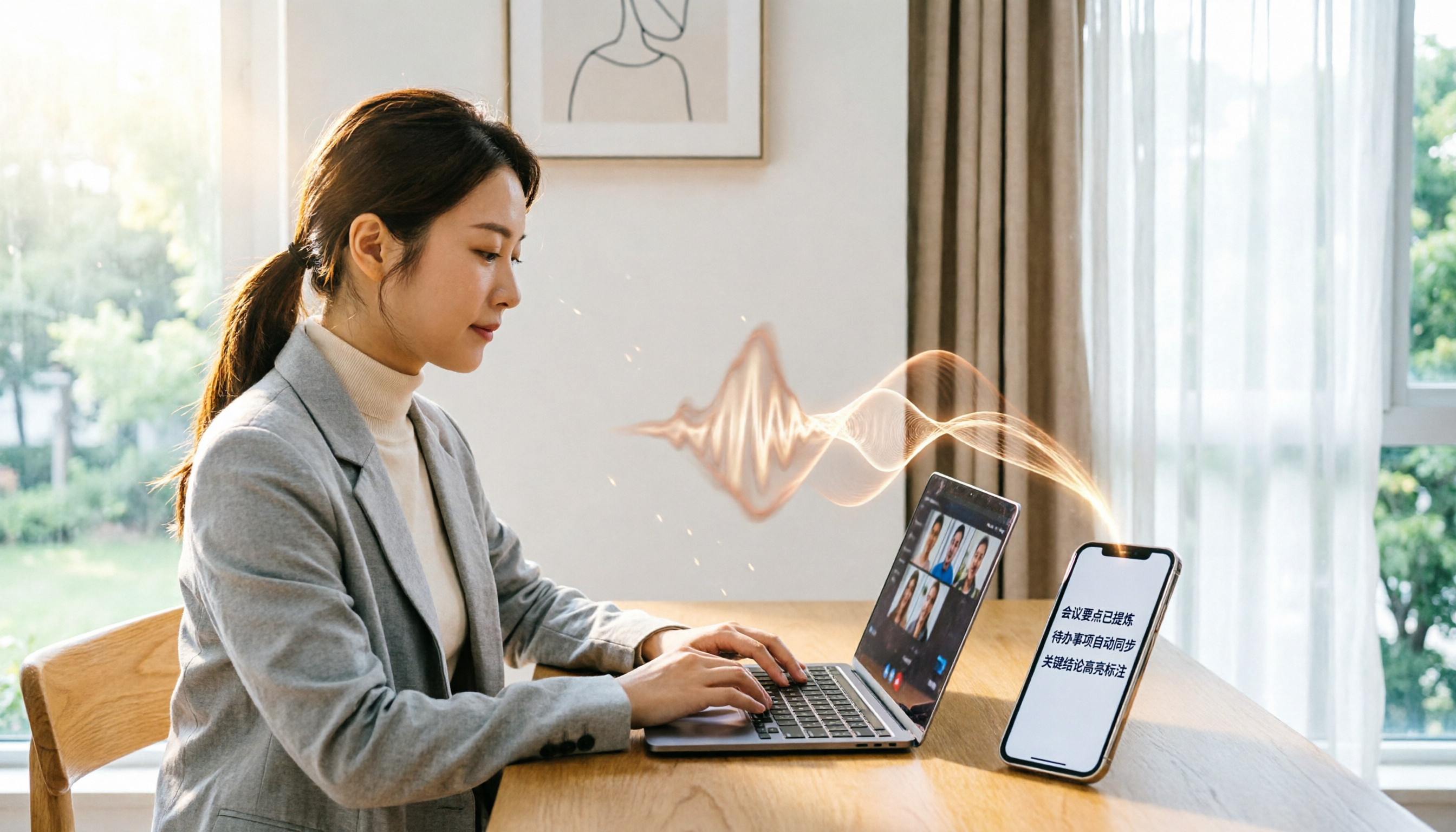
Turn recordings into transcripts and summaries in minutes
Upload audio or video for multilingual transcription, AI notes, and action items
Why Look for an Alternative to Google Meet?
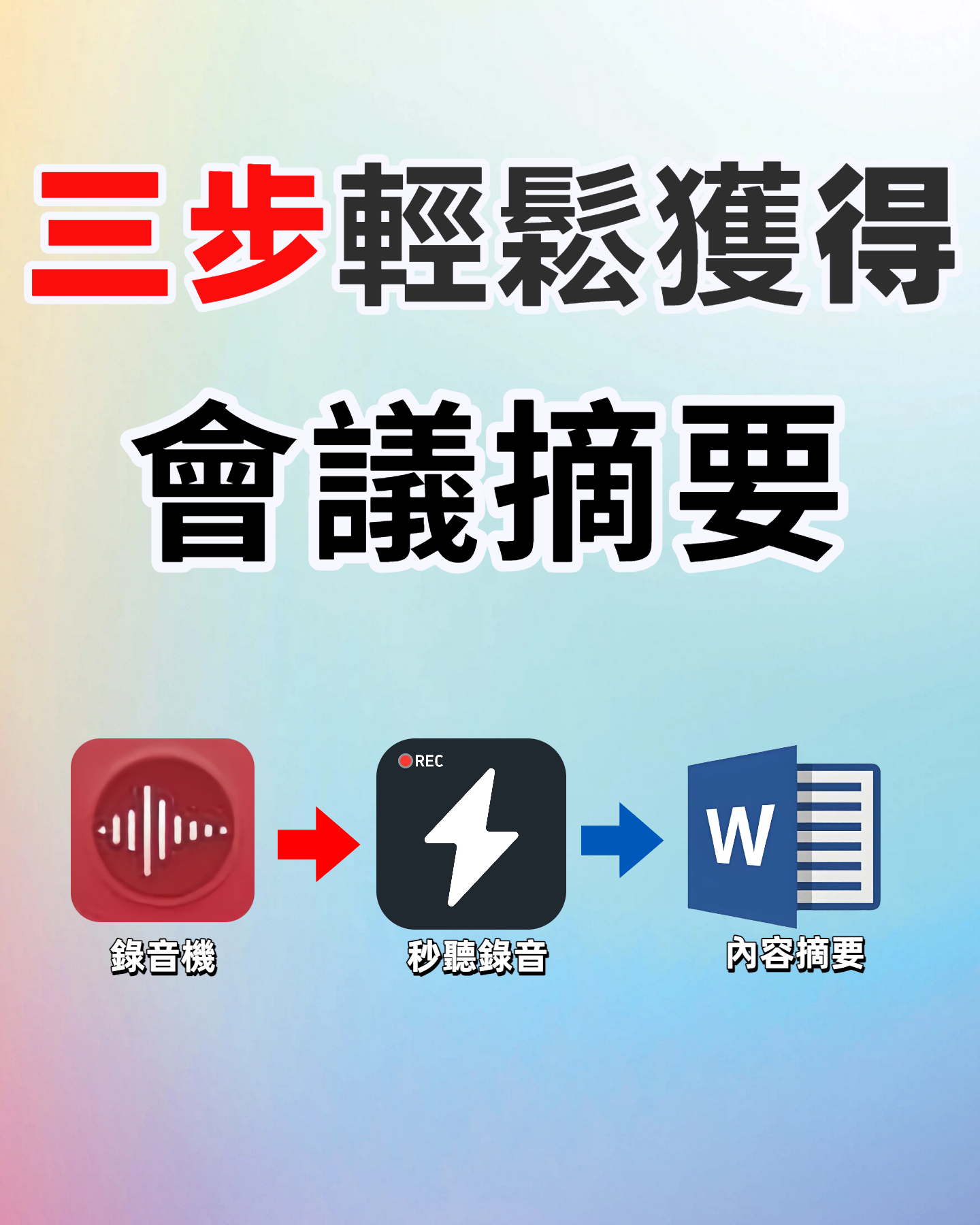
Google Meet is a top choice for Mac users for meetings. Its built-in live captions display dialogue in real time, which is helpful for hearing assistance or quick comprehension. However, these captions usually only show during the meeting and disappear once it ends—they can't be automatically saved as a transcript or further organized into meeting notes.
If you want to preserve meeting content for future search, review, or sharing with those who couldn't attend, Google Meet's captions alone aren't enough. You might need to record yourself, manually take notes, or use another tool for transcription. Honestly, that's a bit cumbersome.
If you're facing similar challenges, Tinrec—an AI-powered speech-to-text tool—is worth a look. It not only solves Google Meet's limitations but also organizes audio and video content from various sources.
Tinrec vs Google Meet: Key Differences in Core Experience
When it comes to speech-to-text, Google Meet and Tinrec have different starting points. Here's a breakdown from five dimensions.
Input Source Variety
This is the most obvious difference. Google Meet's captions only work within Meet meetings—you can't use them outside the platform. But our audio needs aren't limited to meetings: lectures, interviews, online videos, and old recordings from months ago. Tinrec supports not only live transcription but also uploading audio and video files, and even pasting YouTube or Xiaohongshu links to transcribe them. In other words, you don't need separate tools for different sources.
Output Completeness
Google Meet provides live captions—handy during a meeting but gone when it ends. Tinrec treats recordings as data: it gives you a full transcript along with automatically generated summaries, chapters, action items, and even an AI Q&A feature to query the content directly. This means you don't have to type furiously during meetings or spend time recalling key points afterward.
AI Query Capability
This is a feature I personally love. After recording a one-hour meeting in Tinrec, you can simply type: "What was the meeting conclusion?" or "Who is responsible for what?" and it answers based on the content—no need to manually flip through 30 pages of transcript. Google Meet currently lacks this ability, so finding information requires manually scrubbing through the recording.
Cross-Platform Support
Google Meet has a web version and app, but its captions are tied to the meeting. Tinrec offers iOS, Android, and web versions, meaning you can run a Google Meet on your Mac while using Tinrec on your phone or web for transcription, or upload Meet recordings to Tinrec for processing. This cross-platform flexibility is very convenient for multi-device users.
Post-Output Reuse
After transcription, what's next? Tinrec lets you export to TXT, Word, PDF, and sync to Notion, Google Docs, etc., integrating the organized content into your daily workflow. Google Meet's captions have no export options—any further processing requires starting from scratch.
If you just need in-meeting captions, Google Meet does a fine job. But if you want a searchable, editable, and storable meeting record, Tinrec pulls ahead.
Tinrec Core Features at a Glance
From the comparison above, Tinrec is more than just a transcription tool—it's a workstation for processing audio and video content. Let me walk through the most commonly used features with real scenarios.
Live Transcription
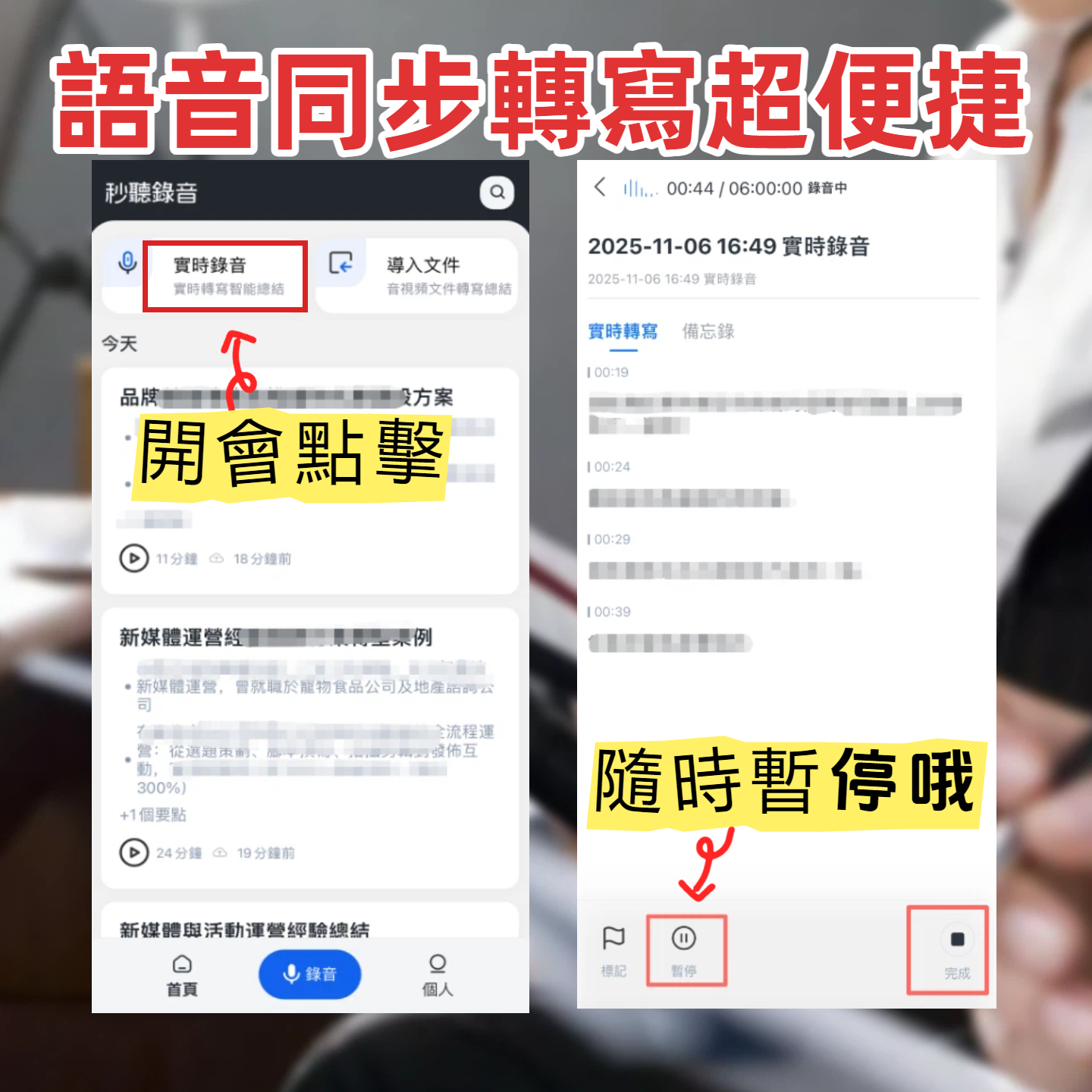
This is almost a daily essential. Open Tinrec, start recording, and text appears synchronously with less than a second delay. During meetings, you can glance at the text to ensure no key info slips through; as soon as the meeting ends, the transcript is ready. For anyone who needs quick meeting minutes, this saves a ton of time.
Audio/Video File Transcription
If you have past recordings—meeting recordings, interview audio, or class recordings—just upload them to Tinrec, and it automatically transcribes them, complete with summaries and chapters. This is especially useful for organizing old materials without having to re-listen to everything.
Stop organizing recordings by hand
Upload audio or video and automatically get a transcript, summary, and action items
Online Video Link Transcription
Sometimes we reference public videos on YouTube or Xiaohongshu, like product demos, tutorials, or speeches. Paste the link into Tinrec, and it extracts the speech, transcribes it, and generates a summary. This is a powerful collection tool for content creators or researchers.
AI Summaries and Action Items Extraction
After recording, Tinrec automatically produces a summary, saving you from having to listen from start to finish. For meetings, it can extract action items from the discussion, listing who needs to do what and by when. This feature is very thoughtful for project executors.
AI Q&A
As mentioned earlier, this is Tinrec's killer feature. Think of it as a queryable database: for any meeting, lecture, or interview, you can ask natural language questions afterward and get direct answers. For those who frequently review past content, this is more intuitive than keyword searches.
Real-World Use Cases
With all these features, you might wonder: when would I actually use this? Here are a few common examples.
Meeting Minutes
This is Tinrec's most intuitive application. While running a Google Meet on your Mac, you can launch Tinrec to record in the background. When the meeting ends, the transcript, summary, and action items are ready—you can immediately organize them into meeting notes to email colleagues or save to Notion.
Lecture Notes
For students or lifelong learners, recording lectures can be a challenge—you record a long session but never find time to re-listen. With Tinrec, not only does it transcribe the audio, but it also automatically breaks it into chapters, effectively creating structured notes that let you quickly jump to key points during review.
Interview Transcription
Interviewers dread spending hours replaying recordings and manually transcribing. Tinrec handles the transcription for you, and allows AI-driven queries afterward to extract key insights or data points from the interviewee, cutting at least half the processing time.
Personal Idea Capture
Sometimes an idea strikes and you quickly record a memo. In the past, those recordings would sit on your phone, never revisited. With Tinrec, you can turn those ideas into text, add summaries, and even link them with other materials, slowly building your own knowledge base.
What to Look For When Choosing a Transcription Tool
If you're evaluating whether to use an external transcription tool, consider these points.
Diverse Input Sources
Many start with meetings, but later realize they need to transcribe a wide range of content—lectures, interviews, online videos, old files. Choosing a tool that supports multiple sources will be more practical in the long run. Tinrec does a thorough job here.
Beyond Transcription: Organization
Getting a transcript is just the first step. The real value lies in summaries, chapters, action items, and even Q&A to extract key points. If a tool only transcribes, you still have to manually sift through the content. Tinrec's post-processing capabilities set it apart from pure transcription tools.
Cross-Platform and Export Flexibility
Your workflow may span multiple devices and services. So whether the tool works on iOS, Android, web, and whether it can export to common formats or sync to Notion, Google Docs, etc., will affect the user experience.
Free Tier Sufficiency
Most people start with the free version. Check the transcription minutes, feature limitations, and whether it's tied to a specific platform. Tinrec's free version offers a basic transcription quota, allowing you to try core features before deciding to upgrade.
Conclusion: Is Tinrec Worth Trying?
Overall, Google Meet's built-in captions are great for in-meeting assistance. But if you want to preserve meeting content long-term, automatically organize key points, or handle audio/video from various sources, Tinrec is a more complete solution.
It not only transcribes but, more importantly, organizes that text into usable data—whether summaries, action items, or direct AI Q&A. For Mac users especially, Tinrec's cross-platform flexibility and output integration will smooth out your workflow significantly.
Try the free version of Tinrec first. Use the monthly quota on your own meeting recordings—experiencing the process from recording to summary will be more telling than any review.
Frequently Asked Questions
What are the limitations of Tinrec's free version?
The free version offers a monthly transcription minute quota, allowing you to experience core features like live recording, file transcription, and online video parsing. If you need more minutes or advanced features, consider a paid plan.
Which platforms does Tinrec support?
Currently, it supports iOS, Android, and web version, so you can use it on Mac via the web, or on your phone.
How accurate is the transcription?
In clear audio environments, Tinrec's transcription quality is quite good, but actual results may vary based on recording quality, background noise, accents, etc. Always review important content against the original audio.
What export formats are available?
Supports common formats like TXT, Word, PDF, and can sync to third-party services like Notion and Google Docs.
Does it support Chinese?
Yes, and it performs well in recognizing and organizing Chinese content, including both traditional and simplified Chinese.
Is my recording privacy secure?
Tinrec uses industry-standard encryption for transmission and storage, ensuring your recordings and transcripts are protected from unauthorized access.
Turn every recording into actionable outcomes
Get 60 free transcription minutes when you sign in. No credit card required.
Related Reading
You might also like

2026 Free Speech-to-Text Solutions: 5 Top Picks
This article rounds up 5 free and paid speech-to-text tools for 2026, from fully free options to professional AI workstations, including Tinrec, Otter.ai, Notta, and more. Get an overview of each tool's highlights and selection tips.

2026 Comparison of 2 Transcription Solutions: From WeChat Voice Memos to AI Workbench
A mid-level manager's real-world test: Say goodbye to WeChat voice memos. Use Tinrec to automatically transcribe meetings, courses, interviews, and more into searchable, summarizable, and exportable text.
2026 Complete Guide to Speech-to-Text: Features, Use Cases, and Tool Selection
Still unsure which speech-to-text tool to choose in 2026? This article dives deep into five key dimensions—recording methods, input sources, AI organizing capabilities, cross-platform support, and cost—to compare the pure-software solution Tinrec with the AI recording hardware Plaud Note, helping you find the right fit.

How to Transcribe Voice Recordings on Your Phone in 2026: A Complete 5-Step Guide (Using Tinrec as an Example)
Learn how to convert phone voice recordings to text with Tinrec (Second Listen Audio) in 5 easy steps—from recording and verbatim transcription to AI summaries and to-do lists. Includes a hands-on tutorial, FAQs, and advanced tips.

Tinrec vs Notta 2026: A 5-Dimension Showdown for Cantonese Users
Meetings all day? Looking for a Cantonese-friendly speech-to-text AI? Which one is the lifesaver for Hong Kong office workers? Our reporter tested five key dimensions to save you the hassle.
2026 Tinrec Desktop Audio-to-Text: Chinese Optimized + Cross-Platform AI Organization
Want to convert audio to text on your computer and also need subsequent organization, summaries, or even Q&A? This article compares two desktop audio-to-text tools, Tinrec and Otter.ai, across 5 dimensions including Chinese recognition, supported sources, and AI features, helping you find the best choice for Traditional Chinese users.
![[Tutorial] 2026 Free Recording-to-Text Software: Organize Meeting Minutes with AI Auto-Summarization](https://record-img.tos-accelerate.volces.com/images/2026/07/26/1785076429989611602.png)
[Tutorial] 2026 Free Recording-to-Text Software: Organize Meeting Minutes with AI Auto-Summarization
A mid-level manager tests 5 free recording-to-text solutions, from AI conversational queries to purely free options, helping you choose the best meeting note tool and save 1 hour of paperwork daily.

Free iOS Speech-to-Text Apps in 2026: Two Options Compared
Looking for a speech-to-text app for iPhone without spending money? We tested two free iOS solutions: Tinrec and Otter.ai, comparing Cantonese recognition, AI summarization, and cross-platform support to see which one saves Hong Kong workers the most time.
2026 Free Speech-to-Text Transcription Tools: 4 Options Compared
Hands-on review of 4 free speech-to-text tools: Tinrec, Otter.ai, Notta, and Yating. Compare free plan limits, pros and cons, and find the best option for Chinese speakers.