

Turn recordings into transcripts and summaries in minutes
Upload audio or video for multilingual transcription, AI notes, and action items
How to Transcribe Voice Recordings on Your Phone in 2026: A Complete 5-Step Guide (Using Tinrec as an Example)
I've tried several apps for transcribing phone recordings before—either the output was full of errors or it only supported English. Some even required expensive hardware. Then I used Tinrec (Second Listen Audio), and finally found one that works: not only does it transcribe Chinese accurately, but it also automatically organizes key points. It's a real time-saver for teams.
Before You Start|What You Need
- A smartphone—iPhone or Android, both supported by Tinrec.
- Download the Tinrec app for free from the App Store or Google Play, and sign in with Google or Apple ID.
- Prepare a recording to transcribe—could be a meeting recording, lecture, or interview file.
- A stable internet connection for real-time transcription. For offline use, download the language pack in advance.
Step 1|Record the Content You Want to Transcribe
The goal of this step is to obtain a clear recording, which is the foundation for all subsequent steps.
Open Tinrec and tap the record button on the main screen to start. Keep your phone close to the speaker during recording—the closer it is, the clearer the audio, and the higher the transcription accuracy. For one-on-one interviews, place the phone between both people; for multi-person meetings, put it in the center of the table.
Why emphasize recording quality? Because AI transcription accuracy depends on audio quality. Even the strongest engines can't handle fuzzy recordings. Rather than spending time correcting errors later, spend an extra 30 seconds positioning the phone correctly during recording.
When done, you'll see the recording on the Tinrec main screen, along with its duration and file size.
Step 2|Let AI Transcribe It into a Verbatim Transcript
After recording, it's time to let Tinrec automatically convert it to text.
In the recording list, tap the recording you just made and select "Transcribe." Tinrec starts processing—it's fast, typically transcribing 1 minute of audio in about 10 seconds. It automatically splits the text into segments and offers a "Speaker Diarization" option, which is great for multi-person meetings.
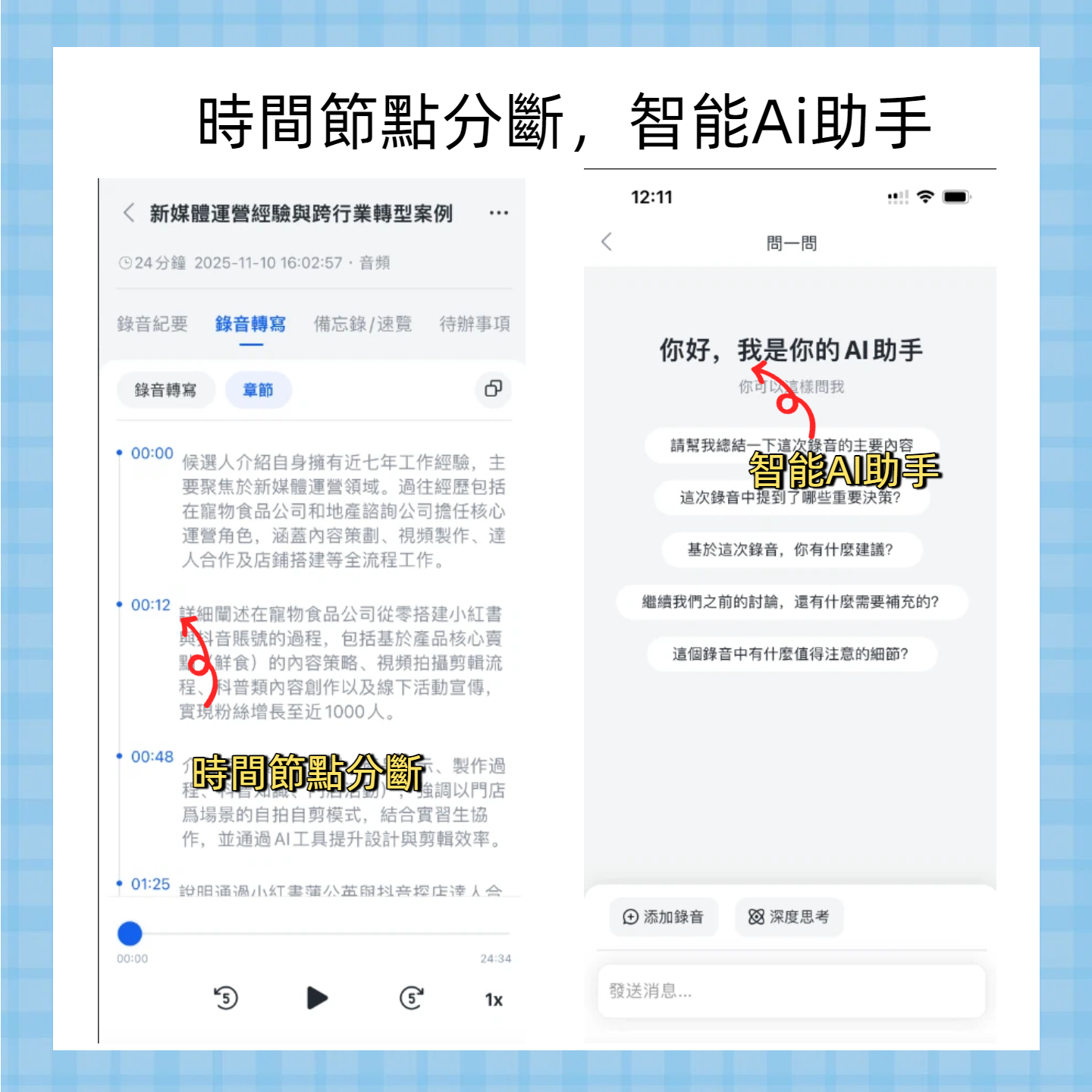
After transcription, you get a verbatim transcript with timestamps. Tap any segment to jump to the corresponding audio position, making proofreading easy.
Step 3|Quickly Proofread the Transcript
AI transcription isn't 100% perfect, but Tinrec's accuracy is quite good with clear recordings. When proofreading, I do the following:
- Quickly scan for obvious typos or missing segments.
- Use timestamps to listen to the original audio for correction, saving time and effort.
- For important meetings, use the "Mark Highlights" feature to highlight key sentences for easy reference later.
Honestly, for most meeting recordings, I only need to correct proper nouns or colloquial phrases, saving at least 80% of the time overall.
Stop organizing recordings by hand
Upload audio or video and automatically get a transcript, summary, and action items
Step 4|Let AI Generate Meeting Minutes
Transcript too long? Tinrec can directly summarize it into a summary and to-do list.
Tap "AI Summary," and it automatically generates a concise meeting overview including the meeting title, participants, discussion points, and conclusions. Then tap "To-Do List," and it extracts "who, when, and what" from the conversation, turning them into an actionable to-do list that can be copied to task management tools.
This feature is really useful for our small team—no need to spend half an hour writing minutes after a meeting.
Step 5|Export and Share
Tinrec can export the processed text and summary in multiple formats: TXT, Word, PDF, or even sync directly to Notion, Google Docs, or Dropbox. This way, it integrates into your existing workflow.
Tap Export, choose your format and cloud service, authorize, and it syncs automatically. Very convenient.
FAQs and Troubleshooting
Q: The transcribed text has many errors. What should I do?
It's usually due to a noisy environment or being too far from the speaker. Tinrec has built-in smart noise reduction—enable it in settings before recording. If you're using an existing recording, you can manually select the "High Noise Environment" mode after uploading. Most transcription tools don't offer this option.
Q: When multiple people are speaking, the speakers can't be distinguished. What should I do?
Tinrec has a "Speaker Diarization" feature. Although not 100% accurate, it works well in typical meetings. If you're using the free version, you can manually label speakers.
Q: Can I use it with an unstable internet connection?
Real-time transcription requires internet, but you can record offline first and upload for transcription when connected. Alternatively, download offline language packs for Chinese and English offline transcription.
Advanced Tips|3 Ways to Double Your Efficiency with Tinrec
Ask the AI directly about recording content
Beyond summaries, you can ask Tinrec directly, "What was the budget figure discussed in the last meeting?" and it will find the relevant segments from the recording. Competitors like Otter have this feature too, but Tinrec's Chinese comprehension is better.Transcribe online video links directly
Paste a link from YouTube, TikTok, or Xiaohongshu, and Tinrec will parse it into a verbatim transcript and summary. This is super convenient for content research. Notta has a similar feature, but Tinrec offers more comprehensive support for Chinese videos.Cross-platform sync for seamless transition between phone and computer
Record on your phone, and it's immediately viewable on the web version on your computer, where you can also edit. This saves me the hassle of transferring files, as I often move between the office and meetings outside.
If You Don't Use Tinrec, Here Are Other Options
- Notta: Similar features and decent transcription quality, but higher monthly fees and less direct support for online videos compared to Tinrec. Suitable for teams that already need a meeting bot.
- Otter.ai: Strong in English meetings, but Chinese transcription is less than ideal, and the free plan offers fewer minutes. If you primarily handle English meetings, give it a try.
But if you're a Chinese-language user covering various scenarios like meetings, lectures, and videos, Tinrec remains the most cost-effective choice at the moment.
Conclusion
After learning these 5 steps, you can now use Tinrec to turn your phone recordings into verbatim transcripts, auto-generated meeting minutes, extracted to-do lists, and even query key points through AI chat. Next step: download the free version of Tinrec and try it with one of your own recordings. The free monthly allowance is enough for a few meetings. That's it—recommend you give it a try.
Turn every recording into actionable outcomes
Get 60 free transcription minutes when you sign in. No credit card required.
Related Reading
You might also like

2026 Free Speech-to-Text Tools Comparison: Which One Saves Your Lecture Notes?
Tinrec and Otter are two popular free speech-to-text tools. This comparison tests their performance in common student scenarios like Chinese lectures, online video transcripts, and AI summaries to help budget-conscious college students choose the best option.
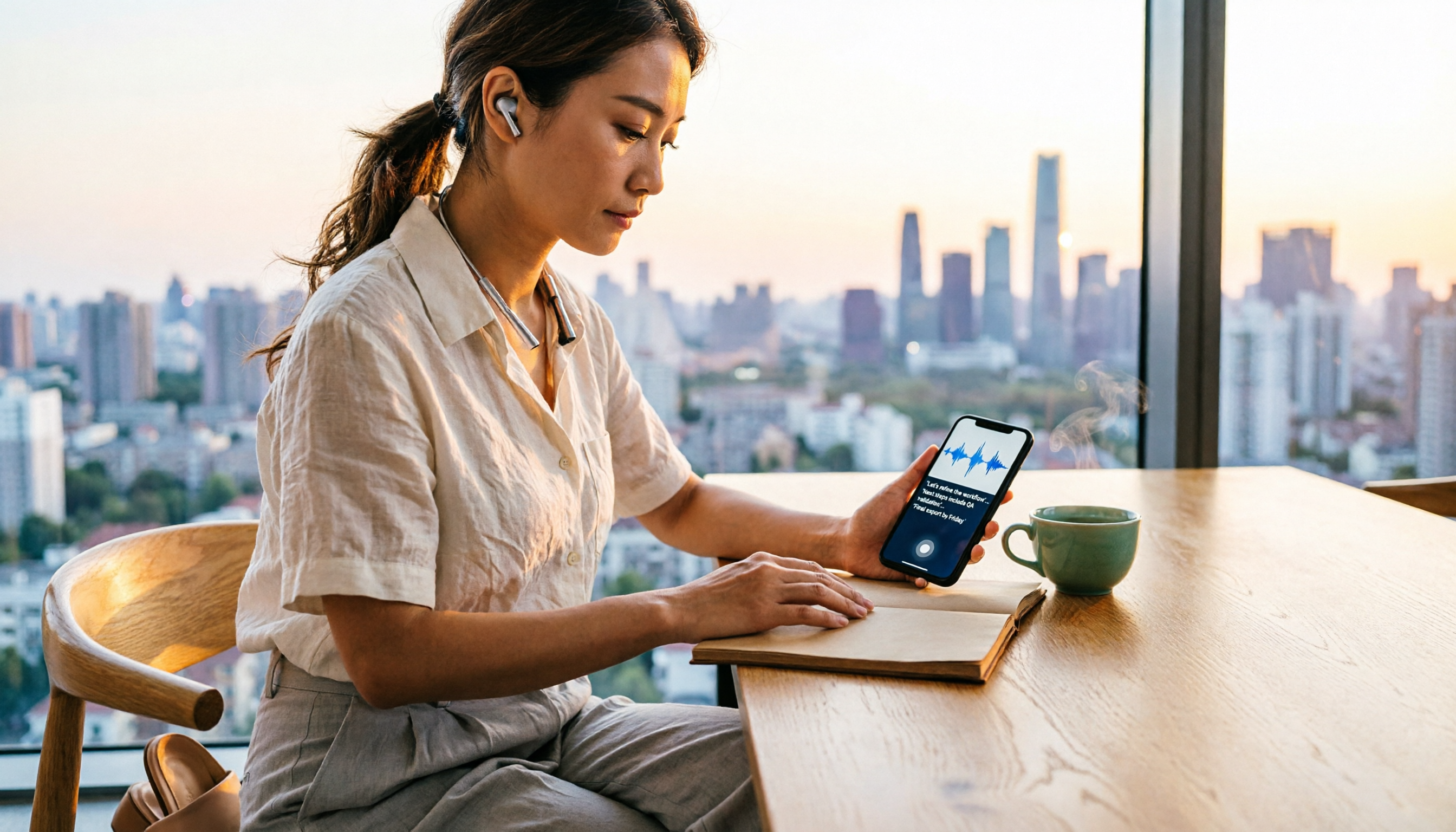
2026 Complete Guide to Speech-to-Text: A 5-Step Tutorial to Cut Your Organizing Time by 80%
This is a practical tutorial on converting audio to text, demonstrating 5 steps with Tinrec: recording, transcription, proofreading, meeting minutes generation, and exporting. It helps middle managers and professionals save a lot of organizing time.

2026 Tinrec Audio-to-Text Review: Free Online, AI Summary, Notta Alternative
Hands-on test of Tinrec’s free online speech-to-text tool. Accurate transcription, AI-powered summaries, Q&A, and export options. Better than Notta for multi-source audio/video. Free basic quota per month, perfect for small teams and solopreneurs.

How to Convert Audio to Text in 2026: A Complete 5-Step Guide
Choosing the right audio-to-text tool? This article compares Tinrec and PLAUD NOTE across five key dimensions—price, use cases, organization, cross-platform support, and AI features—to help you pick the best solution for your workflow.

2026 5 Best Voice-to-Text Apps for Android: A Smart User's Guide
A comprehensive comparison of 5 Android voice-to-text tools, covering free and paid plans, to help you quickly find the right AI transcription assistant.

2026 Free Speech-to-Text Solutions: 5 Top Picks
This article rounds up 5 free and paid speech-to-text tools for 2026, from fully free options to professional AI workstations, including Tinrec, Otter.ai, Notta, and more. Get an overview of each tool's highlights and selection tips.

2026 Comparison of 2 Transcription Solutions: From WeChat Voice Memos to AI Workbench
A mid-level manager's real-world test: Say goodbye to WeChat voice memos. Use Tinrec to automatically transcribe meetings, courses, interviews, and more into searchable, summarizable, and exportable text.
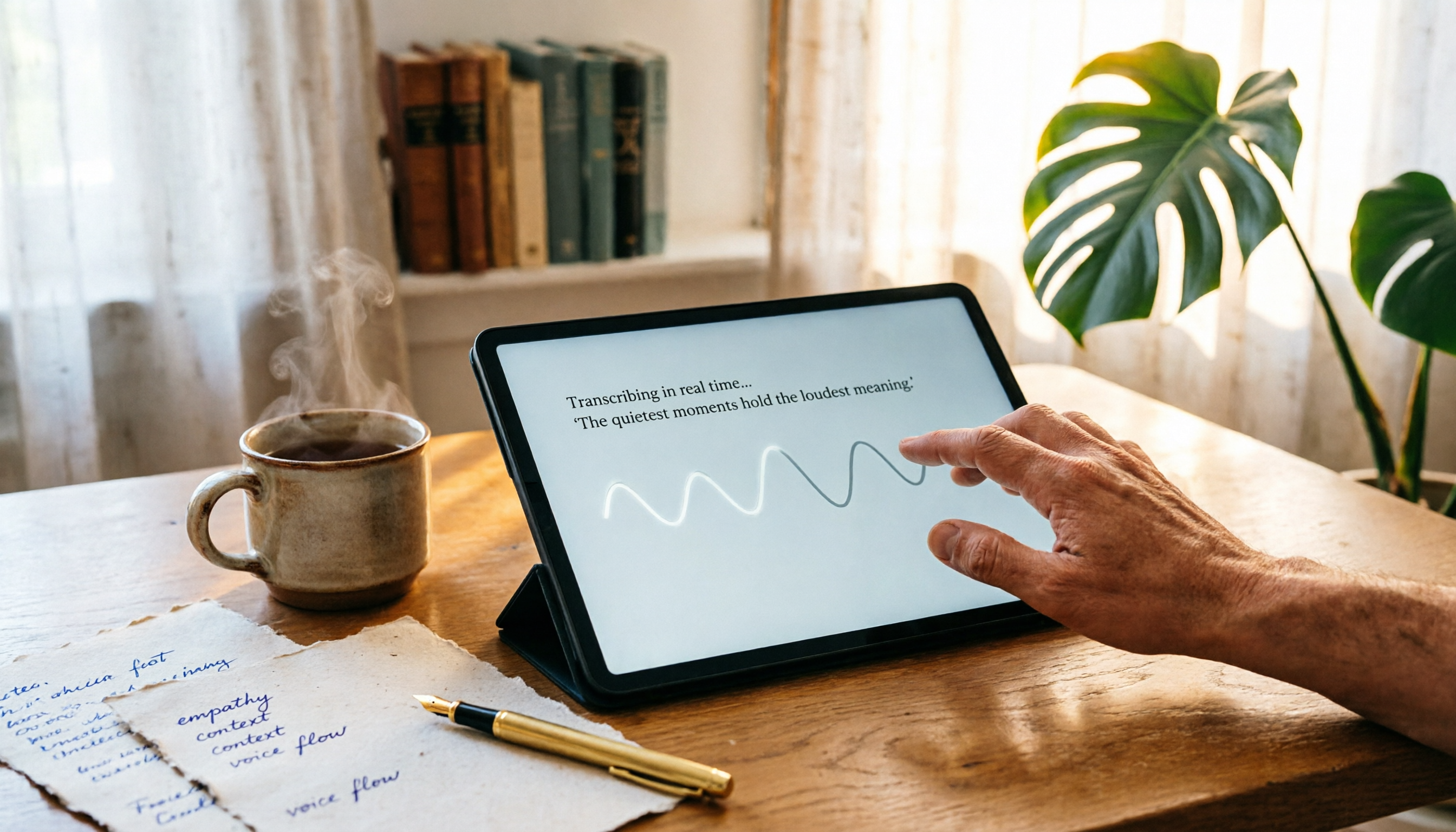
2026 Complete Guide to Speech-to-Text: Features, Use Cases, and Tool Selection
Still unsure which speech-to-text tool to choose in 2026? This article dives deep into five key dimensions—recording methods, input sources, AI organizing capabilities, cross-platform support, and cost—to compare the pure-software solution Tinrec with the AI recording hardware Plaud Note, helping you find the right fit.

Tinrec vs Notta 2026: A 5-Dimension Showdown for Cantonese Users
Meetings all day? Looking for a Cantonese-friendly speech-to-text AI? Which one is the lifesaver for Hong Kong office workers? Our reporter tested five key dimensions to save you the hassle.