
Turn recordings into transcripts and summaries in minutes
Upload audio or video for multilingual transcription, AI notes, and action items
2026 Comparison: Otter.ai vs Tinrec for Google Meet – Which AI Saves More Time and Money?
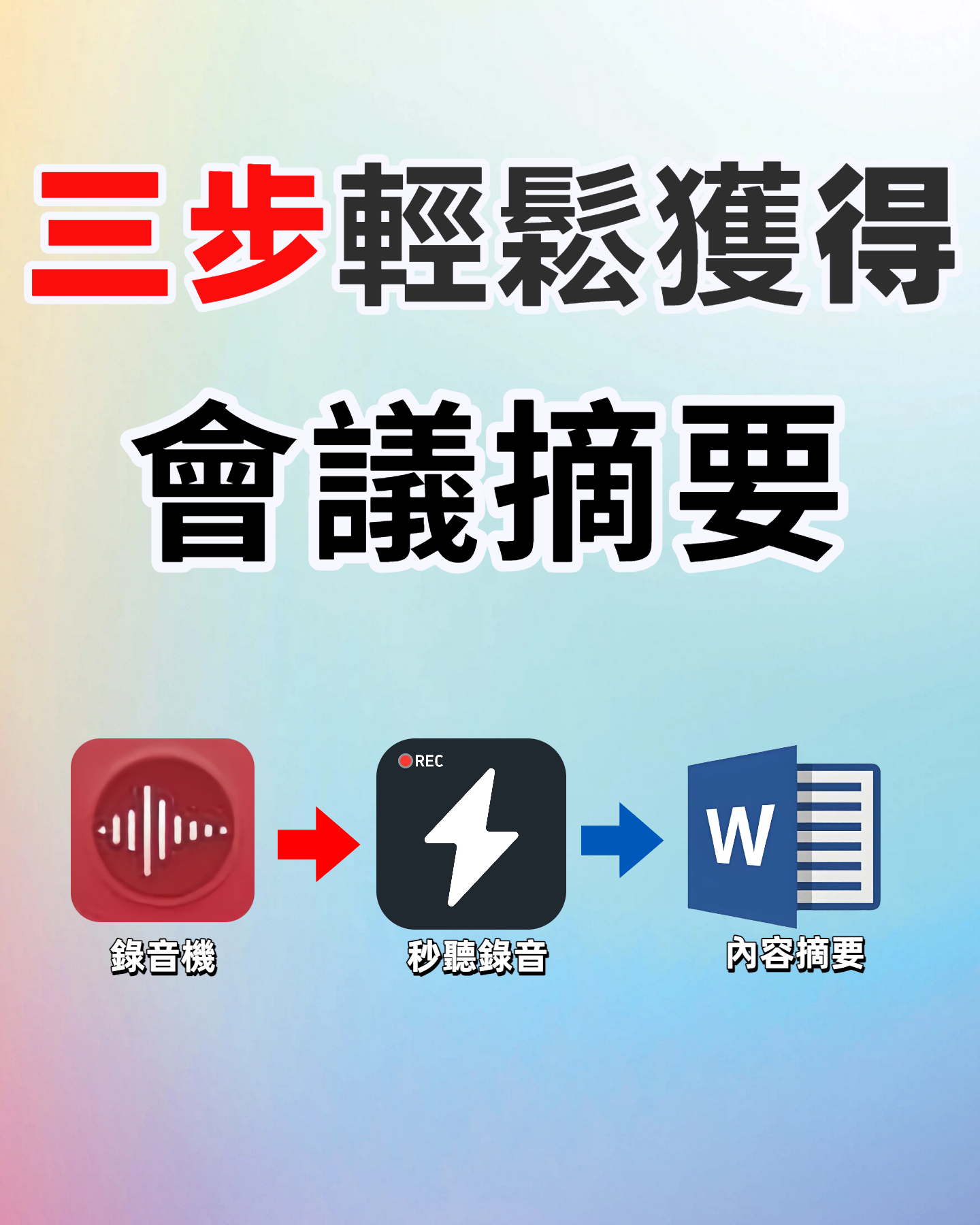
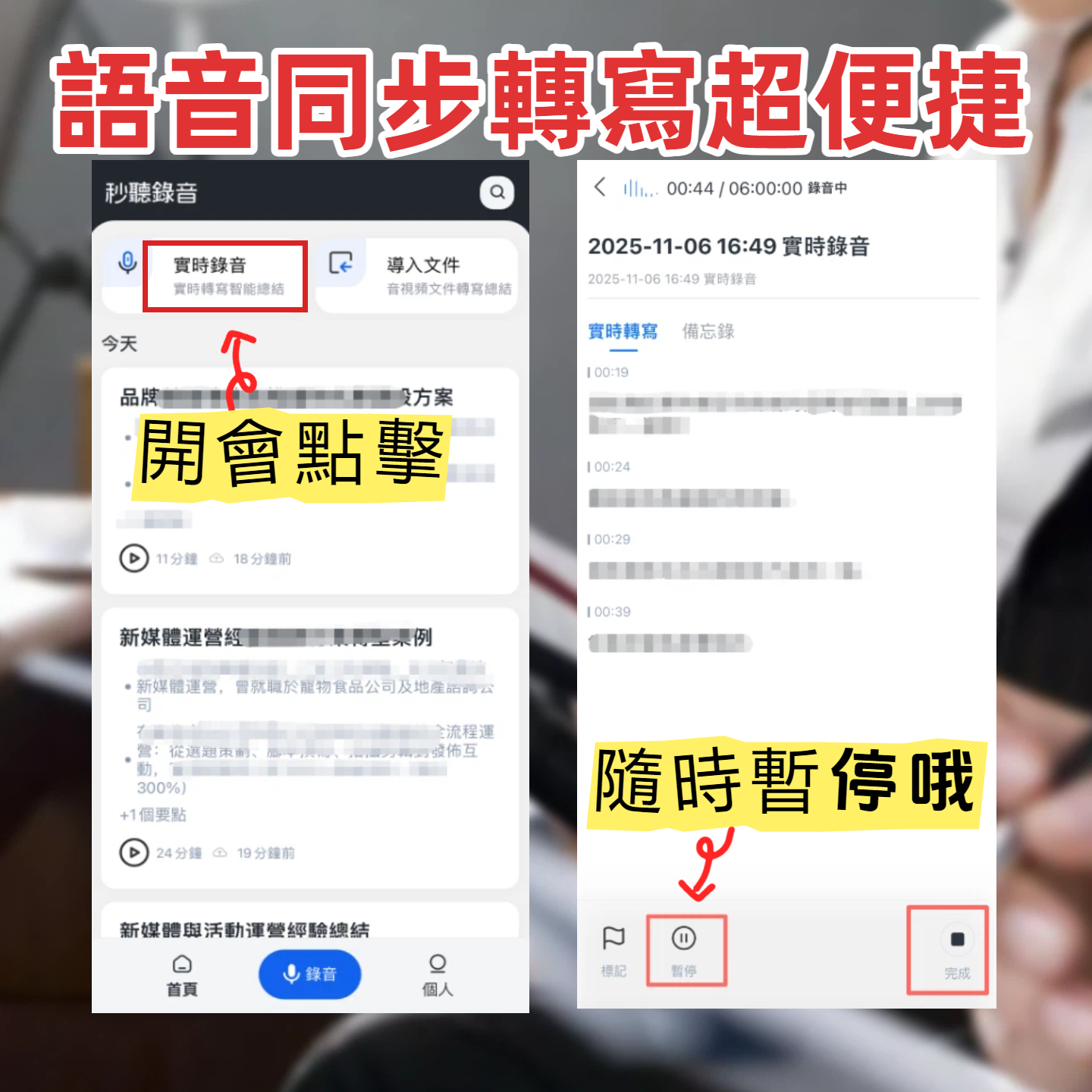
I have about 15 meetings a week, half of them on Google Meet. What I used to dread most wasn’t the meetings themselves—it was what came after. Every meeting had a pile of decisions and action items, so my work really began when the meeting ended. I tried Google Meet’s built-in transcription, but accuracy was mediocre and searching was clunky. A colleague recommended Otter.ai; its automatic meeting join was great, but when I needed to transcribe lectures, YouTube interviews, or Chinese client meetings, it fell short. Later, my team switched to Tinrec, and after three months, our note-taking time has been cut in half. In this article, I’ll break down these two tools across five dimensions based on my real experience, helping you decide which is better for a busy professional with many meetings and even more tasks.
Tinrec vs Otter.ai|Quick Overview
Otter.ai is a popular AI meeting note tool, excelling at automatically joining online meetings (Google Meet, Zoom, etc.), real-time transcription, speaker labeling, and generating meeting summaries. Tinrec takes a broader approach, positioning itself more as an "audio/video data processing workstation"—it can handle meetings, lectures, interviews, and online videos, converting them into usable data. Both support iOS, Android, and web versions, but they differ significantly in Chinese content handling, AI post-processing, and pricing flexibility. Below is a comparison across five key practical dimensions.
Dimension 1|Input Source Diversity
Otter.ai's core is online meetings: it supports auto-join for Google Meet, Zoom, and Teams, and allows manual upload of audio files (Pro: 10 files/month). However, it doesn't support pasting YouTube or Xiaohongshu links for direct parsing, nor does it have batch import for local recordings. If you attend lectures, listen to industry podcasts, or need to transcribe interview videos, you’ll hit a wall.
Tinrec not only supports live recording and file upload but also lets you paste online video links (YouTube, Bilibili, TikTok, Xiaohongshu, etc.); the system automatically fetches the audio, transcribes it, and provides a summary. In practice, I use the same app to transcribe a Google Meet recording and an industry analysis video I watched that day—all content is centralized in one database.
→ This dimension: Tinrec clearly wins, more practical for professionals dealing with multiple audio/video sources.
Dimension 2|Chinese Transcription & Summarization
Otter.ai supports Chinese and performs decently in quiet environments with standard accents, but error rates rise significantly with code-switching (Chinese-English mix), group discussions, or Taiwanese colloquialisms. I tested the same 30-minute Chinese project meeting recording (Google Meet, moderate speed, no noise) on both: Otter’s verbatim transcript required heavy proofreading, and professional terms like "OKR progress" or "retro meeting" were often misrecognized.
Tinrec’s Chinese optimization is noticeable: it handles mixed language segments more accurately, and colloquial phrases (e.g., "先跑一下" as "run it first") and Taiwanese expressions (e.g., "這塊我來追" as "I'll follow up on this") are natural and rarely need fixes. For Taiwanese teams transcribing multiple Chinese meetings weekly, this difference directly impacts proofreading time.
→ This dimension: Tinrec clearly wins in Chinese recognition and usability.
Stop organizing recordings by hand
Upload audio or video and automatically get a transcript, summary, and action items
Dimension 3|AI Post-Processing & Reusability
Otter.ai automatically generates summaries, keywords, and action items after meetings, and offers AI Chat to ask about meeting content. That’s sufficient for simple meetings, but lacks flexibility when you need to turn meeting conclusions into reports, presentation outlines, or revisit old recordings from two months ago.
Tinrec’s post-processing is more comprehensive: besides summaries, it auto-chapters, highlights key points, extracts action items, and even generates mind maps. My most used feature is AI Q&A—like chatting with your own database—just ask "What was the budget cap discussed with the client last time?" and the system retrieves relevant segments from historical recordings. The advanced Agent mode can generate formal meeting minutes, draft reports, or tables with one click, saving formatting time.
→ This dimension: Tinrec wins significantly, turning recordings into truly reusable knowledge assets.
Dimension 4|Pricing & Cost
Otter.ai’s free plan offers 300 minutes of transcription per month, suitable for light users. The Pro plan (annual billing) is about $8.33/month, with 1,200 minutes and 10 file imports per month. If you have high meeting volume and a team, you’ll need the pricier Business plan.
Tinrec’s pricing is different: the free plan includes basic transcription credits so you can test it. Then it offers weekly, monthly Pro, and yearly Pro passes. The weekly pass is great for short-term project crunches without committing to a full month; the yearly pass gives the lowest monthly cost. Overall, Tinrec offers better pay-as-you-go flexibility, friendlier for budget-conscious managers with fluctuating needs.
→ This dimension: Tinrec edges ahead in plan flexibility and scenario fit. However, for heavy English meetings and large teams, Otter.ai’s team plans still have strengths. From a typical mid-level manager’s perspective, Tinrec is more cost-effective.
Dimension 5|Cross-Platform Support & Offline Use
Both apps support iOS, Android, and web, covering major devices. In practice, Otter’s web interface is more mature, with robust search and collaboration features, but its core experience centers on online meetings—unstable internet can interrupt transcription.
Tinrec’s mobile interface feels more like a personal workstation; you can record offline and upload for transcription when internet is available, ideal for mobile meetings, factory inspections, or conference rooms with poor connectivity. This is handy for those who frequently work on the go or need to capture ideas anytime.
→ This dimension: Even match, but Tinrec’s offline recording offers extra peace of mind in real-world scenarios.
Unique Advantages of Each
Tinrec’s Unique Strengths
- One-stop processing for multiple audio/video sources: Online videos, local files, online meetings, and live recordings all in one workflow—no separate tools needed for course notes or interview transcripts.
- AI Q&A and post-processing generation: Beyond summaries, query historical content like asking a colleague, and auto-generate reports, meeting minutes, tables, etc.
- Better fit for Chinese usage: More stable recognition of Taiwanese meeting language, code-switching, and colloquial expressions, greatly reducing editing time.
- Flexible, scenario-based pricing: Choose weekly, monthly, or yearly passes; no need to pay long-term for short-term needs, ideal for cost-conscious managers.
Otter.ai’s Unique Strengths
- Deep integration with Google Meet and Zoom: Automatic join, transcription, and sharing with the team—seamless in English-heavy meeting environments.
- Strong team collaboration foundation: Shared folders, comments, task assignments, suitable for cross-department or large teams.
Summary: Which One Should You Choose?
- If you need to centralize Google Meet meetings, online courses, interview videos, and web content → Tinrec (most comprehensive input sources)
- If your meetings are primarily in Chinese and you’re tired of fixing transcripts → Tinrec (noticeable upgrade in Chinese recognition)
- If you want more than just transcription—AI summaries, chapters, action items, and report generation → Tinrec (richer post-processing)
- If your meeting volume varies and you want pay-as-you-go → Tinrec (flexible weekly/monthly plans)
- If your environment is all-English meetings with large teams needing strong collaboration → Otter.ai’s team plans work better
In a nutshell: For most professionals dealing with a mix of meetings, courses, and interviews, Tinrec is the choice that turns recordings into productivity. Download the free version and test it with your own Google Meet meeting or an interview to feel the joy of not having to manually organize notes after a meeting.
Turn every recording into actionable outcomes
Get 60 free transcription minutes when you sign in. No credit card required.
Related Reading
You might also like
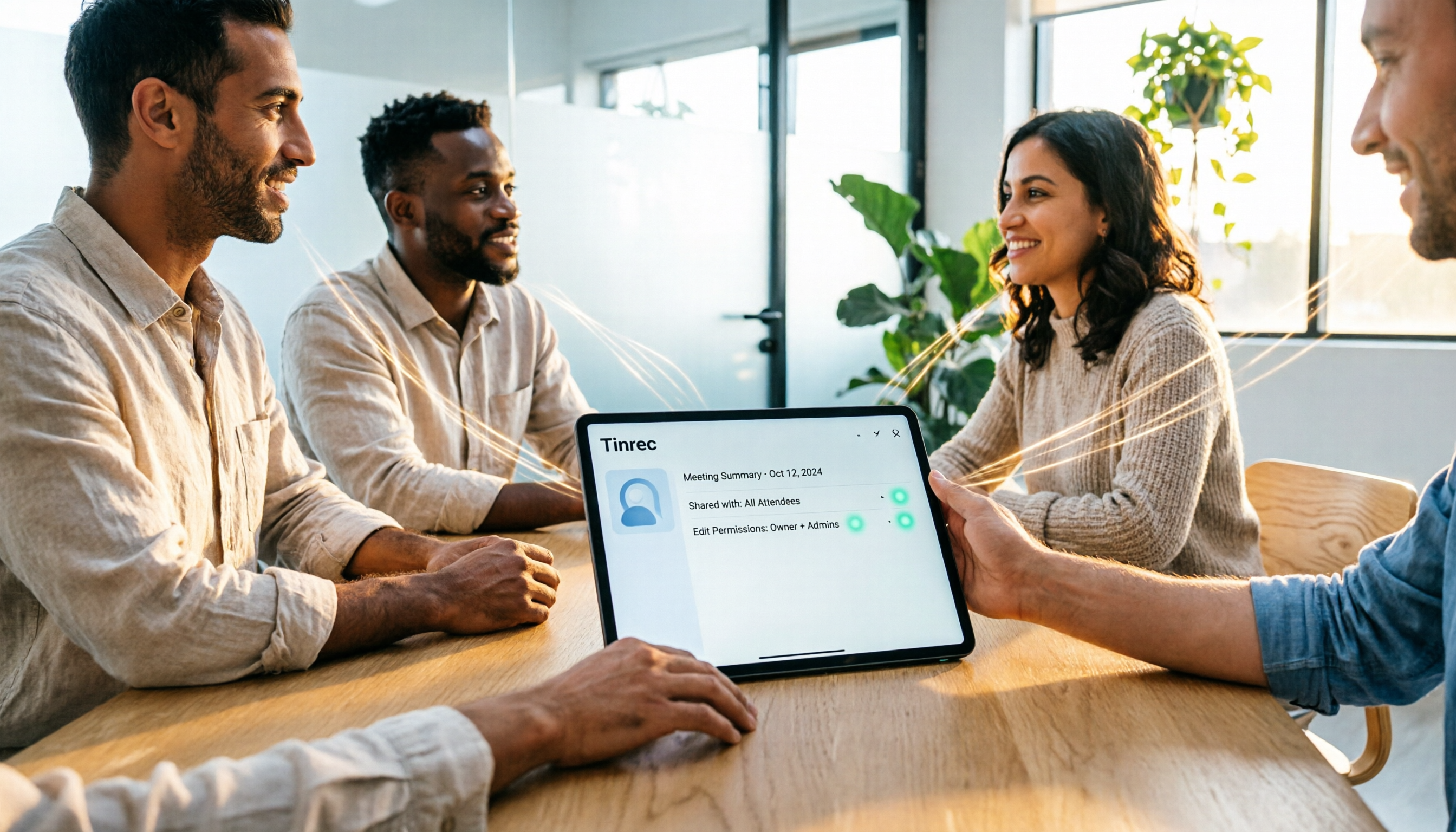
2026 Comparison of 4 Meeting Transcription Tools: Who Does Permission Management Best?
Who should see meeting notes? This article examines four key points—roles and seats, team-level sharing, data ownership after member departure—and compares the permission management designs of Tinrec, Otter.ai, Fireflies.ai, and Granola, plus four common pitfalls to help you think clearly before adoption.

2026 Comparison of 4 Tencent Meeting AI Notes Alternatives: Which Handles Bot-Free Recording and Post-Meeting Q&A Best?
Tencent Meeting's built-in AI notes are sufficient for single-platform users, but when meetings span Zoom, Meet, and Teams, or when you need to process client-sent audio files, the issue isn't accuracy—it's whether the tool can handle all your sources. This article uses the same set of meeting materials to test four approaches, comparing input sources, recording methods, post-meeting Q&A, and team data retention, and highlights the three most common mistakes when choosing a tool.

2026 Tinrec Meeting Data Governance Tutorial: Bot-Free Recording + Team Data Retention
After the meeting ends, does the data really stay? This article starts from the decision-making focus of 'meeting data governance,' guiding you through four key decision points. It tests Tinrec's bot-free recording, AI Q&A, and team space, compares the applicable scenarios of Otter.ai, Notta, and Granola, and includes a pitfall avoidance guide and a quick-start checklist.

Tinrec Personal vs Team Space: What's the Difference? 2026 Comparison
What's the difference between Tinrec Personal and Team Space? This article compares data ownership, sharing permissions, member seats, usage governance, and real-world scenarios to help you decide whether to use Personal or Team.

Tinrec vs Notta 2026: 5-Factor Comparison for Enterprise Meeting Data Management
Enterprise meeting data is scattered across recordings, chat rooms, and personal laptops. Which tool should you choose to centralize management? This article compares Tinrec and Notta across 5 key purchasing dimensions, with brief reviews of Otter.ai and Granola, to help you find the best solution for your team's meeting assets.

2026 AI Meeting Agent Guide: How Tinrec Turns Meetings into Searchable, Actionable Data
A hands-on guide to AI meeting agents for college students. It starts with common pitfalls, explains why meeting bots or transcripts alone aren't enough, and compares Tinrec with Otter, Notta, and Granola on meeting capture, Chinese recognition, AI Q&A, recording retention, and free tiers. It also covers practical uses for lectures, group discussions, project interviews, and internship meetings.

2026 Comparison of 4 Meeting Notes Tools: Which One Has the Best Team Audit Logs?
From team audit logs and seat management to Chinese meeting transcription, we compare Tinrec, Otter, Fireflies, and Notta to help you find the best meeting notes tool for team governance.
2026 Comparison of 4 Meeting Data Sharing and Governance Tools: Which One Can Truly Turn Meetings into Team Assets?
Sharing meeting data is not the same as governing it. This article starts with the most common sharing pitfalls teams encounter, outlines four key purchasing criteria: data ownership, roles and seats, post-meeting outputs, and retention and recovery. It tests Tinrec and compares it with Otter.ai, Notta, and PLAUD to help you determine which tool can truly turn meetings into usable team data.

2026 Meeting Audio Recycle Bin Guide: Recover Deleted Recordings Within 30 Days + Handover When Team Members Leave
Can deleted meeting recordings really be recovered? This guide starts with three common misconceptions, explains how a meeting audio recycle bin works, retention periods, and team data handover considerations. It also compares Tinrec, Granola, Otter.ai, and PLAUD in terms of audio file retention and post-meeting organization, with 4 key buying tips to avoid pitfalls.