

Turn recordings into transcripts and summaries in minutes
Upload audio or video for multilingual transcription, AI notes, and action items
More than half of my weekly meetings happen on Google Meet, and I mostly use a Mac.
Initially, I thought taking meeting notes was just about listening carefully and typing. But what really broke me was a two-hour project meeting—everyone taking turns reporting progress, the boss changing directions on the fly. I tried to listen and type notes at the same time, but I couldn't keep up with the discussion. By the end of the meeting, my notes were just a mess of fragmented keywords.
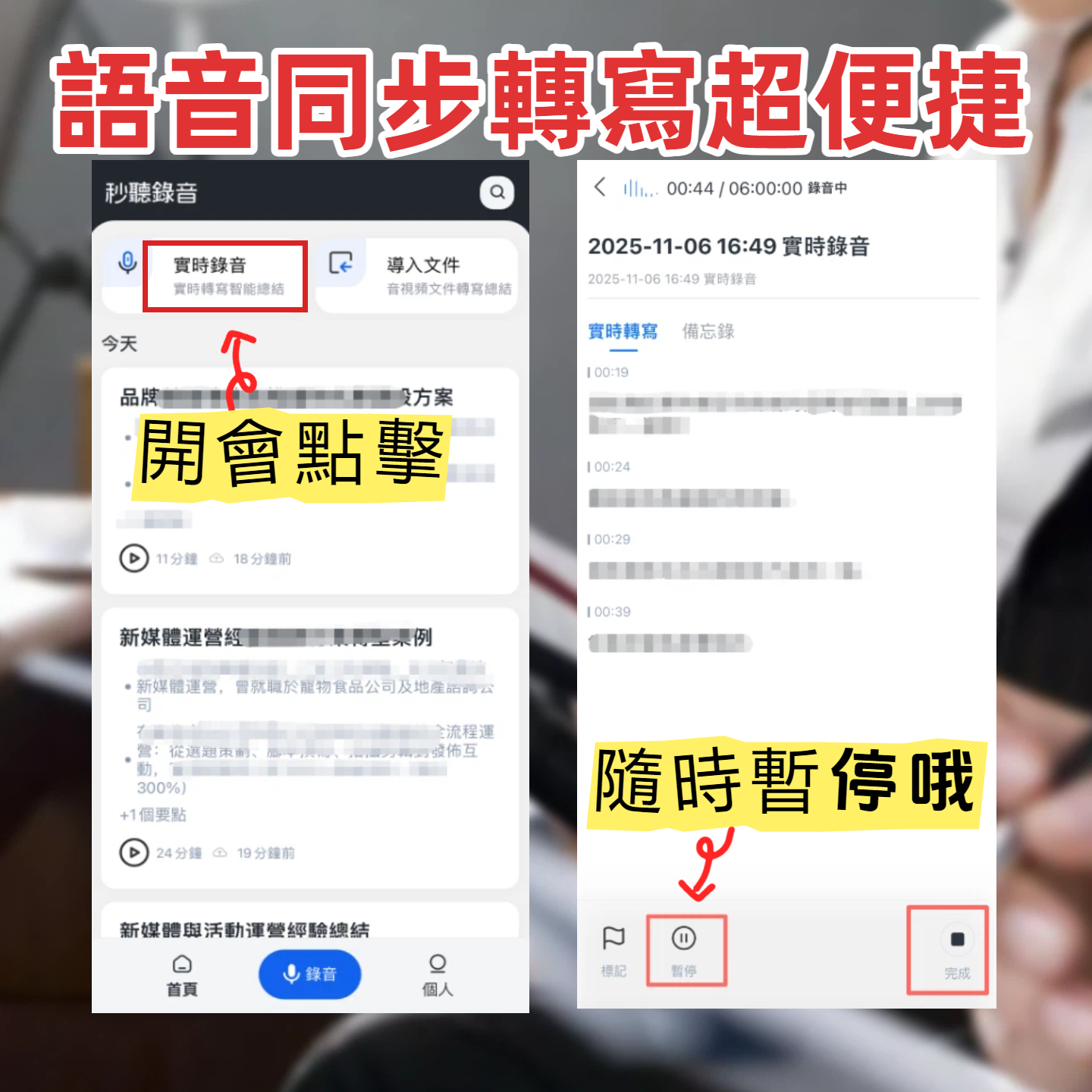
That's when I thought: There must be a smarter way to take notes on Google Meet for Mac.
So I started trying various recording and note-taking tools—from meeting bots to transcription software, until I settled on my go-to method. This article is my complete thought process for choosing a Google Meet recording and note-taking tool on Mac.
What Can Google Meet Recording & Note-Taking Do for You?
Before diving into tools, I think it's more important to ask: What problem does "recording and note-taking" actually solve?
Scenario 1: Get Meeting Notes 5 Minutes After the Meeting
In the past, after a two-hour meeting, you'd spend another hour replaying it and summarizing key points. Now, with AI recording and note-taking tools—take Tinrec for example—by the time the meeting ends, the AI has already generated a summary, conclusions, and action items, clearly showing who is responsible for what and the deadlines.
(This is the meeting minutes automatically generated after I recorded a Google Meet meeting with Tinrec in real time. Key points and action items are all organized.)
Scenario 2: Quickly Find Information Without Re-listening to the Recording
Have you ever had this experience: You remember someone mentioned a budget figure in a meeting a week ago, but you can't find it after flipping through your notes for ages?
Tinrec's AI conversation search lets you directly ask the recording: "Who mentioned the budget in the meeting?" "What was the client's feedback?" It understands the semantics and gives you the answer along with the timestamp.
(I use this feature often—after a meeting, I ask follow-up questions on key topics, which is much faster than going through the transcript myself.)
Scenario 3: Turn Past Meetings into a Searchable Knowledge Base
Last month's product meeting, last week's client presentation—if those recordings just sit on your hard drive, you'll never use them again. But Tinrec lets you store all your Google Meet recordings as text files, so you can search for any meeting content with keywords later.
Core Capabilities of Google Meet Recording & Note-Taking Tools
When I started treating recording and note-taking as a "work method," I realized that tools on the market vary widely in capability. Here are the four core capabilities I consider essential, illustrated with Tinrec's actual operation.
1. Real-Time Transcription: Text Appears as the Meeting Happens
It doesn't transcribe after recording; instead, text syncs in real time during the meeting. Tinrec's real-time transcription has a delay of less than one second. When I'm on a Google Meet meeting on my Mac, I can glance at the text to make sure I haven't missed key points, and even quickly mark important sections during pauses in conversation.
2. AI Semantic Summarization: Structured, Not Just Condensed
Many tools give you a "summary" that's just a few condensed sentences from the transcript. But Tinrec structures it: meeting topic, discussion conclusions, action items, and responsible persons are listed separately. That's what you can actually use to assign tasks and send to colleagues.
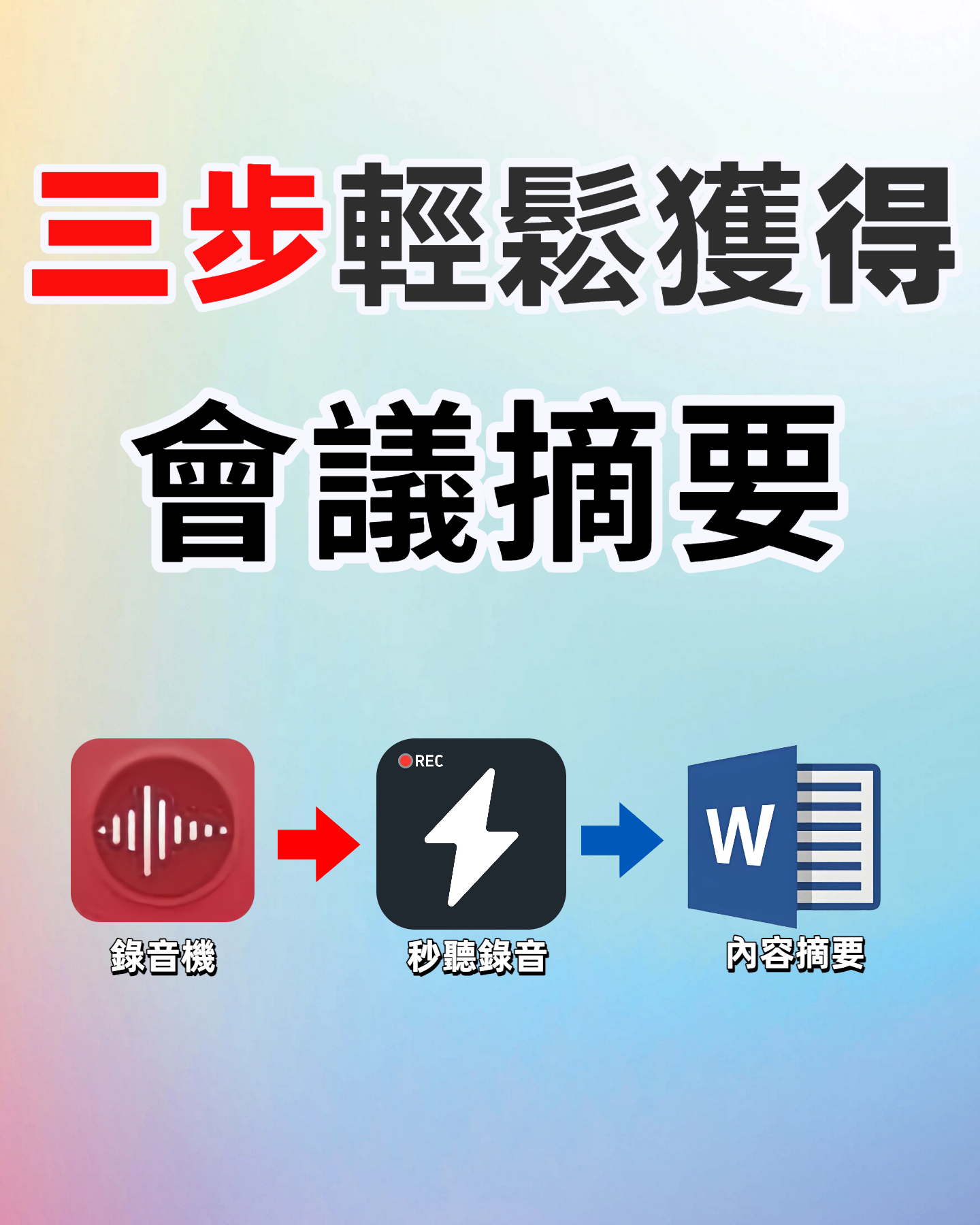
(This is the result of organizing a product discussion. Ann needs to complete the design draft by next week, and Wen is responsible for contacting suppliers—clear and straightforward.)
3. AI Conversation Search: Ask Your Recording Like a Colleague
After transcription is complete, you can open a chat dialog with Tinrec and ask any question about the meeting. For example: "What marketing budget was discussed in this meeting?" "Was there any mention of competitors?" It answers based on semantic understanding, not just keyword search.
Stop organizing recordings by hand
Upload audio or video and automatically get a transcript, summary, and action items
4. Cross-Platform and Post-Processing
I often take meetings on my Mac, but after the meeting I might need to quickly check key points on my phone. Tinrec has iOS, Android, and web versions, with all data synced to the cloud. Plus, it doesn't stop at a transcript—you can export the organized meeting notes and action items to Notion, Google Docs, or OneNote, seamlessly integrating with your existing workflow.
Real-World Use Cases
Next, I'll use three real scenarios of my own to show how Tinrec fits into the Google Meet meeting workflow.
Scenario 1: Project Sync Meeting → Auto-Generated To-Do List
In weekly team sync meetings, the most time-consuming part isn't the discussion itself, but organizing "who does what" afterward. Now, at the start of a meeting, I use Tinrec's real-time recording feature while also capturing system audio on my Mac to ensure all Google Meet audio is recorded.
When the meeting ends, Tinrec not only provides a complete meeting summary but also automatically extracts a to-do list with each task tagged with assignee and timestamp. I just copy and paste it into the team's Slack channel, and the job is done.
Scenario 2: Client Requirements Interview → Ask Key Points with AI
Client requirements raised during Google Meets are often mixed in with small talk and details. Before, I had to listen and frantically take notes, often missing key information.
Now, I record the entire interview with Tinrec. Back at my desk, instead of rushing to write meeting notes, I open the AI chat and ask: "What budget constraints did the client mention?" "What was their top concern?" Tinrec answers directly from the transcript, and I integrate those key points into the client presentation.
Scenario 3: Remote Course Recording → Turn Recordings into Study Notes
I sometimes attend online professional courses where the instructor talks for two hours on Google Meet, packed with content. Before, I could only rely on pausing the screen to take screenshots; there was no way to both understand and take notes.
Tinrec's real-time transcription and chapter organization let me have text notes generated as I listen. After class, I can directly view the AI-organized chapter outline and quickly jump to the sections I want to review.
4 Things to Watch When Choosing a Google Meet Recording & Note-Taking Tool
After trying multiple tools, I've summarized four key points to keep in mind when selecting one.
1. Check Stability on Google Meet for Mac
My first instinct was to find a bot that could "auto-join meetings." But after trying several, I found that some meeting bots on the Mac browser version of Google Meet often fail to join, require specific plugins, or conflict with company security policies.
Tinrec takes a different approach: It's not a bot; instead, it lets you directly record Google Meet audio via system audio or microphone on your Mac. This method is highly compatible, working whether you're using Chrome, Safari, or even through a company VPN, with no connection failures.
2. Does It Really Help You "Organize" Content After Transcription?
Some tools are great at transcription, but they just produce a long wall of text that you still have to read and summarize yourself. That doesn't save time.
Beyond transcription, Tinrec offers AI summaries, action item extraction, and conversation search. These three features are what I think make it truly worthwhile—because it doesn't just "turn speech into text"; it "turns speech into immediately actionable information."
3. Accuracy for Chinese Meetings: Don't Just Trust Official Numbers
I've used some highly rated transcription tools internationally, but their performance on Chinese meetings—especially those mixing Chinese and English—was not as expected. If you primarily have Chinese meetings, you need to test this specifically.
Tinrec handles Chinese content noticeably better. Not only is the error rate lower in the transcript, but the AI summary also uses language that matches our common work vocabulary, like "action items," "responsible person," "deadline"—the terms you'd expect in meeting minutes.
4. Meeting Notes Must Be Portable, Not Locked in the App
After organizing meeting notes, you ultimately need to send them to colleagues, archive them in Notion, or store them in Google Drive. If the tool can't export, or only exports in a weird format, all the previous work is wasted.
Tinrec supports multiple export formats and can even sync directly to Notion, Google Docs, OneNote, and Dropbox. This is crucial for me because my workflow is: meeting notes → Notion project page → team weekly review, all seamlessly connected.
Frequently Asked Questions
Q: Does recording Google Meet with Tinrec on Mac affect meeting audio quality or network?
A: No. Tinrec captures audio via system audio or microphone, operating independently from your speakers and headphones during the meeting. It doesn't interfere with Google Meet's transmission. I've used it for weeks without any audio conflicts.
Q: Is the free version sufficient? Will I run out quickly?
A: The free plan includes a basic monthly transcription quota. For 2-3 meetings per week, each around 30 minutes, it's usually enough. If you have many meetings or courses coming up, consider a weekly plan instead of paying for a full year.
Q: Can I upload past Google Meet recordings for processing?
A: Yes. Tinrec supports uploading local audio or video files. You can upload recordings made with QuickTime or Google Meet's built-in recording feature, then transcribe and generate summaries.
Q: How is it different from meeting bots like Otter or Fireflies?
A: Meeting bots excel at "automatically joining online meetings." But if you primarily use Google Meet and often encounter connection issues or prefer not to let a bot join, Tinrec's system recording method is much simpler. Plus, it's not limited to meetings—I also use it for course recordings, YouTube videos, and interview materials.
Summary
Looking back, what I needed when using Google Meet on my Mac was not a more powerful "voice recorder," but a method to instantly turn meeting content into an action plan.
For me, Tinrec is more than a tool—it changed my perspective on "meeting notes": from passive transcription to active organization and inquiry.
If you also have several Google Meet meetings each week, consider starting with the free plan. Use it to organize 2-3 meetings and experience what it's like to have meeting notes ready right after the meeting.
Maybe you'll also discover that refreshing feeling of wrapping up work in 10 minutes and logging off.
Turn every recording into actionable outcomes
Get 60 free transcription minutes when you sign in. No credit card required.
Related Reading
You might also like

Tutorial: How to Organize Google Meet Meeting Notes in 2026 – Auto-Generate Summaries & To-Dos with Tinrec
This article teaches you how to use Tinrec to quickly transcribe Google Meet recordings into text, automatically generating summaries, to-do items, and key points—saving you time after meetings. The free plan is enough to get started.

3 Ways to Transcribe Google Meet Meetings on iPhone in 2026: Find the Most Time-Saving Solution
iPhone users often have Google Meet meetings and then spend hours listening to recordings to write minutes? This time we tested 3 voice-to-text solutions, from built-in features to professional tools, and found that Tinrec is best for Hong Kong workers: real-time transcription, AI summaries, direct Q&A, finish work 5 minutes after the meeting.
Which Google Meet Transcription Tool is Better? 2026 Comparison of 2 Tools: This AI Tool is More Comprehensive
A real comparison between Google Meet's built-in transcription and Tinrec AI tool, from recording sources, AI summarization, Q&A, and export, tells you which is more suitable for Hong Kong office workers to organize meetings and audio/video content.

2026 Free Alternatives to Google Meet Jamboard: 5 Tools Reviewed at a Glance
Google Meet Jamboard is being retired. What about meeting notes and organization? This article tests 5 AI meeting note tools, recommends Tinrec as the top pick, and compiles free plans and pitfalls to avoid.
How to Convert Google Meet Recordings to Text in 2026? 5 Steps to Replace Built-in Transcription with Tinrec
Is Google Meet's built-in transcription limited? This article shares Esor's tested method: Use Tinrec to integrate meeting recordings, audio files, and videos, and organize meeting notes into a searchable, queryable knowledge base in 5 steps.

2026 Google Meet vs Tinrec: A 4-Dimension Showdown – Which iPad Meeting Recorder Reigns Supreme?
Using Google Meet on iPad for meetings? Is the built-in transcription enough? This article compares accuracy, AI summarization, cross-platform support, and cost across 4 dimensions, showing why Tinrec is the better meeting recording solution.

2026 Guide to Google Meet Meeting Minutes: Turn Recordings into Text and Auto-Generate Summaries & Tasks with Tinrec
Tired of endless meetings and spending hours transcribing recordings? With Tinrec, automatically convert Google Meet recordings to text, get AI summaries and action items, and finish work 5 minutes after the meeting ends.

How to Take Google Meet Meeting Minutes in 2026? 5 Steps from Recording to AI Summary
Tired of spending time organizing notes after Google Meet meetings? This article introduces a complete workflow using AI recording assistant Tinrec to transcribe Google Meet recordings into text, summaries, and action items, and compares other tools and hardware solutions to help you find the best meeting organization method.

2026 Hands-on Comparison of 5 Google Meet Meeting Recording Tools: Which AI Notes Really Save Time?
Meetings every day, but notes always miss the key points? This article tests 5 popular Google Meet meeting recording tools, from AI summaries and task extraction to multilingual transcription, helping you find the best workflow.