

Turn recordings into transcripts and summaries in minutes
Upload audio or video for multilingual transcription, AI notes, and action items
Stuck on language during international meetings? You need a real-time translation meeting assistant
In an international meeting, just understanding what the other person is saying takes up most of your energy, let alone taking notes and responding at the same time.
What's more frustrating is that while Google Meet's built-in live captions are convenient, they only support a handful of languages, the translation quality is inconsistent, and the captions are hard to save after the meeting ends.
If you often attend online meetings mixing Chinese and English, or want a tool that can generate multilingual transcripts during the meeting and quickly summarize key points afterward, this article is for you.
Before choosing a Google Meet real-time translation tool, understand these 3 key points
1. Language support: Not all tools are suitable for traditional Chinese users
Many international real-time translation tools are designed for the English market, and their accuracy in recognizing and translating traditional Chinese varies widely. If your meetings often include Taiwanese expressions or mixed Chinese and English, make sure to confirm whether the tool supports traditional Chinese and how well it performs.
2. Post-meeting data retention: Live captions alone are not enough
If you need to review discussions or organize action items after the meeting, the tool must be able to save complete bilingual transcripts and ideally generate automatic summaries. Live captions alone are insufficient.
3. Can the free plan truly meet your needs?
Many tools offer free plans, but with heavy restrictions—maybe only 100 minutes per month, no downloads, or transcription in only one language. When choosing, consider your actual meeting frequency and required features, so you don't get forced to pay after a few uses.
Tinrec – Our top pick for Chinese users needing real-time translation and meeting notes
If Pseric hadn't tested it himself, it's hard to imagine an app that solves all the pain points of international meetings in one go.
Tinrec is not just an audio-to-text tool; it has built-in simultaneous interpretation and language translation. While you're in a Google Meet, it can convert speech into multilingual transcripts in real time, supporting 14 languages, with traditional Chinese being one of its strengths.
How to use it in a Google Meet? Very simple:
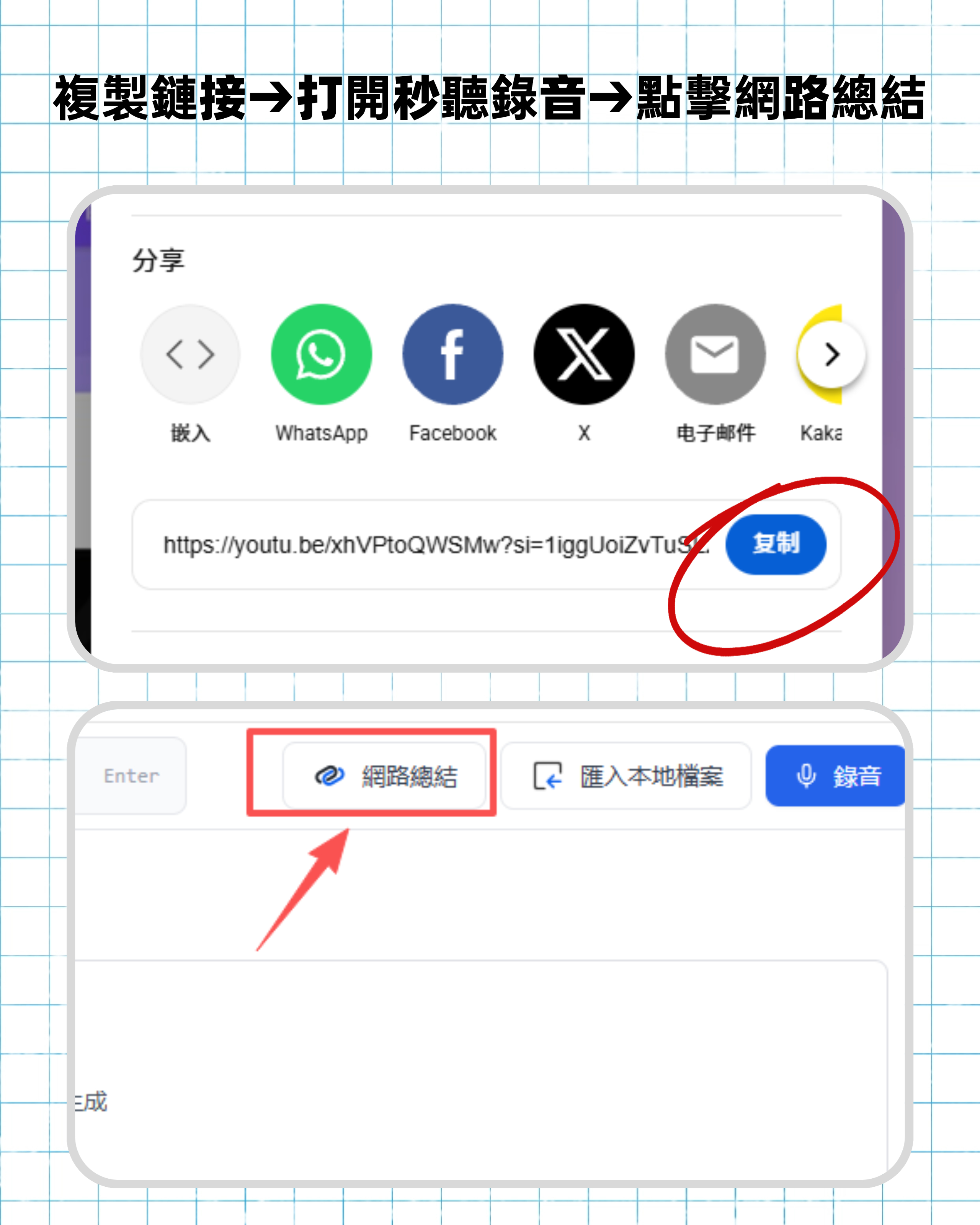
- Open Tinrec's web version or app on your computer and select "Record" mode.
- Start your Google Meet simultaneously, allowing Tinrec to capture system audio.
- It will generate live transcripts as it records, and you can switch translation languages anytime, with Chinese and English side by side.
- After the meeting, you get bilingual transcripts plus automatically generated summaries, action items, and chapter highlights.
In our tests, this is the most user-friendly real-time translation solution for Taiwanese users—it not only solves the "can't understand" problem but also handles the most tedious recording and organizing tasks.
We compared key performance aspects:
Stop organizing recordings by hand
Upload audio or video and automatically get a transcript, summary, and action items
- Translation fluency for mixed Chinese-English meetings: Colloquial sentences are accurately converted, and professional terms have high correspondence.
- Traditional Chinese terms: Significantly more aligned with Taiwanese usage than other international tools, no simplified Chinese errors or inappropriate expressions.
- Post-meeting organization: The AI conversation search lets you ask things like "Who mentioned the budget during the meeting?" and Tinrec answers based on the full content, not just keyword search.
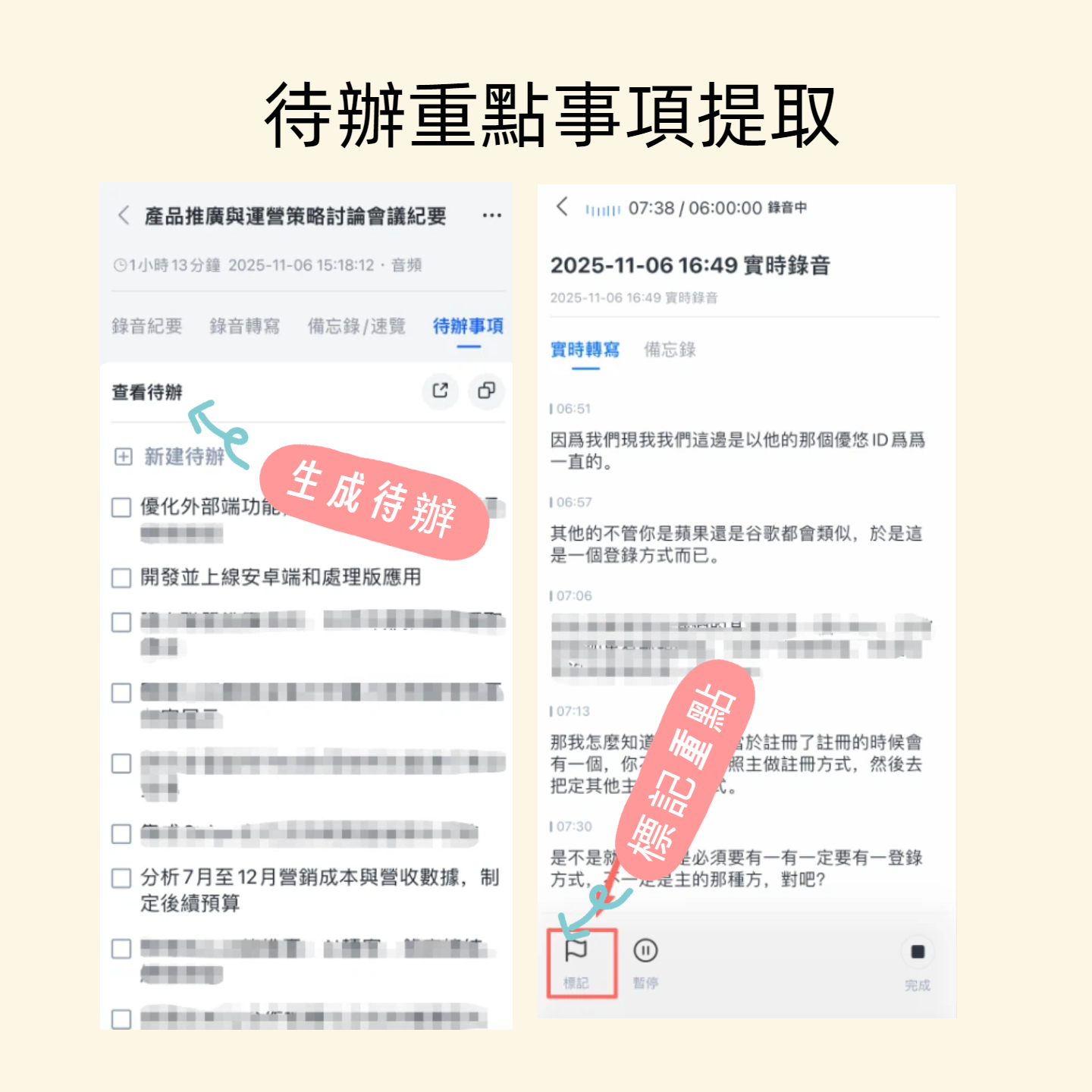
Reassuringly, Tinrec's free version offers a certain monthly allowance of recording and translation, sufficient for light users. For longer sessions, the Pro monthly plan costs about the price of a coffee, while the weekly plan suits project periods with intensive meetings.
Of course, it's not perfect:
- If you expect 100% perfect translation or the nuance of a human interpreter, AI tools still fall short.
- The free version has a minute cap; heavy meeting users should evaluate their usage.
Overall, if you regularly attend Google Meet international meetings and want to save post-meeting organization time, Tinrec is the most balanced option we've tested.
Beyond Tinrec, what other options are there?
If you still want to compare, we also tested two other well-known real-time translation tools, but each has limitations.
Notta
Notta is also a transcription and translation tool, supporting multiple platforms. The free version offers 120 minutes per month, slightly less than Tinrec. In our tests, Notta's translation quality was decent, but it leans more towards file transcription and has weaker support for real-time meeting interaction. It also lacks Tinrec's AI conversation search—after recording, you can only manually replay to find key points. If your main need is to upload files for translation, Notta is worth considering; but for live meetings, Tinrec is more convenient.
Otter.ai
Otter.ai is very popular in English meeting circles—its live captions and summaries are strong, and the free version offers 300 minutes, quite generous. However, its support for traditional Chinese is limited. We tested several mixed Chinese-English meetings, and the accuracy of Chinese recognition and translation was noticeably lower than Tinrec. The interface is also heavily English-oriented, posing a higher barrier for Taiwanese users. If 90% of your meetings are pure English, Otter.ai is a great choice; but if Chinese appears frequently, Tinrec is irreplaceable.
Pitfall Guide: 3 common mistakes when choosing real-time translation tools
Pitfall 1: Assuming Google Meet's built-in captions are enough
Yes, Google Meet can provide live captions, but language options are limited, you can't save a full transcript, and translations tend to be literal, sometimes with odd grammar. Worse, captions disappear when the meeting ends, so you can't revisit them. Unless you're in a simple one-on-one English conversation, dedicated tools are far superior.
Pitfall 2: Focusing only on translation, ignoring post-meeting organization
Many people only care about "how accurate the translation is," forgetting that the real work begins after the meeting. A good tool should save bilingual transcripts, automatically extract action items, and even let you query meeting content via Q&A. Without these, no matter how accurate the translation, you'll still spend a lot of time organizing notes.
Pitfall 3: Choosing an overly basic free plan to save money
Free plans are tempting, but some tools limit the number of languages, don't allow downloads, or include ads. Check how many hours of international meetings you have per month and compare free limits. Tinrec's free version, despite its time cap, doesn't cut core features, so you won't run into missing functions midway.
Conclusion: Which one should you choose?
For traditional Chinese users, if you want a tool that fully records Google Meet meetings, provides live traditional Chinese translation, and quickly organizes key points afterward, Tinrec is our top recommendation.
- Meetings often mix Chinese and English, need high-quality traditional Chinese translation → Tinrec (best accuracy and terms for Taiwanese usage)
- Only need audio-to-text transcription, no real-time translation → Tinrec (free version handles basic needs)
- Need AI to find key points and generate action items after meetings → Tinrec (biggest differentiator from competitors)
- Company policy requires mainstream US/EU tools and meetings are 100% English → Otter.ai (the only exception)
In the end, rather than regret after buying, download Tinrec's free version and try it—the free minutes are enough for two or three meetings. Experience its real-time translation and post-meeting convenience firsthand. Only consider paying if you find it useful; no need to spend money upfront.
Turn every recording into actionable outcomes
Get 60 free transcription minutes when you sign in. No credit card required.
Related Reading
You might also like

Google Meet Free vs Paid 2026: 5 Key Dimensions Compared - Which Plan Is More Cost-Effective?
How much does Google Meet cost? What's the difference between free and paid? This article compares Google Meet free vs paid plans across five key dimensions: meeting duration, participant count, recording, AI tools, and admin controls, helping you decide which plan fits your meeting needs and budget.

How to Calculate Google Meet Pricing in India in 2026? A Clear Look at 4 Workspace Plans
Google Meet pricing in India depends entirely on your Google Workspace plan. This article breaks down the latest 2026 Indian pricing for four plans: Base, Starter, Standard, and Enterprise. From free to enterprise-level, we detail per-user monthly costs, participant limits, and extra features to help you start high-quality video conferencing at the lowest cost.

Tinrec vs Notta in 2026: A 4-Dimension Comparison – Which Is Better for Chinese Audio/Video Organization?
Still hesitating which AI voice-to-text tool to choose? This article compares Tinrec and Notta from 4 dimensions: core positioning, input sources, organization capabilities, and pricing, helping you pick the best AI note-taking assistant for your use case.

2026 Free Speech-to-Text Tools: Compare 3 Top Options
Compare the free plans of TurboScribe, Notta, and Tinrec for speech-to-text. Find out which one helps professionals quickly organize meeting, lecture, and interview recordings. Includes buying tips and common pitfalls.

How to Choose Between Notta and Transkriptor in 2026? A Complete 5-Step Comparison Guide
Wondering which one is better for students between Notta and Transkriptor? This article compares Notta and Transkriptor in 5 steps, covering lecture recording, group discussions, and pricing plans, and recommends a more comprehensive AI recording tool to help you easily manage study notes.

2026 Free AI Meeting Note Tools: 5 Options Compared (Otter vs Notta vs Tinrec)
Wondering which is better, Otter or Notta? Based on real Reddit user reviews, this article compares 5 AI meeting note tools including Otter.ai, Notta, Tinrec, Plaud Note, and more to help you find the best free or paid plan for your needs.
How to Convert Recordings to Text in 2026: 5-Step Guide (Tinrec, Notta, Sonix Tested)
We tested three recording-to-text tools: Tinrec, Notta, and Sonix. From recording, transcribing, proofreading to generating meeting minutes, this 5-step guide walks you through the full experience and tells you which one works best for small to midsize teams.

2026 Google Meet Recording Tools Comparison: 3 Apps Tested to Keep Your Meeting Data from Getting Lost
Scheduling a Google Meet is easy, but finding tools that actually make use of your recordings is hard. This article tests Tinrec, Otter.ai, and Notta to help you choose the best one for turning your future meeting content into searchable, organized knowledge.

2026 Google Meet Meeting Notes Free Plan Roundup: 3 Tools at a Glance
Frequently use Google Meet for meetings and need to organize recordings and meeting notes afterward? This article rounds up 3 meeting notes tools that offer free plans, including Tinrec, Otter.ai, and Fireflies.ai, and compares their suitable scenarios and limitations in detail, helping you quickly find the most helpful choice.