
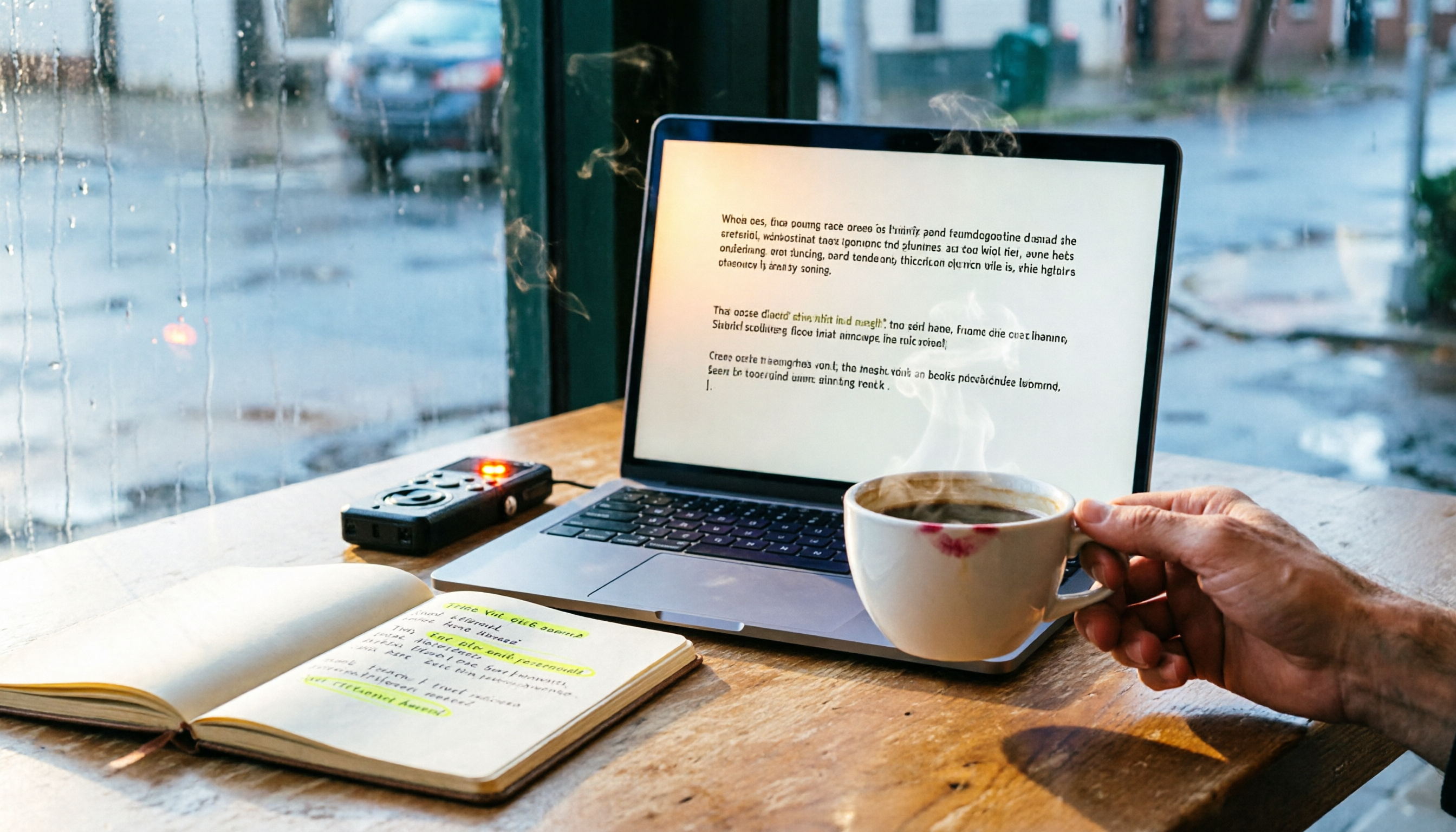
Turn recordings into transcripts and summaries in minutes
Upload audio or video for multilingual transcription, AI notes, and action items
2026 Comparison of 4 PDF to Text Tools: Audio to Text Is the Real Time-Saver
If you're looking for a PDF-to-text tool, you've probably encountered this situation: scanned documents, contracts, or reports where the text can't be selected, requiring OCR to convert them into editable Word or TXT files. There are many such tools, like iLovePDF, Adobe Acrobat, and Smallpdf, which offer online PDF-to-Word services, and many include built-in OCR to recognize text from images.
But more often, what really eats up your time isn't PDFs—it's the audio content that no one organizes for you: meeting recordings, lecture recordings, interview audio. These audio files don't automatically turn into text, let alone generate summaries and action items.
So this article won't just talk about PDF-to-text; it will help you understand the full picture of "text conversion tools": from PDF documents to audio and video, which tools can truly turn your data into usable knowledge. And the key player here is AI audio organization tools like Tinrec.
What Can Text Conversion Tools Do for You?
Text conversion isn't just for PDFs; there's plenty of audio content in your daily life waiting to be organized.
Scenario 1: Turn meeting recordings into minutes in 5 minutes
Before, after a two-hour meeting, you'd spend another hour relistening to the recording and typing up a transcript. Not anymore. With Tinrec, by the time the meeting ends, the AI has already generated a complete transcript and automatically summarized key points, listing action items—who is responsible for what and deadlines, all at a glance. You only need 5 minutes to review the content and send the meeting minutes to your colleagues.
Scenario 2: Convert lecture recordings into review notes, no exam panic
Professor talked for three hours, and you only took notes for the first ten minutes? No problem. Tinrec can transcribe while recording, so after class you can review the transcript directly. Even better, the AI can cut long audio into chapters, letting you jump straight to the "midterm exam scope" section without listening from start to finish.
Scenario 3: Interview organization without all-nighters
When doing user interviews or press interviews, organizing two hours of recordings can easily take an entire day. Tinrec's AI Q&A feature lets you ask, "What did the interviewee think about pricing?" and the system will find relevant paragraphs from the transcript without you having to dig manually.
Scenario 4: Turn online videos and podcasts into text assets
See a useful video on YouTube and want to turn it into text but can't be bothered? Paste the link to Tinrec, and it will convert the video/audio content into a transcript and summary, ready to use for articles or reports.
Core Capabilities of Text Conversion Tools
Turning audio into text is just the first step. A truly good tool also helps you "organize" and "use" the content.
Real-time transcription: Transcribe as you record, not after
Traditional transcription services require you to upload the full audio file and wait minutes for the text. Tinrec transcribes while recording, with less than a second delay. During meetings, you can watch the text appear in real time and immediately confirm no key points were missed.
AI summaries and chapters: Tell you the key points directly, no need to relisten
For a two-hour meeting recording, just click, and Tinrec automatically generates a structured summary including meeting topic, discussion conclusions, action items, and responsible persons. Long audio is also split into meaningful chapters, so you can jump to any section with one click.
AI conversation search: Retrieve data like asking an assistant
After transcription, you can ask questions directly within Tinrec. For example, "Who mentioned the budget shortage in the meeting?" or "What feedback did the client give on the new feature?" It answers based on semantic understanding and even highlights time stamps.
Multi-source input: Accepts recordings, files, and online videos
Tinrec is not just a meeting tool; it supports live recording, uploading audio/video files, pasting public video links, and even recording computer audio during online meetings. All audio and video sources can be organized centrally, without hopping between different tools and platforms.
Export for continued use: Integrate into your workflow
Stop organizing recordings by hand
Upload audio or video and automatically get a transcript, summary, and action items
Transcription results can be exported as TXT, Word, PDF (yes, you can save back to PDF), or synced to tools like Notion, Google Docs, OneNote. The AI can also generate meeting notes, reports, tables, ready to use as deliverables.
Real-World Use Cases
Weekly project meetings
With Tinrec, you can record via phone or computer. Before the meeting, start recording, and immediately after you get the transcript and AI summary. Paste action items directly into project management tools, saving 80% of meeting minutes time.
End-of-semester online courses
Upload lecture or online course recordings to Tinrec, and the AI automatically splits into chapters and highlights key points. When reviewing, you don't need to listen to the whole class; just find key concepts in the AI summary and jump to the time stamp for details.
Content creators' inspiration catcher
Give Tinrec a YouTube video link you want to organize, get the transcript, then use AI Q&A to quickly extract quotes or data for scripts or posts, without pausing and typing while watching.
Long-term personal knowledge base
Save all meeting, course, and interview recordings into Tinrec. Later, if you want to find the "pricing discussion from Q3 last year," just enter keywords to search and ask, turning historical recordings into accessible knowledge.
4 Things to Consider When Choosing a Text Conversion Tool
1. Does it support the input sources you need?
If you only occasionally convert PDFs to text, a free online OCR tool will do. But if you frequently organize meetings, courses, interviews, the tool must support live recording, file upload, and online video links. Tinrec covers all three sources and is easy to use on both phone and computer.
2. Does it help you organize after transcription?
Some tools only give you a raw transcript; you have to organize it yourself. Tinrec not only transcribes but also provides AI summaries, chapters, action items, and Q&A, turning data from "a blob of text" into "actionable knowledge."
3. How well does it handle Chinese content?
Many foreign tools have excellent English recognition but may be less accurate with Chinese mixed contexts or local terms. Tinrec is optimized for Chinese content, with transcription quality better suited to local usage. Of course, actual performance depends on recording quality, accents, and background noise. We recommend testing with your own recordings using the free version.
4. Does the pricing plan match your usage?
If you only transcribe one or two files occasionally, Tinrec's free version has a monthly base allowance that's sufficient. For short-term heavy use, like organizing many interview recordings in a week, consider the weekly plan. For long-term reliance on meeting minutes and study organization, the Pro monthly or annual plan is more cost-effective. Try the free version first, then decide based on your usage—it's more meaningful than just looking at minute limits.
Frequently Asked Questions
Q: Can Tinrec directly convert PDFs to text?
A: Tinrec's strength is in audio, video, and online video transcription; it does not extract text from PDF files. If you need to convert scanned PDFs into editable text, we recommend using iLovePDF, Adobe Acrobat, or Smallpdf's online OCR services. But for meetings, recordings, videos, and other audio content, Tinrec is a better fit.
Q: How accurate is Tinrec's transcription?
A: Under clear recording and standard accent conditions, Tinrec delivers high-quality transcription. However, accuracy depends on background noise, multiple speakers, accents, and specialized terminology. For important content, please cross-check with the original audio.
Q: Does the free version have many limitations?
A: The free version lets you experience core features like live transcription, file upload, and online video link parsing, but with a monthly usage limit. It's sufficient for light users and a good way to test if the tool suits you.
Q: What's special about Tinrec compared to Otter and Notta?
A: Otter and Notta excel in meeting transcription and team collaboration, but Tinrec emphasizes "multi-source data organization" and "post-transcription application"—whether it's meetings, courses, online videos, or audio files, all can be handled centrally, with AI summaries, Q&A, and export features turning data into usable knowledge.
Q: Can Tinrec handle long audio recordings?
A: Yes. Tinrec supports long recordings and large files, automatically splitting them into chapters for easy browsing and searching, so you don't have to listen from start to finish.
Summary
The need for text conversion isn't limited to PDF files. The meetings, courses, interviews, and videos that go unorganized are the real time monsters.
Instead of always hunting for the best PDF-to-Word tool, consider audio content as well and find a single workstation that handles all your text conversion needs. Tinrec doesn't just turn sound into text; it summarizes, categorizes, answers questions, and exports, making every recording a reusable asset.
If you're often bothered by long recordings and videos, start with Tinrec's free version—it includes a monthly base allowance. Try it out to see how much time AI can save you in organizing audio content.
References
Turn every recording into actionable outcomes
Get 60 free transcription minutes when you sign in. No credit card required.
Related Reading
You might also like

2026 Two Voice-to-Text Apps Real-World Test: Which Cantonese Transcription Saves You the Most Time?
Tired of back-to-back meetings and overtime for meeting notes? We tested two popular voice-to-text tools, Tinrec and Plaud Note, comparing Cantonese accuracy, AI post-processing, pricing, and cross-platform support to find the ultimate time-saver for Hong Kong office workers.
2026 Cantonese Speech-to-Text Tool Buying Guide: 3 Products Tested & Recommended
Looking for a free and reliable Cantonese speech-to-text tool? This guide tests three popular options—Tinrec, GGLOT, and Subanana—comparing features, accuracy, and pricing to help Hong Kong users find the best fit.
How to Convert Audio to Text in 2026? Complete 5-Step AI Tutorial
How to turn meeting recordings and lecture recordings into text? Unwire reporters tested Tinrec instant recording transcription and teach you 5 steps to convert audio to text, with AI help to create meeting minutes and summaries, no more overtime typing transcripts!

2026 Tinrec Instant Transcription: Long Video to Text, AI Summary & Q&A
This article introduces Tinrec, an AI tool that quickly transcribes long videos to text, generates summaries, and supports AI Q&A. It also compares other transcription tools to help you choose the best solution for long video transcription.
2026 Review of 5 Audio-to-Text Tools: Legal Recording & AI Organization Picks
Want to keep a record of conversations but worried about breaking the law? This article clarifies the legal boundaries of recording, tests 5 audio-to-text tools, helps you legally preserve key content, and uses AI summaries and Q&A to turn audio files into truly usable data.

The Complete Guide to Speech-to-Text in 2026: From Methods to Tool Recommendations
Struggling to transcribe meeting recordings? We tested multiple tools and highlight Tinrec, showing how it helps quickly organize meeting minutes, lecture notes, and even features an AI conversation search so you no longer have to work overtime on manual transcripts.
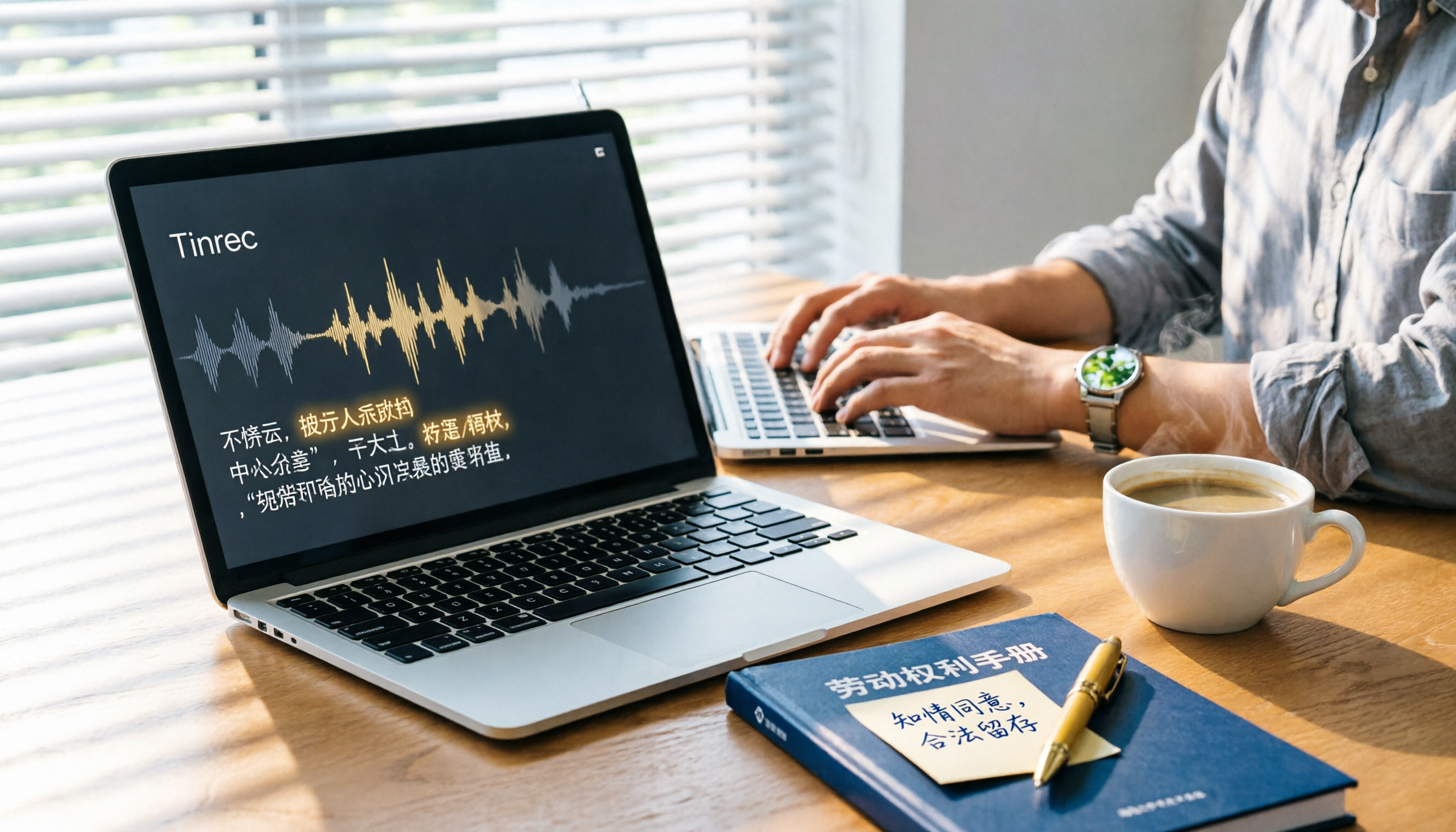
Is It Legal to Record at Work? 2026 Hands-On Comparison of 2 Recording Tools: How to Protect Yourself
Can recording conversations at work get you in legal trouble? This article clarifies the legal boundaries of workplace recording and compares two popular recording tools—Tinrec and PLAUD Note—across key dimensions like core positioning, input sources, post-processing, Chinese experience, and cost-effectiveness, helping you choose the best solution for gathering evidence in the workplace.

2026 Tinrec vs Notta: 4-Dimensional Showdown, Which Captures Subtitles More Efficiently?
As a mid-level manager attending 15 meetings a week, I tested two subtitle extraction tools in depth across four dimensions: input sources, output results, Chinese experience, and AI features. Here's which one truly saves you time and turns videos into usable data.
2026 Free Speech-to-Text Tools Recommended: We Tested 5, and Tinrec's AI Summarization Shines
Still manually transcribing? This article tests 5 free speech-to-text tools, comparing accuracy, AI summarization, cross-platform support, and free tiers. Tinrec not only transcribes but also auto-summarizes, creates chapters, and offers AI Q&A, turning meeting, lecture, and interview recordings into usable assets.