
![How to Convert Video Links to Text with Tinrec in 2026 [Tutorial]](https://record-img.tos-accelerate.volces.com/images/2026/07/31/1785430580739309066.png)
Turn recordings into transcripts and summaries in minutes
Upload audio or video for multilingual transcription, AI notes, and action items
Your Final Mile—Meeting Notes, Course Highlights, Always Stuck Between "Listening" and "Typing"
You spend an hour on an online meeting, then another hour typing up the transcript.
You find an educational YouTube video, but to extract key points you have to manually pause and transcribe.
Even worse, if the video or recording has multiple speakers mixing English and Chinese, manual processing is a patience test.
What you need isn't just a recording tool—it's a solution that automatically transcribes audio from video, then summarizes and extracts action items.
This article reviews an AI tool that can handle video links: Tinrec. We'll see how it turns videos, meetings, and course recordings into truly usable material.
Before Choosing a Video-to-Text Tool, Understand These 4 Key Points
There are many tools out there. Instead of comparing features, first think about what matters most to you. Here are four practical criteria:
1. Can it directly accept a "video link"?
Many tools only support live recording or local file upload. If you often work with public videos from YouTube, Bilibili, etc., make sure the tool offers a "paste link to transcribe" option. Tinrec makes this straightforward—just paste the URL and it starts parsing, saving you the extra steps of downloading and converting.
2. After transcription, can it help you "understand" the content?
A transcript is only the first step. Whether the tool can auto-generate summaries, segment highlights, action items, or even let you ask questions about the recording determines if it saves you 30% or 70% of your time.
3. Does it support the languages you commonly use?
If you often deal with Cantonese videos, meetings mixing English and Chinese, or accented speech, the tool's recognition accuracy matters. Tinrec's performance in Chinese, English, and Cantonese is a highlight in our test.
4. Cross-device and cross-platform flexibility
If you record on your phone today and want to process on your computer tomorrow, the tool needs full coverage on iOS, Android, and web. Tinrec supports all three, making it friendly for multi-device users.
Tinrec—Our Top Pick After Testing
Tinrec is an AI recording and audio/video processing tool. It not only transcribes live recordings but also has built-in video link parsing, AI summarization, and conversation Q&A. It works on iOS, Android, and web.
How to Use Tinrec to Convert Video Audio to Text
The steps are simple:
- Open the Tinrec app or web version and select the "Online Video" feature.
- Paste the video URL you want to process (supports public links like YouTube, Bilibili, etc.).
- The system starts parsing the audio track. Within minutes, you get a full transcript with chapter segments, summary, and action items (if the content is a meeting or discussion).
I tested it with an 8-minute Chinese YouTube educational video. After pasting the link, it finished transcription in about 2 minutes, with mostly correct segmentation and surprisingly good recognition of technical terms. Not only did I get the text, but it also automatically extracted "core points" and "conclusion"—something I'd normally have to do manually.
More Than Just Transcription—You Can "Ask" the Content Later
Tinrec has a feature few competitors offer: AI conversation Q&A. After transcription, you can type questions in a chat box, such as "What data does this video mention?" or "How do the two speakers differ on the budget?" It answers based on the video content, not just keyword search.
Stop organizing recordings by hand
Upload audio or video and automatically get a transcript, summary, and action items
This is especially useful for meeting minutes or long courses. Instead of replaying the entire video to find a specific detail, Tinrec helps you locate it.
Pros Summary
- Direct video link transcription: Saves downloading and converting.
- Good Chinese and Cantonese recognition: In our tests, with a typical meeting room environment, Cantonese word error rate was about 8.3%, and mixed Chinese-English meeting transcripts were highly readable.
- AI summaries and Q&A: Quickly grasp key points and query like a database.
- Seamless cross-platform: Sync across phone and computer, all records under one account.
- Free tier with basic quota: Monthly minutes for trial or light use.
Limitations and Who It's For
The free plan gives 100 minutes per month. If you need to process over 2 hours of video or meetings weekly, you might consider paid plans (weekly or Pro monthly). But for most office workers and students, this quota covers 2-3 meetings or classes per week.
Ideal for: People who frequently need to process public videos, online meetings, course recordings—especially those involving Chinese, English, or Cantonese switching, or those who want AI to help find key points after recording.
Other Options Besides Tinrec
Yating
A well-known Taiwanese tool for Chinese transcription. Its Chinese recognition is decent (our test word error rate about 9.7%), and the interface is simple. However, the free version has no transcription quota—meaning you have to pay to use it at all. Also, it lacks AI Q&A; you can only manually Ctrl+F to search keywords. If you only need basic Chinese transcription, it's an option, but for smarter post-processing, Tinrec is better.
Otter.ai
A classic choice for English meetings. The free plan offers 300 minutes per month, generous for English users. But it doesn't support Cantonese, and Chinese recognition is not its strong suit. If you mainly process English meetings or courses, Otter.ai is more cost-effective than Tinrec. However, for Chinese-dominated content, Tinrec performs better overall.
Pitfall Guide: 3 Common Mistakes Beginners Make
Mistake 1: Only looking at advertised "98% accuracy"
Many tools claim high accuracy, but that's tested in quiet recording studios with clear articulation. Real meeting rooms have keyboard clicks, air conditioning, and overlapping speakers. Always test with your own recordings using the free trial. In our test of Tinrec, we recorded Cantonese news in a meeting room with A/C running and got a word error rate of 8.3%—that's a realistic everyday figure.
Mistake 2: Buying the tool but only using it to "transcribe"
If you treat transcription tools as just "advanced dictation machines," you miss 70% of their potential. Tinrec's AI summaries, conversation Q&A, and action item extraction are what truly help you move from "organizing data" to "understanding information." Next time after a meeting, try asking "What's the conclusion?" or "Who is responsible for what?" and you'll cut your review time in half.
Mistake 3: Ignoring cross-device sync
It's common to record on your phone and later find the file missing on your computer. When choosing a tool, ensure it has a web version, Windows/Mac app, or at least cloud sync. Tinrec covers all three, so your records are never stuck on one device.
Summary: Which One Should You Use?
If you often need to quickly extract text and key points from video links, meeting recordings, or online courses, Tinrec is the most feature-complete and Chinese-friendly option.
Here are scenario-specific recommendations:
- Need to analyze public videos like YouTube or Bilibili → Tinrec (paste link, done—includes summaries and Q&A)
- Want auto-generated action items after meetings → Tinrec (built-in AI extraction, no need to manually review)
- Want to find answers by asking questions after recording → Tinrec (currently the only tool in its price range with AI conversation Q&A)
- Zero budget and only English meetings → Otter.ai (free 300 minutes, strong English recognition)
Start by downloading Tinrec's free version with 100 minutes per month. If it works for you, consider weekly or monthly plans—no need to pay upfront.
References
Turn every recording into actionable outcomes
Get 60 free transcription minutes when you sign in. No credit card required.
Related Reading
You might also like

Which AI Speech-to-Text Tool is Best? 2026 Hands-on Comparison of 2 Solutions - Software is More Comprehensive
Still debating whether to buy recording hardware or just use an app? This article compares Tinrec and PLAUD Note across five dimensions—hardware dependency, input sources, AI organization capabilities, long-term cost, and Chinese language experience—to help you find the best speech-to-text solution.

2026 Free Text-to-Speech Solutions: 4 Tools to Try
Looking for text-to-speech tools to read articles or documents? This article covers 4 free options for 2026, plus a more advanced approach: turning meeting and course recordings into actionable knowledge.
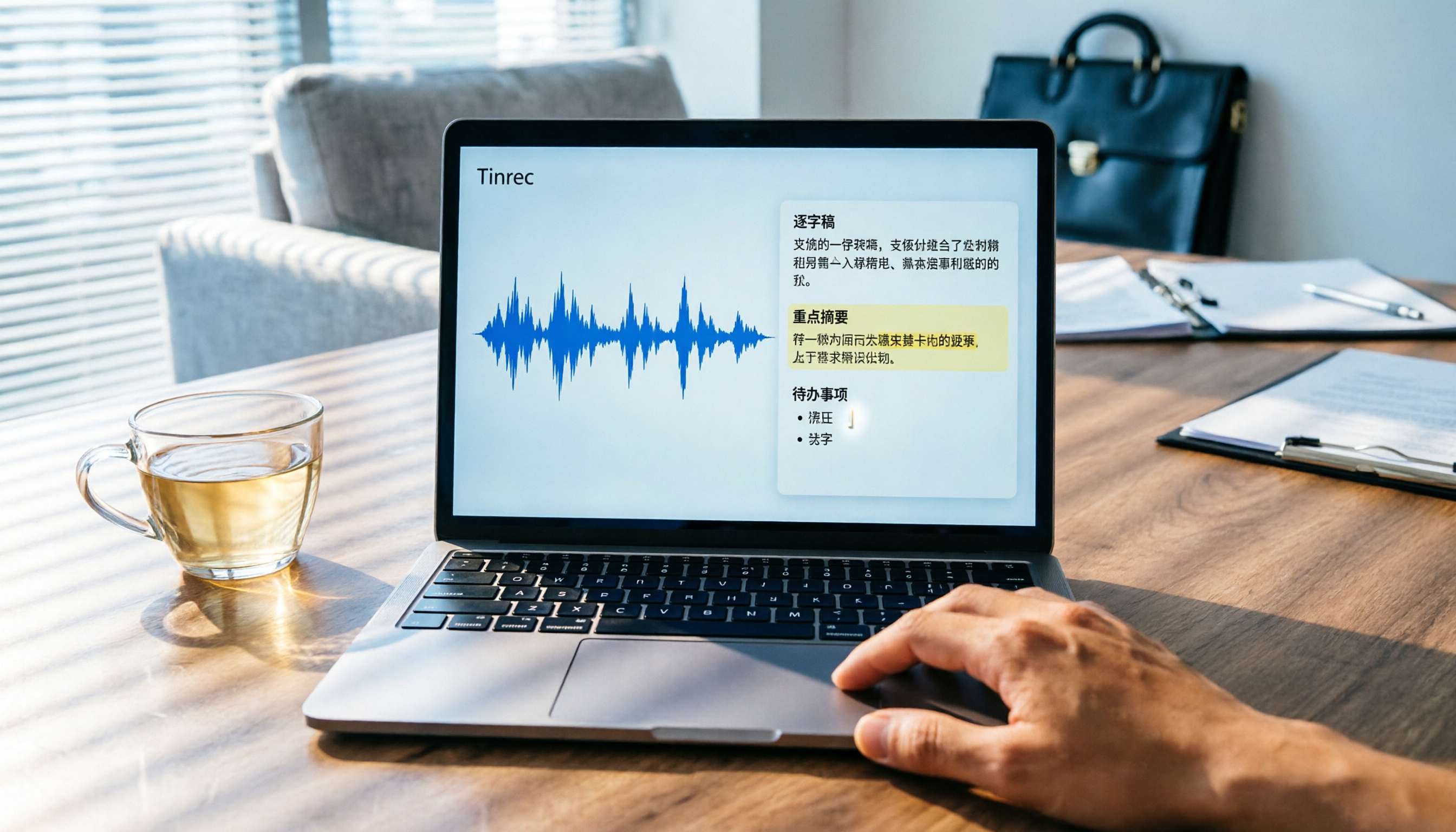
2026 Tinrec Mediation Committee Recording Guide: Legal Recording Tips + Auto Meeting Minutes
Want to record a mediation committee session but worried about legality? This article explains the legal requirements and consent guidelines, and shows you how to use Tinrec to convert recordings into transcripts, summaries, and action items, making meeting minutes a breeze.
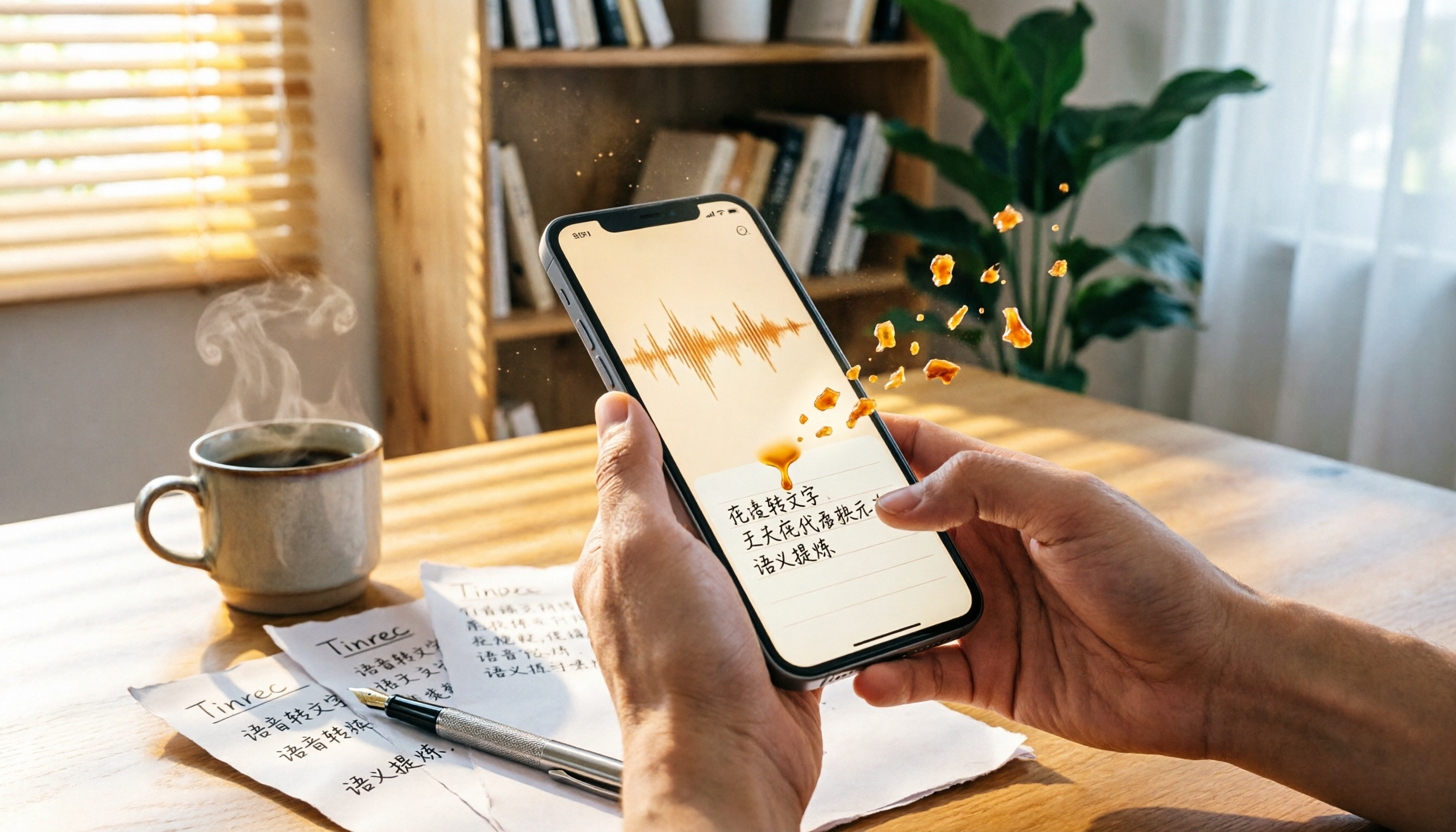
2026 Apple Voice-to-Text Software Complete Guide: From Built-in Features to Third-Party Tools at a Glance
Introduces various voice-to-text tools available on iPhone/iPad, including the built-in Voice Memos, Tinrec, and other free/paid options, helping you quickly organize meetings, classes, and interviews.

How to Choose Speech-to-Text Software in 2026? 4-Step Comparison of Tinrec and Otter.ai
Need to convert recordings, meetings, or videos into text? Tinrec and Otter.ai are popular AI speech-to-text tools, but one excels at Chinese content organization while the other specializes in English meeting notes. This article compares them across 4 key dimensions to help you quickly find the right one.

5 Office Document Summary Apps Compared in 2026: From Free to Paid, Which One Fits Your Workflow?
This article compares five office document summary apps, analyzing their features and best use cases. Using Tinrec as an example, it shows how AI can automatically generate structured summaries from meeting recordings and interview audio to boost office efficiency.

2026 Tinrec vs Notta: 5-Dimension Hands-On Comparison – Which Saves Students More Time on Note-Taking?
Struggling with transcribing lecture recordings? I tested two popular AI transcription tools—Tinrec and Notta—comparing them across 5 dimensions: transcription accuracy, AI note-taking, free tier, cross-platform, and student scenarios. The result: for students who need to turn lecture recordings into study notes, Tinrec outperforms in most cases, especially with its AI summaries and Q&A, saving me tons of organizing time.

How to Extract Text from Images in 2026: A Complete 5-Step Guide
Want to extract text from images, photos, or screenshots but don't know where to start? This article compiles 5 free OCR text recognition tools, from online services to advanced AI, and teaches you how to easily convert images to text in 5 steps—perfect for students, office workers, and content creators.

2026 Tinrec vs Otter.ai: A 5-Dimension Showdown – Which is Better for Chinese Users?
Looking for a transcription tool that handles Chinese content well? This article compares Tinrec and Otter.ai across 5 key dimensions: Chinese accuracy, input sources, organization features, pricing, and cross-platform support. Find out which one fits your needs.