

Turn recordings into transcripts and summaries in minutes
Upload audio or video for multilingual transcription, AI notes, and action items
2026 Tinrec vs Notta: 5-Dimension Hands-On Comparison – Which Saves Students More Time on Note-Taking?
Last semester I took a super tough elective. The professor talked like a machine gun, flipping through slides one after another. I tried handwritten notes, but when I opened my notebook before the midterm, I couldn't even read my own writing. Then I started recording lectures with my phone, planning to transcribe them later. But facing a two-hour audio file, I gave up after three minutes of typing.
My classmates recommended several voice-to-text tools. I first tried the most popular free apps, but they either had terrible accuracy or the free quota ran out quickly. So I narrowed it down to two AI tools most likely to save students time: Tinrec and Notta. I used them for a whole semester, even relying on them to study for finals. This article compares them across 5 dimensions students care about most, so you can decide which one to install.
Tinrec vs Notta: Quick Overview
Both are AI voice-to-text tools, but with slightly different focuses. Notta is a veteran in transcription, translation, and meeting minutes, used by many global teams. Tinrec emphasizes turning audio/video into usable knowledge—not just transcripts, but also follow-up organization.
For student plans (both have free versions; I personally chose the cheapest annual subscription to save money):
- Tinrec: Free version offers a basic monthly transcription quota. Pro annual is about $4.50/month (converted at writing), supports live recording, file upload, and online video link transcription.
- Notta: Free version gives 120 minutes/month. Pro annual is about $8.17/month (roughly $250 NTD), featuring live transcription, translation, and team features.
Below, I compare the two tools based on real student needs: attending class, organizing lecture notes, group discussions, and exam cramming.
Dimension 1: Lecture Transcription Accuracy
I tested both with a recording of the same "Big Data Analytics" class (back row seat, iPhone 14 recording, background noise from AC and classmates whispering). Total length: 45 minutes. The professor spoke mainly Chinese with occasional English technical terms.
Notta, in a noisy environment, had about 80% word recognition accuracy. It often made segmentation errors or garbled text when mixing Chinese and English—for example, "random forest" became something like "luan deng fo si te". I had to spend time correcting.
Tinrec handled Chinese and mixed contexts much better. The same clip had far fewer errors, and technical terms like "gradient boosting" were almost perfectly transcribed. I suspect Tinrec is more optimized for Chinese content, while Notta is more geared toward multilingual meetings.
→ Winner: Tinrec, especially for Chinese courses and seminars.
Dimension 2: AI Note-Taking Ability
Getting a transcript is just the first step. The painful part is extracting key points. Notta has an AI summary feature, but it tends to produce a "paragraph abbreviation" that sometimes misses the key points the professor emphasized.
Tinrec impressed me here. It not only generates a summary but also automatically breaks down chapters, highlights key sentences, and even extracts action items (e.g., "submit midterm paper next week", "read chapter 3"). The most useful is the AI Q&A: before exams, I can ask the recording: "Which chapters will the final exam cover?" Tinrec answers from multiple recordings. It's incredibly satisfying.
Notta also has AI chat, but the depth and Chinese comprehension are slightly inferior. Also it can't query across files, whereas Tinrec treats your entire semester's recordings as a searchable database.
Stop organizing recordings by hand
Upload audio or video and automatically get a transcript, summary, and action items
→ Winner: Tinrec, significantly improves note organization and exam review efficiency.
Dimension 3: Free Tier & Student Budget
Students care about money. Notta's free version gives 120 minutes per month, enough for about two 3-credit classes. Exceeding that locks you out. Tinrec's free version also has a quota, but similarly limited for trial.
The difference lies in paid plans: Tinrec's cheapest plan is a weekly card, about the price of a Starbucks coffee. For midterms or finals, buying just one week is enough. For long-term use, the Pro annual plan costs less than one milk tea a day. Notta's Pro annual plan costs about $100 more per year, and many advanced features (like team workspace) are unnecessary for students.
→ Winner: Tinrec, more flexible plans, better for students whether short-term or long-term.
Dimension 4: Cross-Platform & Offline Use
I record lectures on my tablet, organize notes on my laptop in the dorm, and review on my phone during commutes. Tinrec has web, iOS, and Android apps—just log in to sync all recordings and notes. The interface is simple and easy to use.
Notta also supports multiple devices, but I find its interface cluttered with many meeting-related settings that distract students. Also Tinrec's offline recording lets me record in the library basement (no signal) without issues, while Notta heavily relies on internet.
→ Winner: Tinrec, better for students who move between places with unstable networks.
Dimension 5: Beyond Lectures (Extra Value)
Besides classes, I used these tools to process YouTube tutorial videos and group discussion recordings. Notta can import audio/video files, but only common formats, and it just transcribes.
Tinrec lets you paste a YouTube link to get a transcript plus summary, which is super convenient for project research. After group discussions, I can ask Tinrec to automatically generate action items and assign tasks, then one-click export to Notion for editing. These small extras mean I use it not just for exams but also for projects and interview prep.
→ Winner: Tinrec, extra features aligned with real student learning and project needs.
Unique Strengths
Tinrec's Unique Strengths:
- Better Chinese & Mixed Content Recognition: Handles Chinese-English mixing and professor accents with fewer errors, saving correction time.
- AI Database Q&A: Turns your entire semester's recordings into a conversation-ready knowledge base—a perfect study buddy.
- Direct YouTube Video Transcription: Paste a link and you're done—great for fast project research.
- Flexible Pricing: Weekly, monthly, and annual plans; students aren't locked into long contracts.
Notta's Unique Strengths:
- More Comprehensive Multilingual Translation: If you often need cross-language meetings or subtitle translation, Notta has a wider language set.
- Strong Team Collaboration: Good for shared group projects, but less necessary for individual students.
Conclusion: Which One Should You Choose?
If you're a student drowning in notes, here's a quick guide:
- If you mainly take Chinese courses and need to turn recordings into study notes → Tinrec (AI summaries and Q&A will spoil you).
- If you often watch YouTube tutorials and need to extract key points → Tinrec (paste link to get text).
- If you're on a budget and only need short-term help for midterms/finals → Tinrec (weekly plan is economical).
- If you have heavy multilingual translation needs or frequent group collaboration → Notta (its team features may suit you).
- If you just need simple voice-to-text and don't care about post-processing → Try Notta's free 120 minutes first.
In short: for most students, Tinrec is the more comprehensive and understanding choice. I used it all semester, and even my roommate got hooked. After finals, he quietly bought the annual plan. I suggest you download Tinrec's free version, test it on one lecture, and see if its AI note-taking really lives up to the hype.
References
Turn every recording into actionable outcomes
Get 60 free transcription minutes when you sign in. No credit card required.
Related Reading
You might also like

Which AI Speech-to-Text Tool is Best? 2026 Hands-on Comparison of 2 Solutions - Software is More Comprehensive
Still debating whether to buy recording hardware or just use an app? This article compares Tinrec and PLAUD Note across five dimensions—hardware dependency, input sources, AI organization capabilities, long-term cost, and Chinese language experience—to help you find the best speech-to-text solution.

2026 Free Text-to-Speech Solutions: 4 Tools to Try
Looking for text-to-speech tools to read articles or documents? This article covers 4 free options for 2026, plus a more advanced approach: turning meeting and course recordings into actionable knowledge.
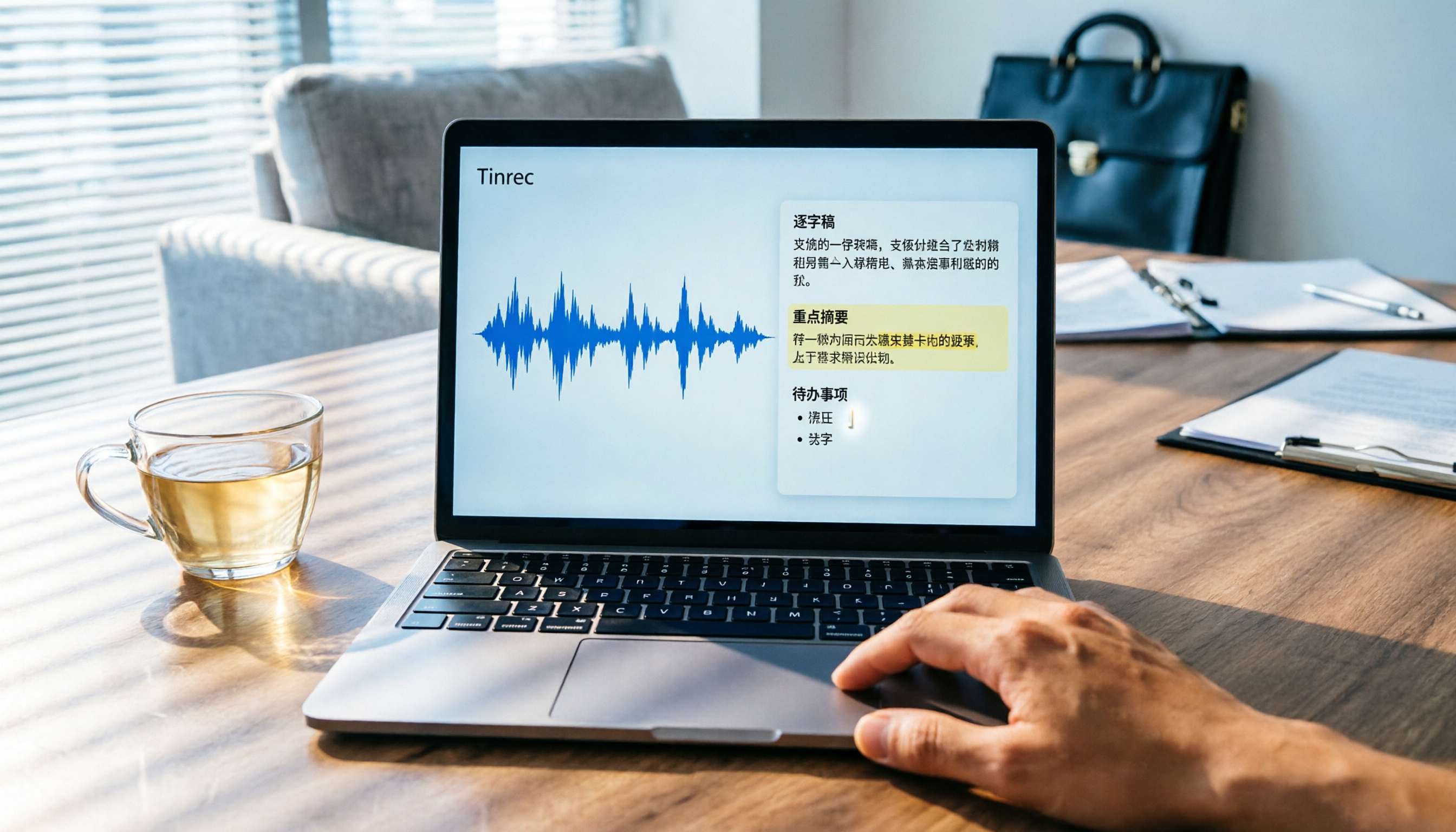
2026 Tinrec Mediation Committee Recording Guide: Legal Recording Tips + Auto Meeting Minutes
Want to record a mediation committee session but worried about legality? This article explains the legal requirements and consent guidelines, and shows you how to use Tinrec to convert recordings into transcripts, summaries, and action items, making meeting minutes a breeze.
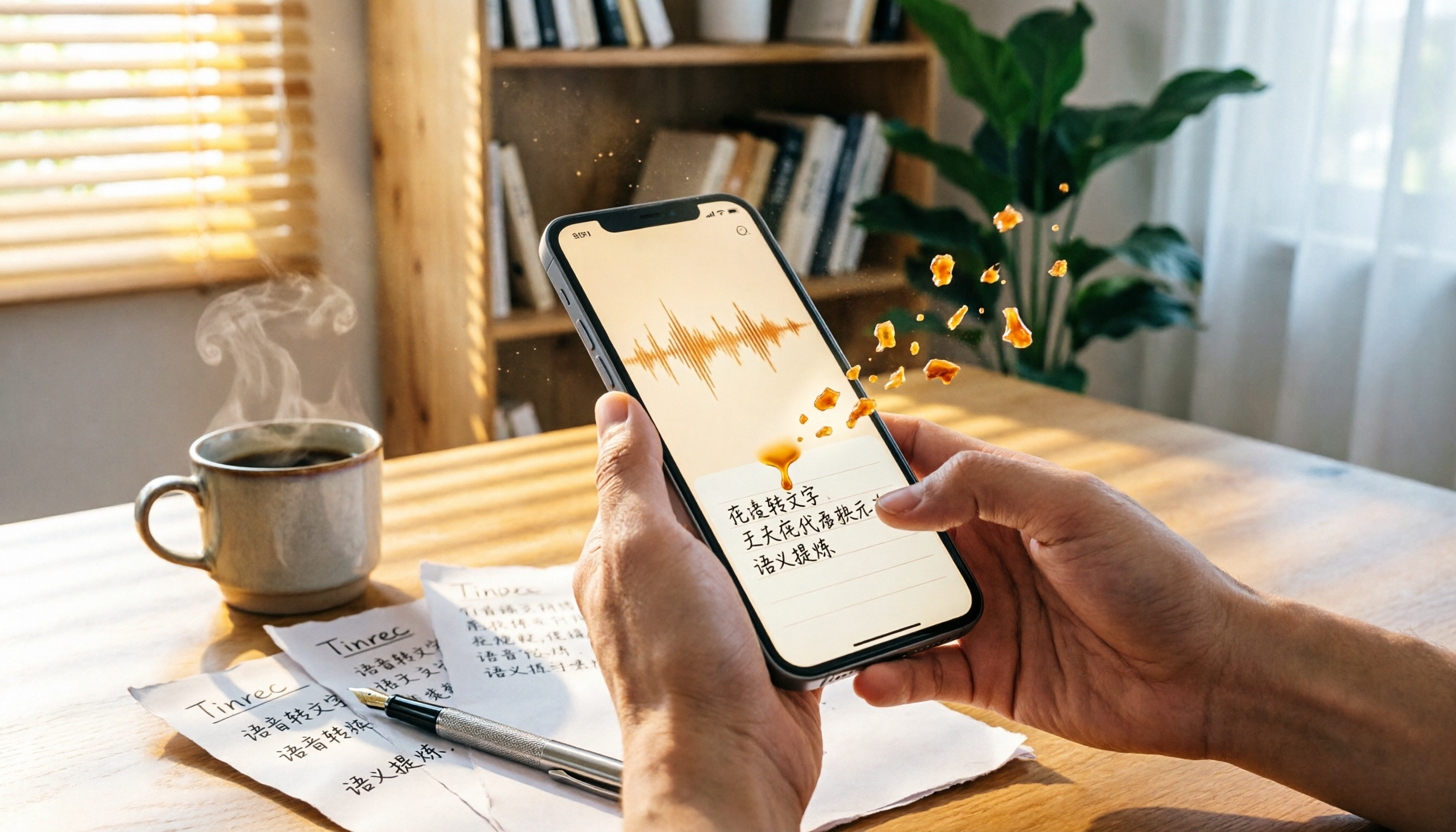
2026 Apple Voice-to-Text Software Complete Guide: From Built-in Features to Third-Party Tools at a Glance
Introduces various voice-to-text tools available on iPhone/iPad, including the built-in Voice Memos, Tinrec, and other free/paid options, helping you quickly organize meetings, classes, and interviews.

How to Choose Speech-to-Text Software in 2026? 4-Step Comparison of Tinrec and Otter.ai
Need to convert recordings, meetings, or videos into text? Tinrec and Otter.ai are popular AI speech-to-text tools, but one excels at Chinese content organization while the other specializes in English meeting notes. This article compares them across 4 key dimensions to help you quickly find the right one.

5 Office Document Summary Apps Compared in 2026: From Free to Paid, Which One Fits Your Workflow?
This article compares five office document summary apps, analyzing their features and best use cases. Using Tinrec as an example, it shows how AI can automatically generate structured summaries from meeting recordings and interview audio to boost office efficiency.
![How to Convert Video Links to Text with Tinrec in 2026 [Tutorial]](https://record-img.tos-accelerate.volces.com/images/2026/07/31/1785430580739309066.png)
How to Convert Video Links to Text with Tinrec in 2026 [Tutorial]
Struggling to turn voice from meetings, classes, or online videos into editable, searchable text? This hands-on review of Tinrec shows how to upload video links to get transcripts, summaries, and action items. We also compare alternatives and share tips to choose the best speech-to-text solution.

How to Extract Text from Images in 2026: A Complete 5-Step Guide
Want to extract text from images, photos, or screenshots but don't know where to start? This article compiles 5 free OCR text recognition tools, from online services to advanced AI, and teaches you how to easily convert images to text in 5 steps—perfect for students, office workers, and content creators.

2026 Tinrec vs Otter.ai: A 5-Dimension Showdown – Which is Better for Chinese Users?
Looking for a transcription tool that handles Chinese content well? This article compares Tinrec and Otter.ai across 5 key dimensions: Chinese accuracy, input sources, organization features, pricing, and cross-platform support. Find out which one fits your needs.