

Turn recordings into transcripts and summaries in minutes
Upload audio or video for multilingual transcription, AI notes, and action items
What Can Office Document Summary Apps Do for You?
Traditionally, organizing office documents required manual reading and rewriting. But now, AI tools can extract key points directly from audio, video, or even links, saving you a ton of time. Here are a few typical scenarios:
Scenario 1: Meeting notes in 5 minutes
A two-hour meeting recording used to require replaying and typing. With Tinrec, as the meeting happens, it transcribes in real time and automatically generates a structured summary after the meeting — including conclusions, action items, and assignees — ready to send to the team.
Scenario 2: Interview recordings turned into reports
For user interviews or market research, recordings can last hours. Upload the audio to Tinrec, and it not only provides a full verbatim transcript but also marks chapters, key insights, and quoted passages, making it easy to clip and use in your report.
Scenario 3: Quickly grasp training video highlights
Online courses or training videos often run tens of minutes. Paste the video link into Tinrec, and it will transcribe the speech and provide an AI summary and chapter splits, letting you browse knowledge points like a book without watching from start to finish.
What Core Capabilities Should Office Document Summary Tools Have?
Summary tools on the market mainly fall into two categories: those that shorten existing documents, and those that generate summaries from audio/video content. The latter is closer to real office scenarios, because many discussions, reports, and ideas are conveyed through voice. Here are the core capabilities the latter should have, using Tinrec as an example:
Multi-source input
Not just recording, but also uploading audio files, video files, and pasting public links like YouTube or Bilibili. Tinrec lets you manage all your audio/video in one place, without switching between different apps.
AI semantic summary, not keyword stitching
A true summary tool can "understand" the content, distinguishing main points from details. Tinrec's AI first understands the logic of the entire text, then produces a structured summary including meeting topics, discussion conclusions, action items, etc., rather than just stringing together key sentences.
Automatic chapter and key point marking
Long recordings are hard to navigate. Tinrec automatically splits content into chapters like "Project Progress Update", "Budget Discussion", "Task Assignment" — just tap to jump to that segment and its corresponding text.
Action item extraction
Filtering action items from conversations is a necessity. Tinrec automatically lists "who should do what and by when", so you don't have to write action items from memory after meetings.
AI Q&A and export
After transcription, you can ask Tinrec questions like "What requests did the client make in yesterday's meeting?" or "What were the key points from last week's strategy meeting?", and it will find answers from historical recordings. Results can be exported to Word, PDF, Notion, and other formats, seamlessly integrating into your workflow.
Practical Use Cases
Meeting minutes and action tracking
Record in real time → automatically generate summary and action items after meeting → export to Notion or share with team. Previously took 30 minutes to compile; with Tinrec, just 2 minutes to review.
Stop organizing recordings by hand
Upload audio or video and automatically get a transcript, summary, and action items
Interview and research material organization
Upload interview recordings → get verbatim transcript, key point summary, and timestamps → quickly locate cited passages, doubling report writing efficiency.
Learning and training notes
Record a lecture or paste a course link → get chapter notes and mind maps → review structured highlights directly, saving time re-listening.
Content creation asset library
Extract summaries and subtitles from podcasts or videos → convert to text and edit into social media posts or articles, keeping inspiration alive.
Key Considerations When Choosing an Office Document Summary Tool
1. Diverse input sources
Tools that only support plain text can't handle meetings or interviews. Tinrec covers live recording, file upload, and web links, covering most office scenarios.
2. Degree of summarization structuring
A good summary isn't just a paragraph; it should include topics, conclusions, and action items. Tinrec's summary format can be selected as bullet points or paragraphs, ready to insert into reports.
3. Chinese content recognition quality
Many tools excel in English but struggle with Chinese or mixed-language scenarios. Tinrec performs reliably in Chinese environments and supports Traditional, Simplified, and mixed languages.
4. Post-processing and export capabilities
Transcription is only the first step. The ability to ask questions and generate more files is key. Tinrec offers AI Q&A and supports export to Google Docs, Notion, and can further generate reports or tables.
5. Price and usage frequency
Free plans usually have minute limits. Tinrec offers a free plan with a monthly base allowance sufficient for light users; for those meeting more than 3 times a week, a Pro monthly or annual plan is recommended for lower per-minute cost.
Frequently Asked Questions
What's the difference between a document summary tool and a speech-to-text tool?
Pure document summary tools shorten existing text, while speech-to-text tools first convert speech to text and then summarize. Tinrec combines both, turning meetings and interviews directly into editable summary documents, better suited for dynamic workflows.
Can Tinrec summarize PDF or Word documents directly?
Tinrec focuses on generating summaries from audio/video content and cannot compress existing documents. However, you can verbally dictate key points and then use Tinrec to organize them into a structured summary as a flexible workaround.
Is the free plan enough?
If you only occasionally summarize a meeting or video, the free plan's monthly allowance is usually sufficient. For weekly multiple meetings or frequent long recordings, upgrading to Pro provides more transcription hours and advanced features.
Is the summary accuracy reliable?
In clear audio environments, Tinrec delivers high-quality summaries, but accents, overlapping speech, or specialized terms may still cause errors. For critical decisions, cross-check with the verbatim transcript or original recording.
What languages are supported?
Tinrec supports multiple languages, including Chinese (Traditional/Simplified), English, Japanese, etc., suitable for cross-border teams or bilingual content.
Conclusion
The essence of office document summarization has evolved from "shortening existing articles" to "automatically extracting key points from audio and video." If you spend hours every week digesting meeting recordings, interviews, or course content, choosing a tool that can transcribe in real time, generate structured summaries, and support subsequent applications can save significant time. Tinrec not only creates summaries but turns them into searchable, queryable, and exportable knowledge assets. Start with the free plan to experience the "recording → summary" automated workflow and see how AI can transform your work.
References
- Text Summarizer – Auto Summary - Google Play Store
- AI Text Summarizer: Extract Key Insights from Any Document
- Office Document – Editor, Word Processing, Forms - App Store
- Dr. AiFeng – Best Office Document Editing Management Apps Recommendations
- Free AI Summarizer: Instantly Summarize Text, PDF, and Documents | SlidesPilot
Turn every recording into actionable outcomes
Get 60 free transcription minutes when you sign in. No credit card required.
Related Reading
You might also like

Which AI Speech-to-Text Tool is Best? 2026 Hands-on Comparison of 2 Solutions - Software is More Comprehensive
Still debating whether to buy recording hardware or just use an app? This article compares Tinrec and PLAUD Note across five dimensions—hardware dependency, input sources, AI organization capabilities, long-term cost, and Chinese language experience—to help you find the best speech-to-text solution.

2026 Free Text-to-Speech Solutions: 4 Tools to Try
Looking for text-to-speech tools to read articles or documents? This article covers 4 free options for 2026, plus a more advanced approach: turning meeting and course recordings into actionable knowledge.
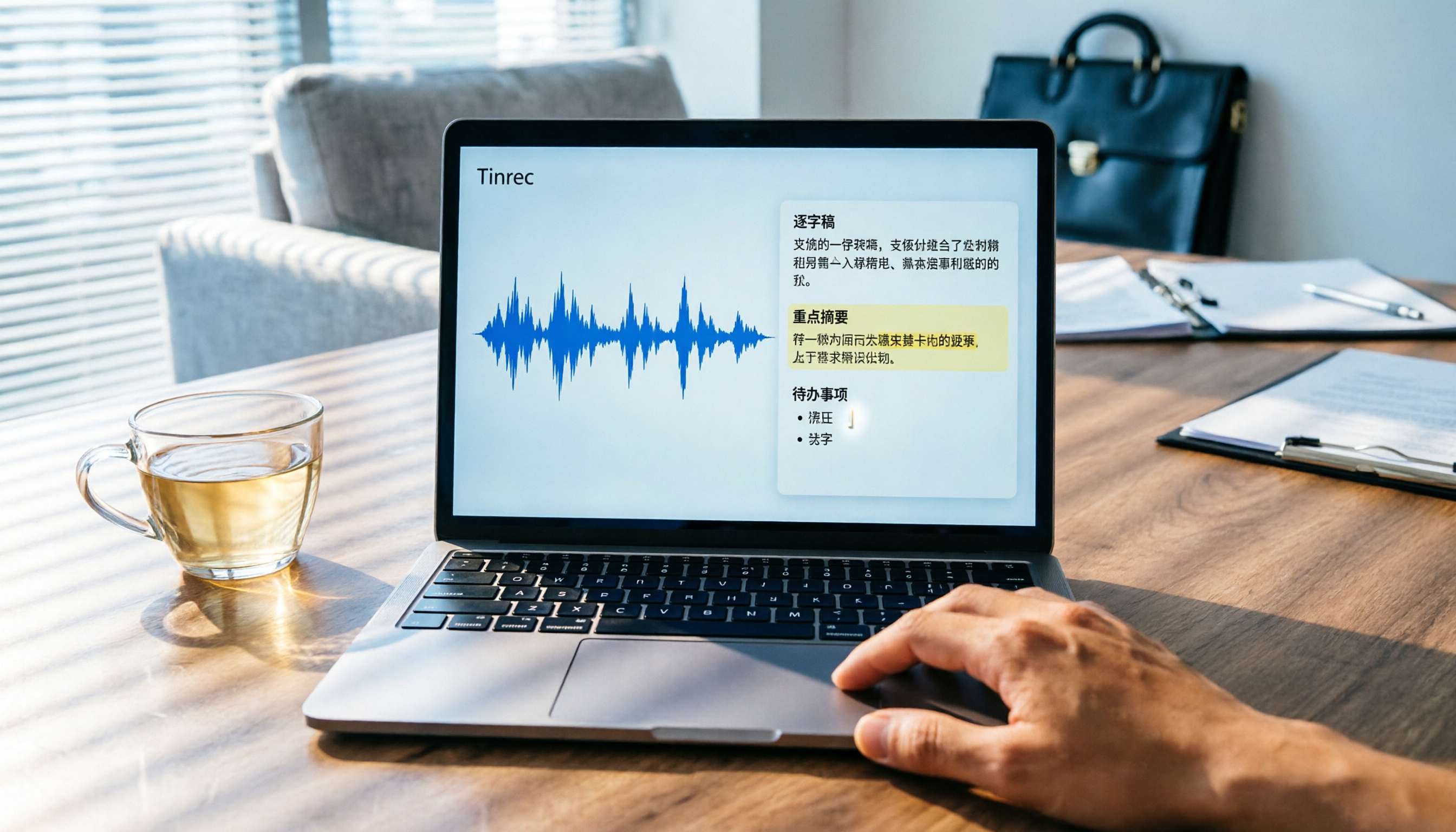
2026 Tinrec Mediation Committee Recording Guide: Legal Recording Tips + Auto Meeting Minutes
Want to record a mediation committee session but worried about legality? This article explains the legal requirements and consent guidelines, and shows you how to use Tinrec to convert recordings into transcripts, summaries, and action items, making meeting minutes a breeze.
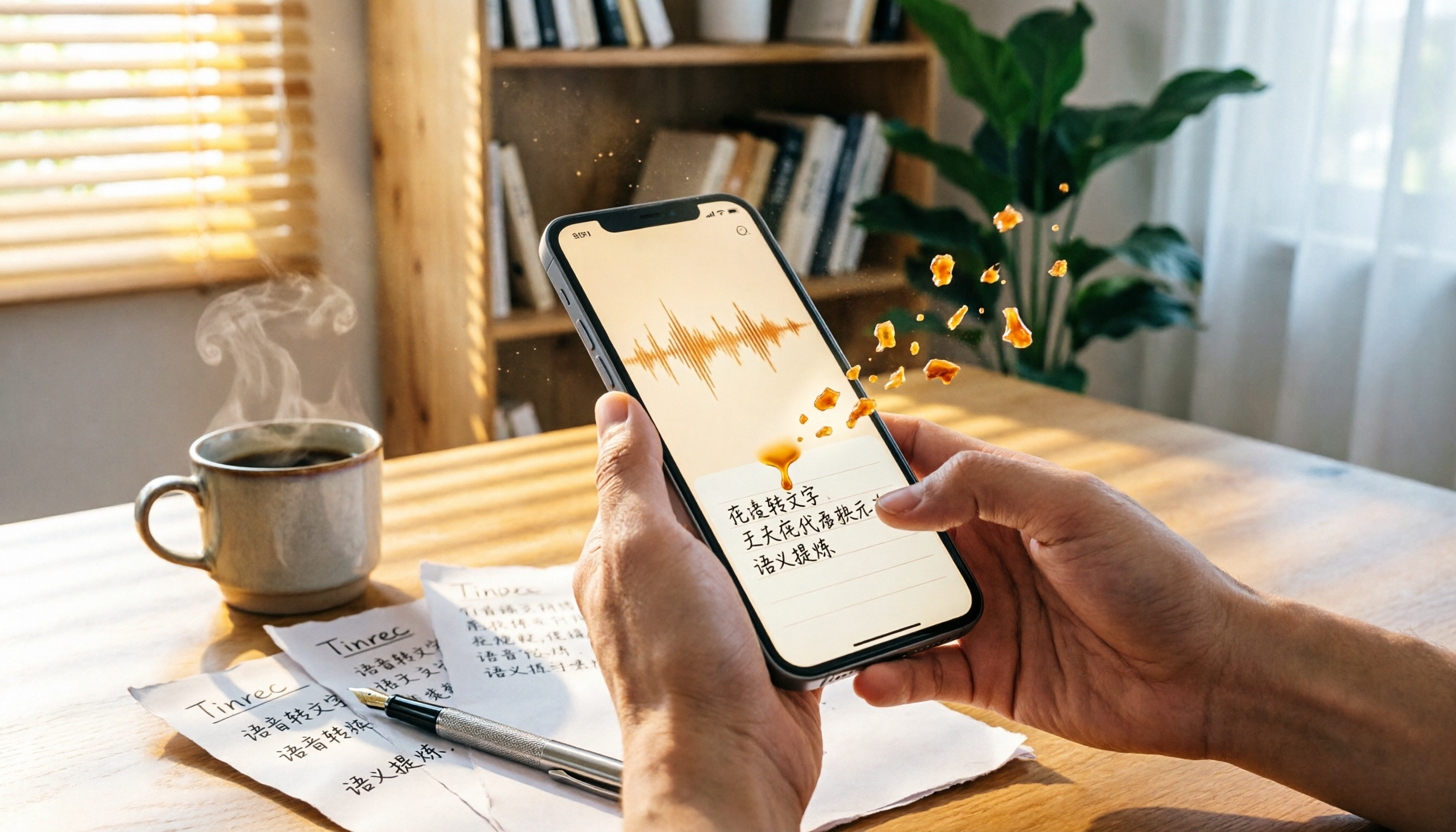
2026 Apple Voice-to-Text Software Complete Guide: From Built-in Features to Third-Party Tools at a Glance
Introduces various voice-to-text tools available on iPhone/iPad, including the built-in Voice Memos, Tinrec, and other free/paid options, helping you quickly organize meetings, classes, and interviews.

How to Choose Speech-to-Text Software in 2026? 4-Step Comparison of Tinrec and Otter.ai
Need to convert recordings, meetings, or videos into text? Tinrec and Otter.ai are popular AI speech-to-text tools, but one excels at Chinese content organization while the other specializes in English meeting notes. This article compares them across 4 key dimensions to help you quickly find the right one.

2026 Tinrec vs Notta: 5-Dimension Hands-On Comparison – Which Saves Students More Time on Note-Taking?
Struggling with transcribing lecture recordings? I tested two popular AI transcription tools—Tinrec and Notta—comparing them across 5 dimensions: transcription accuracy, AI note-taking, free tier, cross-platform, and student scenarios. The result: for students who need to turn lecture recordings into study notes, Tinrec outperforms in most cases, especially with its AI summaries and Q&A, saving me tons of organizing time.
![How to Convert Video Links to Text with Tinrec in 2026 [Tutorial]](https://record-img.tos-accelerate.volces.com/images/2026/07/31/1785430580739309066.png)
How to Convert Video Links to Text with Tinrec in 2026 [Tutorial]
Struggling to turn voice from meetings, classes, or online videos into editable, searchable text? This hands-on review of Tinrec shows how to upload video links to get transcripts, summaries, and action items. We also compare alternatives and share tips to choose the best speech-to-text solution.
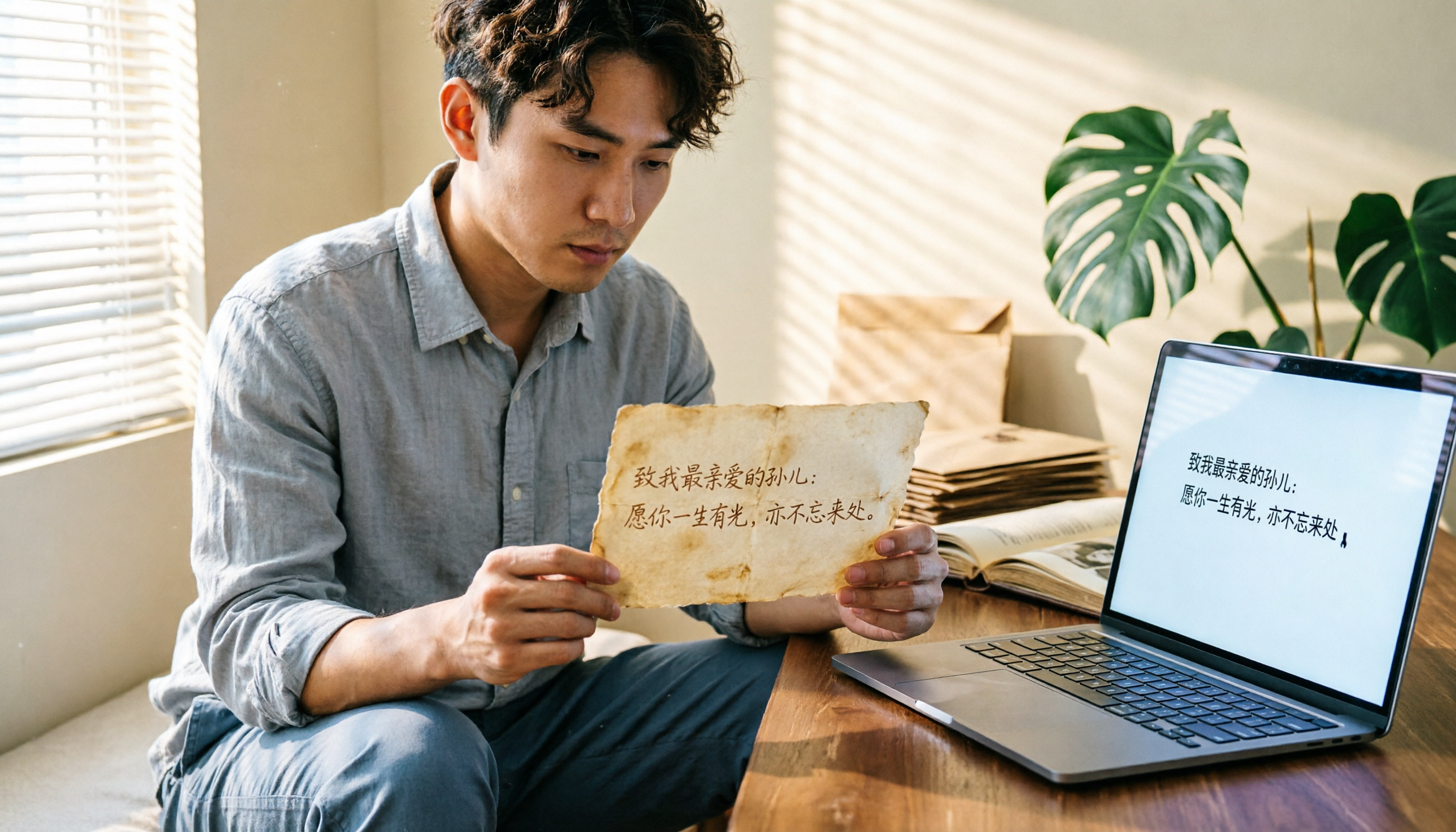
How to Extract Text from Images in 2026: A Complete 5-Step Guide
Want to extract text from images, photos, or screenshots but don't know where to start? This article compiles 5 free OCR text recognition tools, from online services to advanced AI, and teaches you how to easily convert images to text in 5 steps—perfect for students, office workers, and content creators.

2026 Tinrec vs Otter.ai: A 5-Dimension Showdown – Which is Better for Chinese Users?
Looking for a transcription tool that handles Chinese content well? This article compares Tinrec and Otter.ai across 5 key dimensions: Chinese accuracy, input sources, organization features, pricing, and cross-platform support. Find out which one fits your needs.