
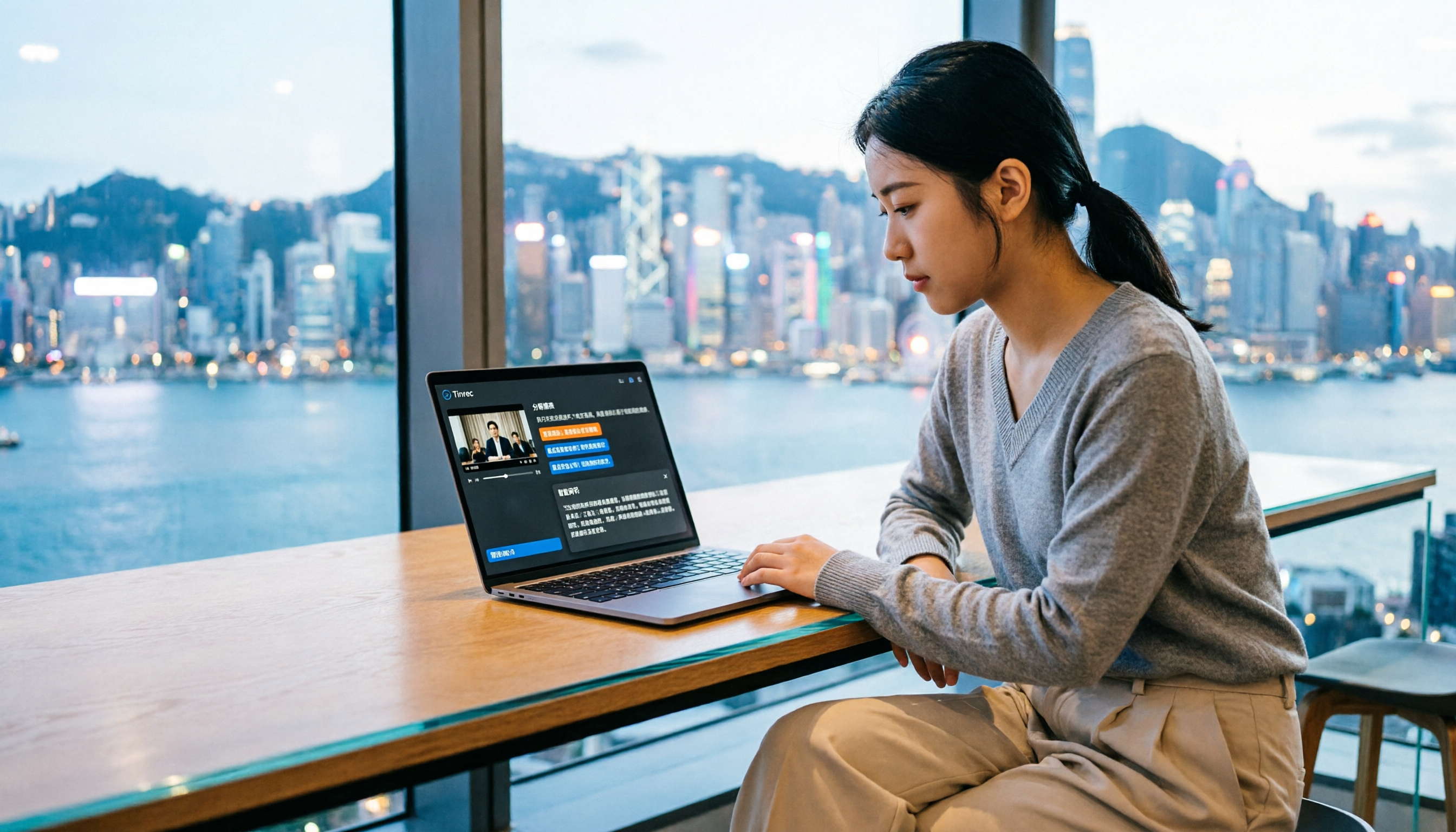
Turn recordings into transcripts and summaries in minutes
Upload audio or video for multilingual transcription, AI notes, and action items
Tinrec vs Otter.ai: Quick Overview
If you're a working professional pursuing further studies, you spend hours each night watching academic videos—and you're completely out of time. Which AI summary tool on the market can actually help? This time, we picked two popular tools—Tinrec, which focuses on multi-source audio/video organization, and Otter.ai, known for its meeting transcripts—and compared them in detail from the academic video perspective.
| Aspect | Tinrec | Otter.ai |
|---|---|---|
| Focus | AI audio recording & audio/video organization workspace | AI meeting notes & team collaboration |
| Input sources | Live recording, files, web links, online meetings, mobile recording | Mostly meeting platforms; supports some file uploads |
| Chinese support | Optimized for Chinese content; handles Chinese-English mix well | Strong in English; weaker in Chinese recognition |
| Free transcription | Monthly basic allowance | 300 minutes per month |
| Pricing (Pro annual) | Usage-based plans, see official website | ~HK$65/month ($8.33 USD) |
Below, we compare the two tools across the five dimensions most relevant to academic video summarization.
Dimension 1: Supported Sources and Formats
Otter.ai's input is mainly centered around online meetings. While you can upload audio/video files, support for public video links (e.g., YouTube, Bilibili) is limited; you'd need to manually record your screen or use third-party tools to download the video before you can use it.
Tinrec, by contrast, is far more comprehensive. In addition to live recording and file uploads, it can directly accept public video links—paste an academic video link from YouTube, Bilibili, Xiaohongshu, TikTok, and it's transcribed right away. It even supports desktop meeting recordings (Zoom, Teams). For students who constantly work with academic videos from many sources, this flexibility is really important.
→ This dimension: Tinrec is the clear winner.
Dimension 2: Chinese Academic Content Recognition
Otter.ai's speech recognition performs well in English, but when processing Chinese—especially Cantonese or Mandarin academic lectures, which are common in Hong Kong—it often produces typo mistakes or missing characters. Recognition quality drops even further with mixed Chinese-English terms (e.g., "Machine Learning 嘅 optimizer 要點 tune").
Tinrec has been deeply optimized for Chinese content (including Traditional Chinese and Cantonese). When we tested both with the same 10-minute Cantonese lecture recording from the University of Hong Kong, Tinrec's output was noticeably closer to the original meaning, with fewer misrecognized technical terms and numbers, making the subsequent summaries more usable.
→ This dimension: Tinrec is the clear winner.
Dimension 3: Summary and Key Point Extraction Quality
Otter.ai automatically generates meeting summaries that lean toward discussion points and action items. That format isn't necessarily the most useful for academic videos: first, it lacks chapter segmentation; second, it rarely organizes concepts and logical flows the way teaching content needs.
Tinrec's AI summaries go beyond condensed key points: they split long videos into structured chapters, automatically extract key concepts and action items, and even offer a "mind map" output. For anyone studying for exams or organizing literature, you can paste the summary straight into Notion or Google Docs without having to retype everything.
Stop organizing recordings by hand
Upload audio or video and automatically get a transcript, summary, and action items
→ This dimension: Tinrec is the clear winner.
Dimension 4: AI Q&A and Post-Processing
Otter.ai also has an AI Chat feature that lets you ask questions about the meeting content, but its Q&A tends to focus on "who said what" or "what are the action items," making it harder to handle deep conceptual follow-ups in academic contexts.
Tinrec's AI Q&A works like a knowledge base built around all your recordings. You can ask things like "how does this video explain p-value?" or "compared with the last lecture, which method is more suitable?" and it answers based on the recording content. More importantly, Tinrec has an Agent post-processing feature that can turn recordings into meeting minutes, reports, tables, and even help you prepare study points for the next class—a depth that Otter.ai clearly lacks.
→ This dimension: Tinrec is the clear winner.
Dimension 5: Pricing and Flexibility
Otter.ai's free plan only includes 300 transcription minutes per month; for a grad student who watches more than a dozen academic videos a week, that runs out quickly. The Pro annual plan is about HK$65/month and offers 1,200 minutes plus 10 file uploads, but the minute allowance is still tight, and there's no flexible plan for short-term needs.
Tinrec, on the other hand, offers four options: a free version, a weekly card, a monthly card, and an annual card. If you only need to organize a lot of videos in the month before exams, a weekly card is enough; long-term users get the best value from the annual card. This flexibility better matches the real needs of students and working professionals, without forcing you into a long-term monthly commitment.
→ This dimension: Tinrec is the clear winner (better pricing and plan flexibility).
What Are Their Unique Strengths?
Tinrec's Unique Strengths:
- One-stop processing of multi-source audio/video, especially direct transcription of online video links, eliminating the need for a downloading intermediary step.
- Higher recognition accuracy for Chinese and Cantonese; ideal for watching local university lectures or Chinese-language academic content.
- Structured summaries, chapters, and AI Q&A turn academic videos into a searchable, reviewable knowledge base.
- Flexible payment plans let you do short-term sprints without being locked into a long contract.
Otter.ai's Unique Strengths:
- Mature English meeting and team collaboration capabilities; suitable for all-English academic discussions or international conferences.
- Strong speaker identification; clearly distinguishes who is speaking in multi-person discussions.
Conclusion: Which One Should You Choose?
• If you mainly watch academic videos in Chinese or Cantonese and need to turn the content into notes and review materials → Tinrec is the more complete choice, with accurate recognition, practical summaries, and AI Q&A to deepen your understanding afterward.
• If you frequently participate in all-English academic conferences and need automatic transcription and team sharing → Otter.ai's speaker identification and team features will be more helpful.
• If you want to use your phone or computer—without extra hardware—to turn lectures, open courses, and documentaries into searchable text → Tinrec's multi-source support and post-processing capabilities go far beyond simple transcription.
In short, for most Hong Kong students and working professionals, Tinrec is the better fit for handling academic videos—it not only saves you time but also helps you truly digest the content. We recommend trying the free version first to see the power of AI organization yourself.
References
- Summarize YouTube with GPT: Free Online Video Summarizer Tool
- ChatGPT YouTube Summarization Tips: From Video Transcripts to Summaries - Mr. Mad
- A Study on Taiwanese College Students' Short-Video Viewing Motivations and Usage Experiences - Taiwan National Digital Library of Theses and Dissertations
- Long Video? No Time? The Must-Have Tool for Learning and Fan-Culture! Quick Long-Video Summaries and Foreign-Language Video Translation - PanSci
- Save Time with Felo AI: Instantly Summarize YouTube Videos | Felo Search Blog
Turn every recording into actionable outcomes
Get 60 free transcription minutes when you sign in. No credit card required.
Related Reading
You might also like

Tinrec 2026 Tutorial: Turn YouTube Videos into Notes & AI Summaries in One Click
Want to turn YouTube learning videos into easy-to-review notes? Tinrec lets you paste a video link to automatically generate transcripts, AI summaries, and key chapters. Export to Notion or Google Docs. The free plan includes monthly credits—perfect for students, professionals, and self-learners.

Tinrec vs Notta in 2026: 5-Dimension Comparison—Which Is Better for Chinese Video-to-Text?
We tested Tinrec vs Notta for video-to-text, comparing 5 dimensions including accuracy, AI features, and video source support to help you pick the best app for organizing Chinese videos.
How to Use a Free Speech-to-Text App in 2026? A Complete 5-Step Guide
How do you convert meeting and class recordings to text for free? This article teaches you how to use Tinrec (秒听录音) to turn audio files, YouTube videos, and meeting recordings into transcripts and summaries in 5 steps. There's also a free trial, perfect for Hong Kong office workers who want to save time.

2026 5 Image-to-Text Recognition Tools Compared: Which Free OCR Is Most Accurate?
This article tests 5 online image-to-text tools, comparing recognition accuracy, supported formats, and free limitations to help you find the best OCR solution for your needs, complete with a full tutorial and FAQ.
Which AI Speech-to-Text Tool is Best? 2026 Hands-on Comparison of 2 Solutions - Software is More Comprehensive
Still debating whether to buy recording hardware or just use an app? This article compares Tinrec and PLAUD Note across five dimensions—hardware dependency, input sources, AI organization capabilities, long-term cost, and Chinese language experience—to help you find the best speech-to-text solution.

2026 Free Text-to-Speech Solutions: 4 Tools to Try
Looking for text-to-speech tools to read articles or documents? This article covers 4 free options for 2026, plus a more advanced approach: turning meeting and course recordings into actionable knowledge.
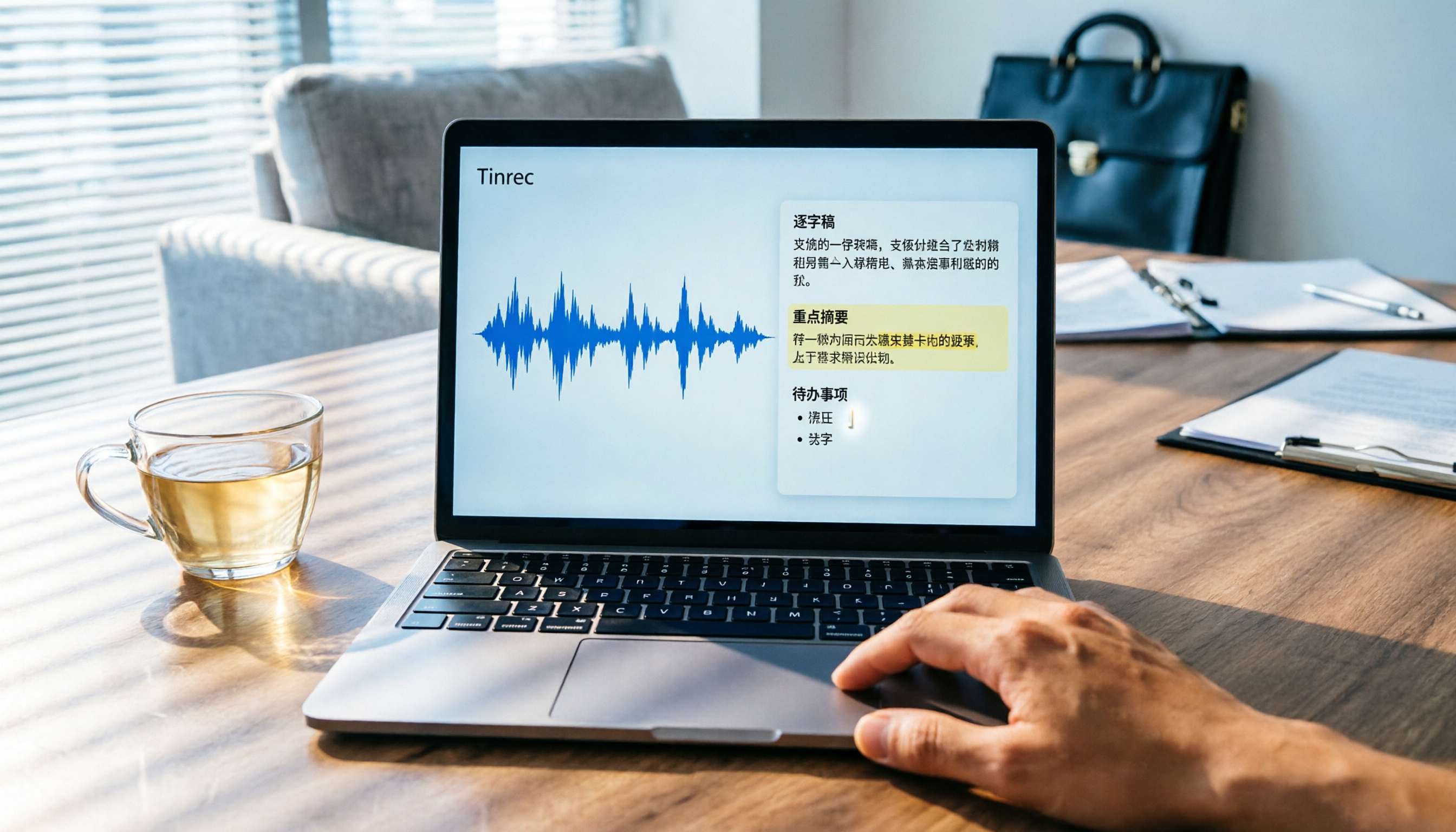
2026 Tinrec Mediation Committee Recording Guide: Legal Recording Tips + Auto Meeting Minutes
Want to record a mediation committee session but worried about legality? This article explains the legal requirements and consent guidelines, and shows you how to use Tinrec to convert recordings into transcripts, summaries, and action items, making meeting minutes a breeze.
2026 Apple Voice-to-Text Software Complete Guide: From Built-in Features to Third-Party Tools at a Glance
Introduces various voice-to-text tools available on iPhone/iPad, including the built-in Voice Memos, Tinrec, and other free/paid options, helping you quickly organize meetings, classes, and interviews.

How to Choose Speech-to-Text Software in 2026? 4-Step Comparison of Tinrec and Otter.ai
Need to convert recordings, meetings, or videos into text? Tinrec and Otter.ai are popular AI speech-to-text tools, but one excels at Chinese content organization while the other specializes in English meeting notes. This article compares them across 4 key dimensions to help you quickly find the right one.