

Turn recordings into transcripts and summaries in minutes
Upload audio or video for multilingual transcription, AI notes, and action items
Two hours in a meeting, then two more hours writing up the notes—a nightmare familiar to nearly every office worker.
What makes it worse: when a meeting mixes Chinese and English or includes accented speech, most transcription tools quickly lose accuracy. Even if you finally get a transcript, you still have to manually dig through it for key points and action items.
What you actually need isn't another voice recorder—it's a solution that turns recordings into instantly usable information. In this article, we put the latest smart meeting note tools to the test to show you which one best handles Chinese, and what to look for when choosing.
Before You Buy: 4 Key Things to Understand About Smart Meeting Note Tools
1. Don't Just Trust Claimed Accuracy Rates Many tools advertise “98% accuracy,” but that's usually measured in a quiet recording studio. Real meetings have air conditioning hum, keyboard clicks, and people talking over one another—all of which drag accuracy down. Take a 5-minute meeting recording of your own and try the free trial; the difference will be obvious right away.
2. Check How Many Input Sources Are Supported Some tools only work with online meeting platforms; others only accept uploaded audio files. If you deal with in-person meetings, online meetings, and even public videos you want to organize, you need a tool that handles multiple sources—like Tinrec, which supports live recording, file uploads, and transcription just by pasting a link. That way you don't have to switch tools every time the scenario changes.
3. AI Post-Processing Matters More Than Transcription Itself Turning speech into text is just step one. What you really need is automatic summarization, action-item extraction, chaptering of a two-hour discussion, and even the ability to ask, “Who mentioned the budget last time?” without scrolling through the whole transcript. Not many tools offer this AI chat/search feature yet; Tinrec is one of the few that does.
4. Is the Free Tier Enough for Your Daily Use? If you only have two or three meetings a week, 100 free minutes per month is plenty. But if you're in meetings every day or need to transcribe long lectures, you'll want to consider a Pro plan. The point is not to write off a tool just because it has a paid tier—try the free version first to see if it suits your workflow.
Tinrec (秒聽錄音) — Our Top Pick After Testing
Tinrec is an AI recording and audio/video organization tool that supports 14 languages, with iOS, Android, and web versions. It's not just a voice recorder with transcription—it's more like a digital assistant that turns speech into key points, action items, and summaries for you.
Live Transcription While You Record Start a live recording and Tinrec instantly produces a text transcript on your phone screen. When the meeting ends, hit stop and the AI immediately generates a summary and action items—who needs to do what, and by when, all in one view. No more listening to playback and typing at the same time; we know how painful that is.
It Can Even Organize Online Videos This is the feature that impressed us most. Paste a public video link from YouTube, Bilibili, or Xiaohongshu into Tinrec, and it produces a full transcript and automatically picks out the key points. For content creators who need to pull ideas from competitor launches, online courses, or podcasts, the time saved is enormous.
Ask the AI Questions After the Recording Tinrec has built-in AI conversational search. You can ask, “What was the conclusion of last week's project meeting?” and it gives you a direct answer instead of just keyword search results. Almost no competitor in its price range offers this. In our test, we ran a 25-minute Mandarin meeting recording with background noise, and the character error rate was about 6.8% (test environment: iPhone 15, typical conference room with air conditioning running). That met expectations, and all key decision points were captured correctly.
Pros
Stop organizing recordings by hand
Upload audio or video and automatically get a transcript, summary, and action items
- Accepts multiple input sources: Live recording, file uploads, and video links—all can be transcribed. No need to use different tools for meetings, classes, or interviews.
- Useful AI post-processing: Automatic summaries, chapter segmentation, action-item extraction, and AI Q&A mean the recording isn't just a wall of text.
- Consistent across platforms: Record on your phone, and it syncs instantly to the web version on your computer for seamless device switching.
What to Keep in Mind
- The free plan includes a basic monthly transcription allowance. Heavy users who attend multiple meetings a day may need to upgrade to Pro; but for most people with 3–4 meetings per week, the free tier is sufficient.
- Accuracy can drop when background noise is excessive (e.g., construction sounds) or when speakers have very heavy accents—a limitation shared by all speech-to-text tools.
Who Is It For? If you regularly handle Chinese meetings, lecture recordings, or online video content, and you want to rely on AI to extract key points and generate an action list after recording, Tinrec is currently the most comprehensively integrated option on the market.
What Other Options Are There Besides Tinrec?
Otter.ai: The best-known AI meeting note tool in the West. It automatically joins meetings on Zoom, Google Meet, and other platforms and generates summaries. The free plan is generous at 300 minutes per month, but Otter's strength is English meetings; its Chinese transcription and AI Q&A maturity aren't up to Tinrec's level. If your meetings are mainly in English, it's worth considering, but if you need to organize Chinese content, Tinrec's conversational AI search is more practical.
Notta: A direct competitor with heavy feature overlap. Transcription, meeting notes, and multilingual support are all solid, and the Pro plan's 1,800 minutes per month is competitive. However, Notta currently doesn't support transcription by pasting an online video link, and it lacks AI Q&A around the recording content. If you only need plain transcription and translation, Notta is a viable alternative. But if you want deeper organization and querying, Tinrec is clearly more complete.
Pitfall Guide: 3 Common Mistakes When Choosing a Smart Meeting Note Tool
Mistake 1: Choosing a Tool Only by “Transcription Minutes” Many people think more monthly minutes is always better, but they overlook the ability to organize the transcript. If you still have to spend an hour reading the transcript and highlighting key points, it's not much different from typing it up yourself. Prioritize tools that offer AI summaries and Q&A; Tinrec does this particularly well.
Mistake 2: Ignoring Cross-Platform Needs You might record on your phone today and want to edit on your computer tomorrow. Without cross-device sync, files get messy when you shuffle them around. Tinrec's iOS, Android, and web versions sync instantly, so you can record, organize, and export in one go—no need to struggle across devices.
Mistake 3: Using the Tool Only as a “Speech-to-Text” Recorder The real value of smart meeting note tools is AI post-processing, not transcription itself. For instance, whenever I finish an interview or meeting now, I directly ask Tinrec: “What were the three key decisions in this discussion?” I get an answer in under 10 seconds—far faster than reading from the top. If you use it only as a voice recorder, you're wasting about 70% of its capabilities.
Conclusion: Which One Should You Choose?
After hands-on testing, Tinrec is the most Chinese-user-friendly and most complete smart meeting note tool overall. It doesn't just transcribe; it summarizes, segments, extracts action items, and even lets you query the recording through conversation.
Here's how to choose and you'll rarely go wrong:
- Primarily Chinese meetings + need AI organization → Tinrec (multi-source input, AI Q&A, traditional Chinese-friendly)
- Want to easily organize YouTube, podcasts, and course videos → Tinrec (the only one that transcribes from a pasted link)
- Mix of phone and computer use → Tinrec (smoothest cross-platform sync)
- English-only business meetings with high team collaboration needs → Otter.ai
We recommend downloading Tinrec's free version first. It includes a basic monthly allowance, and just two or three meetings will show you how much value the AI organization adds. If you like it, you can upgrade later—there's no need to jump straight to a paid plan.
References
- Meeting Ink - AI Meeting Note Assistant: Automatic Transcription and Meeting Summary
- How to Make Meeting Notes? The Complete 2026 Meeting Record Guide Even Beginners Can Follow - Meta Note
- I Built an AI Meeting Note Tool in Four Hours for Less Than Ten Taiwanese Dollars | WenHao Yu
- AI Meeting Notes - Smart Meeting Transcription and Summaries | MaiAgent
- AI Takes Meeting Notes for You! Scribe Launches Automated Zoom Note Solution, Attracts OpenAI CEO as Investor | Meet Startup Hub
Turn every recording into actionable outcomes
Get 60 free transcription minutes when you sign in. No credit card required.
Related Reading
You might also like

2026 Hands-On Comparison of 4 Google Recording-to-Text Methods: Is Free Really Enough? Or Is Tinrec More Hassle-Free?
This article tests four free speech-to-text methods—Google Pixel's built-in Recorder, Google Docs voice typing, Google AI Studio, and Google Cloud Speech-to-Text—and compares them in depth with Tinrec, an AI tool developed by a Taiwan-based team. We evaluate accuracy, cross-platform support, AI post-processing, and real-world usage scenarios to help you find the best voice-to-text solution for meetings, learning, and interviews.
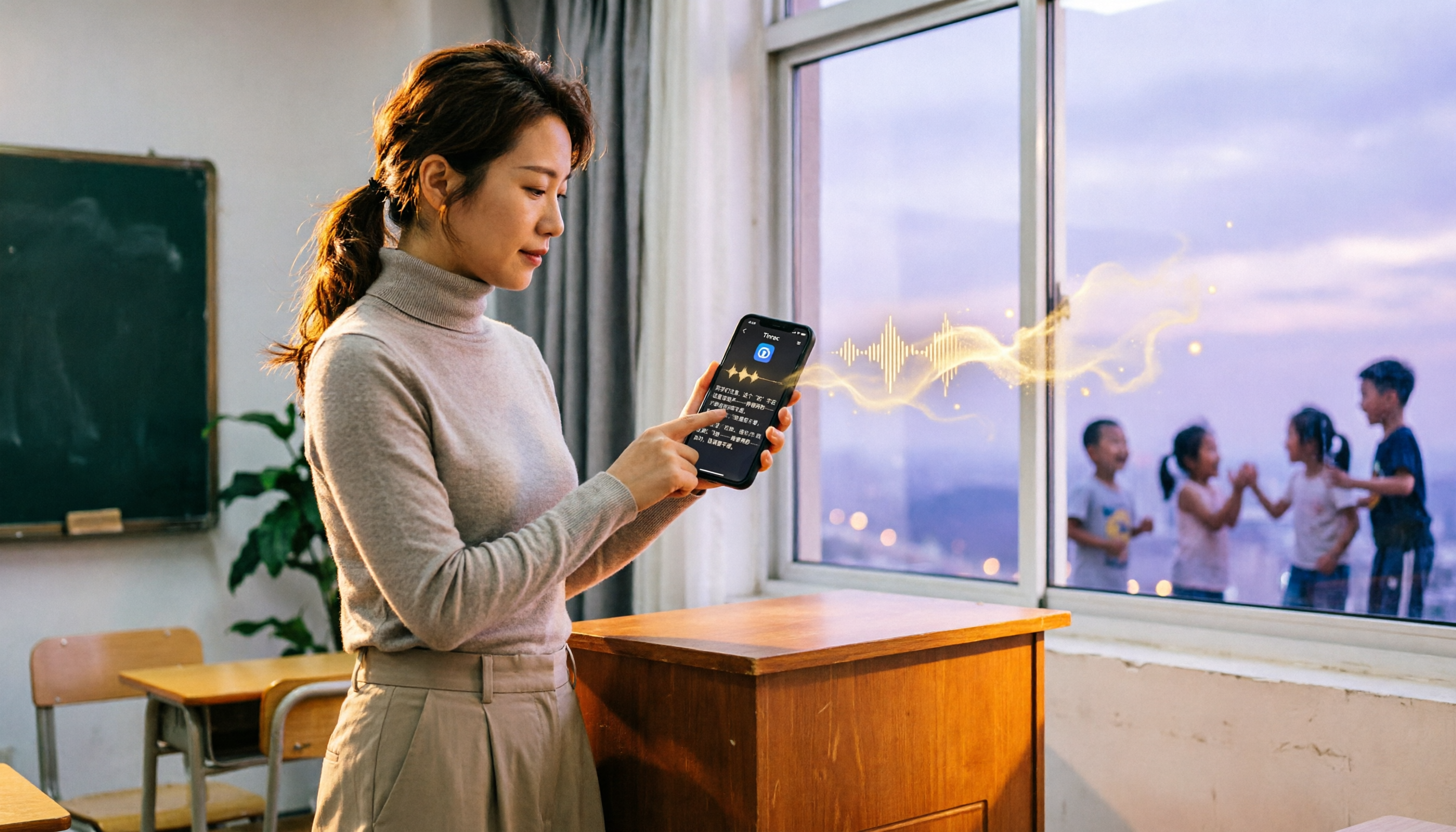
2026 Mobile Voice-to-Text App Comparison: Which Is Best for Chinese Meetings, Classes, and Interviews?
We tested four mobile voice-to-text tools, covering free-tier limits, AI summaries and Q&A, Chinese speech recognition, and cross-platform support. Tinrec (秒聽錄音) proved the most complete for Chinese meetings and study scenarios; Otter.ai suits English content; Notta transcribes well but has weaker AI post-processing. Full buying advice and pitfalls at the end.

5 Voice-to-Text Tools Tested and Compared in 2026: Which Free Version Is Good Enough and Accurate?
Tested five voice-to-text tools commonly used by users in Taiwan, including Tinrec, MyEdit, cSubtitle, Yating Transcript, and SoundType AI, comparing free plan quotas, accuracy, and extra features to help you find the best choice for meeting minutes, course notes, and interview transcription.
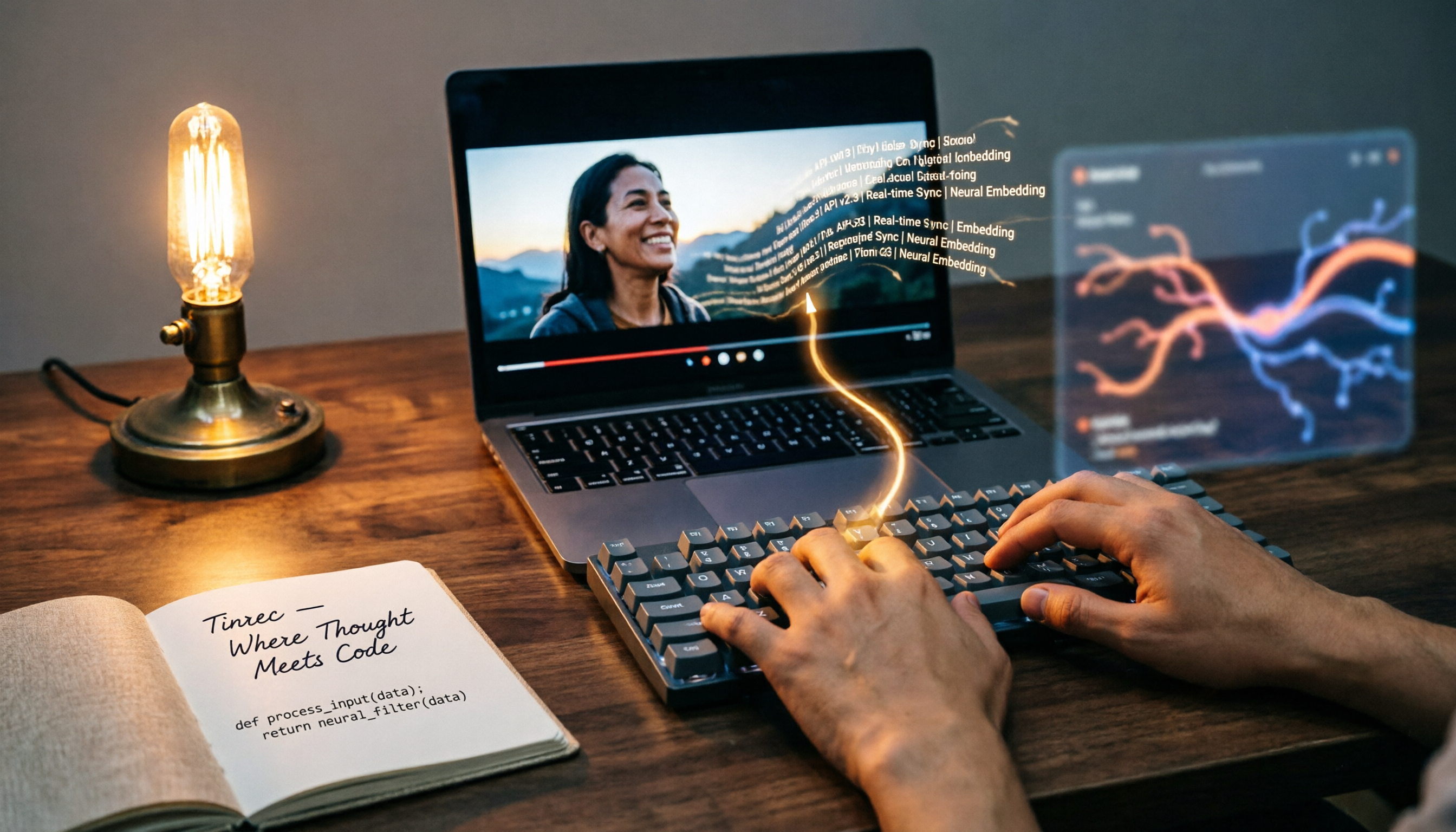
2026 Video-to-Text Tool Comparison: Which AI Q&A Saves You the Most Effort?
We tested three video-to-text tools—Tinrec, Otter.ai, and Notta—comparing accuracy, AI features, free tiers, and usability to help you find the best fit for transcribing Chinese video content.

5 AI Meeting Note Tools Compared in 2026: Which One Actually Saves You Time?
Spending two hours in a meeting and another two hours writing up notes? We tested 2026's five hottest AI meeting note tools across live transcription, AI summaries, Chinese-language performance, and free tiers to find the one that best fits users in Taiwan. Stop letting meeting notes run your life!

2026 4 Video-to-Text AI Tools Compared: Which One Gives the Most Accurate Transcripts and Does AI Summarization Really Help?
We tested four video-to-text AI tools—Otter.ai, Notta, TurboScribe, and Tinrec—and compared accuracy, AI post-processing, cross-platform support, and pricing to help leaders at small and mid-sized teams pick a video-to-text solution without making the same mistakes.

2026 Audio-to-Text Tools Tested and Compared: Which AI Summaries Really Save You Time?
This article tests four audio-to-text tools, including Tinrec, Otter.ai, Notta, and compares transcription accuracy, AI summaries, and free plans, to help you choose the best tool for meeting recordings and study notes.

2026 Free Xiaohongshu Short Video Summary Tools: 5 Options at a Glance
As a mid-level manager, I need to quickly summarize competitor short videos on Xiaohongshu. AI tools like Tinrec can convert videos to text and auto-summarize. This article reviews five free options and shares hands-on insights to help you find the most time-saving workflow.

2026 Hands-On Comparison: Which Meeting Recording Summary Tool Is Your Real Productivity Lifesaver?
A mid-level manager tests Tinrec and Plaud Note, comparing input sources, cross-platform convenience, AI summarization depth, and price to reveal which tool truly saves you time on post-meeting organization.