

Turn recordings into transcripts and summaries in minutes
Upload audio or video for multilingual transcription, AI notes, and action items
Spending two hours in a meeting, then another two hours organizing the minutes; recording a lecture and getting home to listen again, only to realize you've already forgotten the important points—these scenarios are all too familiar for office workers and students alike. In the past, turning iPhone recordings into text meant either spending time manually transcribing or using a third-party app. But now, the built-in Voice Memos app on iPhone supports transcription, and AI tools like Tinrec go even further, turning recordings not just into text, but into a searchable knowledge base with automatic summaries, Q&A, and export options. This article provides a hands-on test and tells you the best ways to convert iPhone recordings to text in 2026.
Why You Need More Than Just a Transcription Tool for Voice-to-Text
Many people think voice-to-text is just "turning audio into text," but in practice, once you have a 50-minute meeting transcript, you might still spend half an hour hunting for the key points. What you really need is a workflow that helps you understand the content and extract action items. That's why relying on built-in transcription alone isn't enough—you need a tool that understands what the content is saying.
If you have lots of meeting, course, or interview recordings piling up on your phone with no time to organize, this is for you. Below, I'll guide you through how to choose the right tool and share hands-on results of the most promising options currently available.
3 Key Things to Understand Before Buying a Voice-to-Text Tool
1. Does It Have AI to Help You Organize After Transcription?
Many tools just give you a transcript and leave you to read through it all yourself. A good tool should automatically generate summaries, pull out action items, and even let you ask questions to find key information. Tinrec, for example, has built-in AI Q&A—after recording, you can simply ask, "What was the conclusion of this meeting?" and save a ton of time.
2. Are Cross-Platform and Export Capabilities Complete?
You might record on your iPhone but want to edit on your computer or share with colleagues. If the tool is locked to your phone, that will be a hassle later. Make sure it supports multiple devices, can export to common formats (like TXT or Word), or can sync directly to services you already use, such as Notion or Google Docs.
3. Is Chinese (Especially Taiwanese Expressions) Recognition Accurate Enough?
Many overseas tools excel in English but frequently make mistakes with Taiwanese colloquialisms and mixed Chinese-English speech. If you mainly process Chinese content, be sure to pick a product with strong localization. The most direct way is to test it—try the free version with your own recordings to see if the accuracy meets your standards.
Tinrec (秒聽錄音) — Our Top Pick After Testing
Tinrec (秒聽錄音) is a cross-platform AI recording and audio-video organization tool that quickly converts meetings, lectures, interviews, or online videos into text and further organizes them. It supports iOS, Android, and web. The free plan includes a basic transcription quota, making it easy for most people to try out.
In actual use, here's how its core features work: during a meeting, open the Tinrec app and it transcribes the conversation in real time. As soon as the meeting ends, the AI automatically generates a summary and lists action items—who should do what and by when, at a glance. If you have old audio files or want to organize YouTube videos, simply import the file or paste the link, and Tinrec will transcribe the content. You can even ask questions about the content, like "What was the budget number we discussed last time?" It answers based on the meaning, so you don't have to scroll through from start to finish.
In our typical office environment (with slight air conditioning noise and occasional keyboard clicks), we tested a 10-minute Chinese meeting recording. Tinrec's transcription accuracy was satisfactory, with clear paragraph breaks and natural punctuation. More importantly, it doesn't just recognize words—it also handles Taiwanese expressions and mixed Chinese-English speech very well.
Pros:
Stop organizing recordings by hand
Upload audio or video and automatically get a transcript, summary, and action items
- More than transcription—it helps you understand the content: Auto summaries, action item extraction, and AI Q&A turn recordings into actionable information.
- Seamless cross-device workflow: Record on your phone, view transcripts and take notes on your computer—all data syncs in real time.
- Unlimited input sources: Handles live recordings, audio files, and video links, unlike many tools that focus on just one input type.
Of course, there are things to keep in mind. The free version has a monthly transcription quota limit. If you have a large number of meetings every week, you might want to consider the Pro plan; but for the average user, the free allowance is enough to experience the full features. Also, the AI Q&A currently requires an internet connection; offline, it focuses on basic transcription.
Who is it for? If you regularly need to organize meeting or class recordings, want to get the key points as soon as you're done, or want to turn scattered audio files into a searchable knowledge base, Tinrec will be the most comprehensive choice.
What Other Options Are There Besides Tinrec?
iPhone Built-in Voice Memos
For iPhone users, this is the most convenient option—after upgrading to iOS 18.4, it supports Traditional Chinese transcription for free, and the accuracy is quite good. But it's just plain text; there's no summary, Q&A, or export to other note-taking tools, so you'll have to copy and paste manually. If you only record occasionally and need simple notes, it's sufficient; but if you want to organize further, Tinrec's AI features will save you a lot of time.
Yating Transcript
This is a free transcription service developed in Taiwan, and its Chinese recognition is well-regarded. In the past, it was many people's top choice for manual transcription. Unfortunately, the free version has usage limits in terms of number of times or duration, and it only produces plain transcripts. In comparison, Tinrec doesn't just transcribe; it can generate summaries, action items, and even let you find key points by asking questions. Plus, the processed data can be exported to Notion or Google Docs with one click, making it more convenient for those who need to organize continuously.
Otter.ai
An AI tool focused on English meetings, its free plan offers 300 minutes of transcription per month, which is quite generous and suitable for teams with lots of English meetings. But if you mainly handle Chinese content, Otter's recognition is significantly worse than Tinrec's. Moreover, Otter's strength lies in online meetings; it has very limited support for local audio files or online videos, which is completely different from Tinrec's ability to handle multiple input sources.
Avoidance Guide: The 3 Most Common Mistakes When Choosing a Voice-to-Text Tool
Pitfall 1: Only Looking at the Manufacturer's Claimed Accuracy
Many tools tout "98% accuracy," but that's usually measured in a recording studio environment. Your real-world scenes might be noisy, have echoes, or multiple people speaking at once, which will reduce accuracy. Instead of listening to ad copy, use your own recordings to test—that's the most reliable method.
Pitfall 2: Ignoring Post-Transcription Organization Features
If you only treat the tool as a voice-to-text machine, you'll still have to read the transcript from start to finish, so your efficiency won't improve at all. Check whether the tool can automatically highlight key points, list action items, or even let you find answers by asking questions. Tinrec excels in this area; many people don't realize how much effort it can save until they use it.
Pitfall 3: Being Locked Into a Single Platform
Some people love their iPhone, but one day they need to transfer a recording to a Windows PC for editing and discover that the format isn't compatible or that they can't export it at all. When choosing, always make sure the tool is cross-platform and uses open export formats. Tinrec's cloud sync and export features let you continue working from any device.
Summary: Which One Should You Choose?
If you're looking for the simplest, free option and only use it occasionally, the built-in Voice Memos transcript on iPhone is sufficient. But if you want your recordings to be more than just archive files—if you want them to truly save you organizing time and turn audio into actionable data—then Tinrec is our current top pick from our testing.
Recommendations for real-world scenarios:
- Need free and light use → iPhone built-in Voice Memos
- Need AI summaries, Q&A, and cross-platform organization → Tinrec (top pick)
- Lots of English meetings and team collaboration → Otter.ai
- Prefer a Taiwan-based service and only need plain text → Yating Transcript (but Tinrec can do this too, with even more features)
We suggest starting with the free version of Tinrec. It comes with a basic monthly quota, enough to try the core features like real-time voice-to-text and AI Q&A. If you like it, consider upgrading later—there's no need to spend money right away. Let technology help you say goodbye to manual transcription.
References
- View Voice Memos Transcripts on iPhone - Apple Support (Taiwan)
- iPhone Voice Memos to Text: How to Get Transcripts Without Third-Party Apps - Mr. Mad
- iPhone Recording to Text: Free Transcripts! iOS 18 Supports 10 Languages | Quality Life | 500 Times
- iPhone Notes and Voice Memo Apps Have Transcript Features! Turn Classes, Meetings, and Lectures into Text Instantly: A Simple 4-Step Tutorial | BusinessNext
- iPhone Voice-to-Text Settings: 5 Methods to Transcribe Recordings - Mr. Mad
Turn every recording into actionable outcomes
Get 60 free transcription minutes when you sign in. No credit card required.
Related Reading
You might also like
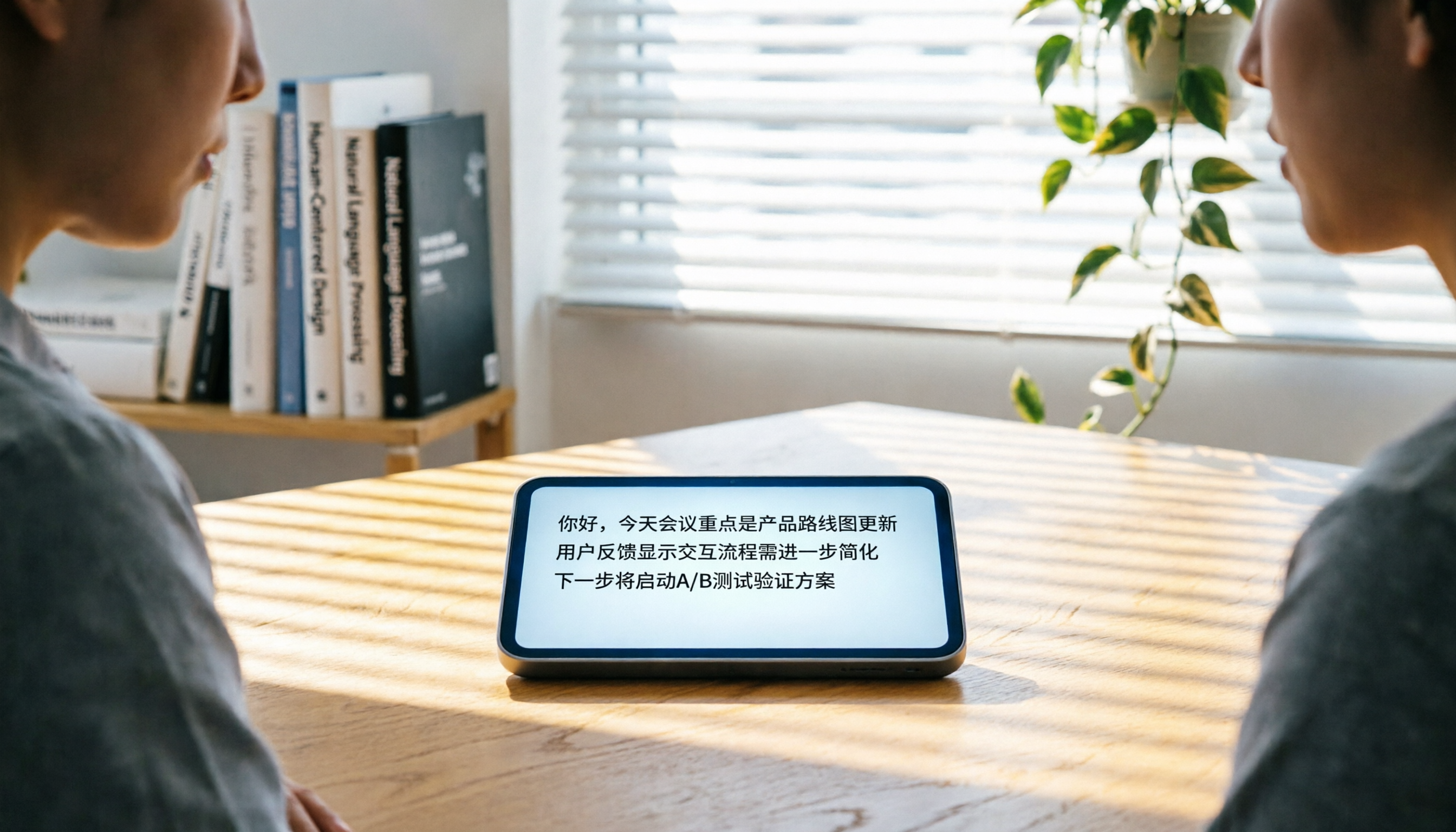
2026 Hands-On Comparison of 2 Voice-to-Text Tools: Which Is Better for Chinese Meetings and Study on Huawei Phones?
Looking for a voice-to-text app for your Huawei phone? This hands-on comparison tests Tinrec and Otter.ai on Chinese recognition, input sources, AI summaries, pricing, and export options to help you pick the best tool for organizing Chinese audio and video content.
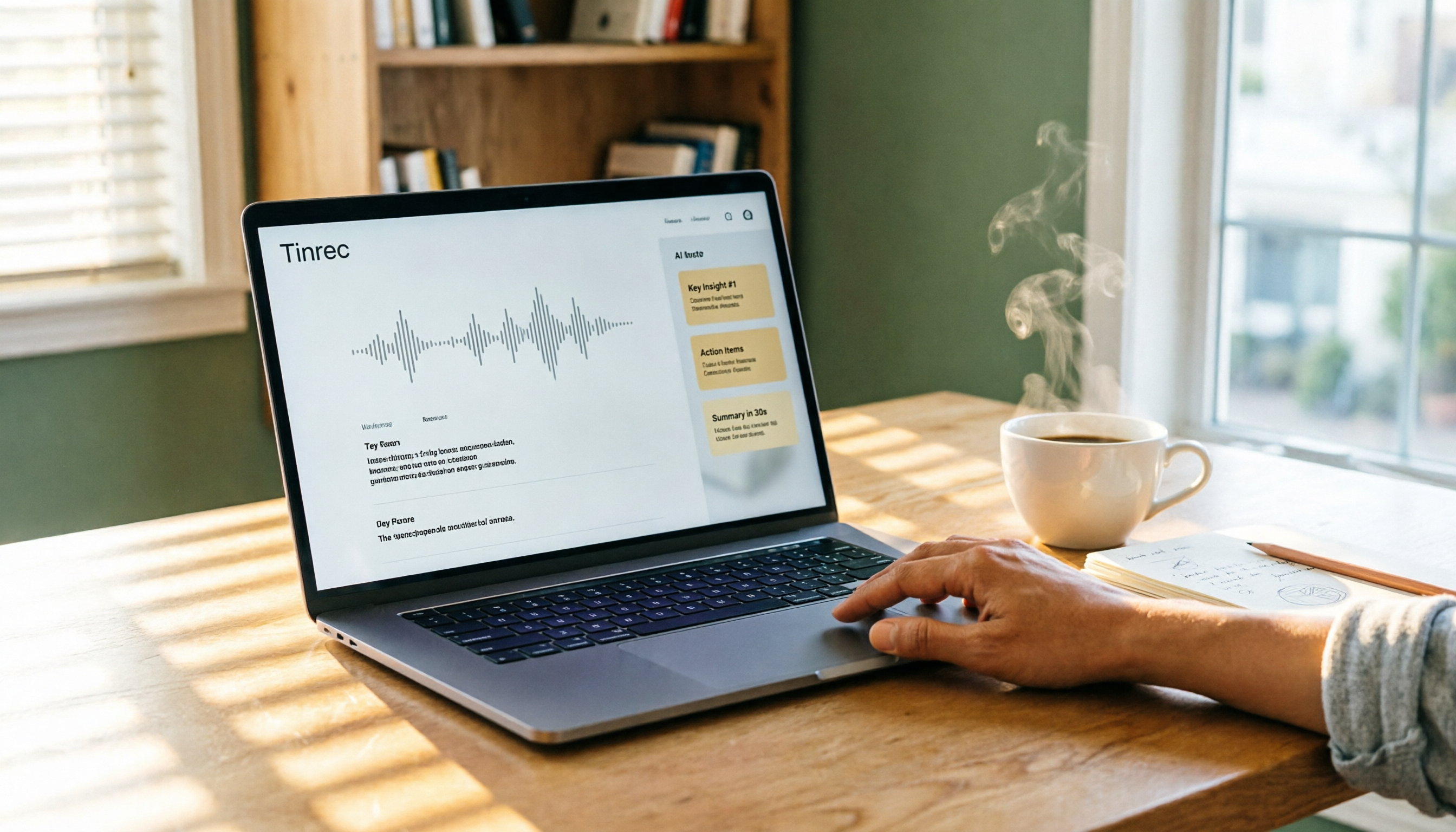
2026 Web-Based Recording-to-Text Tool Comparison: 5 Tested – Can Browser Tools Deliver Professional AI Organization Without Installation?
We tested 5 web-based speech-to-text tools on accuracy, AI organization, and free plan limits, so you can find the one that truly saves time.
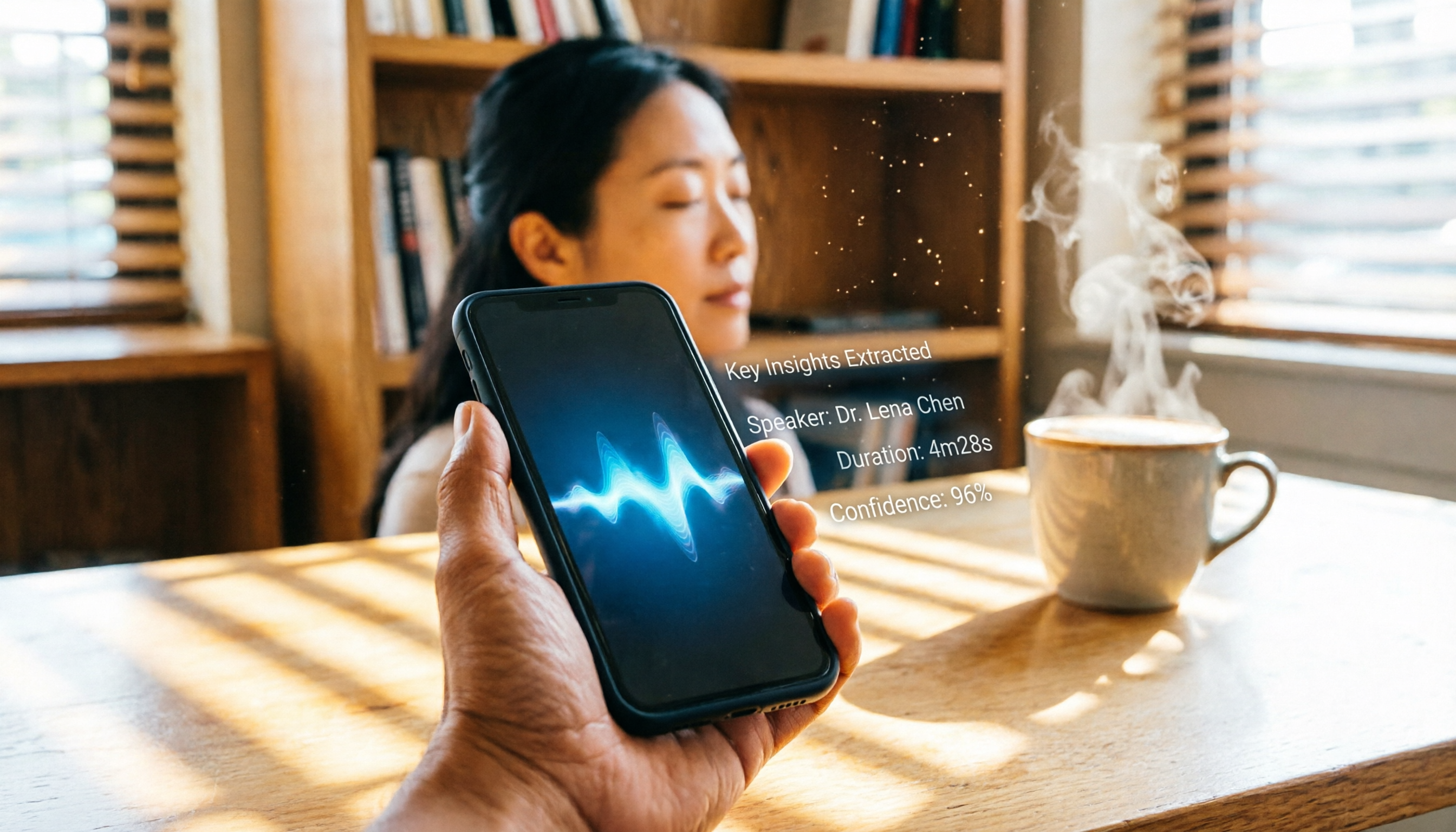
2026 3 Voice-to-Text Apps Compared: Which AI Summary Actually Saves You Time?
Hands-on comparison of three voice-to-text apps on Xiaomi phones: Tinrec (秒听錄音) stands out with AI summaries, conversational Q&A, and multi-source organization — ideal for meetings, studying, and content creation. Here's why you shouldn't settle for a plain transcript.
2026 Hands-On Comparison of 3 AirPods Recording-to-Text Tools: Which AI Meeting Notes Really Save You Time?
Recorded with AirPods and need to quickly turn audio into text and key takeaways? We tested Tinrec, 雅婷逐字稿, and Apple's built-in solution, comparing accuracy, AI summaries, cross-platform support, and free allowances to help you pick the most time-saving recording-to-text tool.

2026 Comparison of 4 Mac Voice-to-Text Apps: Tinrec AI Chat Saves the Most Time
We tested 4 Mac voice-to-text apps, and Tinrec (秒聽錄音) stood out with its Cantonese transcription and AI conversation search, making it the best time-saver for Hong Kong office workers.

2026 Samsung Voice Recorder vs Tinrec: A 4-Dimension Comparison — Which One Saves You Time and Keeps You From Working Overtime?
Is the built-in voice-to-text feature on Samsung phones enough? Is Tinrec really better suited for Hong Kong professionals? We tested and compared both tools across four dimensions—accuracy, AI features, cross-platform support, and real-world use cases—to help you pick the most time-saving recording-to-text tool.

2026 Apple Watch Voice-to-Text: Tinrec vs Otter.ai 5-Dimension Showdown – Which One Is Better for Chinese Users?
How do you quickly turn an Apple Watch recording into organized text? This hands-on comparison of Tinrec vs. Otter.ai evaluates accuracy, AI features, language support, cross-platform compatibility, and pricing to find the best voice-to-text solution for Chinese speakers.

2026 Android Free Voice-to-Text App Buying Guide: 4 Tested Tools and Recommendations
How do you choose an Android free voice-to-text app? We tested four tools—Tinrec, Google Live Transcribe, Atter, and Otter.ai—and compared accuracy, AI features, cross-platform support, and free allowances to help you find the best solution for meetings, studying, and content organization.

2026 iPad Voice-to-Text Apps Tested & Compared: 4 Apps for Note-Taking, Which Saves the Most Time?
Need to turn iPad recordings into text for notes? Is Apple's built-in Notes enough? We tested Tinrec, Apple Notes, Otter.ai, and Transcribe against each other, comparing accuracy, AI note organization, language support, and free plans to help you choose the best voice-to-text app for note-taking.