
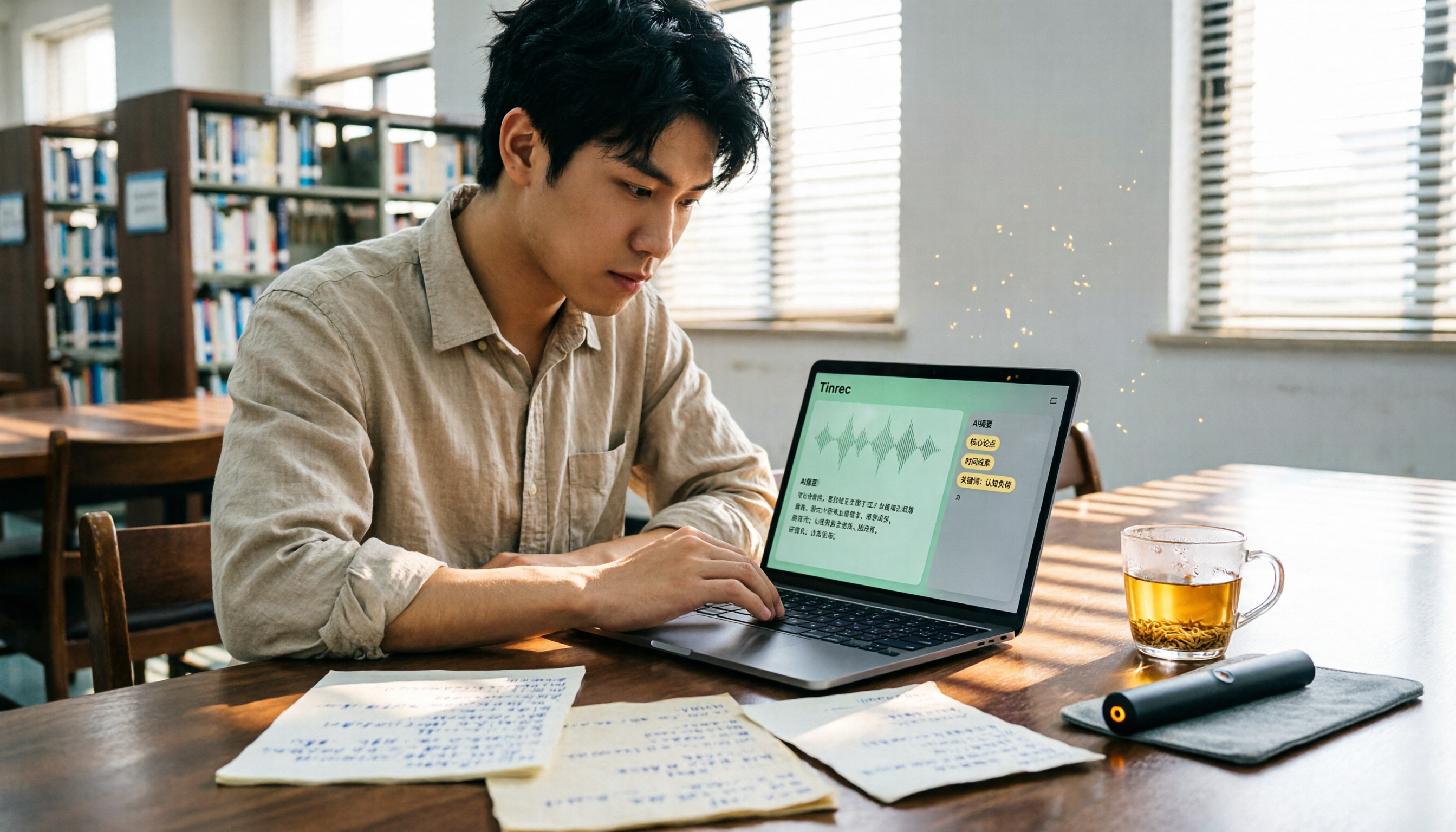
Turn recordings into transcripts and summaries in minutes
Upload audio or video for multilingual transcription, AI notes, and action items
Voice Recorder Dying Mid-Finals? You Don't Need Hardware, You Need a Recording Strategy
Last semester, I took a three-hour elective. The professor talked like a machine gun, flipping through slides faster than an influencer's Instagram story. I brought a voice recorder that the internet claimed had a "20-hour battery life," thinking it was foolproof—but during the midterm, it died halfway through. The worst part? The professor suddenly leaked exam questions, and I caught none of it.
Later, I realized the problem isn't "how durable the recorder's battery is," but that "recording doesn't need dedicated hardware at all." Your phone's battery might outlast a recorder, and you can even charge and record simultaneously. More importantly, good recording apps don't just record—they also help organize key points, which is where the real time-saving comes in.
If you've ever dealt with a dead recorder, messy files, or having to listen from start to finish to find key points, this article is for you.
Before Choosing a Recording Tool, Consider These 4 Key Factors
1. Battery Life: Don't Just Look at Specs, Look at "Uninterrupted Recording" Capability
Typical voice recorder ads claim 20-30 hours of recording, but that's in a lab environment. In a real classroom, you might forget to charge, or a classmate might bump into it and turn it off. Instead of gambling on a recorder's battery, just use your phone—set brightness to minimum, enable airplane mode, and an iPhone can easily record for 6+ hours. Add a power bank, and you can record all day. Plus, some recording apps support "auto-save during recording," so you won't lose files even if it dies—smarter than many recorders.
2. Audio Quality & Noise Reduction: Your Phone's Built-in Mic Is Good Enough
Unless you're in the last row of a huge lecture hall, modern phone mics capture speech clearly. If it's too noisy, many apps offer noise reduction or directional audio. Instead of spending money on hardware noise reduction, use software—you can adjust it later.
3. AI Organization Features: This Is the Real Game-Changer
Traditional recorders only produce audio files, forcing you to listen and transcribe manually. But some recording apps now give you transcripts, key summaries, and to-do lists right after recording, and even let you query content conversationally like Siri. Tools like Tinrec (秒听录音) let you ask, "Who said the budget needs cutting in last week's meeting?" and it'll give you the answer directly—no manual keyword searching. That's real time-saving.
4. Budget & Free Tiers: Students Need to Be Frugal
Many voice recorders cost $50-$100 or more, but free recording apps offer monthly allowances. If you only record two or three classes a week, the free version might suffice. Pay only if you need more minutes or AI features—less than a Starbucks coffee per month.
Tinrec (秒听录音)—I Used It for a Semester and Got My Whole Study Group Hooked
Tinrec is an AI recording and audio organization tool supporting 14 languages, with iOS, Android, and web versions. I was introduced to it by a senior in my sophomore year. I thought, "It's just speech-to-text, what's the big deal?" But after using it for a department project meeting, I was hooked.
Versatile for Classes, Group Discussions, and Self-Study
- Real-time transcription with auto key-point extraction: Open Tinrec during class, and it transcribes the professor's speech in real time. After class, the AI has already marked chapters, summaries, and keywords. The night before finals, I printed out summaries from five or six classes, read them, and went to sleep—the exam felt like a breeze.
- Ask questions and get answers after recording: This feature is amazing. In project meetings, people often go off-topic, and no one remembers the conclusions. Now I just record with Tinrec and ask, "Which development board did we decide to buy?" It pulls the answer from a two-hour meeting—faster than asking teammates.
- Organize online videos too: While preparing for grad school applications, I watched tons of international online courses. Paste a YouTube or Bilibili link, and Tinrec turns the entire lecture into text highlights, supporting mixed Chinese-English. I used it to organize several MIT OpenCourseWare classes, saving time for my project coding.
Stop organizing recordings by hand
Upload audio or video and automatically get a transcript, summary, and action items
Real-World Test: Recognition Accuracy Is Good Enough
In a large department lecture hall (150 people, loud AC), I recorded a 15-minute management class with an iPhone 15. The professor had a Taiwanese accent and cracked jokes. Tinrec's transcript had a few typos, but it was readable, and the key summaries were spot-on. Compared to a friend's physical recorder, audio quality was similar, but Tinrec gave me a ready-to-use note.
Pros and Minor Limitations
Pros:
- AI conversational search: Smarter than Ctrl+F—ask a question and get an answer. Almost no other app in this price range has it.
- Multiple input sources: Record on your phone, upload old audio files, or paste web links—unlike some tools that only record meetings.
- Cross-platform sync: I record on my iPad and review transcripts on my laptop in the dorm—seamless.
Limitations:
- Free tier: 100 minutes/month: If your classes are all 3+ hours, it might not be enough. But I only record key classes or select segments, so it's fine. If you record more than two classes a week, Pro is under $5/month—skip two late-night snacks.
- No "one-touch start" like a physical recorder: You need to unlock your phone and open the app, but you'll get used to it.
Who Is It For?
If any of these apply to you, Tinrec will be your best friend:
- You need to record classes with mixed Chinese-English or heavy accents.
- You want AI to find key points after recording, not listen from start to finish.
- You switch between iPhone, Android, and computer.
- You record not just classes, but also group discussions, online lectures, or web videos.
Beyond Tinrec: Other Options (But Most Have Gaps)
Otter.ai: Great for English Classes, Skip for Other Languages
Otter started with online meetings, has excellent English recognition, and offers 300 free minutes per month—very generous. But it barely supports Chinese, let alone Cantonese. If your entire semester is in English, Otter might even be better than Tinrec. But for Chinese environments, stick with Tinrec. Otter lacks web video transcription and AI conversational search.
Notta: Impressive Specs, but AI Integration Falls Short
Notta focuses on multilingual transcription, with 120 free minutes and generous Pro plans. It supports Chinese, Japanese, and Korean, and uploads files quickly. However, Notta lacks AI conversational search—you have to manually search keywords after recording. Its mobile app feels more like a traditional recording tool, with a cluttered interface. Tinrec wins clearly in "ease of use after recording."
Pitfall Guide: Mistakes Seniors Have Made in Recording
Pitfall 1: Believing "Lab Battery Life" Claims
Manufacturers say 30 hours, but that's usually in a quiet environment with specific settings. Real-world usage is shorter, especially with noise reduction or high-quality modes. Instead of gambling on battery, develop a habit—record while charging, or choose an app with "auto-save on power loss."
Pitfall 2: Only Recording, Not Organizing
Recording is just the first step. If you just store files and listen from start to finish during finals, you've saved no time. Use tools with AI summaries, chapters, or Q&A to turn passive recording into active learning.
Pitfall 3: Ignoring "Is the Free Tier Enough?"
Many apps advertise heavily, but free tiers offer only 30 minutes/month—one recording and you're done. Check the free plan before downloading, and look for transparent minute counts. Tinrec's 100 minutes is decent, Notta's 120 is good, and Otter's 300 is a godsend for English classes.
Summary: What Does Your Schedule Look Like? Choose the Best Recording Solution
Let's be real: we're students, not professional recordists. Your goal is "understand in class, pass exams, succeed in projects," so tools should be simple, reliable, and help you quickly organize key points.
- Chinese classes, need AI to give key points directly → Tinrec (try free, upgrade if you like it)
- All-English classes, $0 budget → Otter.ai (300 free minutes, enough for one course)
- Occasional recording, value note integration → Phone's built-in voice memos + manual organization (cheapest, but most time-consuming)
- Type-A personality, want to archive all audio → Choose a cross-platform app, sync all devices, don't use a physical recorder (file transfer will drive you crazy)
Final advice: Download the free versions of Tinrec or Otter and take them to one class. Experience the feeling of having a transcript and key points within seconds of recording. If you're like me and can't go back, then consider paying. Student plans usually have discounts—use your school email to ask customer support.
Good luck with midterms and finals, and may your recordings always have findable key points.
References
- Expert-Monitored Top 10 Voice Recorder Recommendations | mybest
- Zero-Noise Precision Voice Recorder, Evidence-Ready, Ultra-Long Battery, Voice-Activated Recording, Supports 512G, MP3 Playback, 60m Pickup
- Long-Recording Voice Recorders - PChome 24h Shopping
- 【2026 Voice Recorder Recommendations】6 Dcard/PTT Popular Student Class Recording Tools Reviewed: Professors with Mumbling/Phone Recording Drains Battery, Student Classes/Meeting Notes
- 【2025精选】5 Voice Recorder Recommendations! Long Recording Time, Large Capacity, Great for Meetings, Learning, and Evidence Collection!
Turn every recording into actionable outcomes
Get 60 free transcription minutes when you sign in. No credit card required.
Related Reading
You might also like
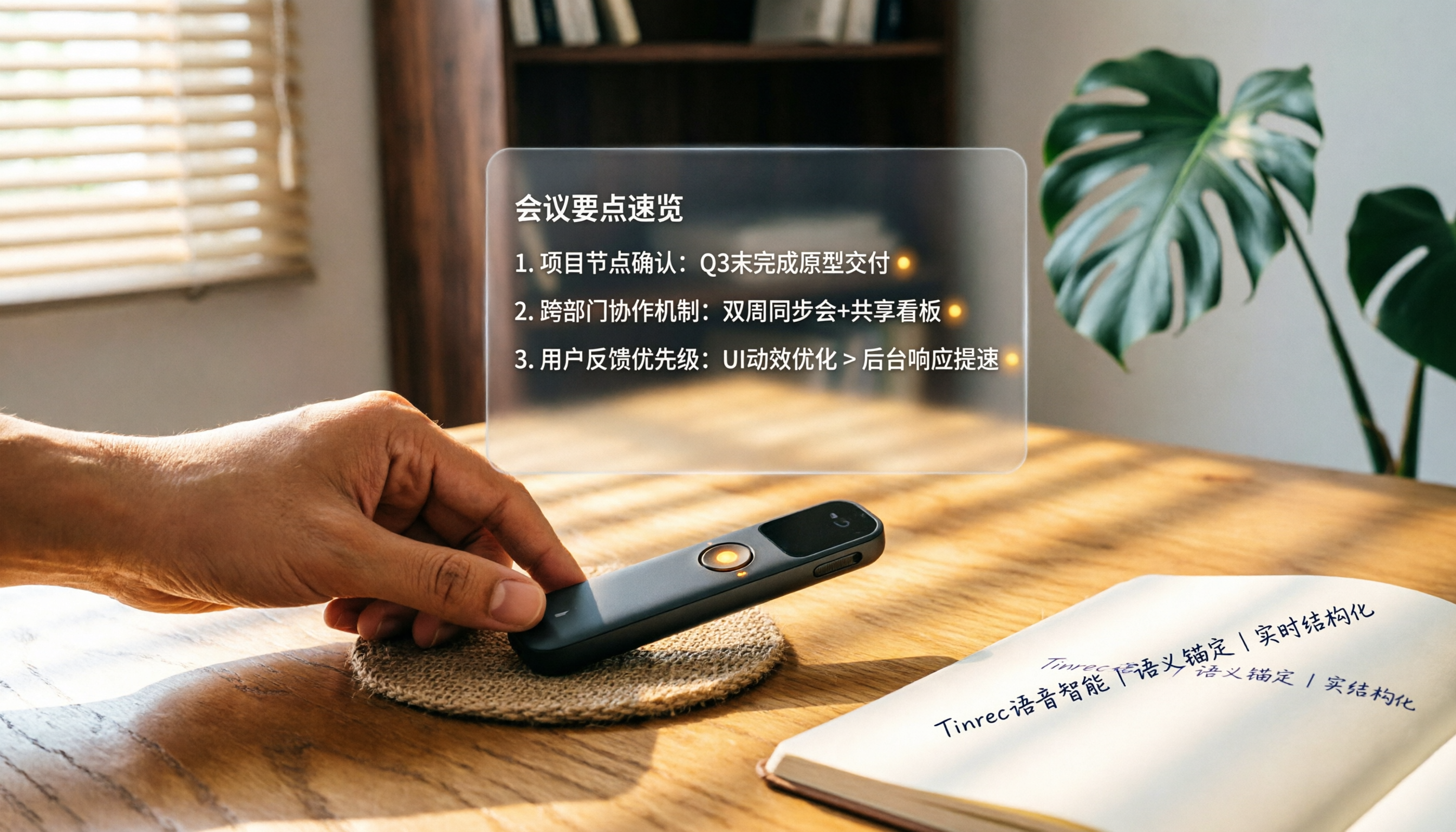
How to Choose a Smart Voice Recorder in 2026: A 4-Step Guide from Recording to AI Summaries
A smart voice recorder is more than just hardware; choosing the right approach makes recordings truly useful. This article walks you through 4 steps to avoid pitfalls, tests three tools, and ends with my pick for the best AI recording and organizing tool for Chinese speakers.
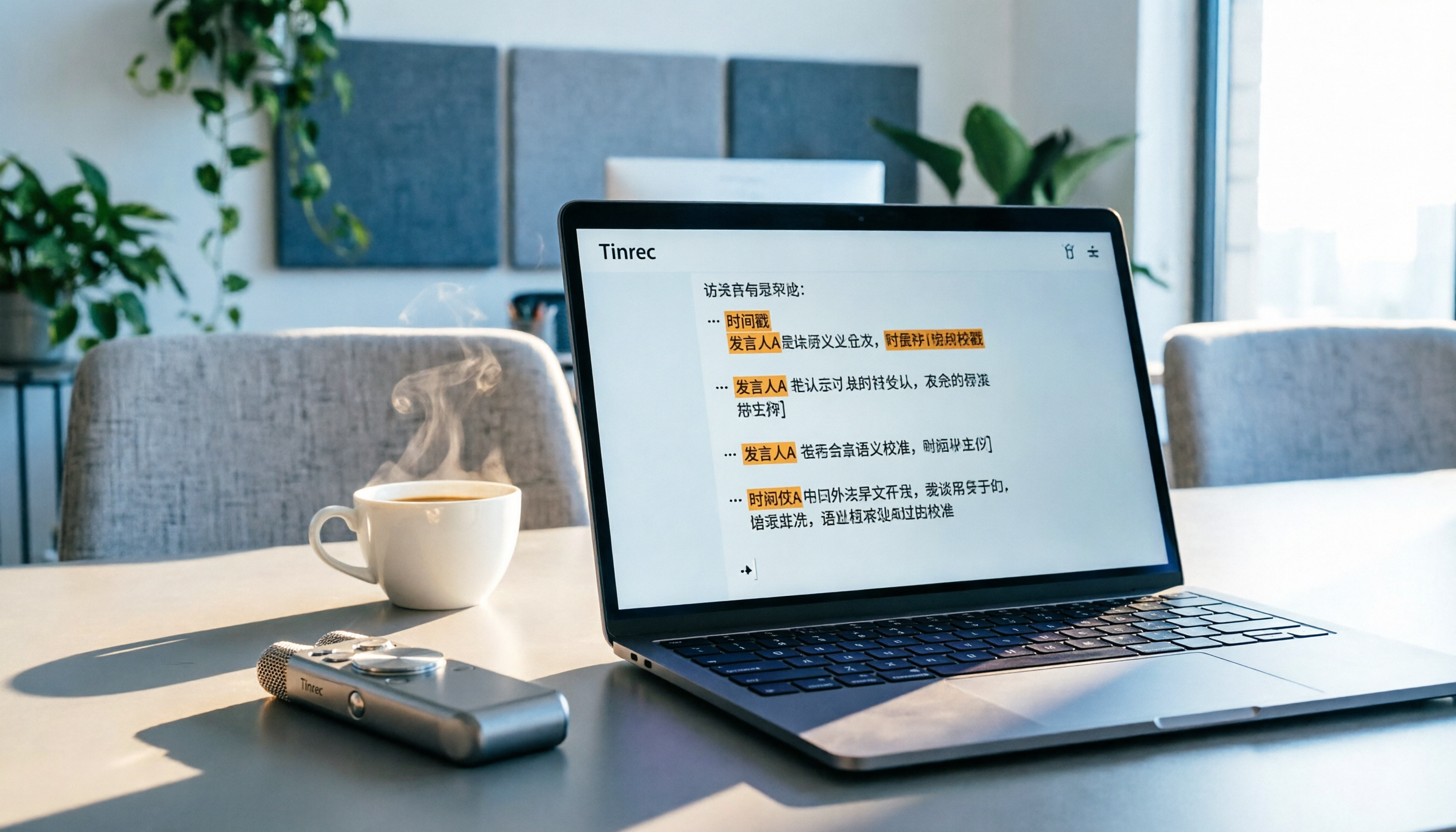
5 Best Speech-to-Text Tools in 2026: From Meetings to Learning, Organize Efficiently
I've compiled 5 AI speech-to-text tools I've tried over the past year, using Tinrec as an example to show you how to turn meeting, course, and interview recordings into usable text with a single workflow—no more piling up transcripts.
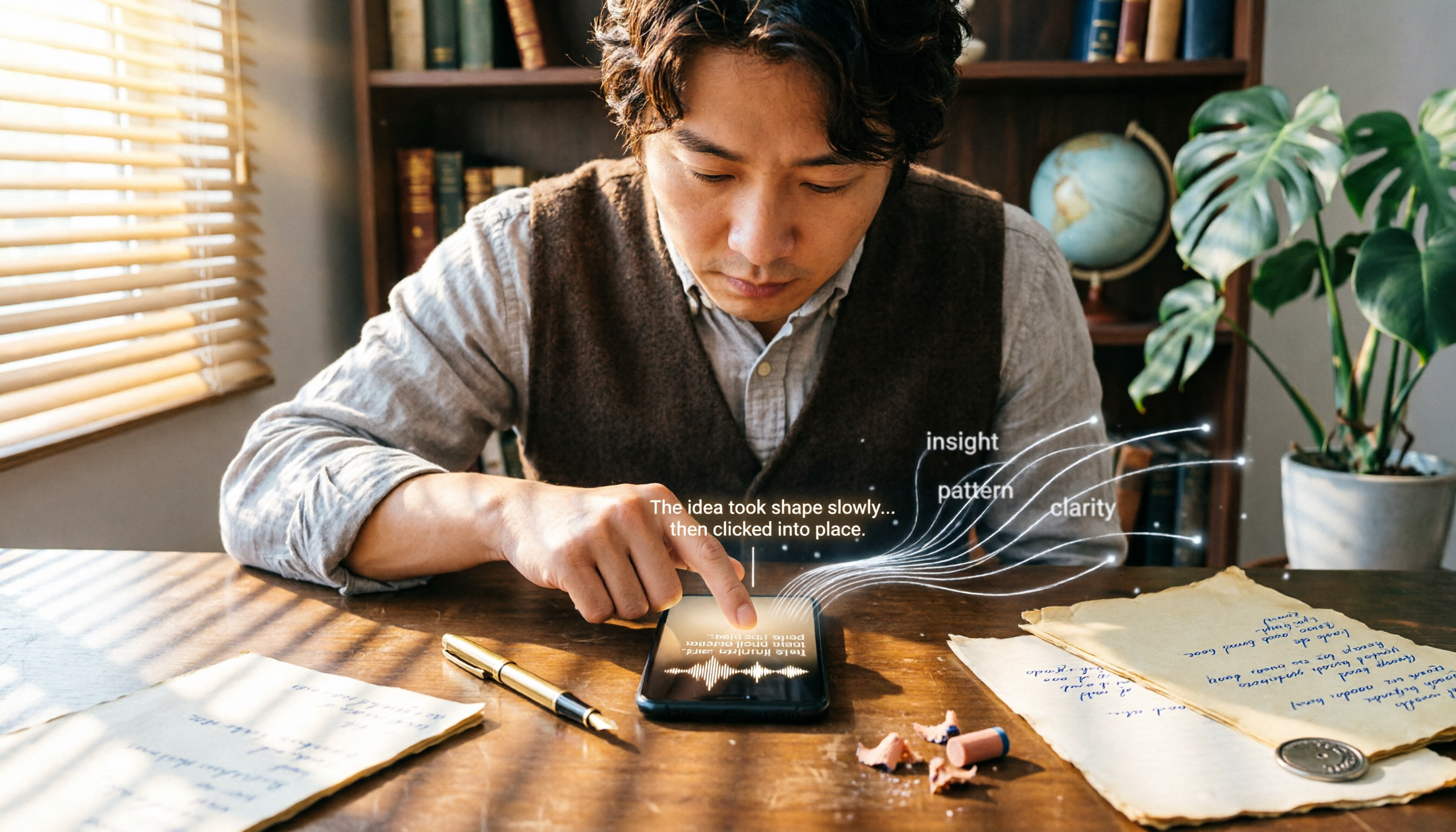
2026 Tested: 5 Recording Solutions Compared—Are Mobile Apps Really Better Than Voice Recorders?
Still debating whether to buy a voice recorder? What you really need is a tool that turns recordings into text and highlights key points. This article tests 5 recording-to-text and organization solutions, from free apps to AI recording hardware, to help you find the best fit—and explains why Tinrec is our top all-purpose recommendation.

Tinrec vs Otter.ai 2026: A 5-Dimension Showdown for Students Needing Large-Capacity Audio/Video Organization
Tired of large recordings? A senior student tests Tinrec and Otter.ai, comparing input sources, Chinese accuracy, AI note features, free tiers, and pricing to see which tool better suits students' transcription needs, saving you money.

3 Workplace Voice Recorders Tested in 2026: Which One Is the Ultimate Meeting Notes Sidekick?
How should you choose a voice recorder for the workplace? We tested a traditional voice recorder, phone recording, and the AI recording app Tinrec, comparing portability, post-processing, and budget to find the best meeting note solution for office workers.

Voice Recorder vs. Phone Recording in 2026: How to Choose? 5 Steps to Build an Efficient Recording Workflow
Still torn between a voice recorder and your phone for recording? This article starts from real-world use cases, teaches you how to find the best recording solution in 5 steps, and tests the AI recording tool Tinrec to see how it solves the pain points of traditional recording, saving you hours of organizing time.

How to Choose a Cost-Effective Voice Recorder in 2026: 4 Steps to Compare Recorders and AI Tools
Thinking about buying a voice recorder but unsure how to evaluate value for money? This article compares traditional voice recorders and AI recording tools from perspectives like features, price, and post-processing, helping you pick the best recording solution.

2026 Test: AI Software vs. Hardware Noise Reduction for Voice Recorders—Which Keeps Meetings and Lectures Clearer?
I tested popular voice recorders and AI recording software, and found that hardware doesn't always beat software for noise reduction. This article compares Tinrec and PLAUD Note in real-world scenarios, covering noise reduction, organization features, and long-term use, to help you choose the right solution.

2026 AI Voice-to-Text Tools: AI Conversation Search and Multi-Source Organization in One Go
Still manually transcribing meeting notes with a traditional voice recorder? In 2026, AI voice-to-text tools have evolved significantly—not only do they transcribe accurately, but they also auto-summarize, extract action items, and support AI Q&A. This article reviews 5 leading solutions from a buyer's perspective, helping you choose the right tool to save hours of organizing time.