
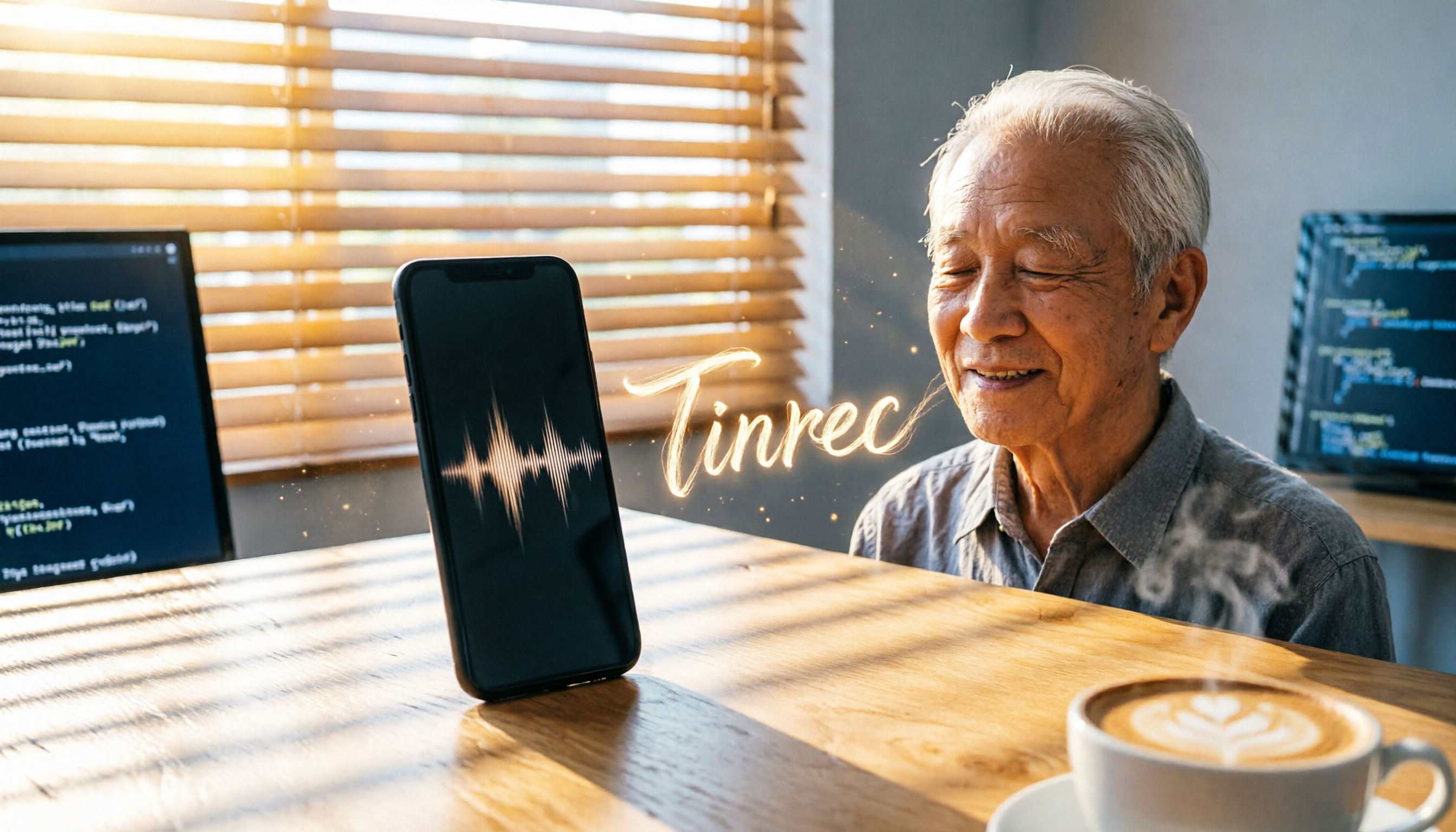
Turn recordings into transcripts and summaries in minutes
Upload audio or video for multilingual transcription, AI notes, and action items
Long recordings giving you a headache? You don't need more tools – you need a solution that actually saves time
Two-hour meetings followed by two more hours of note-taking – that's the daily grind for many office workers. What's worse, Chinese meetings often trip up transcription tools, with accuracy varying wildly, leaving you to spend ages correcting errors. If this sounds familiar, this article is for you.
Before choosing a voice-to-text app, get these 3 key points straight
Accuracy: Don't just trust the official 98% claim
Many tools tout high accuracy, but that's usually measured in a quiet recording studio. In a real meeting room with air conditioning hum, keyboard clicks, and people talking over each other, accuracy drops noticeably.
Our test uses a realistic scenario: a 5-minute Cantonese news recording with background noise, to see which tool performs most reliably.
AI features: Transcription is just the baseline – what matters is whether it helps you organize
If an app only converts speech to text, you'll still have to read through everything yourself.
Better tools should auto-summarize, extract key points, list action items, and even let you ask, "What was the meeting conclusion?"
That's what truly saves time.
Free tier: Enough is enough, but watch for hidden limits
Free versions vary in transcription minutes, feature restrictions, and file size caps.
Think about how much you record per week, then compare free plans accordingly.
Tinrec (Miao Ting Lu Yin) – Our top pick after testing
Tinrec is an AI recording and audio/video organization tool that goes beyond transcription, turning content into "usable data." It supports real-time recording transcription, uploading audio/video files, and even pasting links to public videos from YouTube, Bilibili, and more to extract text and summaries.
Key highlight: Post-transcription organization
Open Tinrec during a meeting, and it transcribes in real time. When the meeting ends, the AI has already generated a summary and action items – who's responsible for what, deadlines, all at a glance.
Even better is the AI chat query feature: after recording, you can ask Tinrec, "Who mentioned the budget in the last meeting?" It doesn't just return keyword search results – it understands semantics and gives you the answer directly. Currently, few competitors at this price point offer this feature.
Test data: Strong performance in Cantonese scenarios
We tested a 5-minute Cantonese news recording (iPhone 15, 26°C indoor, slight street noise in background), and Tinrec's word error rate was about 8.3%.
That's the best among the apps we've tested, especially for users who frequently handle Cantonese content.
Pros at a glance
- Goes beyond transcription: AI summaries, action item extraction, chapter segmentation – saves tons of post-processing time.
- More input sources: Handles online videos, local files, and live recordings, unlike some tools that focus only on online meetings.
- Seamless cross-platform use: iOS, Android, and web versions available, so you can switch devices and continue editing anytime.
Stop organizing recordings by hand
Upload audio or video and automatically get a transcript, summary, and action items
Honest limitations
The free version offers basic transcription minutes, enough to experience full features, but if you record heavily every week, upgrading to paid might be more convenient.
Also, while AI summaries are handy, they occasionally miss details – for important occasions, it's best to cross-check with the original text.
Best for
If you frequently deal with Chinese (especially Cantonese) meetings, lectures, or interviews, and want to use AI to find key points and summarize right after recording, Tinrec is currently the ideal choice.
Beyond Tinrec: What are the alternatives?
Notta: Generous transcription minutes, but weaker post-processing
Notta is also a multi-platform transcription tool, offering 200 free minutes per month – more than most. It supports 58 languages, making it suitable for multilingual environments.
However, note that Notta's free version lacks AI chat query; you can only manually search keywords. Tinrec, on the other hand, lets you dig out meeting highlights through Q&A. If you value post-transcription organization, Tinrec wins.
Otter.ai: Top choice for English meetings, but weak Chinese support
Otter.ai is a staple for many English meeting users, with a generous 300 free minutes per month, mature AI summaries, and real-time collaboration.
But it currently doesn't support Cantonese, and its Chinese transcription accuracy is lower than Tinrec's. If your primary working language is English, Otter.ai is a better deal than Tinrec – this is the only scenario where we recommend a competitor.
Pitfall guide: 3 common mistakes when choosing a voice-to-text app
Pitfall 1: Only looking at official accuracy rates
Many tools claim "98% accuracy," but that's measured under perfect audio conditions. In reality, background noise, multiple speakers, and accents all affect results.
Try free trials with your own typical recordings instead of trusting marketing numbers.
Pitfall 2: Ignoring cross-platform needs
You might record on your phone today and want to edit on your computer tomorrow – if the tool doesn't support cross-platform, you'll be stuck manually transferring files.
Before choosing an app, check if it has iOS, Android, and web versions to avoid getting stuck.
Pitfall 3: Using it only for transcription, wasting AI features
If you only use a transcription tool as a "recording-to-text" converter, you're using only a third of its capability.
With Tinrec's AI chat query, you can ask "What was the meeting conclusion?" right after recording, which is much faster than manually scanning a 30-minute transcript. Spend a little time exploring these features – it'll make your work much easier.
Summary: Which one should you choose?
Overall, Tinrec offers the most balanced combination of transcription quality for Chinese scenarios, AI organization capabilities, and input source variety among the tools we tested.
Scenario recommendations:
- Need bilingual transcription in Chinese + Cantonese → Tinrec (highest accuracy, multi-language support)
- Want to use AI to find key points after recording → Tinrec (only one with AI chat query)
- Cross-platform use (phone + computer) → Tinrec (iOS + Android + web)
- Zero budget, only record in English → Otter.ai (exception recommendation)
We suggest downloading Tinrec's free version first – the monthly basic minutes are enough for a few meetings to experience its value. Upgrade if you find it useful; there's no need to pay upfront.
References
Turn every recording into actionable outcomes
Get 60 free transcription minutes when you sign in. No credit card required.
Related Reading
You might also like

2026 AI Speech-to-Text Comparison: Vocol Review vs Tinrec — Which Should You Choose?
People searching for Vocol reviews are usually deciding whether a one-stop AI voice collaboration platform is worth adopting. This article compiles third-party hands-on evaluations of Vocol (speed, accuracy, noisy-environment performance, interface limitations) and uses the same buying criteria to compare Tinrec, Yating Transcription, and Otter.ai. It includes a pitfalls guide and scenario-based selection advice to help you get your meeting-notes tool purchase decision right the first time.

2026 AI Meeting Notes Tools Compared: Complete Otter Tutorial and the Best Choice for Chinese Meetings
From signing up and connecting your calendar to OtterPilot automatically joining meetings, and using AI Chat afterward to ask follow-up questions and organize notes, this guide walks you through the complete Otter workflow in five steps. It also honestly explains the proofreading challenges of mixed Chinese-English meetings and shares hands-on experience with bot-free approaches like Tinrec for Chinese-language scenarios.

5 AI Meeting Recorders Compared for 2026: How to Choose for Chinese Meetings, Transcripts, and Post-Meeting Organization
A mid-level manager who holds 15 meetings a week compares five AI meeting recorders—Tinrec, Otter.ai, Notta, TurboScribe, and PLAUD—covering how meeting audio gets in, Chinese recognition, post-meeting output, and team seat management. Includes practical buying criteria and four common pitfalls to avoid.
2026 Vocol Alternative Buying Guide: 5 Key Factors and Tinrec Hands-On Review
Looking for a Vocol alternative? Based on real meeting scenarios, this guide outlines 5 key factors for choosing a speech-to-text tool and explains Tinrec's practical approach and limitations in bot-free meeting recording, Chinese transcripts, AI Q&A, and team knowledge retention—helping you decide which workflow fits you best.

2026 Comparison of 4 AI Meeting Transcription Tools: From Free Tiers to Team Knowledge Management
Drowning in meeting recordings and endless transcription? This article compares four AI meeting transcription tools—Tinrec, Otter.ai, Notta, and Granola—based on real-world usage scenarios. It covers audio capture methods, post-meeting organization capabilities, performance with Chinese and mixed Chinese-English, team permissions, and pricing. It also highlights three common pitfalls in tool selection to help you choose the right tool at a glance.

2026 Comparison of 2 Transcription Tools: Vocol.ai vs. Tinrec — Which Should You Choose?
Searching for "transcription" on PTT almost always brings up Vocol.ai, but is it actually good, and how does it differ from Tinrec? This article compiles PTT user opinions and compares the two tools on transcription, post-meeting organization, export, free quota, and team collaboration to help you decide which one suits your meeting scenario.

Google Meet AI Notes in 2026: Built-in Gemini vs. Tinrec Compared
Google Meet's built-in "Take notes for me" is handy, but eligibility, cross-platform support, and post-meeting follow-up can be sticking points. This article compares three approaches—Google Meet's built-in Gemini, third-party meeting bots, and Tinrec's desktop no-bot recording—based on real meeting scenarios, and outlines Tinrec's transcription, AI Q&A, action item extraction, and team workspace capabilities to help you choose the right meeting notes workflow.

2026 AI Meeting Notes Comparison: Are Free Versions Enough? Which Really Saves Cleanup Time?
AI meeting notes are more than just audio-to-text. This article addresses common misconceptions, outlines 4 key buying factors, tests Tinrec's bot-free recording, summaries, action items, and AI Q&A, and compares Otter.ai, Notta, and Granola's positioning and limitations to help you find the right tool for Chinese meetings and team collaboration.

2026 Speech-to-Text Tool Comparison: Is Vocol's Free Version Enough?
Vocol's free version offers free collaboration and 3000 minutes, which sounds appealing, but how long can the free quota last? This article starts with common misconceptions, breaks down 4 key points for choosing a speech-to-text tool, and compares Vocol, Tinrec, Otter.ai, and Notta in real-world Chinese meetings, post-meeting organization, and team collaboration. It also summarizes common pitfalls and selection advice.