
Turn recordings into transcripts and summaries in minutes
Upload audio or video for multilingual transcription, AI notes, and action items
Tinrec vs Notta 2026: A 4-Dimension Comparison for Choosing Cantonese Voice-to-Text Tools
How to Use Cantonese Voice-to-Text? You Don't Need a Tool, You Need a Solution
Two hours in a meeting, another two hours to write up the minutes—this is the daily grind for many office workers in Hong Kong. Even more painful are meetings conducted in Cantonese: there are few transcription tools that support Cantonese, accuracy varies widely, free tiers often come with time or minute limits, and paid plans aren't always worth it.
If you've ever had to manually replay recordings to create transcripts, or tried several apps only to find they only support Mandarin or English, this article is written for you.
Choosing the right tool can make Cantonese voice-to-text simple: not just transcribing words, but also automatically generating summaries, action items, and even letting you ask AI about key points.
Before Choosing a Cantonese Voice-to-Text Tool, Understand These 4 Key Points
Accuracy: Don't Just Look at the Official 98%
Many tools claim high accuracy, but their test environments are often quiet recording studios. Real meetings have air conditioning noise, keyboard clicks, and people talking over each other, plus Cantonese accents vary widely. We recommend uploading a sample of your own meeting recording to test, and see if the error rate in the transcript is acceptable.
Input Sources: Only Live Recording? Or Can It Handle Files and Videos?
Some tools focus on meeting recording, but if you have old audio files, YouTube videos, or podcasts, being able to paste a link and get text makes a big difference. Choosing a tool that supports multiple input sources means you won't have to switch platforms for different content.
Post-Transcription Organization: A Transcript Isn't Enough
A transcript is just the first step. What you really need are summaries, chapters, action items, and even the ability to ask AI questions like "Who mentioned the budget earlier?" If the tool only gives you a wall of text, you'll still spend time organizing.
Pricing and Free Tiers: Know the Limits
Free versions usually have monthly minute or file limits. Some tools are generous with free minutes but only support English, while others have good Chinese support but their free versions are almost unusable. Determine your monthly usage first, then decide if the free tier is enough or when to upgrade.
Tinrec (秒听录音) — Our Top Pick After Testing
Tinrec is an AI recording and audio/video organization tool that not only does Cantonese voice-to-text but also turns meetings, classes, interviews, and online videos into searchable, summarizable, and queryable content. It works on both mobile and desktop, has an intuitive interface, and doesn't require extra recording hardware.
Core Features Integrated into Real-Life Scenarios
Open Tinrec during a meeting, and it transcribes in real time as you record. When the meeting ends, AI has already generated a summary and action items—who is responsible for what, deadlines, all at a glance.
If you have pre-recorded audio or video files, just upload them and they'll be transcribed. Even better, paste a link to a public video from YouTube, Bilibili, or Xiaohongshu, and Tinrec will turn it into text and a summary—a feature rarely found in similar tools today.
After transcription, you can ask Tinrec directly: "Who raised the budget issue in the last meeting?" It understands the semantics and gives you the answer, not just keyword search results. This AI conversational query feature is still missing from most competitors.
How to Use
Stop organizing recordings by hand
Upload audio or video and automatically get a transcript, summary, and action items
- Open Tinrec and choose "Record," "Upload File," or "Paste Video Link."
- After recording or importing, the system automatically transcribes.
- Click "Summary" to see key points, or "Action Items" to see tasks.
- Type a question in the chat box, e.g., "Summarize today's decisions," and AI will find the answer from the recording.
- Export as text, PDF, or sync to Notion, Google Docs, and other tools.
Test Results
We uploaded a 5-minute Cantonese interview recording (recorded on a phone with slight background noise). Tinrec's transcript had very few errors, even correctly transcribing colloquial particles. Summaries and action items were also accurate, saving a lot of manual organization time.
Pros
- Supports Cantonese and various Chinese content organization, ideal for users in Hong Kong and Guangdong.
- Multiple input sources: live recording, audio files, and video links.
- Strong post-transcription organization: summaries, chapters, action items, AI Q&A, and export options.
Limitations
The free version has a monthly base transcription allowance; heavy users will need to pay. But if you have 2-3 meetings a week, the free tier is sufficient. Also, accuracy is affected by recording quality, so it's advisable to double-check important content against the original.
Who It's For
If you need to handle Cantonese meetings, classes, interviews, or online videos, and want to use AI to find key points and take notes after transcription, Tinrec is currently the most convenient choice.
Beyond Tinrec: What Other Options Are There?
Notta
Notta is Tinrec's most direct competitor, focusing on multi-device transcription, meeting notes, and subtitles. The free plan offers 120 minutes per month, and the Pro plan costs about $8.17/month when billed annually. Notta's transcription quality is good, but its video link transcription and AI conversational query features are not as complete as Tinrec's. If you just need to quickly convert files to text, Notta is worth considering; but for a full organization workflow, Tinrec is more comprehensive.
Otter.ai
Otter.ai is a powerhouse for English meeting notes, with a free plan offering 300 minutes per month and high English transcription accuracy. However, it doesn't support Cantonese. If your meetings are primarily in English, Otter is a more cost-effective choice than Tinrec. This is the only scenario where we recommend Otter: pure English, high-frequency online meetings.
Pitfall Guide: 3 Common Mistakes When Choosing Cantonese Voice-to-Text Tools
Pitfall 1: Only Looking at Official Accuracy Claims
Many tools claim 98% accuracy, but that's lab data. In real use, background noise, accents, and multiple speakers reduce accuracy. We recommend testing with your own Cantonese recordings on free trials, not just relying on ads.
Pitfall 2: Ignoring Input Source Limitations
Some tools only support live recording and can't handle old files or online videos. If you also need to organize YouTube or podcast content, make sure the tool supports video link transcription before choosing. Tinrec is one of the few that does this well.
Pitfall 3: Using the Tool Only as a "Recording-to-Text" Converter
If you only use it to get a transcript, you're wasting the AI features. For example, Tinrec's AI Q&A lets you ask "What was the meeting's conclusion?" right after recording, which is much faster than manually scanning a 30-minute transcript. When choosing a tool, look at what it can do after transcription.
Conclusion: Which One Should You Choose?
If you need Cantonese voice-to-text and want more than just a transcript—automatic summaries, action items, AI Q&A, and online video processing—Tinrec is currently the most complete choice.
Scenario Recommendations:
- Cantonese meetings, classes, interviews → Tinrec (multiple input sources + AI post-processing)
- Need to organize YouTube, Bilibili videos → Tinrec (only one that supports online video link transcription)
- Pure English online meetings → Otter.ai (mature English transcription, generous free tier)
- Batch transcription of many files, subtitles → Notta (stable transcription and subtitle features)
We suggest downloading the free version of Tinrec to try it out—it comes with a monthly base allowance, enough for a few meetings to experience the effect. If you find it useful, consider upgrading; there's no need to pay upfront.
References
Turn every recording into actionable outcomes
Get 60 free transcription minutes when you sign in. No credit card required.
Related Reading
You might also like

2026 Comparison of 4 Cantonese Voice-to-Text Tools: Tested by Hong Kong Office Workers
Hong Kong office workers often need to transcribe Cantonese meeting recordings, but tool quality varies. This comparison tests Tinrec, Otter.ai, Notta, and Plaud Note, analyzing accuracy, AI features, free quotas, and cross-platform support to help you find the most time-saving solution.
2026 Hands-On Comparison of 3 Cantonese Voice-to-Text Tools: Which Free Version Is Good Enough?
Looking for a free Cantonese voice-to-text tool? This article tests Tinrec, Otter, and Notta, analyzing free allowances, Cantonese recognition, and output organization to help you decide which one suits office workers and students best.
2026 Cantonese Audio to Text Download Guide: 3 Steps to Quickly Transcribe and Organize with Tinrec
This article introduces how to download and use Cantonese audio-to-text tools, using Tinrec as an example. It explains how to quickly convert Cantonese recordings into transcripts, summaries, and to-do lists via the app or web version, suitable for meetings, interviews, learning, and more.
5 Cantonese Voice-to-Text Apps Compared in 2026: Which One Suits Hong Kong Professionals Best?
Hong Kong office workers often struggle with Cantonese recordings, and transcribing them word by word is time-consuming and difficult. This article compares tools like Tinrec, Plaud, Otter, and Notta, focusing on Tinrec's multi-source transcription, AI summaries, and Q&A features to help you choose the most time-saving solution.
2026 Tinrec Cantonese Recording to Text: No Hardware + AI Auto-Organizing vs PLAUD Note
A hands-on comparison of Tinrec and PLAUD Note for Cantonese recording-to-text tools, breaking down input methods, AI organization, pricing, and the no-hardware advantage to help you pick the most time-saving transcription solution.
2026 Review: 4 Cantonese Voice-to-Text Tools Compared — Tinrec Best for Mixed Chinese-English
This article tests and compares several Cantonese voice-to-text tools on the market, finding that Tinrec best meets the needs of Hong Kong users in terms of Chinese and mixed Chinese-English recognition, AI summarization, and post-processing, making it suitable for meetings, classes, interviews, and content creation.
2026 Tested: 4 Cantonese Speech-to-Text Tools Compared – Which Free Student Plan Is Best?
A senior student tests Cantonese speech-to-text tools, comparing Tinrec, Notta, UniScribe, and Otter on free quotas, AI summarization, and cross-platform support to help you find the best option for students.

5 Cantonese Voice-to-Text Tools Compared in 2026: How to Choose Between Tinrec and Otter?
An overview of several Cantonese voice-to-text tools, focusing on Tinrec and comparing it with Otter, to help users in Hong Kong and Guangdong choose the best solution.
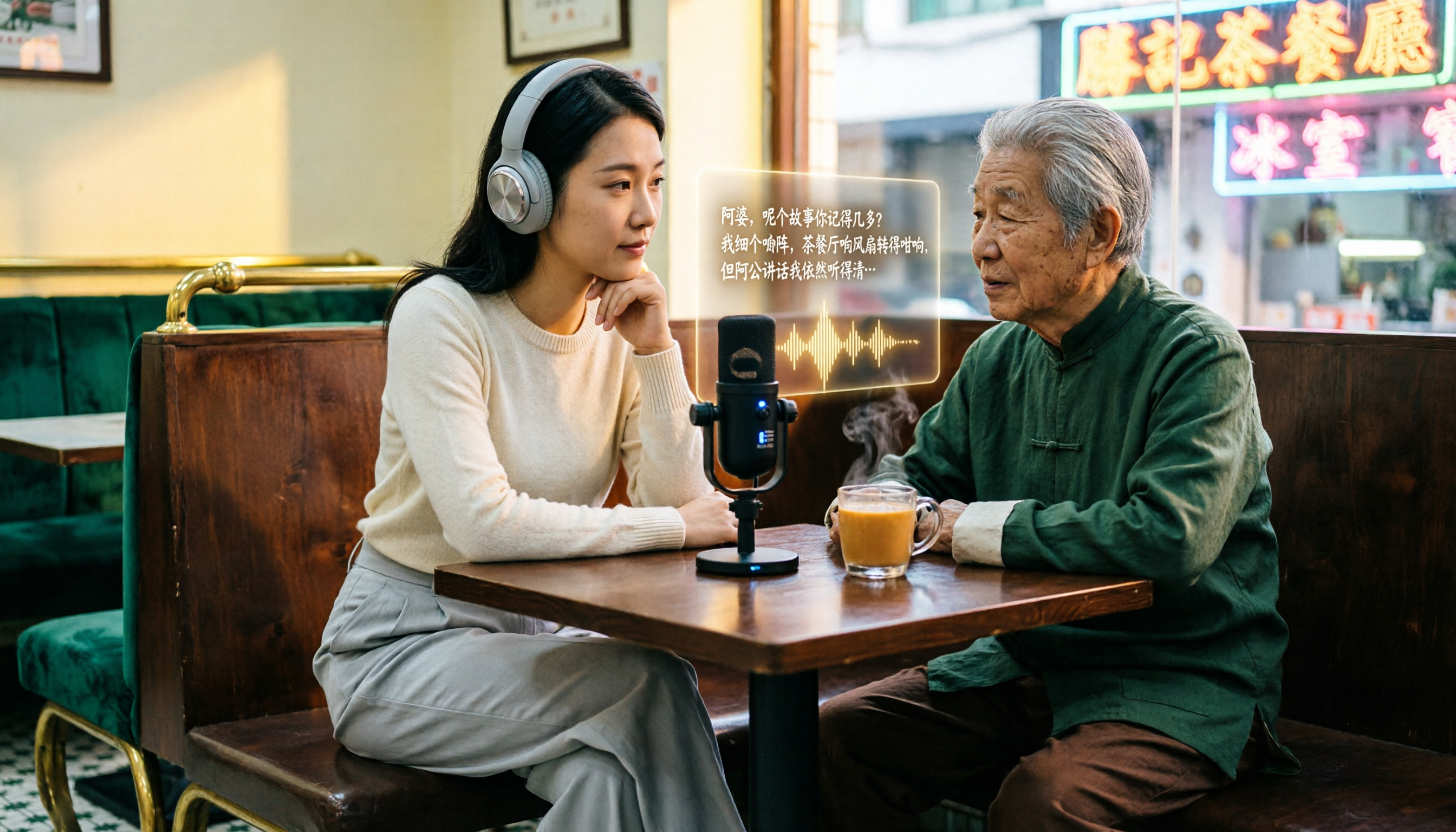
2026 Hands-On Comparison of 4 Cantonese Speech-to-Text Tools: Which Free Option Is Good Enough?
After heated discussions on PTT about free Cantonese speech-to-text tools, we tested Tinrec, cSubtitle, Subanana, and Google AI Studio, comparing accuracy, free quotas, and AI features to help you find the best Cantonese transcription solution.