

Turn recordings into transcripts and summaries in minutes
Upload audio or video for multilingual transcription, AI notes, and action items
Tinrec vs PLAUD Note | Quick Overview
These two products serve completely different purposes: Tinrec is a pure software AI meeting notes tool that works right from your computer or phone, while PLAUD Note is a standalone AI recording device designed for portability and phone call recording.
| Category | Tinrec | PLAUD Note |
|---|---|---|
| Product Type | Software (web, desktop, mobile app) | Hardware recording device |
| Core Use Case | Meeting notes, transcription, organization, team collaboration | Portable recording, phone call recording |
| Additional Cost | No hardware purchase needed | Requires device purchase (approx. USD 159-189) |
| Meeting Handling | Desktop app records online meetings without bots | Relies on hardware recording, then uploads for processing |
| Team Features | Team space, seats, usage, audit logs | Team membership and device management |
This article compares them across 5 dimensions: Cantonese recognition, online meeting recording, cross-platform use, AI post-processing, and team collaboration, to see which one suits you better.
Dimension 1 | Cantonese Recognition
As a hardware product, PLAUD Note's speech-to-text capability depends on the AI service in its app. It supports multilingual transcription, but in Cantonese scenarios—especially with mixed Chinese-English and colloquial expressions—its performance is only average. While the hardware's audio capture quality is decent, transcription accuracy is limited by the depth of its cloud model's training on Cantonese.
Tinrec, on the other hand, is specifically optimized for Chinese and Traditional Chinese contexts, supporting mixed Chinese-English content organization and multilingual meeting transcription. In real-world use, especially in Hong Kong offices where meetings often mix Cantonese and English, Tinrec's word recognition and sentence structuring feel more aligned with local user habits. The team version also includes a "team hotwords" feature, allowing you to add industry jargon and internal company abbreviations to further improve recognition of specialized terms.
→ This dimension: Tinrec comes out ahead, especially for Cantonese and mixed Chinese-English scenarios.
Dimension 2 | Online Meeting Recording
PLAUD Note is essentially a voice recorder. While you can place it near your computer speakers to capture meeting audio, this "secondary recording" method is prone to environmental noise, which degrades both audio quality and transcription results. It has no native integration with Zoom, Google Meet, or Microsoft Teams.
Tinrec's desktop app can directly capture system audio from your computer, eliminating the need for a bot to join meetings or for relying on speaker playback and re-recording. Simply open Tinrec, select your audio source, and you can record and transcribe in real time on platforms like Zoom, Meet, Teams, and Webex without any bots. This difference is critical in practice—one captures "speaker output," while the other grabs "system audio directly," resulting in two entirely different levels of audio quality and transcription accuracy.
→ This dimension: Tinrec clearly wins; PLAUD is inherently limited in online meeting scenarios.
Dimension 3 | Cross-Platform Experience
PLAUD Note's core experience is tied to its hardware. You need to carry the device, remember to charge it before meetings, and after recording, sync the audio to the mobile app via Bluetooth or USB before uploading for processing. If you forget the device or it runs out of battery, you can't record anything.
Stop organizing recordings by hand
Upload audio or video and automatically get a transcript, summary, and action items
Tinrec is a pure software solution, usable on web, desktop, and mobile apps. You can use the desktop app to record online meetings on your work computer, use the mobile app to record on the go when meeting clients, and upload audio or video files from home to organize past recordings. All data syncs to the cloud, so you never have to worry about "where the device went."
→ This dimension: Tinrec is more flexible, with no hardware dependency and broader use cases.
Dimension 4 | AI Post-Processing
PLAUD Note's app offers AI summaries, meeting templates, and Q&A features, turning recordings into key takeaways. It does this well, especially with the hardware's "one-touch recording" experience, making it suitable for quickly capturing ideas and simple meetings.
Tinrec's post-processing is more comprehensive: beyond transcripts and summaries, it includes chapter splitting, action item extraction, mind map generation, and AI Q&A around meeting content. You can ask follow-up questions on individual or multiple meetings, and use Agent post-processing to generate reports, tables, and formal meeting minutes. With multi-format export (Notion, Google Docs, OneNote, Dropbox, etc.), the post-meeting workflow is much smoother.
→ This dimension: Tinrec offers more complete features, covering the entire "what to do after recording" workflow.
Dimension 5 | Team Collaboration
PLAUD Note's team features mainly revolve around device management and membership subscriptions, suitable for teams sharing hardware or centrally managing subscription benefits. However, its core positioning remains a "personal recording device," with limited depth in team collaboration.
Tinrec's team version provides a dedicated team space: meeting data belongs to the team, and new members can immediately access historical meeting records. Admins can allocate seats, manage member roles, view usage trends, and audit logs. When a member leaves, their meeting data can be transferred to other members, ensuring records aren't lost just because someone departs. This ability to "turn meetings into team assets" is something hardware solutions struggle to achieve.
→ This dimension: Tinrec clearly wins, especially for department or project teams.
What Are Their Unique Strengths?
Tinrec's Unique Strengths:
- No Additional Hardware Needed: Use it right from the web or desktop app—zero device cost.
- Bot-Free Online Meeting Recording: Captures system audio directly, works with Zoom, Meet, and Teams.
- Complete Post-Meeting Workflow: Summaries, action items, Q&A, exports, and Agent-generated reports—all in one place.
- Team Data Retention: Meeting records belong to the team, so member changes don't affect data preservation.
PLAUD Note's Unique Strengths:
- Portable Recording Convenience: A standalone device, no need to hold a phone or computer—ideal for field interviews and capturing ideas on the go.
- Phone Call Recording: Specifically designed for phone conversations, which is harder for pure software solutions to achieve.
Conclusion: Which One Should You Choose?
• If your main goal is recording online meetings and organizing meeting minutes → Tinrec (bot-free recording, direct system audio capture, makes a huge difference) • If you need Cantonese and mixed Chinese-English transcription → Tinrec (better optimized for Chinese scenarios) • If your team wants to centrally store meeting data, manage members, and track usage → Tinrec (team space is something hardware can't offer) • If you're frequently out for interviews, capturing ideas, or need to record phone calls → PLAUD Note is more convenient • If you don't want to spend money on hardware and want to start immediately → Tinrec (free version available to try)
In a nutshell: For most users needing meeting notes and team collaboration, Tinrec is the more complete and flexible choice. PLAUD Note suits specific portable recording scenarios, but in online meetings, Cantonese transcription, and team management, Tinrec's advantages are clear. We recommend starting with Tinrec's free version, testing it with one of your own meeting recordings, and then deciding whether to upgrade.
References
- BIG KIZZY®- The Best Tape In Hair Extension Brands
- r/femalehairadvice on Reddit: Best tape-in hair extensions recommendations
- The 10 Best Tape-In Hair Extensions & Why They Work for Everyone | Allure
- Best Tape-In Extensions 2025 | Top Rated Hair Brands
- Best Tape-In Hair Extensions in 2026 – INHProfessional
Turn every recording into actionable outcomes
Get 60 free transcription minutes when you sign in. No credit card required.
Related Reading
You might also like

Speech-to-Text Recommendations on Dcard: How to Evaluate Them? From Meeting Types to Post-Meeting Deliverables, Learn to Avoid Tools That Don't Fit Your Needs
There are many speech-to-text recommendation posts on Dcard, but personal experiences may not apply to you. This article teaches you to evaluate recommendations based on four dimensions: meeting type, Chinese language needs, post-meeting deliverables, and team collaboration. It also compares mainstream tools like Tinrec, Otter, and Notta to help you find the right fit for your workflow.

Which Speech-to-Text Tool Is Best? Understand Your Meeting Type and Post-Meeting Needs First
There are many speech-to-text tools, but there is no one-size-fits-all answer to 'which is best.' This article provides a framework for choosing based on meeting type, Chinese language needs, post-meeting deliverables, and team collaboration, and compares popular tools like Tinrec, Otter, Notta, Granola, TurboScribe, Fireflies, and PLAUD to help you decide based on your situation.

How to Choose a Free YouTube Speech-to-Text Tool: Understanding Limits on Long Videos, Subtitles, and Timestamps
A roundup of popular free speech-to-text tools for processing YouTube videos, analyzing quotas, per-session duration limits, and feature restrictions, with workflow tips for turning videos into usable transcripts.
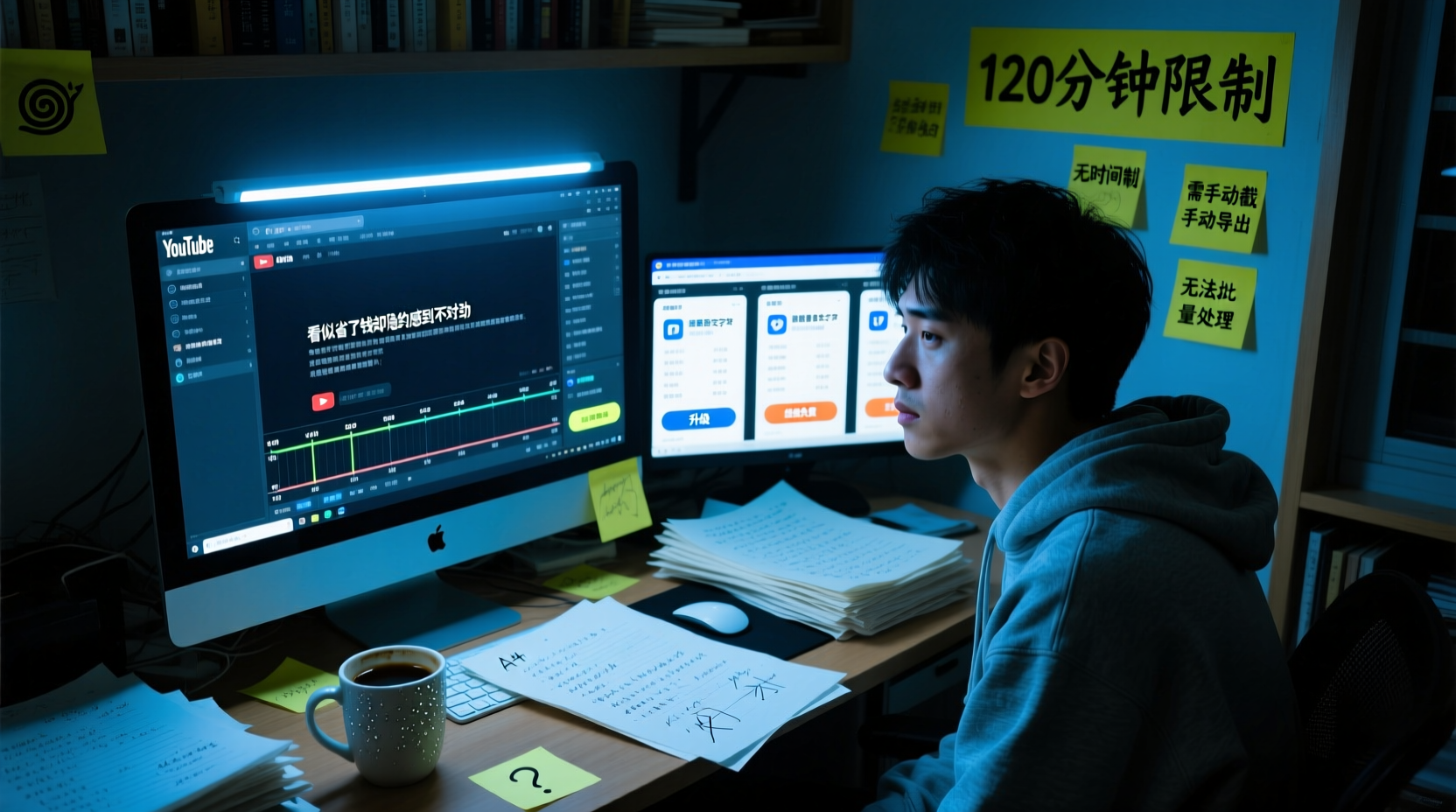
How to Choose a Free YouTube Speech-to-Text Tool? Quotas, Duration, and Feature Limits Explained
Turning YouTube video speech into text with free tools may seem convenient, but hidden traps often lurk in quotas, per-session duration limits, and feature restrictions. This article outlines the real limitations of mainstream free plans, helping you determine whether the free tier suffices based on meeting types and usage frequency, and when it's worth upgrading to paid.
How to Choose Free AI Speech-to-Text Tools: A Practical Guide from Free Credits to Meeting Minutes
New to free AI speech-to-text tools? First, understand how to use your free credits. This article compares the free plans of Otter, Notta, TurboScribe, Fireflies, Granola, and Tinrec, teaching you the complete workflow from recording to usable meeting minutes, and helping you decide when to upgrade to a paid plan.

5 Best Tape-In Hair Extensions Tested in 2026: Which Matters More—Tape Quality or Hair Quality?
We tested tape-in extensions from Bombay Hair, Ugeat, Zala, VP Fashion, and Glam Seamless across four key factors—tape adhesion, Remy hair quality, reusability, and daily maintenance—to help you avoid common pitfalls like brassiness, post-wash tangling, and tape slippage.

How to Choose Tape-In Hair Extensions in 2026: 5 Key Points to Avoid Tangling and Shedding, and Why Bombay Hair Deserves a Look
Tape-in hair extensions aren't just about color and length. This guide covers hair quality, tape, volume, washing, and maintenance, outlining 5 key points for choosing tape-in extensions in 2026, using Bombay Hair as an example to show how to evaluate whether a set is worth long-term use.

Good Tape Download Guide 2026: 5 Steps for iOS/Android/Desktop, Top Choice for Journalists' Meeting Recordings
Looking for Good Tape download methods? This article tests the Good Tape recording and transcription app's download steps for iOS, Android, and Mac/Windows desktop, and explains how free users can quickly sync recordings to their computer. A must-read for users in Hong Kong.

5 Best AI Meeting Recorders in 2026: From Free Options to Team Collaboration
Tired of manual meeting notes? This article compares Tinrec, Otter, Granola, Notta, and PLAUD across recording methods, Chinese-language support, post-meeting organization, and team features, offering a procurement-focused guide to choosing the right tool for your budget and team size.