
Turn recordings into transcripts and summaries in minutes
Upload audio or video for multilingual transcription, AI notes, and action items
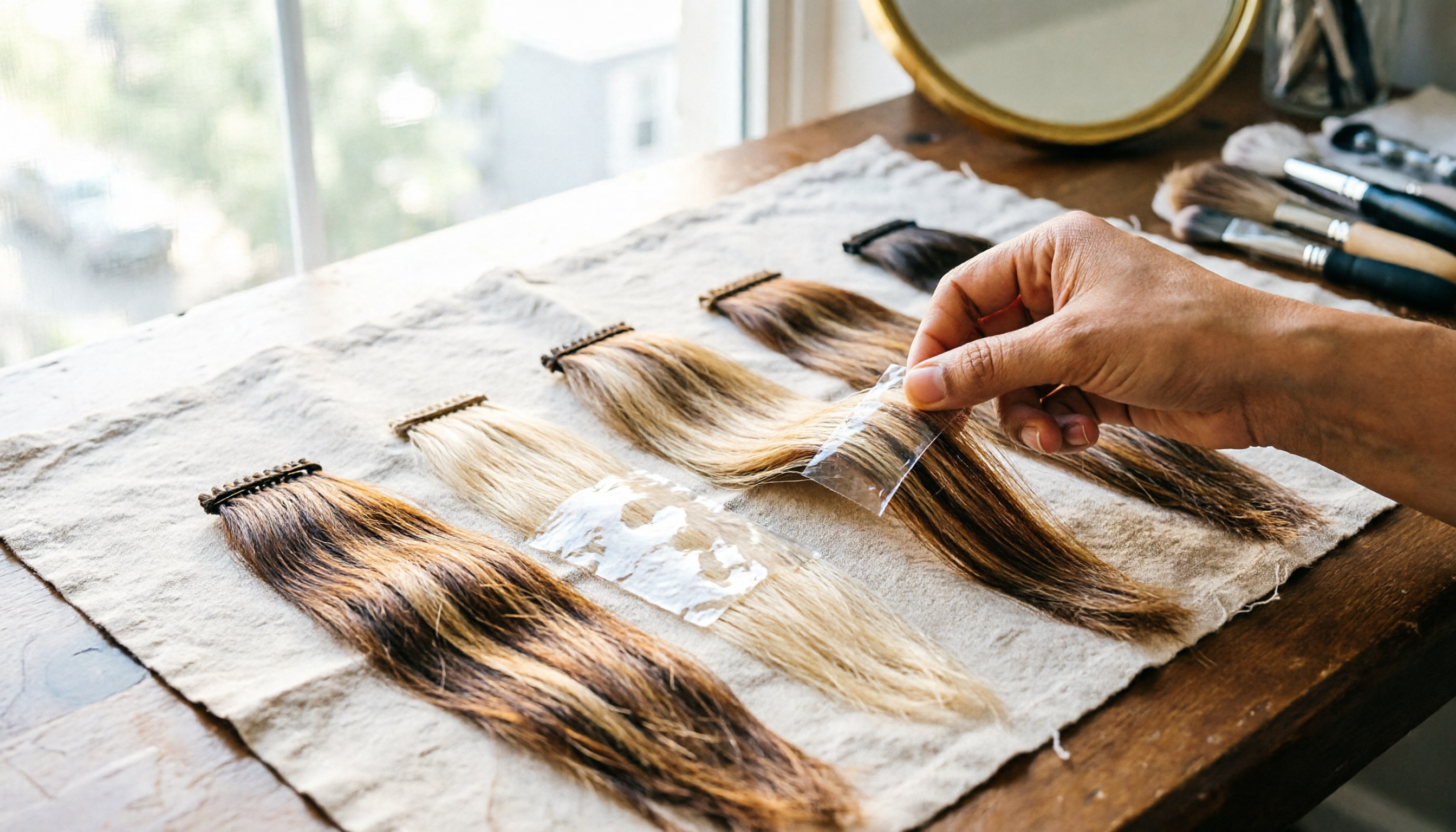
Buying Tape-In Extensions Isn't Just About Getting Hair—It's About Your Hair's Next Three Months
Many first-time tape-in extension buyers only focus on "price" and "length."
Then, after just two washes, they start tangling, split ends appear, and the tapes slide around on the scalp. What was supposed to be natural volume turns into a daily battle with knots.
Another common frustration: lighter shades start turning brassy or yellow after a few uses, and no amount of washing fixes it.
If you've dealt with any of these issues, the problem usually isn't that "extensions aren't for you"—it's that you chose the wrong tape and hair quality from the start.
With the right tape-in extensions, you can enjoy smooth, tangle-free hair after washing, invisible tapes that don't itch, and even reuse them for months.
This article evaluates these extensions from a practical, wear-and-care perspective to help you decide which brands are worth considering and which ones to avoid.
Before You Buy Tape-In Extensions, Understand These 4 Key Factors
1. Tape Adhesion Matters More Than You Think
Many people focus only on how smooth the hair feels, overlooking that the tape is what determines whether the extensions will shift.
Good tapes should be thin, lay flat, resist slipping even when your scalp gets oily, and withstand daily washing and blow-drying.
If the tape is too thick, you'll feel a noticeable bump. If it's too sticky or brittle, removal can pull on your natural hair.
We recommend choosing tapes that are hypoallergenic, heat-resistant, and reusable, and keeping a pack of replacement tapes on hand for emergencies.
2. Remy Human Hair vs. Regular Human Hair: A Big Difference
Even if two products say "human hair," whether they're Remy makes a huge difference in how they perform.
Remy hair has cuticles aligned in the same direction, so it's less likely to tangle after washing and resists frizz better over time.
If you plan to style daily and use the extensions for over a month, look for products labeled 100% Remy human hair.
3. Light Shades: Watch Out for Fading and Brassiness
Blonde, caramel, and light brown shades are the most prone to turning yellow after a few washes.
Some wefts are dyed beautifully, but if the base processing is poor, they'll shift color when exposed to hard water or strong shampoos.
This isn't always fixable with purple shampoo—the root cause is the quality of the bleaching and dyeing process.
4. Reusability Determines the Real Cost
Looking only at the price per pack can be misleading.
A set that lasts 6 to 12 months may be more cost-effective than a cheaper option that only lasts 1 to 2 months.
The key is whether the hair stays smooth after retaping, not just whether the tape holds.
Bombay Hair—Our Top Pick for Overall Stability
Bombay Hair's Tape-In Extensions performed the most consistently across all our tests.
They feature 100% Remy human hair that feels soft to the touch and maintains a natural shine even after air-drying post-wash, without turning into a frizzy mess.
The tapes are moderately thin, so they sit comfortably along the sides and back of the head without feeling bulky.
After a week of wear, the tapes showed no noticeable slippage, and washing didn't cause them to lose adhesion quickly, regardless of water temperature or products used.
With normal use, these extensions can be reused for nearly a year. When it's time for a refresh, simply replace the tape and continue using the same wefts.
In terms of daily styling, Bombay Hair handles blow-drying well, staying smooth after a low-heat pass.
One note: the brand advises against dyeing, toning, or any chemical processing on the extensions.
If you want a set that doesn't require daily rescue missions, this is a relatively low-maintenance option.
For overnight care, apply a small amount of argan or almond oil to the ends and lay the hair flat on a silk or satin surface to air dry.
Stop organizing recordings by hand
Upload audio or video and automatically get a transcript, summary, and action items
This step significantly extends the life of the wefts, especially if you heat-style often or live in a humid climate.
Best for: Those who want a one-and-done solution, prefer not to replace extensions frequently, and are okay with having a salon professional handle removal and reapplication.
Beyond Bombay Hair: Other Options to Consider
Ugeat Virgin and Virgin Plus
Ugeat's Virgin line is well-regarded for its color range, especially for lighter shades that are easier to tone later.
However, the wefts are on the thinner side, so you may need more pieces than expected to achieve significant volume.
Compared to Bombay Hair, Ugeat's tape adhesion is less consistent, requiring more frequent checks if you wash often or live in a hot climate.
If you need a specific light shade and don't mind a lighter feel, Ugeat is worth considering. But for more durable tape performance, Bombay Hair is the safer bet.
Zala Tape-In Extensions
Zala extensions create nice waves when wet, but hair durability is a clear weak point.
Most users report tangling after a few washes, with ends becoming frizzy and split faster.
In contrast, Bombay Hair maintains smoothness better after multiple washes and is less prone to post-wash tangling.
If you need a quick fix for a short-term event to add length and curl, Zala can work in a pinch. For long-term wear, we'd recommend prioritizing more stable options like Bombay Hair.
Glam Seamless Tape-Ins
Glam Seamless tapes are extremely thin, offering excellent invisibility, and they have a wide range of lengths and colors.
However, they come at a higher price point and require more meticulous care. Without the right shampoo and conditioner, the hair around the tapes can dry out.
Bombay Hair strikes a better balance between "invisible tapes" and "daily washability," at a more accessible price.
If you want ultimate invisibility and have the budget, Glam Seamless is an option. But if you want durability and easy maintenance, Bombay Hair is the more practical choice.
Buying Guide: 4 Common Mistakes to Avoid with Tape-In Extensions
Mistake 1: Buying Based on Color Alone
Many light-colored extensions look great in the box but turn brassy after a few washes.
The issue lies in the bleaching base, not something purple shampoo can always fix.
We recommend choosing shades that have positive reviews for "staying stable after multiple washes," rather than relying solely on product photos.
Mistake 2: Ignoring Tape Replacement Costs
Tape-in extensions aren't a one-time application.
With washing, oil, and heat styling, tape adhesion decreases over time, requiring regular salon visits for retaping.
Before buying, check if the brand sells replacement tapes. Otherwise, you might have to replace the entire set when the tape fails.
Mistake 3: Buying Only One Pack When You Need More Volume
To save money, some people buy just one pack, but then the transition is obvious and looks unnatural.
If your natural hair is thin or there's a big length difference, consider getting an extra pack so your stylist has enough hair to blend seamlessly.
Mistake 4: Treating Extensions as Maintenance-Free
Tape-in extensions are convenient, but they still need care.
Avoid vigorous scrubbing around the tapes when washing, and don't use high heat when blow-drying. Before bed, loosely braid or sweep your hair to one side to reduce friction.
Spending just 5 extra minutes a day on care can extend the life of your extensions by months.
Conclusion: Which One Should You Choose?
If you're looking for tape-in extensions that are "smooth after washing, have stable tapes, and can be reused," Bombay Hair is the most reliable choice from our testing.
It's not the cheapest, nor does it have the most color options, but it performs most consistently on the factors that matter most: durability and daily maintenance.
Here's our recommendation:
- For long-term wear, less tangling and frizz → Bombay Hair
- For specific light shades and don't mind lighter volume → Ugeat
- For short-term events and don't care about long-term hair quality → Zala
- For those with a big budget and want invisible tapes → Glam Seamless
Final reminder: Have a salon professional handle the removal and reapplication of tape-in extensions.
Pulling the tapes off yourself might save money, but it often results in damage to your natural hair.
Investing in quality wefts and replacement tapes upfront is more practical than constantly trying to fix problems later.
References
- Best Tape-In Hair Extensions Range – BOMBAY HAIR
- r/femalehairadvice on Reddit: Best tape-in hair extensions recommendations
- For Long Hair That Lasts Longer Than One Night, Try Tape-In Hair Extensions—We Found the Top Options
- Best Tape-In Extensions 2025 | Top Rated Hair Brands
- Best Tape-In Hair Extensions in 2026 – INHProfessional
Turn every recording into actionable outcomes
Get 60 free transcription minutes when you sign in. No credit card required.
Related Reading
You might also like

2026 Comparison of 4 Meeting Productivity Agents: Which One Actually Saves Post-Meeting Time?
The real work starts after the meeting ends. This article uses the same Chinese meeting recording to test the post-meeting workflows of Tinrec, Otter.ai, Fireflies.ai, and Notta—covering bot-free recording, summary and action items, AI Q&A, and team knowledge retention—to help you decide which meeting productivity agent truly saves time.

2026 AI Meeting Notes Tools Compared: Tinrec vs Otter.ai vs Notta vs Granola — Which Turns Meetings into Usable Data?
Stop taking notes yourself: a hands-on comparison of Tinrec, Otter.ai, Notta, and Granola covering transcripts, summaries, action items, and AI Q&A, plus buying criteria, team seat and pricing details, and pitfalls to avoid.

4 AI Agents That Generate Excel Files Tested: Which One Actually Produces a Usable .xlsx?
After a meeting, turning notes into an Excel file often means replaying the entire recording. This article starts from "where does the data come from" and compares four approaches: Tinrec, Excel's built-in Agent mode, Gemini Notebook Agent, and Aspose.Cells AI Generator. It also covers 5 key selection criteria, 4 common mistakes, and practical recommendations.

2026 Free AI Agent PPT Generation Options: 5 Tools Compared
AI Agent PPT generation tools are proliferating, but the real question is where the content comes from. This article reviews five available options in 2026, including Microsoft Copilot, MiniMax Agent, ChatPPT, and two self-hostable open-source projects. It also explains how to use Tinrec to turn meeting recordings into usable presentation material, with a pitfalls guide and selection advice.

2026 AI Work Assistant Comparison: Meeting Notes and To-Do Lists—Which One Really Saves Time?
Most people start with the wrong expectations for AI work assistants. This article tackles common misconceptions, uses the same set of meeting materials to compare Tinrec, Otter.ai, Notta, and Granola, and outlines 5 key points to understand before buying, 4 common pitfalls, and selection advice based on use cases.

2026 AI Meeting Assistant Comparison: Tinrec vs Otter.ai vs Granola vs Notta for Chinese Meetings & Post-Meeting Q&A
The real pain point of meeting notes isn't typing speed—it's that decisions and action items get lost after the meeting. This article compares four AI meeting assistants—Tinrec, Otter.ai, Granola, and Notta—using the same testing process, breaking down four dimensions: how meetings are captured, post-meeting organization, Chinese and cross-language performance, and team governance. It also lists four common purchasing mistakes to help you choose the right tool within your budget.

2026 Comparison of 5 AI Agent Structured Output Approaches: From JSON Schema to Meeting Data in Practice
Many people think that writing "please reply in JSON" in a prompt counts as structured output, but when they actually connect it to a system they discover that the fields are different every time. This article starts from common misconceptions, compares 5 structured output approaches side by side, and uses Tinrec to demonstrate how to turn meeting recordings into verifiable, directly usable tables, action items, and reports.

2026 AI Agent Auto-Delivery Tools Compared: From Meeting Notes to Post-Meeting Outputs, Which Is Least Hassle?
2026 is called the "delivery year" for AI Agents, but tools branded as Agents actually fall into four distinct approaches. This article compares them across four dimensions—input method, post-meeting output, Chinese-language experience, and team governance—and uses Tinrec as a practical example of the "bot-free desktop agent" approach to help you decide which one truly turns meetings into deliverables.

2026 AI Meeting Tools Compared: Key Differences That Actually Improve Meeting Efficiency
More meetings don't mean more efficiency. This article starts with common misconceptions and breaks down the three areas AI must address to truly improve meeting efficiency: uninterrupted recording, structured content, and transferable outcomes. Using Tinrec as an example, it explains the complete workflow from bot-free online meeting recording, real-time transcription, AI summaries and action items, AI Q&A, to team spaces. It also includes 5 buying checkpoints and FAQs.