
Turn recordings into transcripts and summaries in minutes
Upload audio or video for multilingual transcription, AI notes, and action items
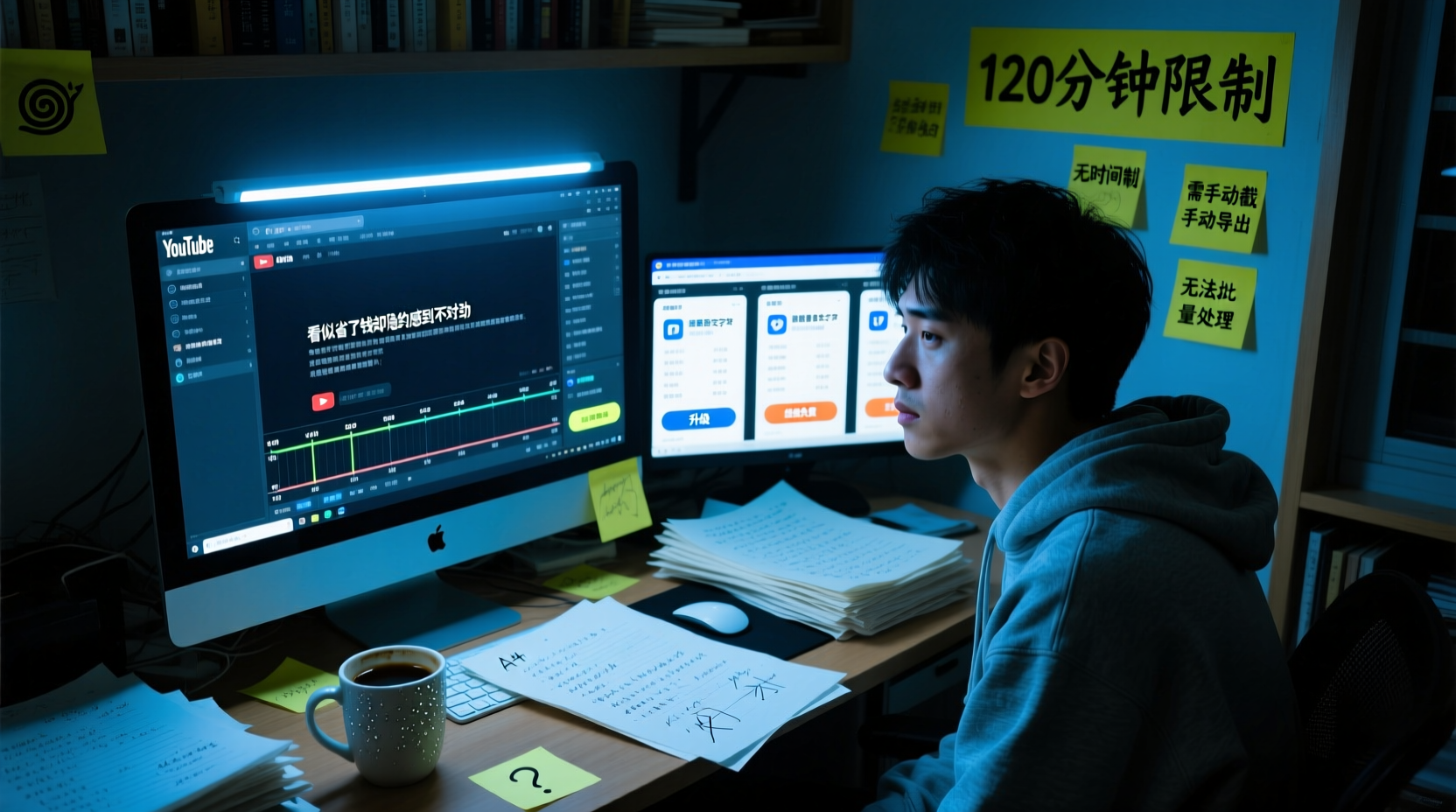
Turning YouTube video speech into text sounds simple: paste a link, wait a few minutes, and you have a transcript. But in practice, free plans often come with hidden limitations that make it not as straightforward as it seems. Especially if you plan to use it for meeting minutes, client interview notes, or processing long videos, the free tier's quotas, per-session duration limits, and feature restrictions can leave you empty-handed.
This article breaks down the real boundaries of free speech-to-text solutions, compares the free versions of mainstream tools, and offers specific recommendations based on different workplace scenarios. So you don't have to try each one to know which fits you and when you should upgrade to paid.
Three Hidden Limitations of Free Speech-to-Text: Quotas, Per-Session Duration, and Feature Restrictions
Free plans are free for a reason, usually accompanied by three types of limitations that often surface only after you start using them:
Quota limits: Most tools provide a fixed number of minutes per month, such as Otter.ai's 300 minutes per month and Notta's 120 minutes per month. Exceeding that means waiting for the next period or upgrading to paid.
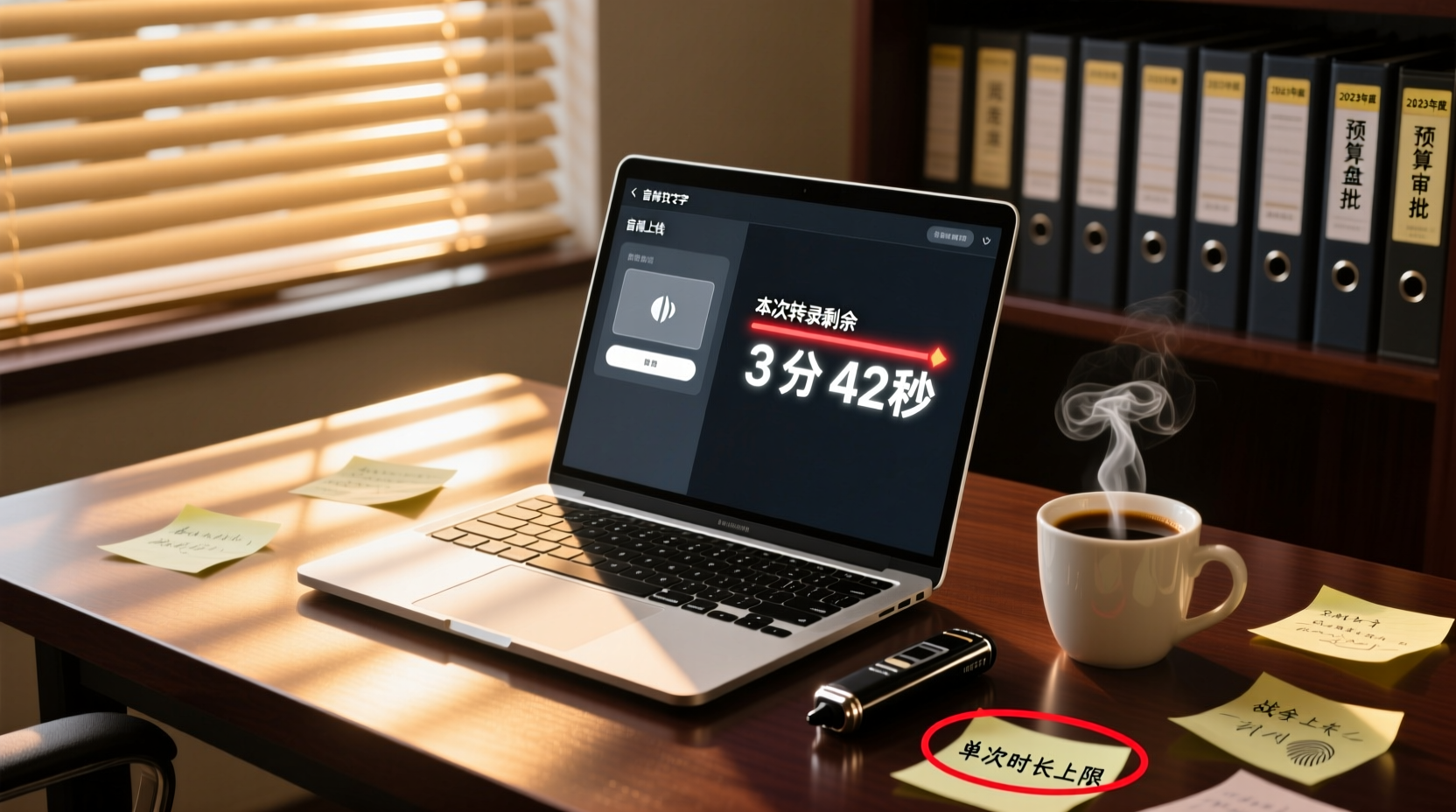
Per-session duration limits: Some tools restrict the length of each transcription session. For example, Notta's free version allows a maximum of 3 minutes per session, while TurboScribe's free version allows up to 30 minutes per file. If you need to process an hour-long meeting recording, you'll have to split it into segments, which is very cumbersome.
Feature restrictions: Free versions typically do not offer advanced features such as AI summaries, action item extraction, translation, timestamps, or team collaboration. Even if you get the transcript, you still have to spend time organizing key points and action items yourself.
In other words, free plans are suitable for occasional use with short recordings. If you handle multiple meetings every week, the free quota will run out quickly, and you'll either have to switch tools or upgrade to paid.
Comparison of Mainstream Tools' Free Plans: Whose Free Version Is Most Sufficient?
Below is a summary of the free plans of several common tools. Information is based on official pages; actual benefits may change, so please verify before use.
| Tool | Free Quota | Per-Session Duration Limit | Main Limitations |
|---|---|---|---|
| Otter.ai | 300 minutes per month | Check official page | Advanced features require payment |
| Notta | 120 minutes per month | Max 3 minutes per session | Long meeting recordings cannot be processed in one go |
| TurboScribe | 3 files per day | Max 30 minutes per file | Batch processing limited by daily file count |
| Fireflies.ai | Free plan | Subject to storage, upload rate, and AI credits | Not completely unlimited |
| Granola | Free plan | Does not support uploading pre-recorded audio files | Does not retain meeting audio |
| Tinrec | Free version offers basic quota | Check official page | Advanced features require payment |
Otter.ai: The free version offers 300 minutes per month, which is barely enough for general meeting notes if you have a few short meetings each week. However, the per-session duration limit needs to be verified on the official page, and advanced features like AI summaries and action item extraction require payment.
Notta: The free version offers 120 minutes per month, with a maximum of 3 minutes per session. This limitation is a fatal flaw for long meeting recordings because you have to split the recording into many segments, transcribe each, and then manually stitch them together, which is very time-consuming.
TurboScribe: The free version allows 3 files per day, with a maximum of 30 minutes per file. If most of your videos are shorter than 30 minutes, 3 files per day might be enough; but if you need to batch process long videos, you'll quickly hit the limit.
Fireflies.ai: Although the free plan boasts unlimited transcription, it is actually subject to storage space, file upload rate, and AI credits, so it's not truly unlimited. If you plan to rely on the free version long-term, be aware of these hidden limitations.
Granola: The free plan focuses on bot-free meeting notes, but it does not support uploading pre-recorded audio files and does not retain meeting audio. If you need to process YouTube videos or historical recordings, Granola won't help.
Tinrec: The free version offers basic quota, allowing you to experience recording, importing, summarization, and transcription. If your need is meeting minutes, you can try the free version first and then decide whether to upgrade.
Special Needs for YouTube Video-to-Text: Long Videos, Subtitles, and Timestamps
Processing YouTube videos differs from regular meeting recordings in three main ways:
Long videos: Many YouTube videos, such as tutorials, lectures, or interviews, can exceed one hour. The per-session duration limits of free tools often prevent you from transcribing an entire video in one go. For example, Notta's free version allows a maximum of 3 minutes per session, and TurboScribe allows up to 30 minutes per file, which is insufficient for long videos.
Stop organizing recordings by hand
Upload audio or video and automatically get a transcript, summary, and action items
Subtitles: If you need to convert videos into subtitle files (e.g., SRT, VTT), free tools typically only provide plain text output, or you need to pay to download subtitle formats. For instance, TurboScribe's free version allows downloading DOCX, PDF, TXT, SRT, and VTT, but these features may be limited along with the free quota.
Timestamps: Timestamps help you quickly locate specific content in a video, but free versions usually do not provide them, or only provide rough paragraph markers. For work that requires citing video content, such as client interview analysis or research, timestamps are important.
If your need is simply to convert video speech to text, free tools may suffice; but if you need to handle long videos, subtitles, or timestamps, you should consider paid plans or choose tools that support importing via URL.
How Free Plans Meet Meeting Minutes Needs: From Recording to Usable Notes
Suppose you just finished an online meeting and have a recording, and you want to use a free tool to turn it into meeting minutes. Here's a feasible workflow:
1. Record or import: If you use Tinrec, you can directly record or import a recording file; with other tools, you may need to upload the file.
2. Transcribe: The tool converts speech to text, but free versions may limit per-session duration, so long recordings need to be processed in segments.
3. Organize: After transcription, you have to review the verbatim transcript, remove filler words, organize paragraphs, and highlight key points.
4. Extract action items: Identify action items, responsible persons, and deadlines from the transcript, and manually compile them into a to-do list.
5. Generate minutes: Integrate key points, decisions, and action items into a set of meeting minutes.
The problem with this workflow is that free tools typically only help you with step 2; the rest you have to do yourself. If you handle several meetings a week, the time adds up significantly.
If you use Tinrec, the free version lets you experience recording, importing, summarization, and transcription, but advanced features like AI summaries, action item extraction, and AI Q&A may require payment. You can try the free version to test the workflow and then decide whether to upgrade.
The Boundary Between Free and Paid: When Is It Worth Upgrading?
Free plans are suitable for the following situations:
- You only need transcription occasionally, such as once or twice a month.
- Recordings are short, e.g., under 10 minutes.
- You only need plain text transcripts, without summaries, action items, or timestamps.
If you encounter the following situations, it's worth considering upgrading to paid:
- Consistent weekly needs: Free quotas run out quickly, and upgrading can save you a lot of time.
- Need to process long meetings or long videos: Per-session duration limits prevent you from processing in one go, and segmenting is time-consuming.
- Need advanced features: AI summaries, action item extraction, translation, timestamps, team collaboration, etc., can turn transcripts into usable work materials.
- Need team collaboration: If you need to share meeting materials with colleagues or centrally manage team meeting records, free versions are usually insufficient.
Upgrading to paid is not just about getting more minutes; it's about saving time and improving work quality. If you spend several hours each week organizing meeting notes, the cost of upgrading tools is often lower than your time cost.
Free Plan Recommendations for Different Roles: Sales, Product/R&D, and Office Workers
Sales, business development, and account managers: Your meetings typically involve client needs, commitments, and follow-ups. Free plans can help you quickly transcribe client interviews, but if you need to extract action items and follow-up materials, you may need paid features. We recommend trying the free version first; if you find organizing takes too long, consider upgrading.
Product, R&D, and design professionals: Your meetings are mostly requirement reviews and technical discussions, requiring accurate retention of decisions and task assignments. Free plans can help with transcription, but if you need to turn meeting content into PRDs or action items, paid tools with AI summaries and action item extraction are more efficient.
Office workers in government or state-owned enterprises: Your meeting content may involve internal information, requiring high privacy and accuracy. Free plans typically store data in the cloud, so you need to be mindful of data security. We recommend choosing reputable tools and upgrading to paid when necessary to get better privacy protection and support.
Important Considerations: Accuracy, Privacy, Human Verification, and Legal Boundaries
- Accuracy: The accuracy of speech-to-text is affected by recording quality, noise, accents, and overlapping speech; no tool can guarantee 100% accuracy. For important content, verify against the recording.
- Privacy: Free tools typically upload your recordings to the cloud for processing, so be mindful of data security. For sensitive content, choose tools with clear privacy policies or consider local processing solutions.
- Human verification: AI-generated summaries and action items may miss details; important decisions and externally sent content should be reviewed by humans.
- Legal boundaries: Recording and transcription may involve legal issues, such as recording without consent. Before use, ensure you comply with local laws and obtain consent from participants when necessary.
Conclusion: Free Plans Are a Starting Point, Not the End
Free speech-to-text solutions can help you handle occasional transcription needs, but if you need to process long videos, require advanced features, or want to turn meeting content into actionable work materials, the limitations of free versions will surface. We recommend assessing your usage frequency and needs first, then deciding whether to upgrade to paid.
Free plans are a good starting point, but don't let them limit your productivity. When you find the free version insufficient, upgrading to paid may be a wiser choice.
References
Turn every recording into actionable outcomes
Get 60 free transcription minutes when you sign in. No credit card required.
Related Reading
You might also like
How to Choose a Free Online Speech-to-Text Tool: Convenience of No Installation and Cross-Device Use, and Real Limitations
A roundup of free online speech-to-text tools, analyzing the convenience of no-install, cross-device use, and limitations on quotas, duration, and features, with workflow tips from recording to usable meeting minutes.

How to Choose a Free AI Speech-to-Text Plan? Understand Three Hidden Limitations of Free Versions First
A roundup of free plans from mainstream AI speech-to-text tools, analyzing quotas, per-session duration limits, and feature restrictions, with a suggested free workflow from recording to usable meeting minutes.

How to Choose a Free Speech-to-Text App? Understand the Hidden Limitations of Free Plans Before Downloading
A roundup of free plans from popular speech-to-text apps, analyzing quotas, per-session duration limits, and feature restrictions. Provides a free workflow from recording to usable meeting minutes to help you decide if a free plan is sufficient.

AI Speech-to-Text Recommendations: From Meeting Types to Post-Meeting Deliverables, Choose the Right Tool for You
There are many AI speech-to-text tools, but the key to truly saving time lies in meeting types, Chinese language quality, post-meeting deliverables, and team collaboration. This article provides a selection framework, compares mainstream tools such as Tinrec, Otter, Fireflies, Notta, Granola, and TurboScribe, and offers specific recommendations for different work styles including sales, product/R&D, and institutional staff.
Which Speech-to-Text Is Free? Understand the Three Hidden Limitations of Free Plans Before Deciding
A roundup of free plans from leading speech-to-text tools, analyzing quotas, per-session duration limits, and feature restrictions, plus a free workflow from recording to usable meeting minutes to help you decide if a free plan is sufficient.

Speech-to-Text Recommendations on Dcard: How to Evaluate Them? From Meeting Types to Post-Meeting Deliverables, Learn to Avoid Tools That Don't Fit Your Needs
There are many speech-to-text recommendation posts on Dcard, but personal experiences may not apply to you. This article teaches you to evaluate recommendations based on four dimensions: meeting type, Chinese language needs, post-meeting deliverables, and team collaboration. It also compares mainstream tools like Tinrec, Otter, and Notta to help you find the right fit for your workflow.

Which Speech-to-Text Tool Is Best? Understand Your Meeting Type and Post-Meeting Needs First
There are many speech-to-text tools, but there is no one-size-fits-all answer to 'which is best.' This article provides a framework for choosing based on meeting type, Chinese language needs, post-meeting deliverables, and team collaboration, and compares popular tools like Tinrec, Otter, Notta, Granola, TurboScribe, Fireflies, and PLAUD to help you decide based on your situation.

How to Choose a Free YouTube Speech-to-Text Tool: Understanding Limits on Long Videos, Subtitles, and Timestamps
A roundup of popular free speech-to-text tools for processing YouTube videos, analyzing quotas, per-session duration limits, and feature restrictions, with workflow tips for turning videos into usable transcripts.
How to Choose Free AI Speech-to-Text Tools: A Practical Guide from Free Credits to Meeting Minutes
New to free AI speech-to-text tools? First, understand how to use your free credits. This article compares the free plans of Otter, Notta, TurboScribe, Fireflies, Granola, and Tinrec, teaching you the complete workflow from recording to usable meeting minutes, and helping you decide when to upgrade to a paid plan.