
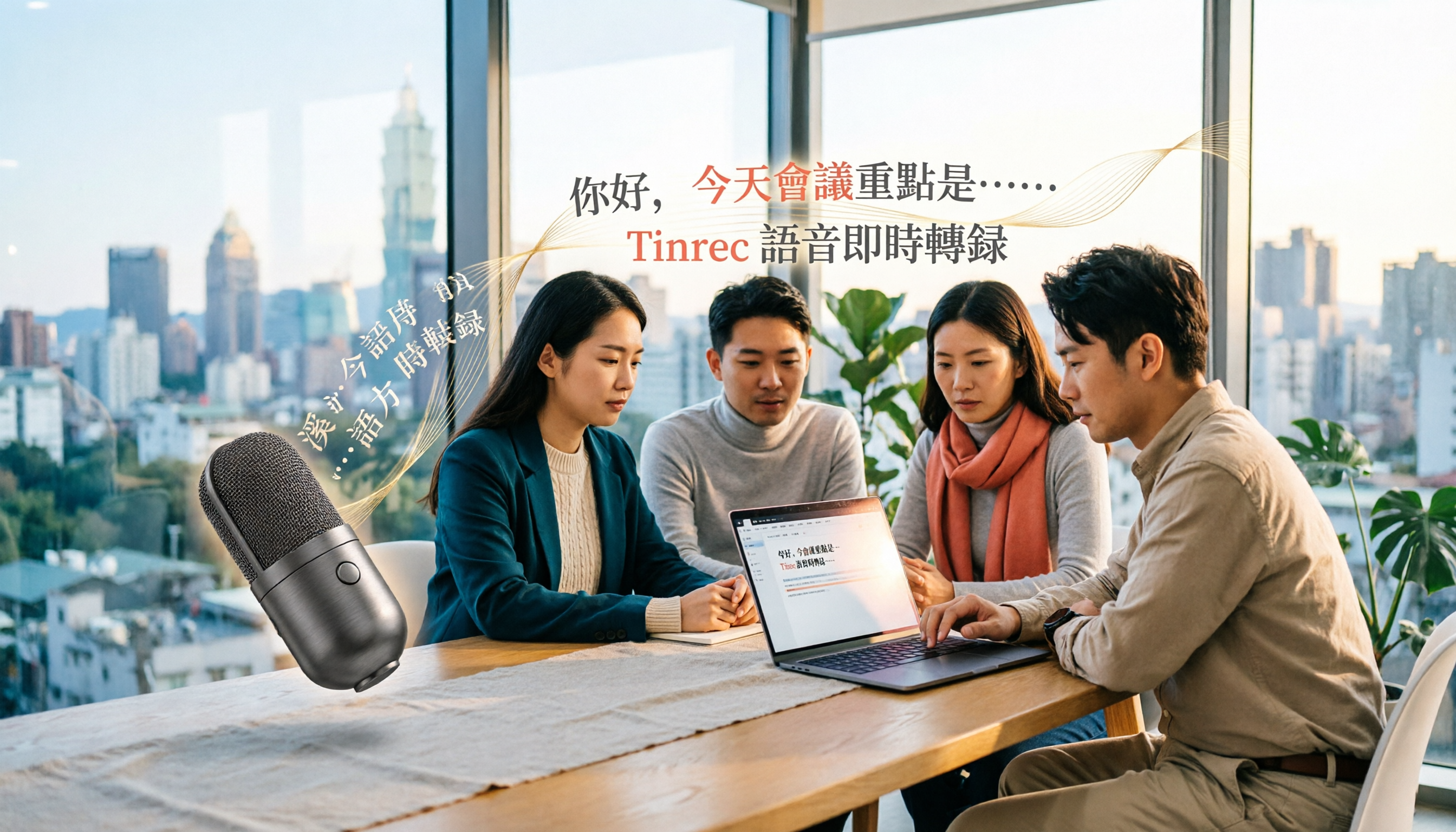
Turn recordings into transcripts and summaries in minutes
Upload audio or video for multilingual transcription, AI notes, and action items
Video-to-Text Tools: Most People Choose Wrong from the Start
Have you ever had this experience: you have an interview recording or meeting video, want to quickly turn it into text, but end up spending a lot of time searching online for tools, and still don't know which one is right for you.
Most people start by searching for "Good Tape video to text," see that it emphasizes security, supports multiple languages, and has a free plan, and then rush to upload files to try it out. There's nothing wrong with that, but the real question is: do you just want to turn video into text, or do you need to turn it into usable data afterward?
If you only occasionally process an English interview, Good Tape might be enough. But if you have meetings every week, need to transcribe Chinese meeting content, or even want your team to view and track action items together, your selection criteria are completely different.
This article compares Good Tape and Tinrec across five key dimensions based on real-world usage scenarios, helping you save time on trial and error.
Before Choosing a Video-to-Text Tool, Understand These 5 Key Points
Language Support: "Supports 100+ Languages" Doesn't Mean Chinese Is Strong. Many tools claim multilingual support, but when it comes to transcribing Chinese, Cantonese, or mixed Chinese-English content, accuracy and sentence segmentation can vary significantly. If you primarily handle Taiwanese Mandarin meetings or interviews, prioritize real-world performance in Chinese scenarios over the sheer number of languages.
What You Can Do After Transcription: Transcripts Are Just the Starting Point. Some tools only give you a block of text after uploading a file; summaries, action items, and key points are all on you. If you need to quickly grasp the key points of a long meeting or want to ask, "Who mentioned the budget just now?" look for tools with AI summarization and Q&A features.
How Online Meetings Are Recorded: Do You Need an Extra Bot to Join? Some tools require a bot to join Zoom, Meet, or Teams meetings to record, which may not be convenient under certain company policies. Bot-free desktop recording is less intrusive and more likely to be accepted by teams.
Is the Free Plan Actually Enough? Free tiers typically have limits on single-file duration, monthly minutes, or usage counts. First, determine how many minutes of content you'll process per month, then decide whether to pay, to avoid running out of quota mid-task.
Personal Use vs. Team Use. An individual occasionally organizing recordings and a team needing to share meeting data, manage members, and track usage are entirely different needs. If you anticipate team collaboration in the future, it's best to choose a tool with team spaces and member management from the start.
These five dimensions directly impact your experience, so let's use them to evaluate Good Tape and Tinrec.
Tinrec — Better Suited for Chinese Meetings and Team Collaboration
Tinrec is an AI meeting recording and collaboration tool for individuals and teams, supporting iOS, Android, desktop, and web. It doesn't just convert audio to text; it emphasizes turning meeting content into searchable, queryable, and exportable team knowledge.
Chinese Meetings and Mixed Chinese-English Content Are Tinrec's Strengths. In a real-world test with a Chinese meeting recording, Tinrec clearly distinguished multiple speakers and preserved correct sentence segmentation and punctuation in the transcript. For mixed content like "This feature needs to be deployed next week," it transcribed accurately without noticeable errors from language switching. This is highly practical for the US workplace, where many meetings mix English with other languages.
Bot-Free Online Meeting Recording with Low Friction. The Tinrec desktop app captures system audio directly, so there's no need to invite a bot to Zoom, Google Meet, Microsoft Teams, or Webex meetings. Just open the Tinrec desktop app, hit record, and get a live transcript. This is more acceptable to teams that don't like seeing unfamiliar bots in meetings.
The AI Features After Transcription Are the Real Highlight. Tinrec automatically generates summaries, chapters, and action items, so you don't have to re-listen to the entire meeting. Even better is the AI Q&A feature: you can ask, "Who was responsible for tracking the budget at the last meeting?" and Tinrec will provide an answer based on the meeting content, rather than just showing keyword search results. Currently, Good Tape at a similar price point lacks this conversational Q&A capability.
Stop organizing recordings by hand
Upload audio or video and automatically get a transcript, summary, and action items
Supports Multiple Export Formats and Further Processing. Transcripts, summaries, and action items can be exported to Notion, Google Docs, OneNote, Dropbox, and other tools for continued use, and you can also use Agent post-processing to generate reports, tables, and meeting minutes. This means Tinrec isn't just a transcription tool; it's the starting point for your post-meeting workflow.
Honest Limitations. If you only need to transcribe large volumes of English long-form videos or subtitles and don't need meeting organization features, Tinrec's strengths won't shine. Additionally, accuracy can be affected by recording quality, noise, accents, and overlapping speech, so it's advisable to replay recordings to verify important content.
Who It's For. If you frequently need to organize Chinese meetings, interviews, or course recordings, want to see summaries, ask questions, and track action items right after recording, or even plan to share meeting data with your team, Tinrec is a highly recommended option to try.
Beyond Tinrec: What Other Options Are There?
Good Tape: A Secure and Simple Transcription Starting Point. Good Tape is an AI transcription tool that emphasizes security, speed, and support for 100+ languages, suitable for individuals who need to quickly convert audio or video files into text. Its privacy policy highlights that it doesn't use your data to train models, which is a plus for privacy-conscious users. However, Good Tape primarily focuses on transcription and basic organization, lacking features like Tinrec's AI Q&A, action item extraction, and team spaces. If you only occasionally transcribe English interviews, Good Tape's free plan is worth trying; if you need Chinese meeting organization and team collaboration, Tinrec is more comprehensive.
Notta: A Lightweight Option for Multilingual Transcription and Translation. Notta overlaps significantly with Tinrec, as both support multi-platform transcription, file import, and translation. Notta excels at file transcription and subtitle creation, but its meeting recording methods, team spaces, and AI Q&A integration aren't as polished as Tinrec's. If you just need to quickly convert audio files to text with translation, Notta is worth considering; but if you need post-meeting summaries, action items, and team knowledge accumulation, Tinrec better fits the bill.
Otter.ai: A Mature Choice for English Meetings. Otter.ai is very mature in English business meeting scenarios, with a free plan offering 300 minutes per month, which is great value for English users. However, its support for Chinese content isn't as robust as Tinrec's, and some features require a bot to join meetings. If you primarily record in English, Otter.ai is a more cost-effective choice than Tinrec; if you need Chinese meeting notes and bot-free recording, Tinrec is more suitable.
Pitfall Guide: 4 Common Mistakes When Choosing a Video-to-Text Tool
Pitfall 1: Only Looking at "Number of Supported Languages," Not Real Chinese Performance. Many tools claim to support 100+ languages, but the accuracy and sentence segmentation quality for Chinese are what really matter. We recommend testing with your own Chinese recordings for free, rather than just relying on official specs.
Pitfall 2: Ignoring the Post-Transcription Workflow. If a tool only gives you a transcript, you'll have to handle organization, summaries, and action items yourself, which doesn't actually save much time. Features like Tinrec's AI summaries and Q&A can take you from a 30-minute transcript straight to meeting highlights, which is the full value of a transcription tool.
Pitfall 3: Not Considering How Online Meetings Are Recorded. If you frequently have Zoom or Meet meetings, the experience of choosing a tool that requires a bot versus one that records directly from the desktop is vastly different. The latter is less disruptive to meeting flow.
Pitfall 4: Discovering a Lack of Management Features When Sharing with a Team. Personal use and team use are two different things. If team members will need to share meeting data, view history, and manage usage quotas, choosing a tool with team spaces and member management from the start will save you a lot of hassle.
Summary: Which One Should You Choose?
If you only occasionally transcribe English videos or audio files, value privacy, and don't need complex meeting organization, Good Tape's free plan is worth a try.
But if any of the following apply to you, Tinrec is the more complete choice:
- Need transcription and organization for Chinese meetings, interviews, or courses → Tinrec (more complete Chinese experience)
- Want to see summaries, ask questions, and track action items right after recording → Tinrec (has AI Q&A and action item extraction)
- Don't want to invite extra bots to online meetings → Tinrec (bot-free desktop recording)
- Need to share meeting data with your team, manage members, and usage → Tinrec (has team spaces and governance features)
- Only record in English and have a $0 budget → Otter.ai (larger free tier)
We recommend starting with free plans, testing Chinese transcription with your own videos or recordings, and then deciding whether to pay. The best way to know if a tool works is to try it yourself.
References
Turn every recording into actionable outcomes
Get 60 free transcription minutes when you sign in. No credit card required.
Related Reading
You might also like

How to Use Yating Transcriber in 2026: A 5-Step Guide from Recording to Export
Yating Transcriber is an AI-powered speech-to-text tool developed by a Taiwanese team, optimized for Taiwanese accents, Taiwanese Hokkien, and code-switching between Chinese and English. This guide walks you through 5 steps from installation, recording, transcription, editing, to export, and explains free tier limits, paid plans, and the common issue of progress stuck at 99%, helping you decide if it suits meeting minutes, interview transcription, and class notes.

The Complete Guide to Using Zoom in 2026: From Joining to Hosting Meetings
How do you use Zoom meetings? This article covers the full process of joining meetings, hosting meetings, screen sharing, recording, and common FAQs, making it ideal for office workers and remote professionals new to Zoom.

Meeting Ink 2026 Hands-On Review: How to Choose an AI Meeting Notes Tool Without Getting It Wrong?
A hands-on test of Meeting Ink's speech-to-text, AI summaries, and meeting integrations, covering 5 common selection pitfalls and smarter ways to evaluate tools, helping professionals find the right meeting notes solution.

Yating Transcriber 2026 Review: Can It Handle Taiwanese Accents and Online Meeting Notes?
Yating Transcriber is an AI speech-to-text tool developed by a Taiwanese team, supporting Taiwanese Mandarin, Taiwanese Hokkien, and code-switching between Chinese and English. This article tests its performance in online meeting notes, real-time transcription, and audio-to-text conversion, and outlines free credits, paid plans, and usage limits to help you decide if it's worth using.

Teams Meeting Icon Missing in 2026? 6 Causes to Troubleshoot—For Admins and Users
In Microsoft Teams channels, some users see the meeting icon while others don't. The issue usually stems from account type, meeting policies, client version, or how the meeting was created. This article breaks down the 6 most common causes and solutions from both user and admin perspectives to help you quickly restore the meeting entry point.

How to Choose Between Tencent Meeting and Zoom in 2026: A 5-Step Guide
When it comes to cross-border meetings and connecting with mainland China, how do you decide between Tencent Meeting and Zoom? This article walks you through 5 practical steps to evaluate connection stability, meeting size, feature needs, and management style, helping you make the best choice for your team.

Adding Attendees to Teams Meetings in 2026: Channel Meetings vs. Manual Invites — Which Is More Efficient?
How do you add attendees to a Microsoft Teams meeting? This article compares channel meetings and manual invitations across member lists, invitation workflows, attendance reports, and management permissions to help you find the best meeting invitation method for your team.
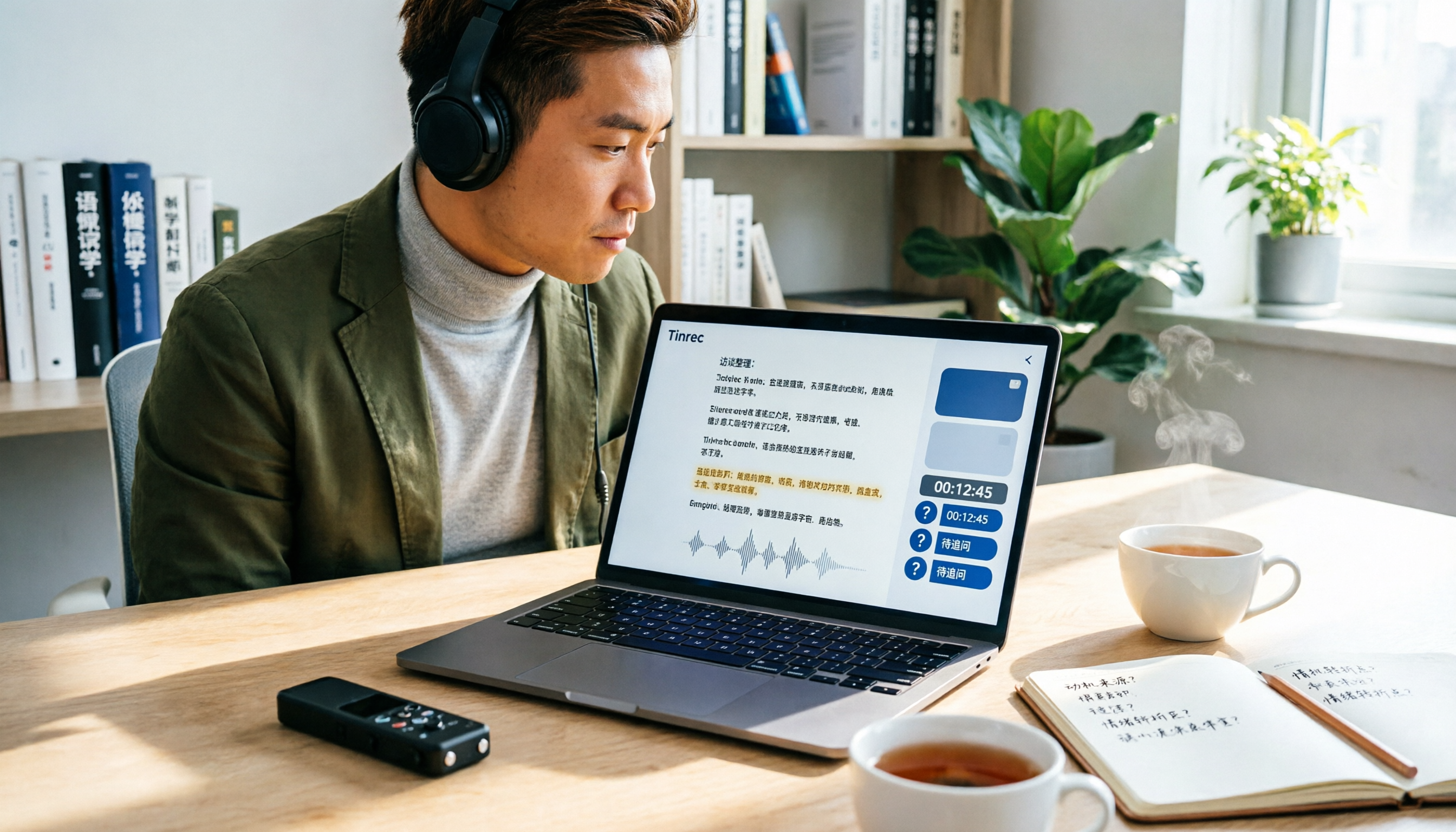
How to Organize Interview Transcripts in 2026: 5 Steps to Turn Recordings into Actionable Research Data
Turning interview recordings into text is more than just typing. This article shares a practical workflow to transform transcripts into searchable, queryable, and continuously organized research data—covering recording, transcription, summarization, questioning, and team collaboration.

2026 Good Tape Alternatives Buying Guide: 4 AI Transcription Tools Tested and Compared
Wondering if Good Tape is right for your meeting notes? This guide compares Good Tape with tools like Tinrec across budget, accuracy, Chinese language support, team collaboration, and privacy to help you choose a transcription solution that truly saves time.