
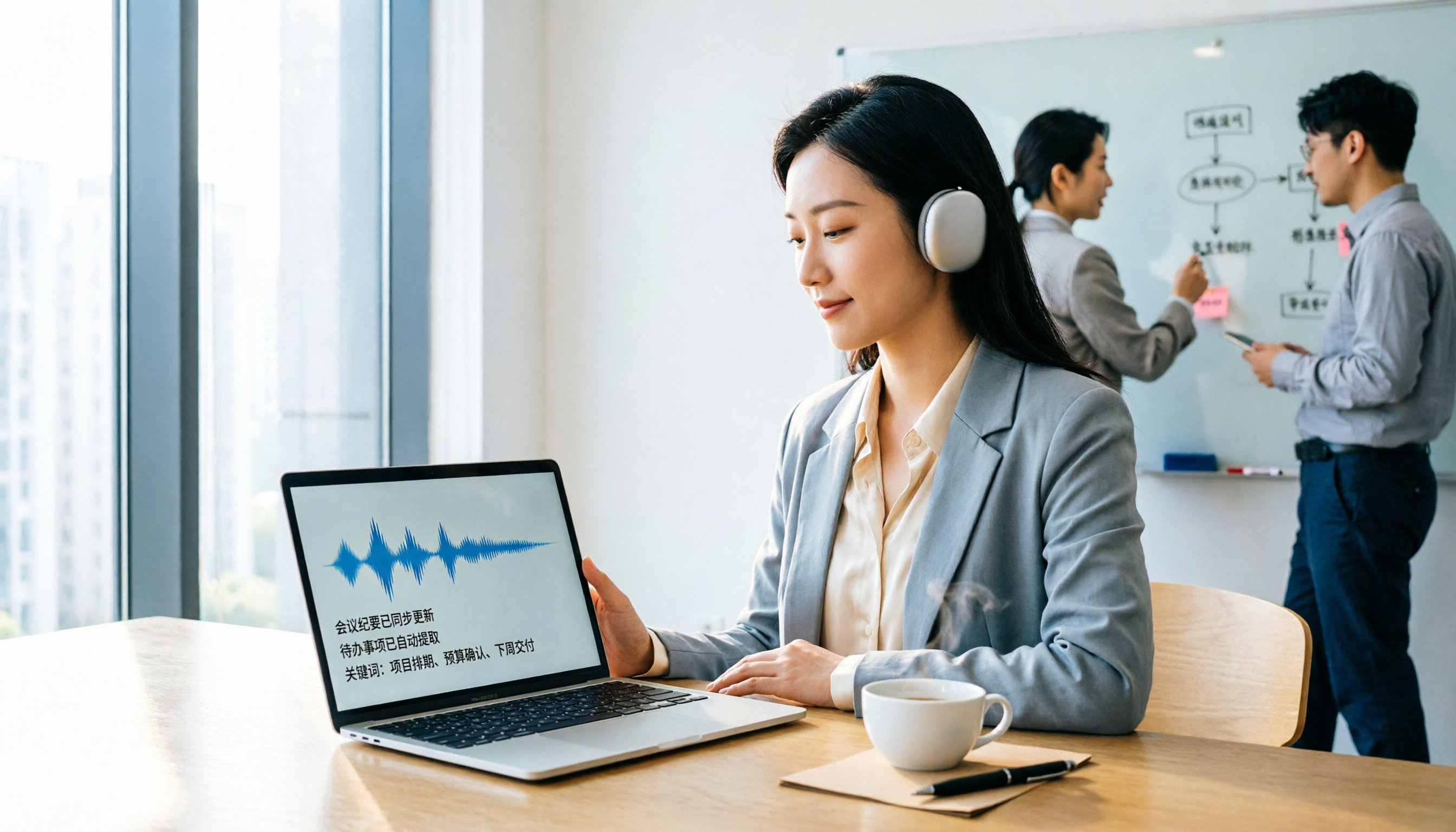
Turn recordings into transcripts and summaries in minutes
Upload audio or video for multilingual transcription, AI notes, and action items
Why Are People Looking for Good Tape Alternatives?
Good Tape is an AI audio-to-text tool developed by a team of journalists, known for its security, speed, and multilingual transcription. It has a solid user base in media, academic, and business meeting settings. Search snippets show that it emphasizes not using your data to train AI models, which is a major plus for privacy-conscious users.
However, in practice, the most common concerns are whether the free plan is sufficient, how long a single transcription can be, and whether it offers Chinese-language organization and follow-up collaboration features. If you're comparing Good Tape with other free transcription tools, Tinrec is another option worth exploring. The differences become more apparent when you need more than just a transcript—like meeting summaries, action items, and team data management.
Good Tape Free Plan and Limitations
Good Tape offers a free account primarily for testing its automatic transcription feature. According to third-party compiled data, the free account can transcribe approximately 20 minutes of content. To get more minutes, you'll need to upgrade to a paid plan.
Good Tape's core strengths are security and multilingual support. The company states it doesn't use user data to train AI, supports over 90 to 100 languages, and offers iOS and Android apps for direct in-app recording and transcription, eliminating the need for manual file uploads. This makes it a straightforward workflow for journalists conducting interviews, overseas interviews, or anyone needing quick audio transcription.
It's worth noting that the free allowance is limited, making it better suited for first-time testing or occasional short recordings. If you have meetings, classes, or interviews every week, the 20-minute free limit is usually not enough.
Tinrec vs. Good Tape: What's Different in Core Experience?
Good Tape is more about "securely converting audio to text," while Tinrec leans toward "turning meeting content into actionable data." Both can transcribe, but the post-transcription workflow differs.
Post-Transcription Organization
Good Tape excels at providing near-ready transcripts, reducing editing time. Tinrec, on the other hand, automatically generates summaries, chapters, highlights, and action items. You can ask Tinrec questions like "What was the meeting conclusion?" or "Who is responsible for what?" without manually going through the entire transcript. If you often need to quickly produce meeting minutes, this difference is significant.
Handling Online Meetings
Good Tape primarily focuses on uploading audio and video files for transcription. Tinrec's desktop version can capture your computer's system audio, allowing you to record online meetings on Zoom, Google Meet, Microsoft Teams, and Webex without needing a meeting bot. This means you don't have to record separately and then upload; you can transcribe in real time during the meeting.
Team Collaboration and Data Storage
Good Tape's free plan is more geared toward individual use. Tinrec offers team spaces where meeting recordings, transcripts, summaries, and action items can be stored centrally. Team members can access historical data, and admins can manage roles, seats, and usage. For departments or project groups, meeting data doesn't get scattered across personal devices.
Chinese and Multilingual Content
Good Tape supports multilingual transcription, which is a clear advantage. Tinrec also supports Chinese, Traditional Chinese, and multilingual meetings, and offers real-time translation, bilingual viewing, and team-specific glossary features. If you often deal with mixed Chinese-English meetings or want industry-specific terms to be recognized correctly, Tinrec's glossary feature is a plus.
Tinrec's Core Features at a Glance
Real-Time Recording to Text
With Tinrec, you can record and transcribe simultaneously, with text appearing in real time. Whether it's an in-person meeting, interview, or class, you get a transcript immediately without spending time later organizing audio files.
Bot-Free Online Meeting Recording
This is a feature I find particularly useful. The desktop version captures your computer's system audio directly, so you don't need to invite an additional bot to your meeting. Many online meetings aren't suitable for third-party bots, and this approach is more natural while still generating real-time transcripts.
AI Summaries, Chapters, and Action Items
Long meetings are tedious to review. Tinrec automatically breaks down content into summaries, chapters, and action items, so you can quickly see what topics were discussed and what needs to be done next. This is much more efficient than just having a long transcript.
AI Q&A
Stop organizing recordings by hand
Upload audio or video and automatically get a transcript, summary, and action items
After recording, you can ask Tinrec questions like "What concerns did the client have about pricing?" or "How many conclusions were there in this meeting?" It answers based on the meeting content, which is great for quickly revisiting past meetings.
Multi-Format Export and Third-Party Integrations
Tinrec supports exporting in various formats and can send results to tools like Notion, Google Docs, OneNote, and Dropbox. If you already have a fixed note-taking or document workflow, this feature saves time on copy-pasting.
Practical Use Cases
Online Project Meetings
During a Zoom or Google Meet session, use Tinrec's desktop version to record system audio directly. When the meeting ends, you have a record with summaries and action items. You can paste action items into your project management tool, saving about 30 minutes of writing meeting minutes.
Client Interviews
Sales or research professionals can record and transcribe client interviews on the fly, then use AI Q&A to quickly identify client needs, objections, and commitments. Compared to just saving an audio file, finding key points later is much faster.
Classes and Lectures
Students or lifelong learners can record course content and have it automatically organized into chapters and highlights. When reviewing, you don't need to listen to the entire recording; just check the summary or search for keywords.
Personal Idea Notes
When inspiration strikes, record a voice memo on your phone. Tinrec converts it to text and preserves the original. You can search and ask questions anytime, turning scattered thoughts into a growing database.
Key Points to Consider When Choosing a Free Audio-to-Text Tool
Free Allowance and Per-Session Limits
Don't just look at the word "free." Some tools only allow 20 minutes per free account, while others limit each session to 3 minutes, which is insufficient for long meetings. Think about how long your typical recordings are, then check if the free plan is actually usable.
Transcript Only or Further Organization
If you only need occasional transcription, a plain transcript might suffice. But if you need summaries, action items, Q&A, or follow-up documents, choose a tool with AI post-processing. Tinrec covers this more comprehensively.
Do Online Meetings Require a Bot?
Some tools require a bot to join as a participant, which can be inconvenient in certain corporate or client meetings. Tinrec uses bot-free desktop recording, making it suitable for scenarios where you don't want to add third parties.
Chinese and Technical Term Performance
If you often handle Chinese, mixed Chinese-English, or industry jargon, test with your own recordings. Background noise, accents, and overlapping speech all affect results. Tinrec's team glossary helps improve recognition of specialized terms, which is particularly useful in fields like healthcare, law, and technology.
Future Team Collaboration Needs
Individual use and team use are different. If meeting data needs to be shared, searched, and managed by multiple people, a tool with team spaces is more efficient. Tinrec's roles, seats, and usage analytics are suitable for departments or project groups looking to systematize meeting data management.
Summary: Is Good Tape Free? Or Is Tinrec a Better Fit?
Good Tape's free version can transcribe about 20 minutes, making it suitable for first-time testing or occasional short recordings. Its strengths are high security, no AI model training, and comprehensive multilingual support, which is practical for journalists, researchers, and privacy-conscious individuals.
However, if you have meetings, interviews, or classes to organize every week and need summaries, action items, AI Q&A, and team sharing, Tinrec is a more complete choice. It doesn't just turn audio into text; it turns content into actionable data.
We recommend starting with the free version. Whether it's Good Tape or Tinrec, run your own recordings through the tool to see if Chinese recognition, summary quality, and workflow meet your needs. That's more direct than any review.
Frequently Asked Questions
How long can I transcribe with Good Tape's free version?
According to third-party compiled data, Good Tape's free account can transcribe approximately 20 minutes of content. The actual free allowance may change with official policy, so it's best to check Good Tape's official website.
Does Good Tape support Chinese?
Good Tape officially states it supports over 90 to 100 languages, with multilingual transcription being a core feature. Chinese content should be supported, but actual accuracy depends on audio quality, accents, and background noise.
What's the difference between Tinrec's free version and Good Tape's free version?
Both offer free trials, but with different focuses. Good Tape emphasizes security, multilingual support, and near-ready transcripts; Tinrec focuses more on post-meeting summaries, action items, AI Q&A, team spaces, and multi-format export. If you only need short transcription, Good Tape is worth trying; if you need a complete meeting workflow, Tinrec is more suitable.
Does Tinrec require a meeting bot for online meetings?
No. Tinrec's desktop version captures your computer's system audio directly, handling online meetings on Zoom, Google Meet, Microsoft Teams, and Webex without needing to invite a bot.
Can audio-to-text tools guarantee 100% accuracy?
It's not advisable to judge based on a fixed accuracy rate. Any AI transcription tool is affected by recording quality, background noise, accents, overlapping speech, and technical terms. For important content, keep the original audio file and cross-check when necessary.
If a team member leaves, will meeting data be lost?
With Tinrec's team version, for example, team resources belong to the team and won't disappear with an individual account. When a member exits, is removed, or loses their seat, their assigned team resources can be transferred to other active members.
References
Turn every recording into actionable outcomes
Get 60 free transcription minutes when you sign in. No credit card required.
Related Reading
You might also like
How to Add a Meeting Link in Microsoft Teams in 2026: Scheduling, Copying, and Inviting Explained
Want to add a meeting in Microsoft Teams and share the link, but not sure whether to start from the calendar, Outlook, or an instant meeting? This complete guide walks you through the meeting creation process in Teams desktop, web, and Outlook, explains how to copy meeting links, invite external participants, and avoid common link and permission issues.

Where to Click to Start a New Zoom Meeting? 2026 Tested: 3 Ways to Start a Meeting, This One Is Fastest
Trying to start a new Zoom meeting but can't find the button? This article tests three ways to start a meeting—desktop app, mobile app, and web browser—to help you pick the fastest and most reliable workflow. A must-read for U.S. professionals.

Yating Transcriber Free Plan 2026: 3 Ways to Use It, Explained
How long can you use Yating Transcriber for free? How do uploads, live recording, and export formats work? This article breaks down Yating Transcriber's free quota, paid plans, and real-world limitations, with recommendations for 3 use cases.

2026 1/12 Dao Ma Action Figure Comparison: Which Version Has the Best Details for Collectors?
Thinking about collecting the 1/12 Dao Ma action figure from Blades of the Guardians but unsure about Nottaa Collection's paint job, accessories, and articulation? This article compiles currently available version info, pre-order tips, and buying advice to help you decide if this Dao Ma figure is worth adding to your collection.

Teams Meeting Toolbar Disappeared in 2026? 6 Fixes for Every Scenario
When the Teams meeting toolbar, chat, or meeting icons suddenly vanish, it's often tied to window mode, account policies, cache, or version updates. This guide breaks down 6 common causes and their fixes to help you quickly restore meeting controls.

How to Use Yating Transcriber in 2026: A 5-Step Guide from Recording to Export
Yating Transcriber is an AI-powered speech-to-text tool developed by a Taiwanese team, optimized for Taiwanese accents, Taiwanese Hokkien, and code-switching between Chinese and English. This guide walks you through 5 steps from installation, recording, transcription, editing, to export, and explains free tier limits, paid plans, and the common issue of progress stuck at 99%, helping you decide if it suits meeting minutes, interview transcription, and class notes.

The Complete Guide to Using Zoom in 2026: From Joining to Hosting Meetings
How do you use Zoom meetings? This article covers the full process of joining meetings, hosting meetings, screen sharing, recording, and common FAQs, making it ideal for office workers and remote professionals new to Zoom.

Meeting Ink 2026 Hands-On Review: How to Choose an AI Meeting Notes Tool Without Getting It Wrong?
A hands-on test of Meeting Ink's speech-to-text, AI summaries, and meeting integrations, covering 5 common selection pitfalls and smarter ways to evaluate tools, helping professionals find the right meeting notes solution.

Yating Transcriber 2026 Review: Can It Handle Taiwanese Accents and Online Meeting Notes?
Yating Transcriber is an AI speech-to-text tool developed by a Taiwanese team, supporting Taiwanese Mandarin, Taiwanese Hokkien, and code-switching between Chinese and English. This article tests its performance in online meeting notes, real-time transcription, and audio-to-text conversion, and outlines free credits, paid plans, and usage limits to help you decide if it's worth using.