
10x Efficiency Boost: This AI Recording Tool is a Game-Changer

This article addresses common meeting pain points for professionals, such as keeping up with speech speed, tracking accountability in multi-speaker meetings, and inefficient post-meeting organization. It introduces four core features of 'MiaoTing Recording' (instant voice-to-text, smart memos, speaker differentiation, and chapter summary extraction) that streamline the entire meeting process, helping users quickly generate meeting minutes and save time.

Tinrec Insights
Dinel
November 20, 2025
32 min
91 views

Turn recordings into transcripts and summaries in minutes

Upload audio or video for multilingual transcription, AI notes, and action items

In the corporate world, who hasn't struggled with meeting notes? Either you're scrambling to keep up with the pace of speech, or you spend hours organizing afterward. The good news is, these problems aren't hard to fix—just pick the right tool. Today, I'm sharing "MiaoTing Recording," an app that with its four core features helps countless professionals overcome meeting note challenges. Let's see how it works.

1. Common Meeting Pain Points – How Many Do You Have?

When it comes to meeting notes, almost every professional has complaints. These common pain points not only waste time but can also hinder work progress:
First pain point: "Can't keep up with speech pace, notes are fragmented." During meetings, speakers talk fast. Your brain is still processing the last sentence when the next one starts. Your pen scribbles frantically, and later you can't decipher key data or important decisions.
Second pain point: "Multi-speaker meetings, hard to trace accountability." Cross-department meetings involve many people and topics. Everyone's input matters, but notes easily become muddled—you can't tell who proposed what or who made the final call. When following up, unclear responsibility leads to finger-pointing.
Third pain point: "Post-meeting organization is time-consuming and inefficient." Just listening to the recording takes over half an hour, plus you have to sift through hours of audio for key points and logical flow. The time you could spend on core tasks is eaten up by organizing minutes, seriously hurting productivity.
The truth is, these issues aren't about you not being diligent enough—it's that traditional note-taking can't keep up with modern meeting rhythms. That's why choosing the right tool is crucial. MiaoTing Recording's four core features precisely address these pain points.

2. Four Core Features Unlock a New Efficient Meeting Mode

Every feature of MiaoTing Recording is designed around real meeting scenarios. Simple to use yet packed with practicality, it boosts meeting efficiency from start to finish.

1. Real-time Voice-to-Text: Speak and It Transcribes – Stay Focused on Discussion
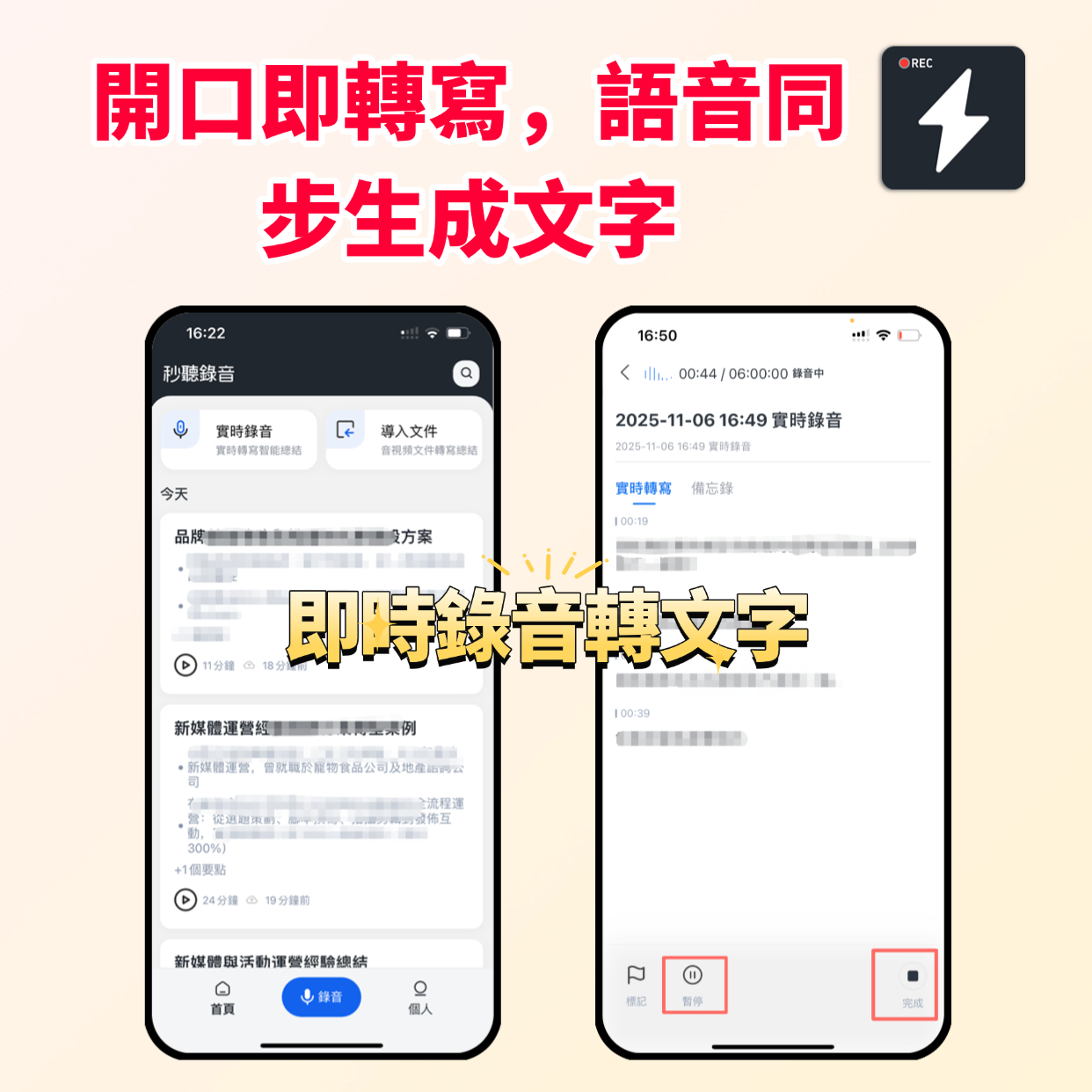

This feature is a lifesaver for meeting notes. Just open the app, tap the record button, and as soon as someone speaks, the text appears in real time—no manual typing needed.
I tested it myself: in everyday office scenarios, Mandarin transcription accuracy reaches over 98%. Even with slight accents, it stays above 95%. Terms like "ROI conversion" and "customer lifetime value" are accurately captured without typos.
With this feature, you no longer have to frantically scribble notes or keep your eyes glued to your notebook. The speaker's key points appear as text in real time, so you can fully engage in the discussion—interact with colleagues and share your ideas. Even if you zone out for a moment, you can quickly catch up by reading the text.

2. Smart Memos: One-Tap Mark Key Points, Easy to Find Later
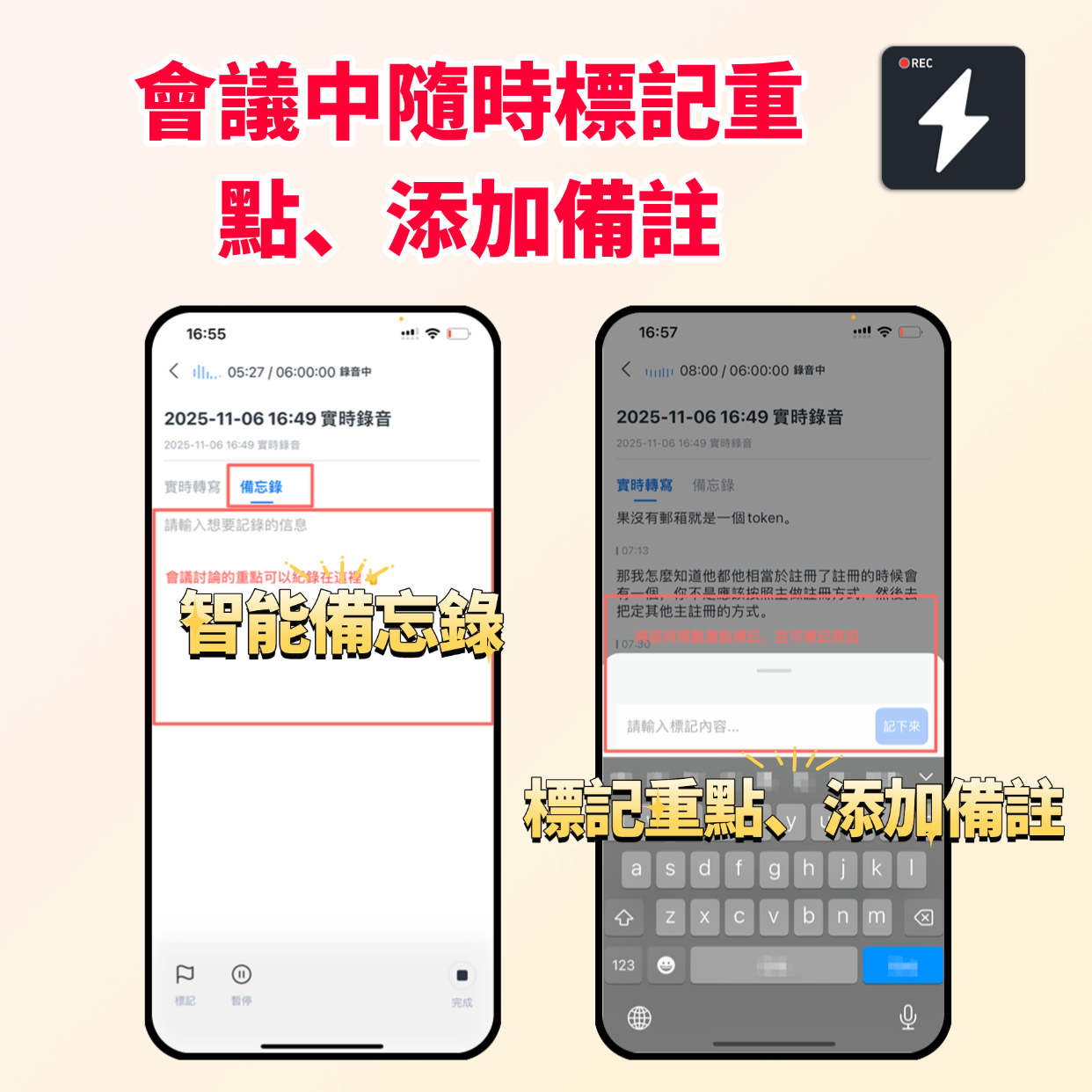

During meetings, you might get sudden inspiration or need to highlight a decision. That's when Smart Memos come in handy. No need to interrupt the meeting or jot things down hastily—just tap "Mark" on the transcribed text or add a short note, like "Execute this plan next week" or "Coordinate with Marketing."
These marks and notes are automatically saved and linked to the corresponding text. After the meeting, you don't have to search through hours of recordings or messy notes. Just open the "Marked Items" section, and all key information is right there. In short, it's like having a precise index for your meeting content—quickly locate anything you need without reading line by line.

3. Speaker Differentiation: Clear Role Labels, Easy Accountability
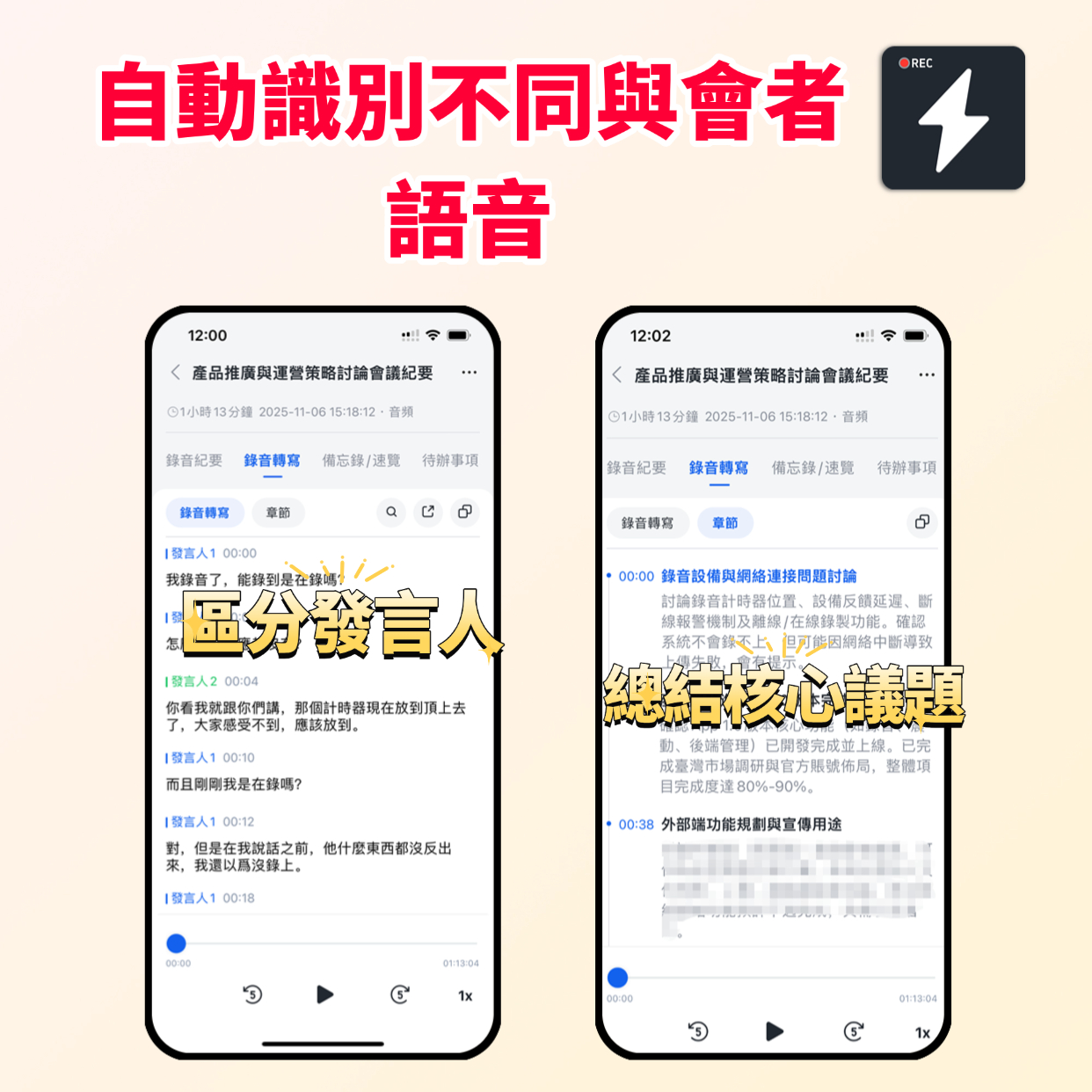

When multiple people attend, the biggest headache is keeping track of who said what. MiaoTing Recording's "Speaker Differentiation" feature automatically recognizes different speakers' voice characteristics and assigns unique labels, such as "Speaker 1" or "Speaker 2." You can also manually change them to real names.
Whether it's a ten-person department meeting or a twenty-person project review, each person's speech is clearly separated. Who raised a question, who proposed a solution, who made a commitment—all clearly labeled. When following up or tracing accountability, just look at the corresponding speaker's section. No more wondering "Who said that?" This dramatically improves work efficiency.

4. Chapter Summary Extraction: AI Auto-Summarizes, Saves Time on Minutes
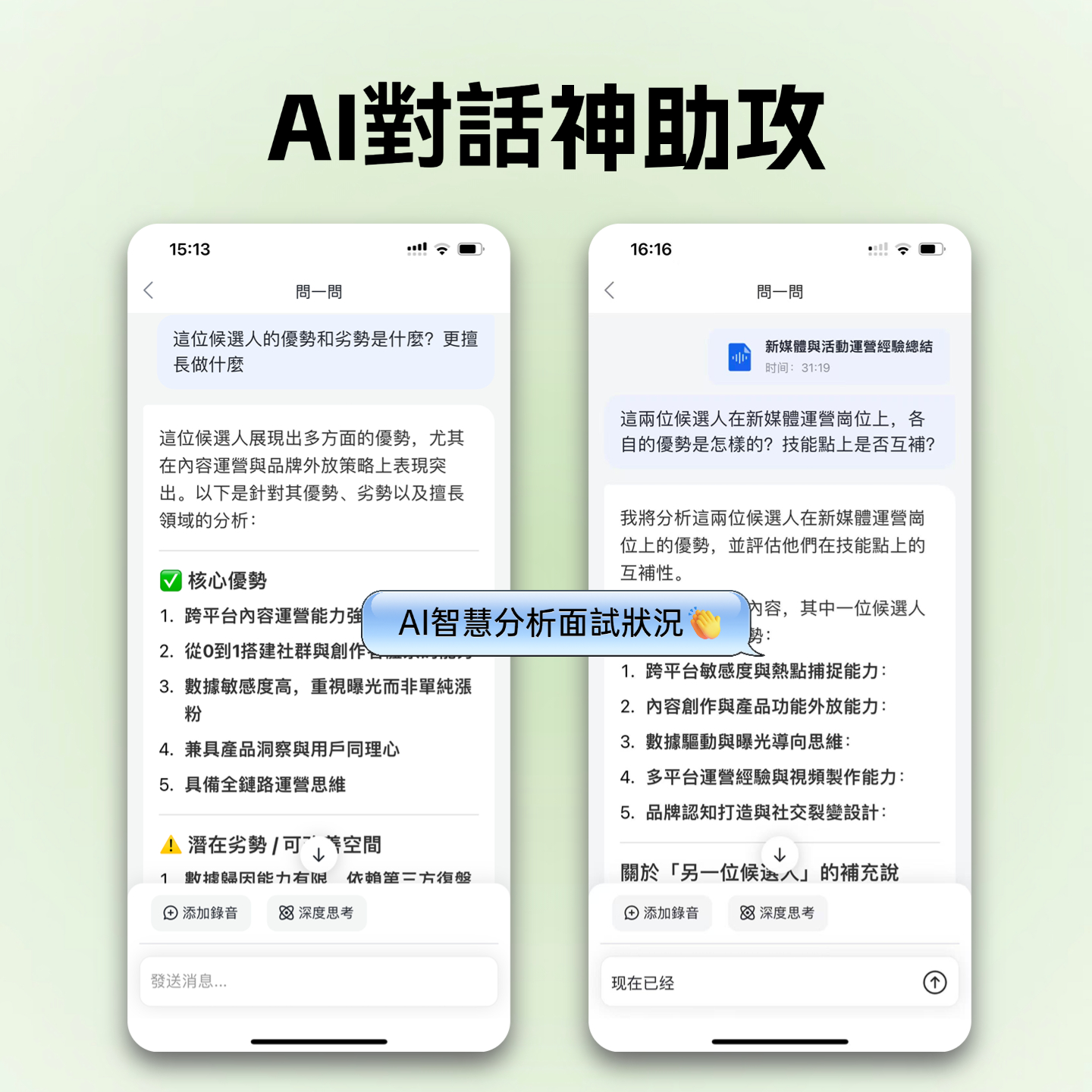

Post-meeting minutes have always been a tough nut to crack. MiaoTing Recording's "Chapter Summary Extraction" feature solves it. After the meeting, you don't need to spend hours organizing. The AI automatically splits the meeting into chapters, grouping content by different topics.
At the same time, the AI extracts core topics, key conclusions, and action items, generating structured meeting minutes. I used it for a two-hour project meeting: the app produced a complete summary in just 3 minutes, clearly listing three core topics and eight action items, each with assigned owners and deadlines. Forward the minutes to attendees, and everyone grasps the key tasks immediately—saving you the time of organizing and double-checking.

3. Beyond Recording: Make Every Meeting Deliver Value

Ultimately, efficient meetings aren't just about complete records—they're about quickly extracting value and advancing work. MiaoTing Recording keeps it simple: all features are designed around "solving pain points, boosting efficiency."
From real-time voice-to-text (solving "can't keep up" issues) to Smart Memos (locking in key info), speaker differentiation (clarifying accountability), and finally chapter summaries (rapid minutes generation)—the entire workflow transforms meetings from "time-consuming and labor-intensive" to "highly productive."
Now my colleagues are all using this tool. What used to take two hours to organize now takes ten minutes. Everyone has more time to focus on core work, no longer bogged down by tedious note-taking.
If you're often frustrated with meeting notes, give MiaoTing Recording a try. No steep learning curve—just start using it. Let every meeting produce efficient and valuable outcomes. That's the work state we all deserve~

Turn every recording into actionable outcomes

Get 60 free transcription minutes when you sign in. No credit card required.

Upload audio or video for multilingual transcription, AI notes, and action items

Related Reading

You might also like

for mac google meet: Audio Permissions, Recording, and Transcript Handoff for Google Meet on Mac

for mac google meet: Audio Permissions, Recording, and Transcript Handoff for Google Meet on Mac

Recording Google Meet on a Mac usually gets stuck not because you cannot find the record button, but because macOS separates 'capture system audio' and 'use microphone' into two independent authorizations. This article proceeds in three parts—permission setup, recording, and post-meeting organization—explaining how to determine which layer is causing meeting audio not to be recorded, and how to organize the recording into a transcript, summary, and to-dos and hand it off to a colleague.

2026-09-17
How to Change Your Google Meet Background on Mobile: Check Account and Version Requirements First, Then Follow the Pre-Meeting or In-Meeting Path

How to Change Your Google Meet Background on Mobile: Check Account and Version Requirements First, Then Follow the Pre-Meeting or In-Meeting Path

When you're told to join a client-facing meeting and only have your phone on hand, the last thing you want is to discover five minutes before the call that you can't find the background option. This article first explains what's required to use backgrounds on mobile (account type, app version, device permissions), then walks through two paths step by step—one before you join the meeting and one during it—and closes with a pre-meeting checklist and alternatives if you can't find the option.

2026-09-17
Google Meet 2026 APK Installed: Choosing a Meeting Notes Tool on Android — First Look at the Mobile vs. Desktop Organization Gap

Google Meet 2026 APK Installed: Choosing a Meeting Notes Tool on Android — First Look at the Mobile vs. Desktop Organization Gap

Installing the Google Meet 2026 APK is just the first step. This article uses four dimensions to narrow down meeting notes tools that claim to 'support Google Meet' to two or three options, focusing on the real-world gap between Android mobile and desktop post-meeting organization. Each dimension includes specific questions you should confirm with the product page or vendor.

2026-09-17
Google Meet 2026 Meeting Notes Capability Review: Where Built-in Transcription Ends and How to Split Post-Meeting Action Items and Deliverables

Google Meet 2026 Meeting Notes Capability Review: Where Built-in Transcription Ends and How to Split Post-Meeting Action Items and Deliverables

A practical mid-level manager's review of Google Meet 2026 recording and transcription coverage, explaining the responsibility boundaries for post-meeting summaries, action items, and deliverables, with recommendations for Chinese and mixed Chinese-English meetings, data storage, and team handoffs.

2026-09-17
Which Google Meet 2026 APK Should You Install? Android Install Source Guide, Meeting Prerequisites, and Backup Recording Handoff Order When Nothing Was Recorded

Which Google Meet 2026 APK Should You Install? Android Install Source Guide, Meeting Prerequisites, and Backup Recording Handoff Order When Nothing Was Recorded

When you're assigned to join a Google Meet on an Android phone and handle post-meeting notes, first clarify whether you're attending, hosting, or responsible for organizing. Then decide whether to install from the official app store or a third-party APK source, what prerequisites are needed to sign in, and how to use audio recording and transcription in order to fill in the transcript and action items and hand them off when the meeting wasn't recorded.

2026-09-17
Google Meet 2026 Meeting Notes Capabilities: Where Built-In Transcription Ends and How to Split Post-Meeting To-Dos and Deliverables

Google Meet 2026 Meeting Notes Capabilities: Where Built-In Transcription Ends and How to Split Post-Meeting To-Dos and Deliverables

Google Meet 2026 recording and transcription are not automatically enabled by default, and post-meeting summaries, to-dos, and deliverables still have coverage boundaries. This article walks through the actual workflow to assess built-in platform capabilities, explains the differences in organizing Chinese and mixed Chinese-English meetings, the distinction between data storage and team spaces, and offers recommendations for dividing post-meeting to-dos, deliverables, and data storage.
2026-09-17
How to Choose a Google Meet Note-Taking Tool for Windows: Four Dimensions to Narrow Down from Cross-Device Gaps to Two or Three Options

How to Choose a Google Meet Note-Taking Tool for Windows: Four Dimensions to Narrow Down from Cross-Device Gaps to Two or Three Options

Meetings happen on Google Meet on a Windows PC, but organizing often gets picked up on a phone or another device. This article uses four dimensions (how audio gets in, how far post-meeting output goes, the organizing gap between Windows and phone, and whether data stays in a personal or team space) to narrow down candidate tools to two or three, with specific questions to ask product pages or vendors for each dimension.
2026-09-17
How to Choose a Google Meet Meeting Notes Tool for PC: Narrow a Dozen Options to Two or Three with Four Dimensions, and What to Confirm with Vendors for Each

How to Choose a Google Meet Meeting Notes Tool for PC: Narrow a Dozen Options to Two or Three with Four Dimensions, and What to Confirm with Vendors for Each

After a Google Meet call on a Windows PC, what you actually need to deliver is decisions, owners, deadlines, and an archivable record. This article uses four dimensions to help you narrow a dozen tools that claim Google Meet support down to two or three, with specific questions to confirm on product pages or with vendors for each dimension.
2026-09-17
What You Need for Google Meet: Pre-Meeting Role Checklist and Post-Meeting Handoff

What You Need for Google Meet: Pre-Meeting Role Checklist and Post-Meeting Handoff

From the perspective of administrative assistants and project coordinators, this guide breaks down the prerequisites for joining or hosting a Google Meet by role, including account requirements, organizational settings, recording permissions, and extra conditions for external attendees. It also provides a pre-meeting checklist and a post-meeting handoff sequence for transcripts, decisions, and action items.

2026-09-17
Use Tinrec Now